Sublimation Transfer Paper
CN → US| HS Code | Tariff Rate | Origin | Destination | Doc |
|---|---|---|---|---|
| 4823906700 | 35.0% | CN | US | Official Doc |
| 4823908680 | 35.0% | CN | US | Official Doc |
Product Images
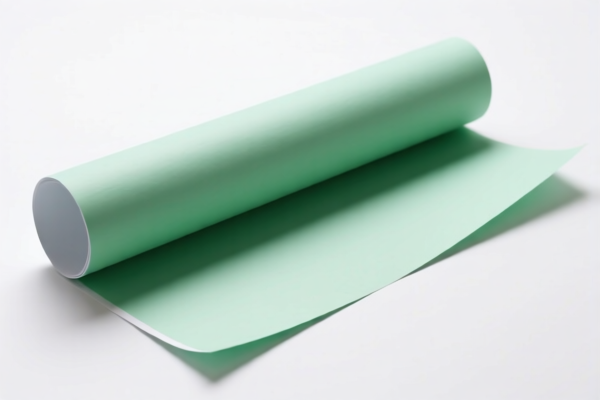

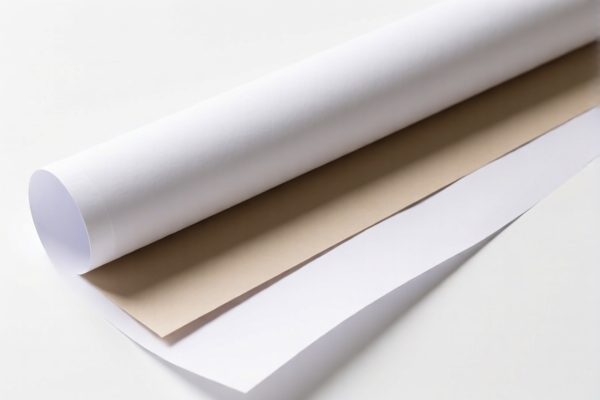

AI Analysis
🖨️ Sublimation Transfer Paper
🌐 HS Code Reference & Customs Clearance Guide | 2026 Latest Tariff Analysis | Professional Clearance Strategy
📌 I. Product Definition & Classification: What Exactly is "Sublimation Transfer Paper"?
Sublimation transfer paper is a specialized coated paper used in heat transfer printing. It temporarily holds sublimation ink in a dry state and releases it as a gas when heated (typically above 180°C/356°F), allowing the ink to penetrate the substrate (usually polyester fabrics or coated hard substrates).
In international trade, this product is classified under Chapter 48 (Paper and Paperboard), specifically as "Cut to size or shape" or "Other articles" because it is rarely imported in bulk rolls for direct use in final manufacturing without processing, or if it is, it falls under specific sub-categories.
⚠️ Key Distinction:
- If the paper is coated with a release layer to prevent ink bleeding → It is treated as Coated Paper.
- If it is uncoated standard paper used for printing → It falls under general paper categories.
- Note: Most commercial sublimation papers are coated to ensure sharp image transfer, thus falling under "Coated Paper" tariffs.
📦 II. HS Code Classification Details (Based on Provided Data)
The following HS Codes and Tariffs are derived strictly from the provided <DATA>. These codes apply to cut-to-size or shaped sublimation papers, which is the standard form for end-users and small-to-medium manufacturers.
| HS Code | Product Description (Extracted from Data) | Tax Rate (Total) | Tax Detail |
|---|---|---|---|
4823.90.67.00 |
Coated Paper: Other paper, paperboard, cellulose wadding, cut to size/shape; other articles; Of coated paper | 25.0% | Base: 0.0% Additional: 25.0% |
4823.90.86.80 |
Uncoated/Other Paper: Other paper, paperboard, cellulose wadding, cut to size/shape; other articles; Other: Other | 25.0% | Base: 0.0% Additional: 25.0% |
🔍 Critical Analysis:
1.4823.90.67.00: This is the most likely code for high-quality sublimation paper because it is specifically a coated paper. The coating is essential for sublimation to work (holding the ink until heat is applied). If your product has a visible white coating on the printing side, this is the correct classification. 2.4823.90.86.80: This serves as the "Other" category. Use this only if the paper is not coated (rare for true sublimation, more likely for dye-based inkjet paper used for transfers) or if it doesn't fit other specific sub-headings.
3. Both Codes Carry a 25% Additional Tariff. This indicates a specific trade policy (likely US Section 301 tariffs on Chinese goods) where the base rate is 0%, but an additional duty is applied.
💰 III. 2026 Latest Tariff Rate Breakdown
✅ Applicable Region: Likely United States (US) based on the "25.0% additional tariff" structure common in US-China trade data for this chapter.
✅ Origin: Likely China (CN) or regions subject to these specific additional duties.
✅ Base Rate: 0.0%
✅ Additional Duty: 25.0%
✅ Total Effective Rate: 25.0%
🎯 1. 4823.90.67.00 – Coated Paper (Sublimation Paper)
| Item | Content |
|---|---|
| HS Code | 4823.90.67.00 |
| Product Type | Coated Paper, Cut to Size |
| Base Tariff | 0.0% |
| Additional Tariff | +25.0% |
| Total Tariff | 25.0% |
| Calculation | CIF Value × 25% |
| De Minimis Exemption | ❌ Not Eligible (Generally, paper products over certain value thresholds or from specific origins do not qualify for low-value shipment exemptions under Section 321). |
📌 Explanation:
- The 25% additional tariff is likely a Section 301 tariff applied to Chinese-origin goods in this category.
- The 0% base rate means the standard MFN (Most Favored Nation) rate is zero, but the political additional duty drives the total cost up.
- Cost Impact: For every $10,000 of goods, you pay $2,500 in duties alone. This is a significant cost factor for low-margin paper products.
🎯 2. 4823.90.86.80 – Other Paper (Uncoated/General Transfer Paper)
| Item | Content |
|---|---|
| HS Code | 4823.90.86.80 |
| Product Type | Other Paper Articles, Cut to Size |
| Base Tariff | 0.0% |
| Additional Tariff | +25.0% |
| Total Tariff | 25.0% |
| Calculation | CIF Value × 25% |
| De Minimis Exemption | ❌ Not Eligible |
📌 Note:
- Even if classified as "other," the tariff burden remains identical (25%).
- Misclassifying a coated paper as "other" to avoid scrutiny may lead to customs audits, penalties, and retrospective duty assessments.
🛠️ IV. Customs Clearance Practical Advice (Avoid Pitfalls)
✅ 1. Required Documentation Checklist
| Document | Required? | Explanation |
|---|---|---|
| Commercial Invoice | ✅ Yes | Must clearly state: "Sublimation Transfer Paper," HS Code, Quantity, and Value. |
| Product Specification | ✅ Yes | Detail if the paper is coated or uncoated. Mention weight (gsm), size (A4, A3, Rolls), and coating type (polymer, etc.). |
| Material Safety Data Sheet (MSDS) | ⚠️ Optional | Usually not required for plain paper, but good to have if coatings are chemical-heavy. |
| Certificate of Origin | ✅ Recommended | To prove origin. If not from a beneficiary country (e.g., China), the 25% additional tariff may apply regardless. |
| Packing List | ✅ Yes | Must match invoice exactly. Show gross/net weight. |
✅ 2. Classification Strategy & Warnings
🔥 "Coated vs. Uncoated: The 25% Trap!"
| Scenario | Recommended HS Code | Risk Level |
|---|---|---|
| Standard Sublimation Paper (White Coated) | 4823.90.67.00 |
🟢 Low (If described accurately as "Coated") |
| Inkjet Paper for Dye Sublimation (Uncoated) | 4823.90.86.80 |
🟢 Low (If truly uncoated) |
| Bulk Rolls (Not Cut to Size) | Not in Data | 🔴 High (May fall under different HS codes not listed above, potentially with different tariffs. Do not use these codes for bulk rolls without verification.) |
| Printed Paper with Graphics | Not in Data | 🔴 High (May be classified as printed matter, not blank transfer paper). |
⚠️ Critical Warning:
- Do not claim "Free Duty" on sublimation paper if it is coated. The code4823.90.67.00explicitly includes the 25% additional tax.
- Bulk vs. Cut: These HS codes (4823...) are for cut to size or shape. If you are importing jumbo rolls (un-cut), these codes are likely incorrect. You must find the roll-specific HS code (e.g., in Chapter 48 heading 4801-4806), which may have different tariff implications.
- Coating Definition: If the paper has any functional coating (even a light polymer layer for ink release), customs may insist on4823.90.67.00.
✅ 3. Special Cases
| Situation | Advice |
|---|---|
| De Minimis Shipment (Under $800) | While Section 321 often exempts duties for shipments under $800, paper products from China are sometimes scrutinized or excluded if they are deemed to be circumventing tariffs. Check current CBP enforcement trends. |
| Mixed Shipments (Paper + Ink) | Declare separately. Paper goes to HS 4823 (25% duty). Ink may fall under Chapter 32 or 38. Do not bundle them under the paper HS code to hide ink value, or risk customs flags. |
| Private Label/OEM | Ensure the invoice shows the manufacturer’s name and the importer’s name. Avoid vague descriptions like "Gift Paper." |
🌍 V. Global Market Comparison (Contextual Insight)
| Region | Likely HS Code | Estimated Duty | Notes |
|---|---|---|---|
| 🇺🇸 USA | 4823.90.67.00 |
25% | High additional duty on Chinese goods. |
| 🇪🇺 EU | 4823.90 (varies) |
~6.5% | Standard MFN duty. No Section 301 equivalent. |
| 🇨🇳 China | 4823.90 |
~6.5% | Import duty on coated paper. |
| 🇬🇧 UK | 4823.90 |
~6.5% | Post-Brexit tariff structure similar to EU. |
| 🇦🇺 Australia | 4823.90 |
~5% | Lower duty, no major trade war tariffs. |
📌 Conclusion:
- The USA market is the most expensive for imported sublimation paper from China due to the 25% additional tariff.
- For US importers, consider shifting sourcing to Vietnam, India, or Malaysia if possible, as these countries may have lower or zero additional tariffs (subject to current US trade policies).
- If sourcing from China, factor in the 25% cost in your pricing strategy.
📌 VI. Common Errors & Pitfalls (Lessons Learned)
❌ Error 1: Importing Bulk Rolls under 4823.90... (Cut-to-Size codes)
👉 Consequence: Customs will reclassify, delay shipment, and potentially fine you for misdeclaration.
👉 Fix: Find the correct HS code for Paper Rolls (typically under heading 4801-4806).
❌ Error 2: Describing Product as "Art Paper" or "Printing Paper"
👉 Consequence: Customs may apply higher tariffs or deny duty-free claims.
👉 Fix: Use specific term "Sublimation Transfer Paper" and specify "Coated".
❌ Error 3: Assuming All Paper is 0% Duty
👉 Consequence: Unexpected $2,500+ duty bill on a $10,000 shipment.
👉 Fix: Always check the Additional Duty column for the specific HS code and Origin.
✅ Correct Declaration Example:
"Sublimation Transfer Paper, Coated, Cut to A4 Size, 80 GSM, For Heat Transfer Printing, Made in China"
HS Code:4823.90.67.00
Duty: 25%
🎯 VII. Conclusion: Professional Clearance, Cost Control
🎯 Remember the Key Takeaways:
🔹 "Coated Paper =
4823.90.67.00= 25% Total Duty"
🔹 "Uncoated/Other =4823.90.86.80= 25% Total Duty"
🔹 "Bulk Rolls ≠ These Codes! Find Roll-Specific Codes."
🔹 "Factor 25% into your US Landing Cost."
📌 Pro Tip:
If you are importing large volumes, consider applying for a Tariff Engineering exemption or checking if your product qualifies for any Exclusions under the current trade policy. Even small savings on a 25% duty can be significant at scale.
📣 Immediate Action:
📞 Verify Origin: Confirm if your supplier is in China. If yes, the 25% duty is likely mandatory.
📦 Check Form: Ensure you are importing cut sheets or small packs, not jumbo rolls, to use these codes.
💼 Consult a Broker: Always validate HS Code4823.90.67.00with your customs broker before shipment to avoid clearance delays.
✨ Precision in Classification, Savings in Logistics!
💼 Don’t let 25% erode your margins. Know your HS Code!
Customer Reviews
About HS Code Classification
The Harmonized System (HS) is an internationally standardized nomenclature developed by the World Customs Organization (WCO) to classify traded products. Over 200 countries use the HS system as the basis for customs tariffs, trade statistics, and import/export regulations.
Each HS code follows a hierarchical structure:
- Chapter (2 digits) — Broad category of goods (e.g., Chapter 84: Machinery and Mechanical Appliances)
- Heading (4 digits) — More specific grouping within the chapter
- Subheading (6 digits) — Internationally standardized breakdown, used by all WCO member countries
- National subdivisions (8-10 digits) — Country-specific extensions for further classification, such as US HTSUS 10-digit codes
Correct HS code classification is essential for smooth customs clearance, accurate duty payment, and compliance with trade regulations. Misclassification can lead to customs delays, overpayment of duties, or penalties.
When importing from CN to US, the applicable tariff rates may include:
- Most-Favored-Nation (MFN) rate — The standard duty rate applied to WTO members
- General rate — Applied to countries without trade agreements
- Trade remedy duties — Additional tariffs such as Section 301 (anti-dumping), Section 232 (national security), or countervailing duties
The information provided on this page is for reference purposes only. For official classification, please consult with your local customs authority or a licensed customs broker.