Submersible Motor
CN → US| HS Code | Tariff Rate | Origin | Destination | Doc |
|---|---|---|---|---|
| 8501324500 | 35.0% | CN | US | Official Doc |
| 8501528040 | 35.0% | CN | US | Official Doc |
Product Images
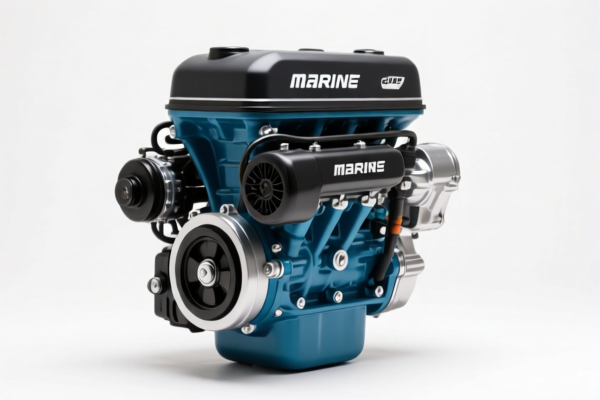
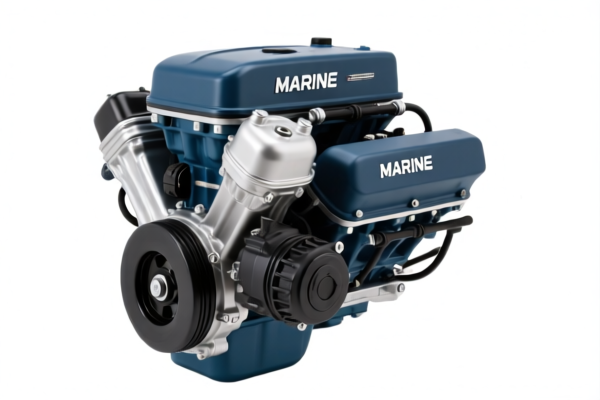
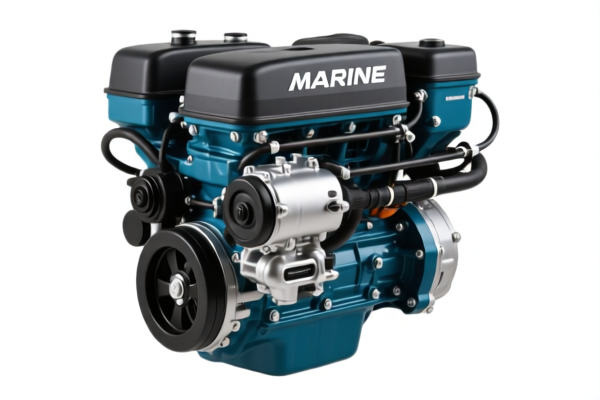
AI Analysis
⚡ Electric Motors & Generators (Submersible & Industrial Applications)
🌐 HS Code Reference & Customs Clearance Guide | 2026 Latest Tariff Analysis | Professional-Level Clearance Strategy
📌 I. Product Definition & Classification: Do You Really Understand “Electric Motors”?
Electric motors and generators are the heart of modern industrial automation, renewable energy systems, and electric vehicle (EV) drivetrains. In international trade, they are strictly categorized by current type (DC/AC), output power, and specific application (especially for EVs).
For submersible motors or general industrial motors falling under Chapter 85, the classification hinges on two critical factors: 1. Current Type: Is it Direct Current (DC) or Alternating Current (AC)? 2. Power Output: Is it under 750W, between 750W–75kW, or above 75kW? 3. Special Application: Is it specifically designed for electric vehicles (EVs)?
⚠️ Key Distinction Point:
- DC Motors: Often used in specialized industrial applications, EVs, or precision controls. If used in EVs (subheadings 8703.40–8703.80), they have a specific sub-heading.
- AC Motors: Multi-phase AC motors are the standard for industrial machinery. If they don’t fit specific EV categories, they fall under "Other."
📦 II. HS Code Classification Details (2026 Latest Tariff Authority Comparison)
Based on the provided data, the products in question fall into two specific categories within the 8501.32 (DC) and 8501.52 (AC) families. Both exceed 750 W but do not exceed 75 kW.
| HS Code | Product Description | Applicable Scenario | Motor Type | Power Range |
|---|---|---|---|---|
8501.32.45.00 |
DC Motors for EVs (Specific Subheadings) | Primary source of mechanical power for EVs (Subhs 8703.40–8703.80) | DC | >750 W to ≤75 kW |
8501.52.80.40 |
Other Multi-Phase AC Motors | General industrial AC motors, pumps, compressors (not specifically for EVs in those subheadings) | AC (Multi-phase) | >750 W to ≤75 kW |
🔍 Important Reminder:
-8501.32.45.00is highly specific: It applies ONLY if the DC motor is of a kind used as the primary source of mechanical power for electric vehicles classified under HS 8703.40, 8703.50, 8703.60, 8703.70, or 8703.80.
-8501.52.80.40is a "catch-all" for multi-phase AC motors in this power range that do not fit other specific exemptions.
- Submersible Motors: If a submersible motor is DC and used in a specific EV context, it might qualify for8501.32.45.00. However, most submersible motors (e.g., for water pumps, oil rigs) are AC and would fall under8501.52.80.40unless they are specifically designed for the EVs listed above. Do not assume "submersible" automatically changes the HS code; the power source and application define it.
💰 III. 2026 Latest Tariff Rate Details (Including Additional Duties)
✅ Applicable Country: United States (US)
✅ Origin: China (CN)
✅ Effective Date: 2025–2026 (Current Trade Policy)
🎯 1. 8501.32.45.00 — DC Motors for Electric Vehicles
| Item | Content |
|---|---|
| Base Tariff Rate | 0.0% (Ad Valorem) |
| Additional Tariff (Section 301 / USITC) | +25.0% |
| Total Tariff Rate | 25.0% |
| Tax Calculation | CIF Value × 25% |
| De Minimis Exemption | ❌ Not Applicable (High tariff rates generally exclude small packages from de minimis benefits if not specifically exempted) |
| Legal Basis Path | HTSUS 8501.32.45.00 → USITC Footnote (Section 301) |
📌 Explanation:
- The Base Tariff is 0%, reflecting the US policy to encourage technology imports.
- However, the +25% Additional Tariff applies due to trade measures against Chinese-origin goods in this category.
- Total Effective Rate: 25%. This is a significant cost factor that must be included in your landed cost calculation.
🎯 2. 8501.52.80.40 — Other Multi-Phase AC Motors
| Item | Content |
|---|---|
| Base Tariff Rate | 0.0% (Ad Valorem) |
| Additional Tariff (Section 301 / USITC) | +25.0% |
| Total Tariff Rate | 25.0% |
| Tax Calculation | CIF Value × 25% |
| De Minimis Exemption | ❌ Not Applicable |
| Legal Basis Path | HTSUS 8501.52.80.40 → USITC Footnote (Section 301) |
📌 Note:
- Despite being an AC motor (often more common in general industry), it faces the same 25% additional tariff as the specific DC EV motors.
- The base rate remains 0%, but the effective entry rate is 25% for Chinese-origin goods.
- This applies to multi-phase AC motors with output between 750W and 75kW that are not specifically exempted.
🛠️ IV. Customs Clearance Practical Advice (Battle-Tested Pitfall Avoidance Guide)
✅ 1. Documentation Checklist (Non-Negotiable)
| Document | Required | Description |
|---|---|---|
| ✅ Product Specification Sheet | ✔️ | Must explicitly state: Type (AC/DC), Phase (if AC), Power Output (W/kW), Voltage, Application (e.g., EV, Pump, Fan). |
| ✅ Technical Drawing / Schematic | ✔️ | To prove if the motor is "of a kind used as primary source for EVs" (critical for 8501.32.45.00). |
| ✅ Product Photos (with Nameplate) | ✔️ | Clear image of the nameplate showing model, power, and manufacturer. |
| ✅ Commercial Invoice | ✔️ | Must accurately describe the goods as "Electric Motor" with specific HS code description, not generic "Motor." |
| ✅ Packing List | ✔️ | Detail weight, dimensions, and contents. |
| ✅ Certificate of Origin (CO) | ✔️ | Crucial for determining if additional tariffs apply (China-origin triggers the +25%). |
✅ 2. Declaration Tips (Key Mantra)
🔥 “Identify Current Type, Specify Power, Clarify Application!”
| Scenario | Correct Declaration | Incorrect Practice |
|---|---|---|
| DC Motor for EV | 8501.32.45.00 – "DC Motor, 5kW, for Electric Vehicle (Subhs 8703.x0)" |
Misdeclare as generic DC motor → Potential penalty |
| AC Motor for Pump | 8501.52.80.40 – "Multi-Phase AC Motor, 10kW, for Water Pump" |
Vague description "Electric Motor" → Customs scrutiny |
| Submersible Motor (AC) | 8501.52.80.40 – Same as above, add "Submersible" in description |
Assume "submersible" has its own HS code → Error |
| Motor >75kW | Incorrect HS Code | Using 750W–75kW codes for larger motors → Rejection |
📌 Critical Note on "Submersible":
The term "submersible" describes the enclosure/design, not the electrical classification.
- A submersible AC motor goes to8501.52.80.40.
- A submersible DC motor is still likely8501.32.45.00only if it meets the specific EV primary source criteria. Otherwise, it may fall under other DC motor subheadings (not in the provided data), but not the EV-specific one.
✅ 3. Special Cases Handling
| Situation | Handling Advice |
|---|---|
| OEM Motors for EV Makers | Provide contract/order from EV manufacturer proving the motor is "of a kind used as primary source" to justify 8501.32.45.00. |
| Generic Industrial AC Motor | Clearly state "Multi-phase AC Motor" and power rating. Use 8501.52.80.40. |
| Hybrid Applications | If the motor can be used in both EV and general industry, use the more specific code that matches the actual shipment’s intended use and documentation. |
| Origin Changes | If the motor is manufactured in Vietnam, Mexico, or Thailand, the +25% Additional Tariff may not apply (depending on current FTAs/USMCA rules). Provide valid CO. |
🌍 V. Global Market Clearance Comparison (2026 Latest)
| Country/Region | Recommended HS Code | Tariff Rate (China Origin) | Certification Requirements | Notes |
|---|---|---|---|---|
| 🇺🇸 USA | 8501.32.45.00 or 8501.52.80.40 |
25% (Total) | None specific for motor | High tariff due to Section 301 |
| 🇨🇳 China | 8501.32.45.00 or 8501.52.80.40 |
0%–5% (Import Tariff) | CCC (if applicable) | Lower entry cost into China |
| 🇪🇺 EU | 8501.31 or 8501.52 |
0%–1.7% (Mostly 0%) | CE, RoHS, ErP | No major trade tariffs, but strict eco-design |
| 🇬🇧 UK | 8501.31 or 8501.52 |
0% | UKCA, RoHS | Post-Brexit rules apply |
| 🇦🇺 Australia | 8501.31 or 8501.52 |
5% | RCM | No major anti-dumping tariffs |
📌 Conclusion:
- USA is the most tariff-heavy market for these motors due to the 25% additional duty.
- EU/UK focus on energy efficiency (ErP) and safety (CE/UKCA) rather than high tariffs.
- Always verify origin rules to mitigate US tariffs.
📌 VI. Common Mistakes & Pitfall Avoidance (Lessons from Experience)
❌ Mistake 1: Declaring a submersible AC motor as 8501.32.45.00 (DC EV Code)
👉 Consequence: Customs mismatch → Delay, audit, potential fine.
✅ Fix: Check if motor is DC and for EV. If AC, use 8501.52.80.40.
❌ Mistake 2: Ignoring the 750W–75kW power range
👉 Consequence: Misclassification if power is <750W (different subheading) or >75kW (different subheading).
✅ Fix: Verify nameplate kW/W rating accurately.
❌ Mistake 3: Assuming "Submersible" implies a unique HS Code
👉 Consequence: Customs may reclassify, leading to tax discrepancies.
✅ Fix: "Submersible" is a design feature, not a tariff determinant. Classify by Electrical Type + Power + Application.
❌ Mistake 4: Failing to declare Section 301 applicability
👉 Consequence: Underpayment of duties → Back taxes + penalties.
✅ Fix: If China-origin, budget for 25% total duty.
🎯 VII. Conclusion: Precision Classification Saves Money!
🎯 Remember the Mantra:
🔹 "DC for EVs? Check 8501.32.45.00."
🔹 "AC Multi-phase? Check 8501.52.80.40."
🔹 "Both carry 25% US Duty. Plan accordingly!"
🔹 "Submersible is just a design. Current and Power decide the code."
📌 Pro Tip:
If your motors are not China-origin (e.g., made in Vietnam or Mexico), you may avoid the 25% additional tariff. Always obtain a valid Certificate of Origin and consult with a customs broker to confirm eligibility for reduced rates under USMCA or other trade agreements.
📣 Immediate Action:
📞 Contact a licensed customs broker + Provide Nameplate Photos + Specification Sheets
🚀 Ensure your Commercial Invoice accurately reflects the HS Code description to avoid delays.
✨ Professional Clearance Starts with Accurate Classification!
💼 Every Percent of Tariff Saved is Pure Profit!
Customer Reviews
About HS Code Classification
The Harmonized System (HS) is an internationally standardized nomenclature developed by the World Customs Organization (WCO) to classify traded products. Over 200 countries use the HS system as the basis for customs tariffs, trade statistics, and import/export regulations.
Each HS code follows a hierarchical structure:
- Chapter (2 digits) — Broad category of goods (e.g., Chapter 84: Machinery and Mechanical Appliances)
- Heading (4 digits) — More specific grouping within the chapter
- Subheading (6 digits) — Internationally standardized breakdown, used by all WCO member countries
- National subdivisions (8-10 digits) — Country-specific extensions for further classification, such as US HTSUS 10-digit codes
Correct HS code classification is essential for smooth customs clearance, accurate duty payment, and compliance with trade regulations. Misclassification can lead to customs delays, overpayment of duties, or penalties.
When importing from CN to US, the applicable tariff rates may include:
- Most-Favored-Nation (MFN) rate — The standard duty rate applied to WTO members
- General rate — Applied to countries without trade agreements
- Trade remedy duties — Additional tariffs such as Section 301 (anti-dumping), Section 232 (national security), or countervailing duties
The information provided on this page is for reference purposes only. For official classification, please consult with your local customs authority or a licensed customs broker.