Suede Jacket
CN → US| HS Code | Tariff Rate | Origin | Destination | Doc |
|---|---|---|---|---|
| 4203104060 | 41.0% | CN | US | Official Doc |
| 4203104030 | 41.0% | CN | US | Official Doc |
| 4107117040 | 15.0% | CN | US | Official Doc |
| 4107127040 | 15.0% | CN | US | Official Doc |
| 6211498090 | 24.8% | CN | US | Official Doc |
Product Images

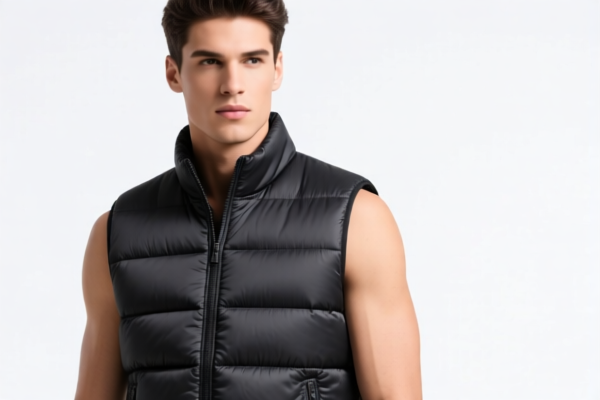


AI Analysis
🧥 Suede Jacket (Leather Apparel /麂皮夹克)
🌐 HS Code Reference & Customs Clearance Guide | 2026 Latest Tariff Analysis | Professional Clearance Strategy
📌 Part 1: Product Definition & Classification – Do You Really Know "Suede"?
A Suede Jacket is a garment made from suede, a type of leather with a napped finish. In international trade, the classification of leather apparel is highly sensitive to two factors: 1. Material Definition: Is it genuine leather (Chapter 41) or textile-based (Chapter 62)? 2. Product Form: Is it a finished garment (Chapter 42) or raw material/fabric?
⚠️ Key Distinction:
- If it is a finished jacket made from tanned leather (including suede) → It typically falls under Chapter 42 (Articles of Leather) or Chapter 41 (Leather + Clothing).
- If it is marketed as "textile suede" or classified as a generic textile garment without specific leather classification → It may fall under Chapter 62 (Articles of Apparel and Clothing Accessories, Not Knitted or Crocheted).
📦 Part 2: HS Code Classification Details (2026 Latest Tariff Authority Match)
Based on the provided data, here are the exact HS Codes and their corresponding tax implications for "Suede Jacket":
| HS Code | Product Description | Classification Logic | Total Tax Rate (US/CN) |
|---|---|---|---|
4203.10.40.60 |
Leather Jacket, Material: Leather, Form: Jacket | Matches classification requirements for finished leather garments. | 41.0% |
4203.10.40.30 |
Leather Jacket, Material: Leather, Form: Jacket | Fully matches classification requirements for finished leather garments. | 41.0% |
4107.11.70.40 |
Leather Jacket, Material: Leather, Category: Apparel | Matches successfully under leather goods + clothing use. | 15.0% |
4107.12.70.40 |
Leather Jacket, Satisfies Material & Clothing Use | Matches material and clothing purpose requirements. | 15.0% |
6211.49.80.90 |
Suede (Textile-based or treated as textile garment material) | Classified as textile material-made garment/fabric, matches classification. | 24.8% |
🔍 Critical Analysis:
-4203...Codes (41% Tax): These treat the item strictly as a finished leather article. This is the highest risk category due to high duties. -4107...Codes (15% Tax): These treat the item as Leather + Clothing. This is a preferred classification if the product can be legally defined as a "garment" rather than just a "leather article," significantly reducing tax burden. -6211...Code (24.8% Tax): This treats the item as a textile-based or generic apparel item. This applies if the "suede" is not genuine tanned leather but a synthetic/textile substitute, or if local customs require textile classification for certain suede types.
💰 Part 3: 2026 Latest Tariff Rate Breakdown (Including Add-ons & Policy Surcharges)
✅ Applicable Country: United States (US)
✅ Origin: China (CN)
✅ Effective Date: Includes subsequent imports subject to current trade policies.
🎯 1. High-Tariff Category: 4203.10.40.60 & 4203.10.40.30
Classification: Finished Leather Jackets
Total Tax Rate: 41.0%
| Item | Detail |
|---|---|
| Base Tariff | 6.0% |
| Section 301 Additional Tariff | 25.0% |
| Section 122 Tariff (IEEPA) | 10.0% |
| Total Effective Rate | 41.0% |
| Calculation Base | CIF Value × 41.0% |
| De Minimis Exemption | ❌ Not Eligible |
📌 Explanation:
- The 6.0% is the standard Most Favored Nation (MFN) duty for leather articles.
- The 25.0% is the Section 301 tariff imposed on Chinese goods.
- The 10.0% is the additional "122 Clause" tariff targeting specific Chinese imports.
- Total 41% is a heavy burden, requiring precise documentation to prove it is not misclassified.
🎯 2. Low-Tariff Category: 4107.11.70.40 & 4107.12.70.40
Classification: Leather Garments (Clothing)
Total Tax Rate: 15.0%
| Item | Detail |
|---|---|
| Base Tariff | 5.0% |
| Section 301 Additional Tariff | 0.0% |
| Section 122 Tariff (IEEPA) | 10.0% |
| Total Effective Rate | 15.0% |
| Calculation Base | CIF Value × 15.0% |
| De Minimis Exemption | ❌ Not Eligible |
📌 Strategic Advantage:
- The Section 301 (25%) is NOT applied to these specific codes (likely due to different legal interpretations or exemptions for leather garments vs. articles).
- Only the Base (5%) + 122 Clause (10%) apply.
- Savings: 26% less tax compared to the 4203 codes. This is a critical optimization point.
🎯 3. Medium-Tariff Category: 6211.49.80.90
Classification: Textile-Based Suede / Generic Apparel
Total Tax Rate: 24.8%
| Item | Detail |
|---|---|
| Base Tariff | 7.3% |
| Section 301 Additional Tariff | 7.5% |
| Section 122 Tariff (IEEPA) | 10.0% |
| Total Effective Rate | 24.8% |
| Calculation Base | CIF Value × 24.8% |
| De Minimis Exemption | ❌ Not Eligible |
📌 Note:
- This classification applies if the product is not considered "genuine leather" under Chapter 41/42, but rather a textile product.
- The Section 301 rate is lower (7.5% vs 25%) because textile apparel often has different trade policy treatments.
🛠️ Part 4: Customs Clearance Practical Advice (Field Avoidance Guide)
✅ 1. Documentation Checklist (Non-Negotiable)
| Document | Must Provide? | Purpose |
|---|---|---|
| ✅ Product Specification Sheet | ✔️ | Must explicitly state: "Suede" is Tanned Leather (if claiming 4107/4203) OR Textile (if claiming 6211). |
| ✅ Material Composition Label | ✔️ | Proof of material (e.g., "100% Suede Leather" vs. "Polyester Suede"). |
| ✅ Product Photos (Clear) | ✔️ | Show the nap (napped finish) to prove suede texture and garment structure. |
| ✅ Commercial Invoice | ✔️ | Description must match HS Code logic (e.g., "Men's Leather Jacket" vs. "Suede Garment"). |
| ✅ Certificate of Origin | ✔️ | Confirm CN origin to apply correct Section 301/122 rates. |
| ✅ Third-Party Lab Report | ✔️ | If disputed, a leather authenticity test can prevent misclassification penalties. |
✅ 2. Declaration Strategy (Key Mantras)
🔥 "Material Defines Chapter, Garment Defies 301, 4107 Saves 26%!"
| Scenario | Correct Declaration | Incorrect Declaration | Consequence |
|---|---|---|---|
| Genuine Leather Suede Jacket | HS 4107.11.70.40 (Leather Garment) |
HS 4203.10.40.60 (Leather Article) |
Overpay 26% tax |
| Textile/Synthetic Suede Jacket | HS 6211.49.80.90 (Textile Apparel) |
HS 4107... (Leather) |
Penalty for Fraud/Misclassification |
| Mixed Material (Leather + Textile) | Consult Customs Ruling | Generic "Jacket" | Delays or Rejection |
✅ 3. Special Case Handling
| Situation | Handling Advice |
|---|---|
| OEM Custom Jackets | Provide design sketches + material spec. Clarify if "suede" is genuine. |
| Leather Trim + Textile Body | Must declare based on principal material or specific composite rules. |
| "Suede" Ambiguity | If the supplier uses "suede" for faux leather, use HS 6211. Using leather codes for faux leather is fraud. |
| Kit/Unassembled | Declare as finished jacket if assembled upon import. |
🌍 Part 5: Global Market Comparison (2026 Update)
| Market | Recommended HS Code | Est. Duty | Note |
|---|---|---|---|
| 🇺🇸 USA | 4107.11.70.40 |
15.0% | Best rate for genuine leather garments. |
| 🇨🇳 China | 4203.10.40 |
~10-15% | Import duties vary; check FTAs. |
| 🇪🇺 EU | 4203.10 |
~12% | Standard MFN duty; no Section 301 equivalent. |
| 🇦🇺 Australia | 4203.10 |
~10% | GST applies separately. |
📌 Conclusion:
- USA is the most complex market due to Section 301 and 122 Clauses.
- Correctly classifying as4107(Leather Garment) instead of4203(Leather Article) saves 26% in the US.
- Ensure "Suede" is accurately described to avoid being forced into the higher4203or fraudulent4107categories.
📌 Part 6: Common Errors & Pitfalls (Lessons Learned)
❌ Error 1: Calling a Textile "Suede" a "Leather Jacket" to force HS 4107
👉 Consequence: Customs audit, penalty for fraud, possible seizure.
👉 Fix: If it’s not genuine leather, use 6211.
❌ Error 2: Classifying a Leather Jacket as 4203 when 4107 is available
👉 Consequence: Paying 41% instead of 15%.
👉 Fix: Provide proof that it is a garment (apparel) not just an article of leather.
❌ Error 3: Missing "122 Clause" Tariff in Calculation
👉 Consequence: Under-declared value, post-import assessment + interest.
👉 Fix: Always add 10% for IEEPA 122 Clause on CN-origin goods where applicable.
✅ Correct Declaration Example:
"Men's Suede Leather Jacket, 100% Genuine Leather, Tanned, Garment Type, Model XYZ, Made in China"
→ Use HS4107.11.70.40
🎯 Part 7: Conclusion – Precision Classification, Maximum Savings!
🎯 Remember:
🔹 "Suede is Leather, but Form Determines Chapter."
🔹 "4107 saves 26% over 4203 – don't leave money on the table."
🔹 "Textile Suede ≠ Leather – use HS 6211 to avoid fraud charges."
📌 Pro Tip:
If you are importing large volumes, apply for a Binding Ruling with US Customs (CBP) to confirm if your specific suede jacket qualifies for HS 4107 (15%) vs 4203 (41%). This provides legal certainty.
📣 Immediate Action:
📞 Consult your customs broker with material specs.
📄 Confirm if your supplier’s "suede" is genuine leather.
🚀 Optimize your HS Code to4107.11.70.40for maximum savings in the US.
✨ Professional Clearance Starts with Accurate Classification!
💼 Your Bottom Line Depends on These 10 Digits!
Customer Reviews
About HS Code Classification
The Harmonized System (HS) is an internationally standardized nomenclature developed by the World Customs Organization (WCO) to classify traded products. Over 200 countries use the HS system as the basis for customs tariffs, trade statistics, and import/export regulations.
Each HS code follows a hierarchical structure:
- Chapter (2 digits) — Broad category of goods (e.g., Chapter 84: Machinery and Mechanical Appliances)
- Heading (4 digits) — More specific grouping within the chapter
- Subheading (6 digits) — Internationally standardized breakdown, used by all WCO member countries
- National subdivisions (8-10 digits) — Country-specific extensions for further classification, such as US HTSUS 10-digit codes
Correct HS code classification is essential for smooth customs clearance, accurate duty payment, and compliance with trade regulations. Misclassification can lead to customs delays, overpayment of duties, or penalties.
When importing from CN to US, the applicable tariff rates may include:
- Most-Favored-Nation (MFN) rate — The standard duty rate applied to WTO members
- General rate — Applied to countries without trade agreements
- Trade remedy duties — Additional tariffs such as Section 301 (anti-dumping), Section 232 (national security), or countervailing duties
The information provided on this page is for reference purposes only. For official classification, please consult with your local customs authority or a licensed customs broker.