Suede Leather Jacket
CN → US| HS Code | Tariff Rate | Origin | Destination | Doc |
|---|---|---|---|---|
| 4107117040 | 15.0% | CN | US | Official Doc |
| 4107127040 | 15.0% | CN | US | Official Doc |
| 4203104060 | 41.0% | CN | US | Official Doc |
| 4203104030 | 41.0% | CN | US | Official Doc |
| 4107927090 | 15.0% | CN | US | Official Doc |
Product Images
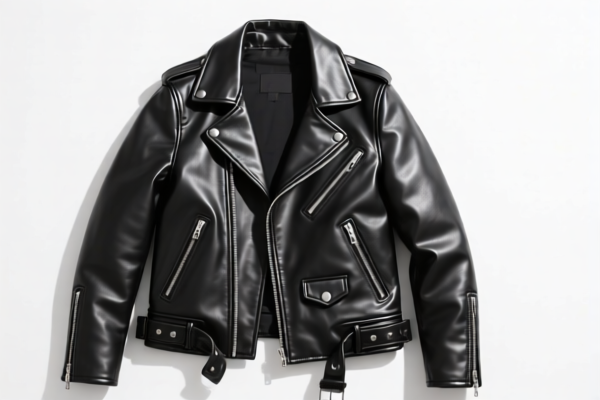
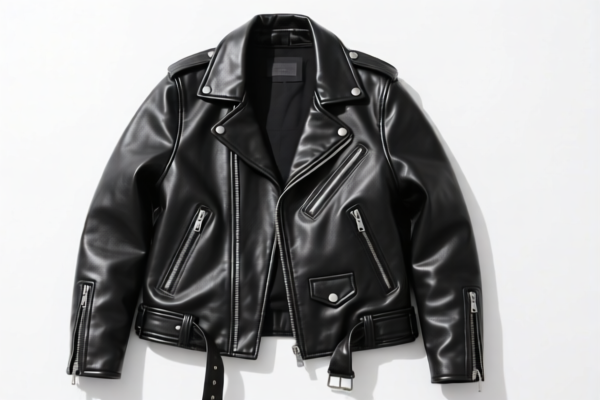
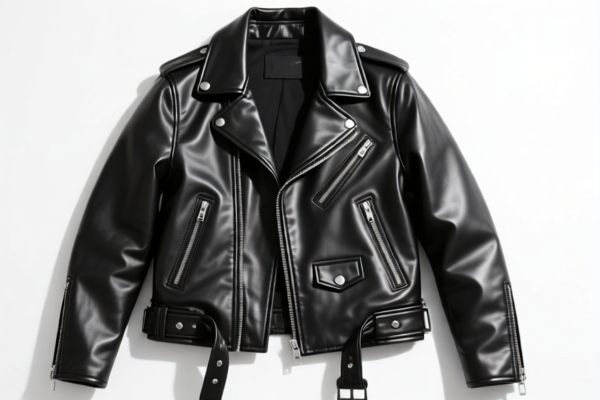
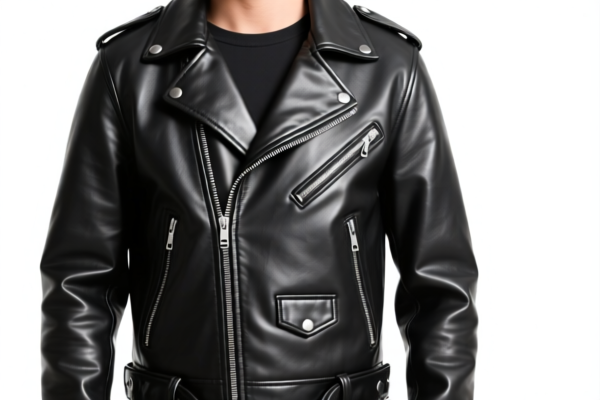
AI Analysis
🧥 Suede Leather Jacket (Leather Apparel)
🌐 HS Code Reference & Customs Clearance Guide | 2026 Latest Tariff Analysis | Professional Compliance Strategy
📌 I. Product Definition & Classification: Do You Really Know "Suede Leather Jacket"?
A Suede Leather Jacket is a high-end apparel item made from the underside of animal hide (typically lambskin, goatskin, or calfskin) which is sanded to produce a soft, velvety nap. In international trade, classification hinges on two critical factors: 1. Tanning Process: Specifically "Chrome Tanned" vs. "Other Tanned". 2. Chapter Boundary: Whether it is classified under Chapter 41 (Leather Articles) as "apparel" or Chapter 42 (Travel Goods/Leather Articles) as a specific "leather article/jacket" not covered in Chapter 41.
⚠️ Key Distinction:
- If classified under Chapter 41 (4107): Usually applies to specific chrome-tanned leathers intended primarily for apparel, often with lower base duties but subject to specific section notes. - If classified under Chapter 42 (4203): Applies to made-up leather articles (like finished jackets). Crucially, Chapter 42 items often attract higher "Section 301" tariffs and specific "122 Clause" surcharges depending on the origin and trade policy.
📦 II. HS Code Classification Matrix (2026 Latest Authority)
| HS Code | Product Description | Application Scenario | Tax Profile |
|---|---|---|---|
4107.11.70.40 |
Leather Jackets, Chrome-Tanned, With Furskin | Apparel use, Chrome-tanned cowhide/sheepskin | 🔵 Low Base Duty (5%) 🔴 High Total Tax (15%) |
4107.12.70.40 |
Leather Jackets, Chrome-Tanned, Other Than Furskin | Apparel use, Standard chrome-tanned leather | 🔵 Low Base Duty (5%) 🔴 High Total Tax (15%) |
4203.10.40.60 |
Made-Up Leather Articles (Jackets), Other Than Apparel Furskin | Finished jackets, Suede/Full-grain, Chapter 42 classification | 🔴 High Base Duty (6%) 🔴 High Section 301 (25%) 🔴 High 122 Clause (10%) |
4203.10.40.30 |
Made-Up Leather Articles (Jackets), With Furskin | Finished jackets, Suede with fur lining/trim | 🔴 High Base Duty (6%) 🔴 High Section 301 (25%) 🔴 High 122 Clause (10%) |
4203.92.70.90 |
Other Made-Up Leather Articles (Suede Products) | Non-apparel suede items or misc. leather goods | 🔵 Low Base Duty (5%) 🔴 High Total Tax (15%) |
🔍 Critical Note:
-4107Codes: Typically apply to leather that is "primarily for apparel" but classified under the leather chapter due to specific tanning definitions.
-4203Codes: The standard for finished leather garments (jackets).
- Why the Tariff Difference?
-4107: Base 5% + 122 Clause 10% = 15% Total.
-4203: Base 6% + Section 301 (25%) + 122 Clause (10%) = 41% Total.
- Misclassification Risk: Declaring a finished jacket as4107to save tax is high-risk. Customs requires strict adherence to the "Chapter 41 vs. Chapter 42" boundary. Generally, finished garments fall under 4203.
💰 III. 2026 Tariff Rate Breakdown (Including Surcharges)
✅ Applicable Country: United States (US)
✅ Origin: China (CN)
✅ Effective Date: 2025/2026 Trade Policies
🎯 1. 4107.11.70.40 & 4107.12.70.40 – Leather Jackets (Chrome-Tanned)
| Item | Details |
|---|---|
| Base Duty | 5.0% (Ad Valorem) |
| Section 301 Surcharge | 0.0% (Exempt or Not Applicable in this specific subheading context) |
| 122 Clause Surcharge | 10.0% (Specific anti-dumping/countervailing or trade remedy duty) |
| Total Tax Rate | 15.0% |
| Calculation | CIF Value × 15% |
| De Minimis Exemption | ❌ Not Applicable (High risk of audit) |
| Legal Basis | USHTS 4107.11/12 + Section 122 Tariff Schedule |
📌 Explanation:
- These codes have a lower base duty (5%) but are still subject to the 10% 122 Clause surcharge.
- Note: This classification is often reserved for specific leather types not fully made-up as garments in the traditional sense, or specific trade agreements. For standard Suede Jackets, customs may reject this if they are fully assembled garments.
🎯 2. 4203.10.40.60 & 4203.10.40.30 – Made-Up Leather Jackets (Standard)
| Item | Details |
|---|---|
| Base Duty | 6.0% (Ad Valorem) |
| Section 301 Surcharge | 25.0% (USITC Footnote for Chinese Goods) |
| 122 Clause Surcharge | 10.0% (Additional trade remedy) |
| Total Tax Rate | 41.0% |
| Calculation | CIF Value × 41% |
| De Minimis Exemption | ❌ Denied |
| Legal Basis | USHTS 4203.10 + Section 301 (EO 13936) + 122 Clause |
📌 Explanation:
- This is the standard classification for finished leather jackets (including suede) imported from China.
- The 25% Section 301 tariff is the primary cost driver.
- The 10% 122 Clause is an additional punitive tariff often applied to specific categories of Chinese goods.
- Total Effective Rate: 41%. This is a high-cost classification.
🎯 3. 4203.92.70.90 – Other Suede Articles (Non-Jacket Specific)
| Item | Details |
|---|---|
| Base Duty | 5.0% |
| Section 301 Surcharge | 0.0% (If classified under different chapter notes) |
| 122 Clause Surcharge | 10.0% |
| Total Tax Rate | 15.0% |
| Calculation | CIF Value × 15% |
| Note | ⚠️ Only for non-apparel suede items. Misclassifying a jacket as "other article" to get 15% tax is fraudulent. |
🛠️ IV. Customs Clearance Practical Advice (Avoid Pitfalls)
✅ 1. Essential Documentation Checklist
| Document | Required | Description |
|---|---|---|
| ✅ Commercial Invoice | ✔️ | Must clearly state "Suede Leather Jacket", Material (e.g., Goat Suede), HS Code. |
| ✅ Packing List | ✔️ | Detail quantity, weight, and packaging. |
| ✅ Product Description | ✔️ | Must specify: "Leather Jacket, Chrome-Tanned Suede, With Lining, Brand XXX". |
| ✅ Tanning Certificate | ✔️ | Proves "Chrome-Tanned" status if claiming 4107 codes (high risk). |
| ✅ Material Composition | ✔️ | % of leather vs. lining (nylon/polyester). |
| ✅ Photo of Item | ✔️ | Clear front/back view showing label, stitching, and suede texture. |
✅ 2. Declaration Strategy (Key Mnemonic)
🔥 "Chapter 41 for Leather, Chapter 42 for Articles. Check the 25% Trap!"
| Scenario | Correct HS Code | Risk if Wrong |
|---|---|---|
| Finished Suede Jacket | 4203.10.40.60 |
41% Tax. If misdeclared as 4107 (15%), severe penalty + back taxes. |
| Chrome-Tanned Leather (Unfinished) | 4107.12.70.40 |
15% Tax. If it's a finished jacket, customs will reclassify to 4203. |
| Suede Gloves (Not Jacket) | 4203.92.70.90 |
15% Tax. Do not use jacket codes. |
| Leather Jacket with Fur Trim | 4203.10.40.30 |
41% Tax. Specific subheading for fur-skin articles. |
📌 Critical Advice:
- Do not attempt to classify a standard suede jacket under4107to save taxes. Customs data models flag high-value apparel under 4107.
- Budget for 41%: For Chinese-origin suede jackets, assume a 41% total tariff.
- 122 Clause: Always verify if the 10% surcharge applies to your specific supplier and item.
✅ 3. Special Circumstances
| Situation | Handling Suggestion |
|---|---|
| Mixed Material | If lining is >50% by weight, does it change classification? No, leather content dominates. |
| OEM Branding | Provide OEM contracts. Helps prove origin and value, but does not reduce Section 301 tariffs. |
| Returns/Replacements | Ensure proper documentation to avoid double taxation. |
| Sample Imports | Still subject to duties unless value is extremely low and de minimis applies (but leather goods are often excluded). |
🌍 V. Global Market Comparison (2026)
| Market | Recommended HS Code | Est. Total Tax | Notes |
|---|---|---|---|
| 🇺🇸 USA | 4203.10.40.60 |
41% | High 301 + 122 Clause. |
| 🇨🇳 China | 4203.10.40.60 |
~10-13% | Import duties apply, but no Section 301. |
| 🇪🇺 EU | 4203.10.30 |
~12% | No Section 301, but standard tariff applies. |
| 🇬🇧 UK | 4203.10.30 |
~12% | Post-Brexit tariffs similar to EU. |
📌 Conclusion:
- The US market is the most expensive due to Section 301 (25%) and 122 Clause (10%).
- Total cost of landed goods could be 41% higher in the US compared to base duty.
- Consider supply chain diversification (e.g., manufacturing in Vietnam or Turkey) to avoid US-specific surcharges if targeting the US market.
📌 VI. Common Errors & Pitfalls (Lessons Learned)
❌ Error 1: Classifying finished suede jackets as 4107 to save 26% in taxes.
👉 Consequence: Customs audit, retroactive tax payment of 26% + penalties + interest.
❌ Error 2: Ignoring the "122 Clause".
👉 Consequence: Under-declaration of value/tax. The 10% surcharge is automatic for many Chinese leather goods.
❌ Error 3: Ambiguous product description ("Leather Jacket").
👉 Consequence: Customs officer may reclassify to a higher duty code or demand extensive proof of tanning method.
✅ Correct Practice:
"Suede Leather Jacket, Chrome-Tained Goat Suede, Fully Lined, Model XYZ, Made in China"
🎯 VII. Conclusion: Professional Declaration, Save Money, Stay Compliant!
🎯 Remember:
🔹 "Finished Jacket? Go to 4203. Expect 41% in the US."
🔹 "Don't risk it: Misclassification costs more than the tax savings."
🔹 "122 Clause is real: Add 10% on top of base + 301."
📌 Pro Tip:
If you are importing large volumes, consider Section 301 Exclusions (if still available for your specific HTS code) or Free Trade Agreements (e.g., from non-China origins).
Always obtain a Binding Ruling from US Customs (CBP) before shipment to confirm the exact HS code and duty rate.
📣 Immediate Action:
📞 Consult with a licensed customs broker.
📄 Prepare detailed product specs.
🚀 Accurate classification saves thousands!
✨ Professional Customs Clearance Starts with Precise Classification!
💼 Every dollar of duty should be calculated, not guessed!
Customer Reviews
About HS Code Classification
The Harmonized System (HS) is an internationally standardized nomenclature developed by the World Customs Organization (WCO) to classify traded products. Over 200 countries use the HS system as the basis for customs tariffs, trade statistics, and import/export regulations.
Each HS code follows a hierarchical structure:
- Chapter (2 digits) — Broad category of goods (e.g., Chapter 84: Machinery and Mechanical Appliances)
- Heading (4 digits) — More specific grouping within the chapter
- Subheading (6 digits) — Internationally standardized breakdown, used by all WCO member countries
- National subdivisions (8-10 digits) — Country-specific extensions for further classification, such as US HTSUS 10-digit codes
Correct HS code classification is essential for smooth customs clearance, accurate duty payment, and compliance with trade regulations. Misclassification can lead to customs delays, overpayment of duties, or penalties.
When importing from CN to US, the applicable tariff rates may include:
- Most-Favored-Nation (MFN) rate — The standard duty rate applied to WTO members
- General rate — Applied to countries without trade agreements
- Trade remedy duties — Additional tariffs such as Section 301 (anti-dumping), Section 232 (national security), or countervailing duties
The information provided on this page is for reference purposes only. For official classification, please consult with your local customs authority or a licensed customs broker.