Sugar Coffee Tea Storage Canister
CN → US| HS Code | Tariff Rate | Origin | Destination | Doc |
|---|---|---|---|---|
| 7310290065 | 85.0% | CN | US | Official Doc |
| 6912005000 | 16.0% | CN | US | Official Doc |
| 6912004890 | 19.8% | CN | US | Official Doc |
| 7310210075 | 85.0% | CN | US | Official Doc |
| 3924104000 | 13.4% | CN | US | Official Doc |
Product Images
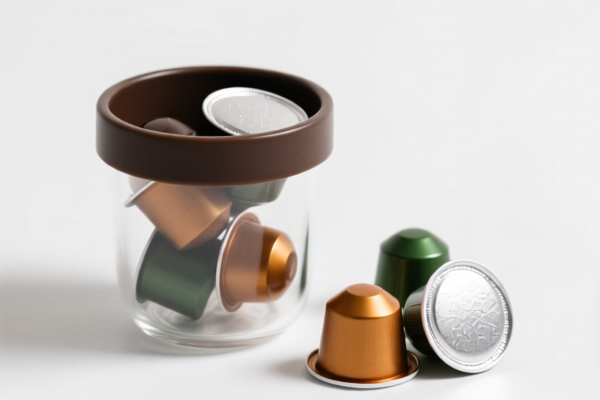
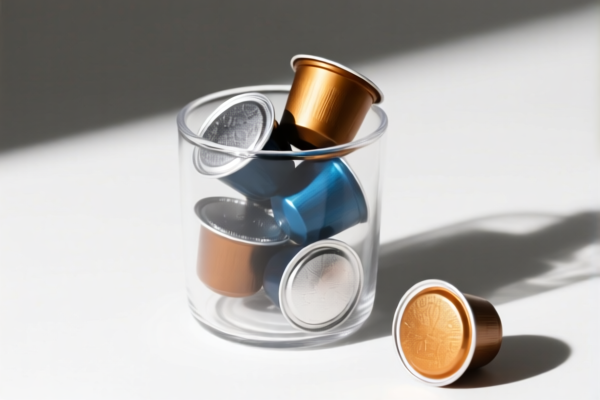
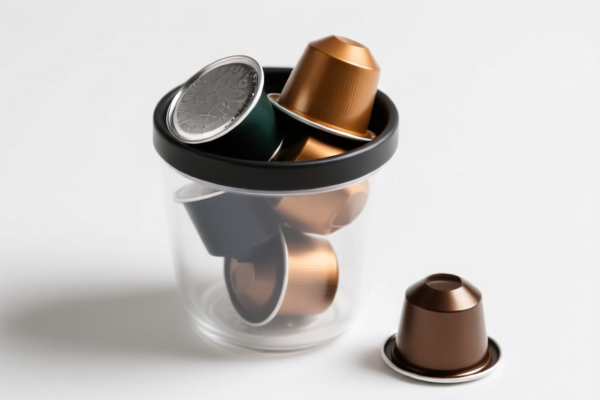
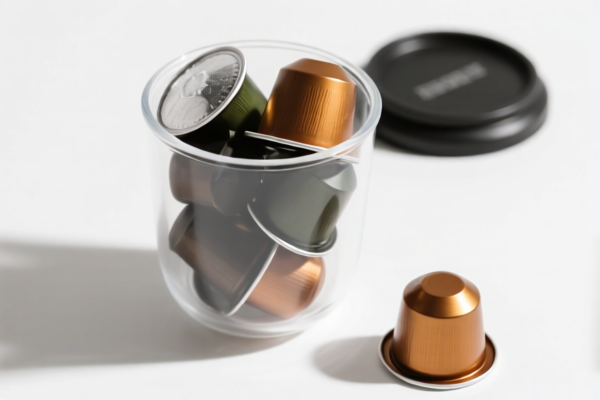
AI Analysis
🍯 Sugar, Coffee & Tea Storage Canisters: The Ultimate Classification & Tariff Guide
🌐 HS Code Reference & Customs Clearance Strategy | 2026 Latest Tariff Analysis | Professional通关 Strategy
📌 1. Product Definition: What Are We Talking About?
Sugar, Coffee, and Tea Storage Canisters are everyday household items used for storing dry goods, keeping them fresh, organized, and aesthetically pleasing in the kitchen or dining area. They vary widely in material:
- Ceramic/Porcelain: Elegant, often used for tea and sugar display.
- Plastic: Lightweight, common for daily use.
- Metal (Steel/Iron): Durable, often used for coffee or bulk storage.
⚠️ Key Classification Point:
- The HS Code depends primarily on the material of the container.
- If made of ceramic → Look at Chapter 69.
- If made of plastic → Look at Chapter 39.
- If made of metal → Look at Chapter 73.
📦 2. HS Code Classification Details (2026 Tariff Book)
| HS Code | Product Description | Material | Application |
|---|---|---|---|
6912.00.50.00 |
Ceramic or porcelain vessels, whether or not unglazed, for table, kitchen, toilet or other household purposes | Ceramic | Kitchen utensils, tableware |
6912.00.48.90 |
Ceramic or porcelain tableware or kitchenware | Ceramic | Household storage, decorative |
3924.10.40.00 |
Tableware and kitchenware, of plastics | Plastic | Everyday storage containers |
7310.29.00.65 |
Containers, of iron or steel, capacity <50 liters | Steel/Iron | Metal storage cans |
7310.21.00.75 |
Containers, of iron or steel, sealed by welding or crimping | Steel/Iron | Welded metal cans |
🔍 Important Notes:
- Ceramic canisters fall under 6912 (Tableware/Kitchenware).
- Plastic containers fall under 3924 (Tableware/Kitchenware of plastic).
- Metal containers fall under 7310 (Articles of iron or steel).
💰 3. 2026 Latest Tariff Rates Detailed Breakdown (Including Surcharge Policies)
✅ Applicable Country: United States (US)
✅ Country of Origin: China (CN)
✅ Effective Date: November 10, 2025 (and subsequent imports)
🎯 1. 6912.00.50.00 — Ceramic Kitchen/Tableware
| Item | Detail |
|---|---|
| Basic Tariff | 6.0% (ad valorem) |
| USITC Surcharge | 0.0% |
| IEEPA Surcharge (Section 122) | 10.0% |
| Total Tariff | 16.0% |
| Tax Calculation | CIF Value × 16.0% |
| De Minimis Exemption | ❌ Not Eligible |
| Legal Basis | IEEPA:9903.01.25 → IEEPA:9903.01.24 → USITC:6912.00.50.00 |
📌 Explanation:
- Ceramic tableware has a 6% base tariff.
- The 10% Section 122 tariff applies to Chinese-origin ceramic goods.
- No USITC 301 surcharge applies here.
🎯 2. 6912.00.48.90 — Ceramic Tableware/Kitchenware
| Item | Detail |
|---|---|
| Basic Tariff | 9.8% |
| USITC Surcharge | 0.0% |
| IEEPA Surcharge (Section 122) | 10.0% |
| Total Tariff | 19.8% |
| Tax Calculation | CIF Value × 19.8% |
| De Minimis Exemption | ❌ Not Eligible |
| Legal Basis | IEEPA:9903.01.25 → IEEPA:9903.01.24 → USITC:6912.00.48.90 |
📌 Note:
- Slightly higher basic tariff than6912.00.50.00.
- Same 10% Section 122 surcharge applies.
🎯 3. 3924.10.40.00 — Plastic Tableware/Kitchenware
| Item | Detail |
|---|---|
| Basic Tariff | 3.4% |
| USITC Surcharge | 0.0% |
| IEEPA Surcharge (Section 122) | 10.0% |
| Total Tariff | 13.4% |
| Tax Calculation | CIF Value × 13.4% |
| De Minimis Exemption | ❌ Not Eligible |
| Legal Basis | IEEPA:9903.01.25 → IEEPA:9903.01.24 → USITC:3924.10.40.00 |
📌 Note:
- Plastic containers have the lowest basic tariff among the three materials.
- Still subject to the 10% Section 122 surcharge.
🎯 4. 7310.29.00.65 — Steel/Iron Containers (<50 Liters)
| Item | Detail |
|---|---|
| Basic Tariff | 0.0% |
| USITC Surcharge | 25.0% |
| IEEPA Surcharge (Section 122) | 10.0% + 50% (Steel/Aluminum/Copper Surcharge) |
| Total Tariff | 85.0% |
| Tax Calculation | CIF Value × 85.0% |
| De Minimis Exemption | ❌ Not Eligible |
| Legal Basis | IEEPA:9903.01.25 → IEEPA:9903.01.24 → USITC:7310.29.00.65 → FOOTNOTE:Steel/Aluminum |
📌 Warning:
- Metal containers face extremely high tariffs due to Section 232 (Steel/Aluminum) and Section 301 surcharges.
- 85% total tariff is a major cost factor.
🎯 5. 7310.21.00.75 — Welded/Crimped Steel Containers
| Item | Detail |
|---|---|
| Basic Tariff | 0.0% |
| USITC Surcharge | 25.0% |
| IEEPA Surcharge (Section 122) | 10.0% + 50% (Steel/Aluminum/Copper Surcharge) |
| Total Tariff | 85.0% |
| Tax Calculation | CIF Value × 85.0% |
| De Minimis Exemption | ❌ Not Eligible |
| Legal Basis | IEEPA:9903.01.25 → IEEPA:9903.01.24 → USITC:7310.21.00.75 → FOOTNOTE:Steel/Aluminum |
📌 Note:
- Same high tariff as7310.29.00.65.
- Welding/crimping method does not reduce tariff.
🛠️ 4. Customs Clearance Practical Advice (Real-World Pitfall Guide)
✅ 1. Required Documentation Checklist
| Document | Required | Explanation |
|---|---|---|
| ✅ Product Specification Sheet | ✔️ | Material, dimensions, capacity, intended use |
| ✅ Product Photos (Including Label) | ✔️ | Show material type, brand, capacity |
| ✅ Commercial Invoice | ✔️ | Clearly state “Storage Canister for Sugar/Coffee/Tea” |
| ✅ Packing List | ✔️ | Show packaging details, avoid mixed materials |
| ✅ Certificate of Origin (CO) | ✔️ | If non-Chinese origin, may qualify for lower rates |
✅ 2. Declaration Tips (Key Mantras)
🔥 “Material Defines HS, Label Clearly, Avoid Mixed Claims!”
| Scenario | Correct Declaration | Wrong Practice |
|---|---|---|
| Ceramic Canister | 6912.00.50.00 |
Misclassified as plastic → Wrong tax |
| Plastic Canister | 3924.10.40.00 |
Misclassified as ceramic → Higher tax |
| Metal Canister | 7310.29.00.65 |
Misclassified as plastic → 85% penalty |
| Mixed Material (e.g., Ceramic with Metal Lid) | Classify by Primary Material | Split declaration → Higher complexity |
✅ 3. Special Cases Handling
| Scenario | Handling Advice |
|---|---|
| OEM Custom Canisters | Provide client order + design drawings to avoid “non-standard” classification |
| Multi-Material Canisters | Classify by primary material; if mixed, consult customs broker |
| Canisters with Lids/Seals | Still classified by main body material |
| Decorative vs. Functional | Both fall under same HS Code; focus on material |
🌍 5. Global Market Comparison (2026 Latest)
| Country/Region | Recommended HS Code | Tariff | Certification | Note |
|---|---|---|---|---|
| 🇺🇸 USA | 6912.00.50.00 (Ceramic) |
16% | None | Metal: 85% |
| 🇨🇳 China | 6912.00.50.00 |
5-9% | CCC (if applicable) | No surcharge |
| 🇪🇺 EU | 6912.00.50.00 |
0-6% | CE (if electrical) | No surcharge |
| 🇦🇺 Australia | 6912.00.50.00 |
5% | RCM (if electrical) | No surcharge |
| 🇯🇵 Japan | 6912.00.50.00 |
0% | PSE (if electrical) | No surcharge |
📌 Conclusion:
- USA imposes high tariffs on metal canisters (85%) due to steel/aluminum surcharges.
- Ceramic and plastic are more cost-effective for US imports.
- Other markets have no or low surcharges, making them easier for metal exports.
📌 6. Common Mistakes & Pitfall Guide (Lessons Learned)
❌ Mistake 1: Misclassifying metal canisters as plastic or ceramic
👉 Consequence: 85% tariff instead of 13-20% → Huge cost increase!
❌ Mistake 2: Using vague descriptions like “Storage Container”
👉 Consequence: Customs cannot determine material → Delay or rejection
❌ Mistake 3: Failing to specify material in declaration
👉 Consequence: Customs assigns worst-case HS Code → Higher tax
✅ Correct Practice:
“Ceramic Tea Canister, 500ml, White, Glazed, Model ABC”
“Plastic Coffee Storage Bin, 1L, BPA-Free, Model XYZ”
“Steel Sugar Canister, 2L, Welded, Model 123”
🎯 7. Conclusion: Accurate Classification Saves Money!
🎯 Remember the Mantra:
🔹 “Material is King, HS Code Follows, Tariff Depends on Origin!”
🔹 “Metal Faces 85%, Ceramic/Plastic Face 13-20%, Choose Wisely!”
📌 Pro Tip:
If your canisters are originating from Vietnam, Mexico, Thailand, or Malaysia, you may qualify for IEEPA exemptions or lower tariffs.
Recommend pre-clearance rulings (Advance Ruling) to avoid clearance risks.
📣 Immediate Action:
📞 Contact a professional customs broker + Provide product photos + Apply for HS Code pre-ruling
🚀 Ensure smooth clearance, efficient export, and maximized profits!
✨ Professional clearance starts with accurate classification!
💼 Every cent of cost deserves precise calculation!
Customer Reviews
About HS Code Classification
The Harmonized System (HS) is an internationally standardized nomenclature developed by the World Customs Organization (WCO) to classify traded products. Over 200 countries use the HS system as the basis for customs tariffs, trade statistics, and import/export regulations.
Each HS code follows a hierarchical structure:
- Chapter (2 digits) — Broad category of goods (e.g., Chapter 84: Machinery and Mechanical Appliances)
- Heading (4 digits) — More specific grouping within the chapter
- Subheading (6 digits) — Internationally standardized breakdown, used by all WCO member countries
- National subdivisions (8-10 digits) — Country-specific extensions for further classification, such as US HTSUS 10-digit codes
Correct HS code classification is essential for smooth customs clearance, accurate duty payment, and compliance with trade regulations. Misclassification can lead to customs delays, overpayment of duties, or penalties.
When importing from CN to US, the applicable tariff rates may include:
- Most-Favored-Nation (MFN) rate — The standard duty rate applied to WTO members
- General rate — Applied to countries without trade agreements
- Trade remedy duties — Additional tariffs such as Section 301 (anti-dumping), Section 232 (national security), or countervailing duties
The information provided on this page is for reference purposes only. For official classification, please consult with your local customs authority or a licensed customs broker.