Suit
CN → US| HS Code | Tariff Rate | Origin | Destination | Doc |
|---|---|---|---|---|
| 6203119000 | 35.0% | CN | US | Official Doc |
| 6203122010 | 44.8% | CN | US | Official Doc |
| 6103103000 | 45.7% | CN | US | Official Doc |
Product Images



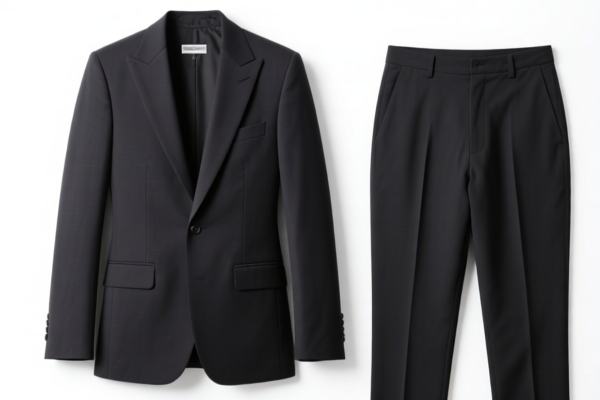
AI Analysis
🕴️ Suit (Formal Wear for Men & Women)
🌐 HS Code Reference & Clearance Guide | 2026 Latest Tariff Analysis | Professional Strategy
📌 I. Product Definition & Classification: Do You Really Understand "Suits"?
A Suit is a coordinated set of outerwear garments consisting of a jacket and trousers (or skirt), designed for formal, professional, or semi-formal occasions. In international trade, suits are classified based on:
- Material composition (wool, synthetic fibers, etc.)
- Construction type (knitted vs. woven)
- Intended use and form (men’s, women’s, sets vs. separates)
⚠️ Key Classification Criteria:
- Woven suits (not knitted): Typically fall under Chapter 62.
- Knitted suits: Fall under Chapter 61.
- Material matters: Wool blends, synthetic fibers, and mixed materials have different HS codes and tax implications.
- Set vs. Separate: If the jacket and pants are sold together as a "set," they are often classified under specific suit codes; otherwise, they may be classified separately.
📦 II. HS Code Classification Details (2026 Latest Tariff Reference)
| HS Code | Product Description | Applicable Scenario | Material Inference |
|---|---|---|---|
6203.11.90.00 |
Suits, tailored form and purpose, material unspecified, inferred from other categories | General formal suits (men’s), woven, synthetic or mixed | Likely synthetic or mixed (not wool) |
6203.12.20.10 |
Suits, classified as "sets", no material conflict, inferred as synthetic or other | Men’s woven suit sets (jacket + trousers) | Likely synthetic fibers or blends |
6103.10.30.00 |
Suits, form and purpose match, no material detail, inferred as synthetic | Knitted suits (men’s), formal or semi-formal | Likely synthetic or blended knit |
🔍 Key Reminder:
- All woven suits (not knitted) should be classified under Chapter 62.
- All knitted suits should be classified under Chapter 61.
- If the material is wool, the tax rate may differ; if synthetic, higher tariffs apply.
- Sets (jacket + pants) are often classified differently from separates.
💰 III. 2026 Latest Tariff Rate Breakdown (Including Additional Taxes & Policy Surcharges)
✅ Applicable Country: United States (US)
✅ Country of Origin: China (CN)
✅ Effective Date: November 10, 2025 (and subsequent imports)
🎯 1. 6203.11.90.00 — Woven Suit (Men’s, Unspecified Material)
| Item | Details |
|---|---|
| Base Tariff | 17.5% |
| Section 301 Tariff | +7.5% |
| Section 122 Tariff | +10% |
| Total Tariff | 35.0% |
| Tax Calculation | CIF Value × 35.0% |
| De Minimis Exemption | ❌ Not applicable |
| Legal Basis | Section 301 + Section 122 + Base Tariff |
📌 Explanation:
- Base Tariff (17.5%): Standard import duty for woven suits.
- Section 301 Tariff (7.5%): Additional tariff on Chinese goods.
- Section 122 Tariff (10%): Additional tariff under the "Section 122" provision.
- Total: 35.0% — High tax burden, requires advance planning.
🎯 2. 6203.12.20.10 — Woven Suit Set (Synthetic or Other Material)
| Item | Details |
|---|---|
| Base Tariff | 27.3% |
| Section 301 Tariff | +7.5% |
| Section 122 Tariff | +10% |
| Total Tariff | 44.8% |
| Tax Calculation | CIF Value × 44.8% |
| De Minimis Exemption | ❌ Not applicable |
| Legal Basis | Section 301 + Section 122 + Base Tariff |
📌 Note:
- Base Tariff (27.3%) is higher due to synthetic or other materials.
- Total: 44.8% — Very high tax, especially for suit sets.
- Even if the suit is "knit-like," if classified as woven, this rate applies.
🎯 3. 6103.10.30.00 — Knitted Suit (Synthetic or Other Material)
| Item | Details |
|---|---|
| Base Tariff | 28.2% |
| Section 301 Tariff | +7.5% |
| Section 122 Tariff | +10% |
| Total Tariff | 45.7% |
| Tax Calculation | CIF Value × 45.7% |
| De Minimis Exemption | ❌ Not applicable |
| Legal Basis | Section 301 + Section 122 + Base Tariff |
📌 Warning:
- Knitted suits have the highest tariff (45.7%).
- If the suit is knit and made of synthetic fibers, expect the highest duty.
- Avoid misclassification as woven suits to prevent penalties.
🛠️ IV. Customs Clearance Practical Advice (Avoid Pitfalls)
✅ 1. Document Preparation Checklist (Mandatory)
| Document | Required | Description |
|---|---|---|
| ✅ Product Specification Sheet | ✔️ | Include material composition, weight, dimensions, stitching type |
| ✅ Photos (Front, Back, Inside Labels) | ✔️ | Show brand, care label, material tags |
| ✅ Composition Certificate | ✔️ | From manufacturer or third-party lab |
| ✅ Commercial Invoice | ✔️ | Clearly state "Men’s Suit" or "Women’s Suit" |
| ✅ Packing List | ✔️ | Show set composition (jacket + pants) |
| ✅ Country of Origin Certificate | ✔️ | Required for tariff verification |
| ✅ Test Reports (if applicable) | ✔️ | Fire safety, textile testing, etc. |
✅ 2. Declaration Strategy (Key Tips)
🔥 "Know Your Material, Know Your Code, Avoid Overpaying!"
| Scenario | Correct Declaration | Wrong Declaration |
|---|---|---|
| Woven suit (jacket + pants set) | 6203.12.20.10 |
Misclassify as 6103.10.30.00 → 45.7% |
| Knitted suit (synthetic) | 6103.10.30.00 |
Misclassify as 6203.11.90.00 → 35.0% |
| Wool suit (if applicable) | Different HS Code (not in list) | Assume synthetic → 44.8%+ |
| Suit sold as separates | Classify jacket and pants separately | Declare as "suit set" → Higher tax |
✅ 3. Special Cases Handling
| Scenario | Recommendation |
|---|---|
| Custom-made suits | Provide design specs to justify classification |
| Suits with pockets, linings, or special features | Still classify based on material and knit/woven status |
| Suits for special occasions (e.g., military, uniforms) | May qualify for special classification; need proof |
| Suits made in third countries (Vietnam, Mexico, etc.) | May be eligible for IEEPA exemption; apply in advance |
🌍 V. Global Market Comparison (2026 Tariffs)
| Country/Region | Recommended HS Code | Tariff | Certification | Notes |
|---|---|---|---|---|
| 🇺🇸 United States | 6103.10.30.00 / 6203.12.20.10 |
35%–45.7% | N/A | High tariff on Chinese suits |
| 🇨🇳 China | 6103.10.30.00 / 6203.12.20.10 |
5%–10% | CCC | No additional tariffs |
| 🇪🇺 European Union | 6103.10.30.00 / 6203.12.20.10 |
0%–12% | CE, REACH | No Section 301 or 122 |
| 🇦🇺 Australia | 6103.10.30.00 / 6203.12.20.10 |
5% | RCM | Lower tariffs |
| 🇯🇵 Japan | 6103.10.30.00 / 6203.12.20.10 |
0% | PSE | No added tariffs |
📌 Conclusion:
- The U.S. imposes the highest tariffs on Chinese suits, especially knitted and synthetic ones.
- China, EU, and other markets are more tariff-friendly.
- Consider relocating production to Vietnam, Mexico, or other countries to avoid Section 301 and 122 tariffs.
📌 VI. Common Mistakes & Pitfalls (Learn from Others’ Pain Points)
❌ Mistake 1: Declaring a knitted suit as a woven suit
👉 Result: Lower tax initially, then penalties + back taxes upon audit.
❌ Mistake 2: Not specifying material composition on invoices
👉 Result: Customs may reclassify → Higher tax + delays.
❌ Mistake 3: Declaring suit separates as a suit set
👉 Result: Incorrect tariff application → Overpayment or underpayment.
❌ Mistake 4: Using generic terms like "Formal Wear" without HS Code
👉 Result: Customs may apply default rate → Unnecessary cost.
✅ Best Practice:
"Men’s Woven Suit Set, 100% Polyester, Jacket + Trousers, Made in China, HS Code: 6203.12.20.10"
🎯 VII. Final Words: Precision Classification = Cost Savings!
🎯 Remember the Mantra:
🔹 “Material Matters, Knit vs Woven Count, Set vs Separate Pays.”
🔹 “HS Code Saves or Kills, 10% tax diff means thousands in profit.”
📌 Pro Tip:
If your suits are originated from Vietnam, Mexico, Thailand, Malaysia, you may be exempt from Section 301 and 122 tariffs, with rates as low as 0%–5%.
Apply for Advance Ruling to avoid clearance delays.
📣 Take Action Now:
📞 Contact a licensed customs broker + Provide product photos + specs + Apply for HS Code Pre-Ruling
🚀 Let your suits clear customs smoothly, boost profit, and scale globally!
✨ Precision in Classification, Power in Savings!
💼 Every dollar saved starts with the right HS Code!
Customer Reviews
About HS Code Classification
The Harmonized System (HS) is an internationally standardized nomenclature developed by the World Customs Organization (WCO) to classify traded products. Over 200 countries use the HS system as the basis for customs tariffs, trade statistics, and import/export regulations.
Each HS code follows a hierarchical structure:
- Chapter (2 digits) — Broad category of goods (e.g., Chapter 84: Machinery and Mechanical Appliances)
- Heading (4 digits) — More specific grouping within the chapter
- Subheading (6 digits) — Internationally standardized breakdown, used by all WCO member countries
- National subdivisions (8-10 digits) — Country-specific extensions for further classification, such as US HTSUS 10-digit codes
Correct HS code classification is essential for smooth customs clearance, accurate duty payment, and compliance with trade regulations. Misclassification can lead to customs delays, overpayment of duties, or penalties.
When importing from CN to US, the applicable tariff rates may include:
- Most-Favored-Nation (MFN) rate — The standard duty rate applied to WTO members
- General rate — Applied to countries without trade agreements
- Trade remedy duties — Additional tariffs such as Section 301 (anti-dumping), Section 232 (national security), or countervailing duties
The information provided on this page is for reference purposes only. For official classification, please consult with your local customs authority or a licensed customs broker.