Suitcase
CN → US| HS Code | Tariff Rate | Origin | Destination | Doc |
|---|---|---|---|---|
| 4202122120 | 55.0% | CN | US | Official Doc |
| 3923109000 | 38.0% | CN | US | Official Doc |
| 3923900080 | 38.0% | CN | US | Official Doc |
| 4202122150 | 55.0% | CN | US | Official Doc |
| 4202999000 | 55.0% | CN | US | Official Doc |
Product Images
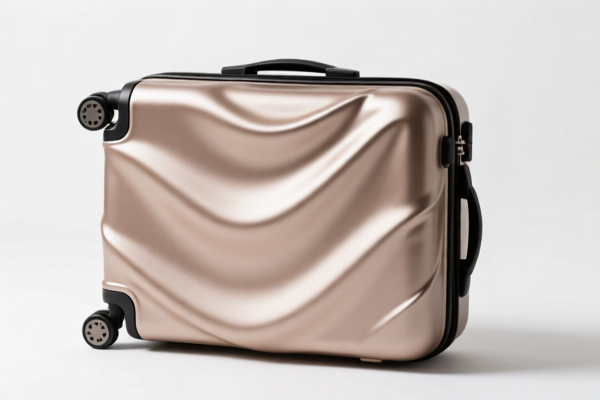
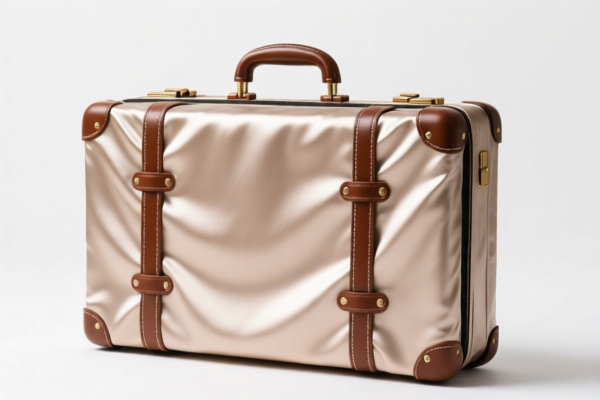
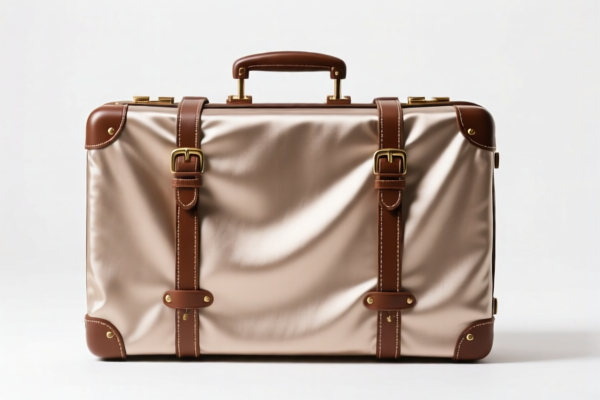
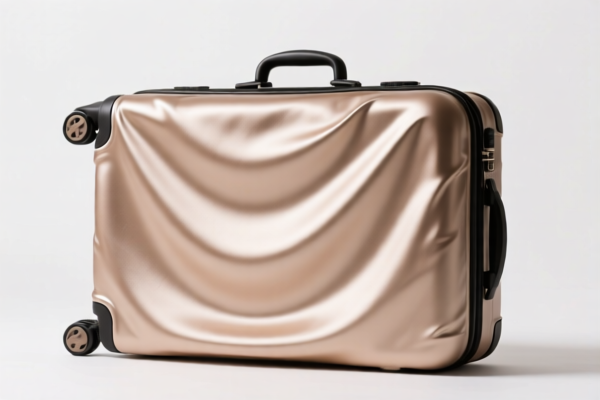
AI Analysis
🧳 SUITCASE (Travel Goods & Luggage) – The Ultimate HS Code & Taxation Guide
🌐 HS Code Reference & Customs Clearance Guide | 2026 Latest Tariff Analysis | Professional Clearance Strategy
📌 I. Product Definition & Classification: Do You Really Know "Suitcases"?
A suitcase is not just a container; it is a highly regulated trade good defined by its function (carrying personal belongings for travel) and its material (leather, plastics, textiles). In international trade, customs authorities do not look at the "handle" or the "wheels" alone—they look at the primary material composition and the specific chapter of the Harmonized System (HS).
⚠️ Critical Distinction:
- Chapter 42 (Travel Goods): Applies if the suitcase is made of leather, leather substitutes, or textile materials. It is classified as "Trunks, suitcases, vanity cases, etc."
- Chapter 39 (Plastics): Applies if the suitcase is made primarily of plastic or plastic-coated materials. It is classified as "Articles of plastics for packing, storage, or transport."💡 Key Rule:
- If it’s Leather/Fabric → Go to HS 4202.
- If it’s Hard Plastic/Polycarbonate → Go to HS 3923.
- Misclassification is the #1 cause of customs holds and penalties.
📦 II. HS Code Classification Matrix (2026 Latest Tariff Data)
Based on the provided , here is the precise breakdown for Suitcases:
| HS Code | Summary / Description | Material/Category | Total Tax Rate | Tax Breakdown |
|---|---|---|---|---|
4202.12.21.20 |
Trunks/Suitcases; Plastic or Leather containers | Leather, Leather Substitute, or Textile | 55.0% | Base: 20% + Sec 301: 25% + Sec 122: 10% |
3923.10.90.00 |
Suitcases as "Boxes, Cases, Crates" for packaging; Plastic/Coated | Plastic, Plastic-Coated, or Synthetic | 38.0% | Base: 3% + Sec 301: 25% + Sec 122: 10% |
3923.90.00.80 |
Suitcases for Transport/Packaging; Other Plastic Categories | Plastic or Similar Plastic Materials | 38.0% | Base: 3% + Sec 301: 25% + Sec 122: 10% |
4202.12.21.50 |
Trunks/Suitcases; Plastic, Leather, or Textile materials | Mixed Materials (Primary: Leather/Textile) | 55.0% | Base: 20% + Sec 301: 25% + Sec 122: 10% |
4202.99.90.00 |
Storage Cases (Non-Specific); Plastic, Textile, or Cardboard | General Storage/Container (If deemed "Suitcase" under Ch 42) | 55.0% | Base: 20% + Sec 301: 25% + Sec 122: 10% |
🔍 Key Insight:
- Chapter 42 Codes (4202...) are significantly more expensive (55%) due to the higher Base Tariff (20%).
- Chapter 39 Codes (3923...) are cheaper (38%) because the Base Tariff is only 3%, though they still suffer from the same additive taxes.
- Sec 122 Tariff: A new/variable duty often applied to specific goods from China, adding 10% on top.
💰 III. 2026 Tariff Rate Detailed Breakdown
✅ Applicable Country: United States (US)
✅ Origin: China (CN)
✅ Effective Date: Post-November 2025
🎯 1. The "Luxury/Textile" Route: HS Codes 4202.12.21.20 & 4202.12.21.50
(For Leather, Faux Leather, or Fabric Suitcases)
| Component | Rate | Legal Basis / Description |
|---|---|---|
| Base Tariff | 20.0% | General Rate of Duty for Travel Goods (Chapter 42) |
| Section 301 Tariff | 25.0% | Additional duty on Chinese imports (List 3/4A) |
| Section 122 Tariff | 10.0% | Additional duty for specific goods (often related to trade policy adjustments) |
| TOTAL EFFECTIVE RATE | 55.0% | High Risk / High Cost |
📌 Explanation:
- Suitcases made of leather or textile materials are classified as "travel goods."
- These goods attract a 20% base tariff, which is significantly higher than plastic goods.
- Combined with 301 (25%) and 122 (10%), the landed cost increases by more than half.
- No De Minimis Exemption: These goods are not eligible for the $800 de minimis exemption if imported in bulk or high value.
🎯 2. The "Plastic/Hard Shell" Route: HS Codes 3923.10.90.00 & 3923.90.00.80
(For Polycarbonate, ABS, or Plastic-Coated Suitcases)
| Component | Rate | Legal Basis / Description |
|---|---|---|
| Base Tariff | 3.0% | General Rate for Plastic Articles for Packing/Transport (Chapter 39) |
| Section 301 Tariff | 25.0% | Additional duty on Chinese imports |
| Section 122 Tariff | 10.0% | Additional duty for specific goods |
| TOTAL EFFECTIVE RATE | 38.0% | Moderate Risk / Lower Cost |
📌 Explanation:
- Suitcases made primarily of plastic are classified as "articles of plastics for packing, storage, or transport."
- The base tariff is only 3%, making it 17% cheaper than leather/fabric suitcases.
- However, the 301 and 122 duties remain the same (35% total add-ons).
- Customs Alert: If the suitcase has significant metal fittings, leather handles, or textile lining, customs may reclassify it to Chapter 42, triggering the 55% rate.
🛠️ IV. Customs Clearance Practical Advice (Real-World Pitfall Avoidance)
✅ 1. Documentation Checklist (Non-Negotiable)
| Document | Required? | Purpose |
|---|---|---|
| ✅ Product Specifications | YES | Must clearly state Material Composition (e.g., "100% Polycarbonate Shell," "Canvas Body with Leather Trim"). |
| ✅ Product Photos | YES | Clear images of the entire suitcase, including zippers, handles, and wheels. |
| ✅ Commercial Invoice | YES | Must specify the HS Code and Country of Origin. |
| ✅ Packing List | YES | Detailed breakdown of contents (e.g., "Suitcase only" vs. "Suitcase + Power Bank"). |
| ✅ Certificate of Origin | Conditional | If applicable, to prove origin for trade agreement benefits (though limited for China-US). |
✅ 2. Declaration Strategy (The "Material Matters" Rule)
| Scenario | Correct HS Code | Wrong Code | Consequence |
|---|---|---|---|
| Hard Shell Suitcase (Plastic) | 3923.10.90.00 |
4202.12.21.20 |
Overpayment of 17% (55% vs 38%). Customs may refund, but delays are inevitable. |
| Soft Shell Suitcase (Fabric/Leather) | 4202.12.21.20 |
3923.10.90.00 |
Underpayment Penalty. Customs will assess the higher 55% rate + penalties. |
| Mixed Material (e.g., Leather Handles + Plastic Body) | Depends on Primary Character | Guessing | If leather handles are significant, may be reclassified to Chapter 42 (55%). |
| Suitcase with Wheels & Telescopic Handle | Still HS 4202/3923 | 8714 (Vehicle Parts) |
Misclassification. Wheels on luggage are not "vehicle parts." |
🔥 Golden Rule:
"If it's Plastic, it's Chapter 39. If it's Leather/Fabric, it's Chapter 42. Never guess!"
✅ 3. Special Considerations for 2026
| Issue | Recommendation |
|---|---|
| Section 122 Tariff Volatility | This 10% duty is subject to change. Monitor USITC bulletins weekly before shipping. |
| De Minimis Loopholes | Do not rely on the $800 de minimis exemption for commercial shipments. Customs is cracking down on "suitcase bundles" split into multiple small parcels. |
| Origin Marking | Ensure "Made in China" is clearly marked on the suitcase. Failure to mark can result in 6% penalty on top of duties. |
| Hybrid Materials | If the suitcase is 50% Plastic, 50% Textile, consult a customs broker. The "essential character" test will determine the chapter. |
🌍 V. Global Market Comparison (2026)
| Destination | HS Code | Base Tariff | Total Rate (with 301/122) | Notes |
|---|---|---|---|---|
| 🇺🇸 USA | 4202.12.21.20 / 3923.10.90.00 |
20% / 3% | 55% / 38% | High tariffs due to trade policy. |
| 🇪🇺 EU | 4202.12.00 / 3923.10.00 |
4% / 0% | 4% / 0% | No Section 301/122 equivalents. Much cheaper. |
| 🇬🇧 UK | 4202.12.00 / 3923.10.00 |
4% / 0% | 4% / 0% | Post-Brexit, no additional Chinese tariffs. |
| 🇨🇳 China | 4202.12.00 / 3923.10.00 |
20% / 3% | 20% / 3% | No additional Section 301/122 duties. |
| 🇯🇵 Japan | 4202.12.00 / 3923.10.00 |
0% / 0% | 0% / 0% | Free Trade Agreement (EPA) may apply. |
📌 Conclusion:
- The USA is the most expensive market for suitcases due to the 35% in additive tariffs (301 + 122).
- Consider supply chain diversification (e.g., manufacturing in Vietnam, Thailand, or Mexico) to bypass US tariffs.
- For B2B bulk imports, the 17% difference between Plastic (38%) and Leather/Fabric (55%) is a major cost factor.
📌 VI. Common Mistakes & Blood-Crying Lessons
❌ Mistake 1: Declaring a Leather Handle Suitcase as "Plastic" to save 17%.
👉 Result: Customs inspection reveals leather content >10% by weight/value. Penalty + Back Duties.
❌ Mistake 2: Splitting a shipment of 100 suitcases into 10 shipments of 10 to use De Minimis.
👉 Result: CBP (Customs and Border Protection) flags "fragmented shipments." All 100 items seized or taxed.
❌ Mistake 3: Ignoring Section 122 Tariff.
👉 Result: Assuming only 301 (25%) applies. Unexpected 10% charge at port.
✅ Correct Action:
"Declare Material Accurately, Pay the Right Duty, Avoid the Penalty."
🎯 VII. Final Recommendations: Save Money, Clear Faster
- For Plastic Suitcases: Use
3923.10.90.00(38% total). It’s the most cost-effective for hard-shell travel goods. - For Leather/Fabric Suitcases: Use
4202.12.21.20(55% total). Budget accordingly. - For Mixed Materials: Consult a customs broker to determine "essential character" before shipping.
- For High-Value Imports: Apply for Advance Ruling from US CBP to lock in the HS Code and tariff rate.
- Supply Chain Strategy: If shipping to the US, consider manufacturing in non-China countries to avoid 301 (25%) and 122 (10%) tariffs entirely.
📣 Immediate Action Plan:
📞 Contact a Licensed Customs Broker
📸 Provide Clear Photos of the Suitcase Material
📄 Prepare Commercial Invoice with HS Code
🚀 Clear Customs Smoothly, Profit Safely!
✨ Professional Clearance Starts with Accurate Classification!
💼 Every Dollar Saved is a Dollar Earned!
Customer Reviews
About HS Code Classification
The Harmonized System (HS) is an internationally standardized nomenclature developed by the World Customs Organization (WCO) to classify traded products. Over 200 countries use the HS system as the basis for customs tariffs, trade statistics, and import/export regulations.
Each HS code follows a hierarchical structure:
- Chapter (2 digits) — Broad category of goods (e.g., Chapter 84: Machinery and Mechanical Appliances)
- Heading (4 digits) — More specific grouping within the chapter
- Subheading (6 digits) — Internationally standardized breakdown, used by all WCO member countries
- National subdivisions (8-10 digits) — Country-specific extensions for further classification, such as US HTSUS 10-digit codes
Correct HS code classification is essential for smooth customs clearance, accurate duty payment, and compliance with trade regulations. Misclassification can lead to customs delays, overpayment of duties, or penalties.
When importing from CN to US, the applicable tariff rates may include:
- Most-Favored-Nation (MFN) rate — The standard duty rate applied to WTO members
- General rate — Applied to countries without trade agreements
- Trade remedy duties — Additional tariffs such as Section 301 (anti-dumping), Section 232 (national security), or countervailing duties
The information provided on this page is for reference purposes only. For official classification, please consult with your local customs authority or a licensed customs broker.