Sulfate Unbleached Pulp
CN → US| HS Code | Tariff Rate | Origin | Destination | Doc |
|---|---|---|---|---|
| 4703110000 | 35.0% | CN | US | Official Doc |
| 4703190000 | 35.0% | CN | US | Official Doc |
Product Images
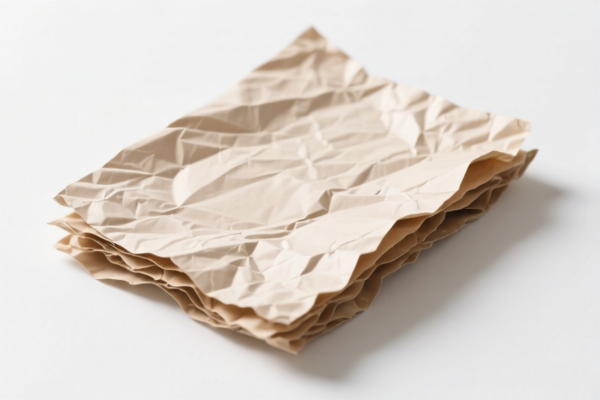
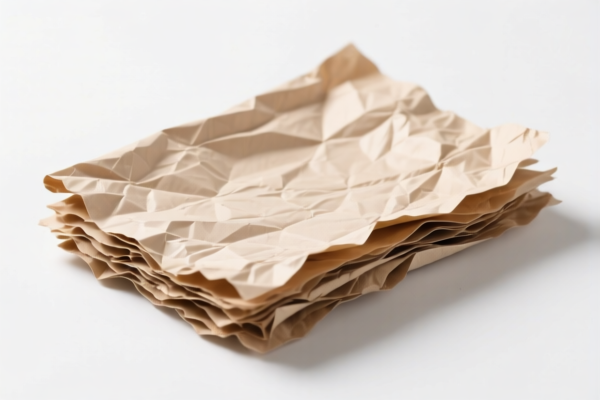
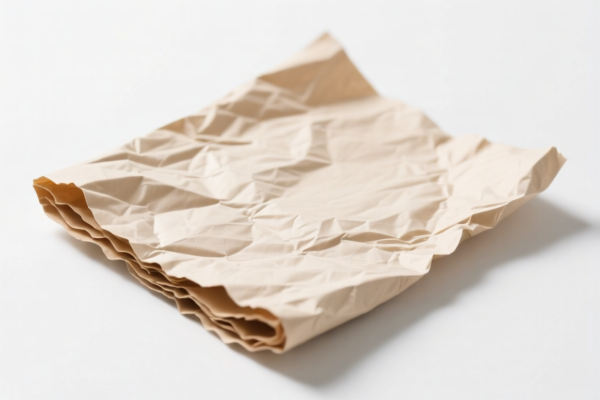
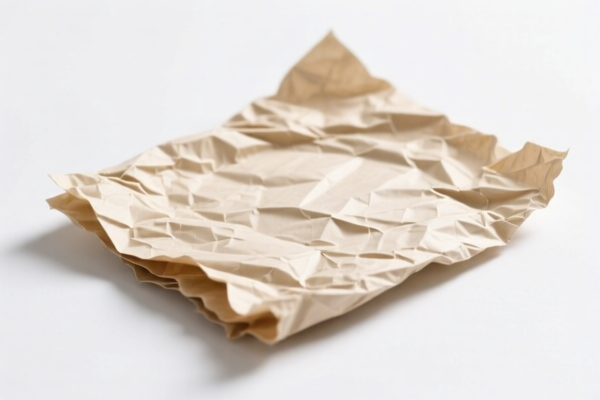
AI Analysis
🌲 Sulfate Unbleached Pulp (Chemical Woodpulp)
🌐 HS Code Reference & Customs Clearance Guide | 2026 Latest Tariff Analysis | Professional Clearance Strategy
📌 Part 1: Product Definition & Classification: Do You Really Understand "Sulfate Pulp"?
Sulfate Unbleached Pulp (also known as Kraft Pulp) is a major type of chemical wood pulp produced via the sulfate process. It is characterized by high strength and is widely used in papermaking, cardboard production, and fiberboard manufacturing. In international trade, it is primarily classified into two categories based on the source of the wood fibers:
Coniferous Pulp (Softwood): Derived from pine, fir, spruce, and other coniferous trees. It has longer fibers, providing higher tensile strength. Nonconiferous Pulp (Hardwood): Derived from oak, birch, eucalyptus, and other broad-leaved trees. It has shorter fibers, providing better density and smoothness.
⚠️ Key Distinction Point:
- If the product is Unbleached and Sulfate/Kraft process → Look at Codes 4703.11 or 4703.19.
- If it is Dissolving Grade → It is Excluded from these codes (goes to 4706 or other chapters).
- If it is Bleached → It goes to 4703.21/4703.29 (Not covered in current DATA).
📦 Part 2: HS Code Classification Details (2026 Latest Tariff Authority Comparison)
| HS Code | Product Description | Application Scenario | Wood Source |
|---|---|---|---|
4703.11.00.00 |
Chemical woodpulp, soda or sulfate, other than dissolving grades: Unbleached: Coniferous | Softwood Kraft Pulp, High-strength packaging paper, Corrugated bases | 🌲 Coniferous (Pine/Fir) |
4703.19.00.00 |
Chemical woodpulp, soda or sulfate, other than dissolving grades: Unbleached: Nonconiferous | Hardwood Kraft Pulp, Printing/writing paper bases, Cardboard | 🍂 Nonconiferous (Birch/Eucalyptus) |
🔍 Key Reminder:
- Both codes specify "Soda or Sulfate" (Kraft process).
- Both codes specify "Unbleached" (Brown pulp). If bleached, different codes apply.
- Both codes explicitly exclude "Dissolving Grades". If used for cellulose acetate or viscose rayon, do NOT use these codes.
💰 Part 3: 2026 Latest Tariff Rate Details (Including Surtaxes)
✅ Applicable Country: United States (US)
✅ Origin: China (CN) (Note: Tax rates apply based on origin; if not China, rates may differ)
✅ Effective Time: Current applicable rates as per provided data
🎯 1. 4703.11.00.00 —— Unbleached Sulfate Pulp (Coniferous)
| Item | Content |
|---|---|
| Base Tariff | 0.0% (ad valorem) |
| Additional Tariff | +25.0% |
| Total Tax Rate | 25.0% |
| Tax Calculation | CIF Value × 25% |
| De Minimis Exemption | ❌ Not Applicable (High risk) |
| Legal Basis Path | USITC:4703.11.00.00 → Section 301 Tariff List |
📌 Explanation:
- The Base Tariff is 0%, but an Additional Tariff of 25% applies (typically under Section 301 for Chinese origin goods).
- Total Effective Rate: 25%. This is a significant cost factor.
- No other hidden surcharges are listed in the provided data for this specific code.
🎯 2. 4703.19.00.00 —— Unbleached Sulfate Pulp (Nonconiferous)
| Item | Content |
|---|---|
| Base Tariff | 0.0% (ad valorem) |
| Additional Tariff | +25.0% |
| Total Tax Rate | 25.0% |
| Tax Calculation | CIF Value × 25% |
| De Minimis Exemption | ❌ Not Applicable (High risk) |
| Legal Basis Path | USITC:4703.19.00.00 → Section 301 Tariff List |
📌 Note:
- Same tariff structure as Coniferous Pulp.
- Whether from Eucalyptus, Birch, or Oak, as long as it is Unbleached Sulfate Pulp and Nonconiferous, it falls under 25% total tax.
🛠️ Part 4: Customs Clearance Practical Advice (Real-World Pitfall Guide)
✅ 1. Documentation Checklist (Missing Items Cause Delays)
| Document | Required? | Description |
|---|---|---|
| ✅ Certificate of Origin (CO) | ✔️ | Crucial to determine if 25% surtax applies. If non-China origin, verify if exemption exists. |
| ✅ Commercial Invoice | ✔️ | Must clearly state: "Unbleached Sulfate Wood Pulp", specify Coniferous/Nonconiferous. |
| ✅ Bill of Lading | ✔️ | Ensure description matches invoice. |
| ✅ Product Specification Sheet | ✔️ | Include: Moisture content, Alpha-cellulose content, Viscosity (if dissolving grade, exclude!), Wood species. |
| ✅ Packing List | ✔️ | Detail bagging type (jute/plastic), net/gross weight. |
✅ 2. Declaration Tips (Key Mnemonics)
🔥 “Process Correct, Bleach Status Clear, Wood Type Precise!”
| Situation | Correct Declaration | Wrong Practice |
|---|---|---|
| Unbleached Coniferous Kraft Pulp | 4703.11.00.00 |
Mislabel as "Paper" or "Recycled Pulp" |
| Unbleached Hardwood Kraft Pulp | 4703.19.00.00 |
Mislabel as "Dissolving Pulp" → Wrong Code |
| Bleached Pulp | Do NOT use above codes | Use 4703.21/29 → Risk of Penalty |
| Dissolving Grade Pulp | Do NOT use above codes | Use Chapter 4706 or other → Avoid 25% if applicable elsewhere |
✅ 3. Special Handling Cases
| Situation | Advice |
|---|---|
| Dissolving Grade Pulp | Must be declared as such. If misdeclared as standard pulp, you may face penalties + back taxes. Check if dissolving grades have different duty rates. |
| Mixed Loads | If Coniferous and Nonconiferous pulp are in the same container, separate declarations are strongly recommended to avoid misclassification. |
| Origin Strategy | If pulp is from Vietnam, Brazil, or Canada, verify if it enjoys 0% additional tariff. Provide clear CO to avoid automatic 25% surcharge. |
🌍 Part 5: Global Market Comparison (2026 Latest)
| Country/Region | Recommended HS Code | Tariff (China Origin) | Certification | Notes |
|---|---|---|---|---|
| 🇺🇸 USA | 4703.11.00.00 / 4703.19.00.00 |
25% (Total) | None specific | High duty due to Section 301 |
| 🇨🇳 China | Same Codes | Varies (MFN ~5-10%) | None | Import duty varies by FTAs |
| 🇪🇺 EU | 4703.11/19 | ~6.5% | REACH | No additional surtax like US |
| 🇯🇵 Japan | 4703.11/19 | 0-3.5% | JIS | Favorable rates for many countries |
📌 Conclusion:
- USA imposes a heavy 25% surcharge on these unbleached sulfates from China.
- For US market, consider supply chain diversification (e.g., sourcing from Brazil or Southeast Asia) to mitigate tariff risks.
📌 Part 6: Common Errors & Pitfalls (Lessons Learned)
❌ Error 1: Declaring Dissolving Pulp as 4703.11/19
👉 Consequence: Misclassification. Dissolving pulp has different HS codes (e.g., 4706 or 4707 depending on state). Risk of seizure or heavy fines.
❌ Error 2: Failing to specify Coniferous vs. Nonconiferous
👉 Consequence: Customs may detain cargo for re-classification, leading to storage fees and delays.
❌ Error 3: Ignoring Bleach Status
👉 Consequence: If pulp is actually bleached but declared unbleached, you avoid higher duties? No, if caught, it’s fraud. If unbleached but declared bleached, you pay wrong tax. Always be accurate.
❌ Error 4: Assuming 0% Base Tariff = 0% Total Cost
👉 Consequence: 25% surtax applies. Budget accordingly! Many importers underestimate total landed cost.
✅ Correct Practice:
"Unbleached Sulfate Wood Pulp, Hardwood (Nonconiferous), Kraft Process, Moisture < 10%, Origin: Brazil"
🎯 Part 7: Conclusion: Professional Declaration, Cost Control!
🎯 Remember These Mantras:
🔹 "Sulfate + Unbleached = 4703.1x"
🔹 "Coniferous = 11, Nonconiferous = 19"
🔹 "Dissolving Grade? Go Elsewhere!"
🔹 "25% Surtax for China Origin in US – Plan Ahead!"
📌 Pro Tip:
- If your pulp is not from China, check if it qualifies for FTA benefits (e.g., CPTPP, USMCA) to reduce the 25% surcharge to 0%.
- Always request a Binding Ruling from CBP if the wood species or process is ambiguous.
📣 Immediate Action:
📞 Consult your freight forwarder + Provide detailed Product Spec + Verify Origin for Tariff Optimization
🚀 Ensure smooth customs clearance, avoid unexpected 25% costs, and maximize profit margins!
✨ Professional Clearance Starts with Accurate Classification!
💼 Every percentage point of tariff affects your bottom line – calculate precisely!
Customer Reviews
About HS Code Classification
The Harmonized System (HS) is an internationally standardized nomenclature developed by the World Customs Organization (WCO) to classify traded products. Over 200 countries use the HS system as the basis for customs tariffs, trade statistics, and import/export regulations.
Each HS code follows a hierarchical structure:
- Chapter (2 digits) — Broad category of goods (e.g., Chapter 84: Machinery and Mechanical Appliances)
- Heading (4 digits) — More specific grouping within the chapter
- Subheading (6 digits) — Internationally standardized breakdown, used by all WCO member countries
- National subdivisions (8-10 digits) — Country-specific extensions for further classification, such as US HTSUS 10-digit codes
Correct HS code classification is essential for smooth customs clearance, accurate duty payment, and compliance with trade regulations. Misclassification can lead to customs delays, overpayment of duties, or penalties.
When importing from CN to US, the applicable tariff rates may include:
- Most-Favored-Nation (MFN) rate — The standard duty rate applied to WTO members
- General rate — Applied to countries without trade agreements
- Trade remedy duties — Additional tariffs such as Section 301 (anti-dumping), Section 232 (national security), or countervailing duties
The information provided on this page is for reference purposes only. For official classification, please consult with your local customs authority or a licensed customs broker.