Sulfite Dissolving Pulp
CN → USProduct Images
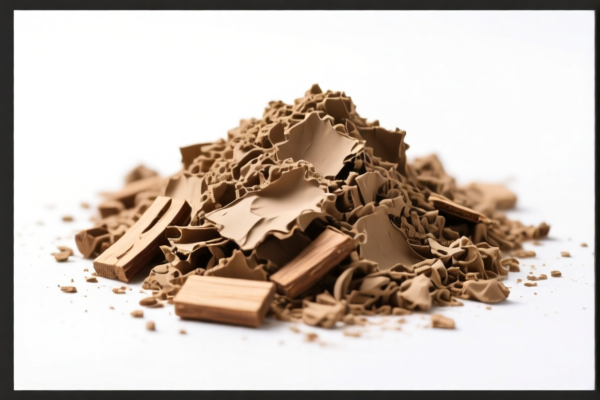
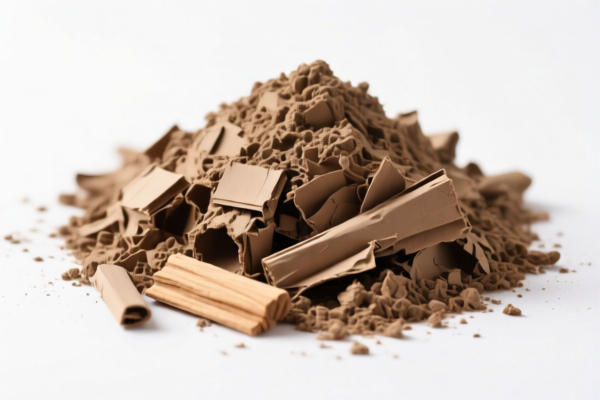
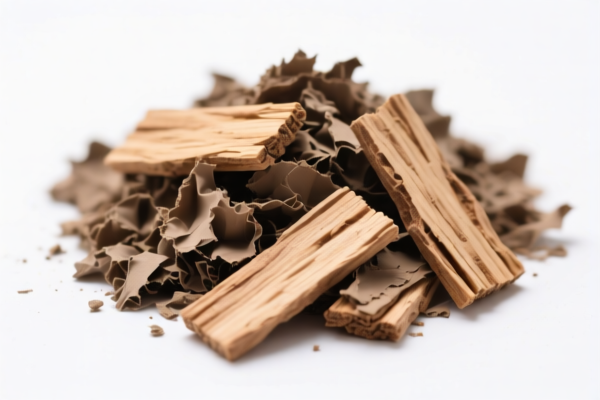
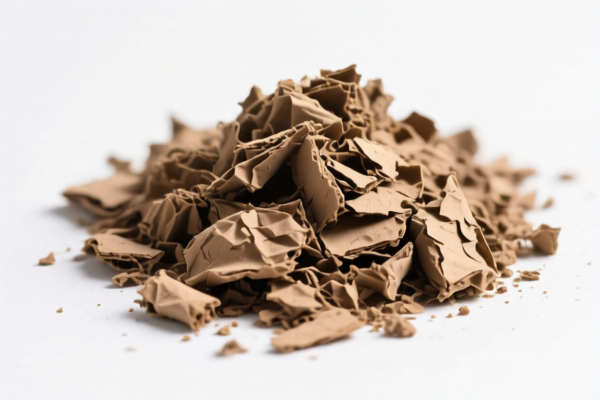
AI Analysis
🌿 Sulfite Dissolving Pulp (SDP)
🌐 HS Code Reference & Clearance Guide | 2026 Latest Tariff Analysis | Professional Customs Strategy
📌 I. Product Definition: What Exactly is "Sulfite Dissolving Pulp"?
Sulfite Dissolving Pulp (SDP) is a highly purified wood pulp produced using the sulfite cooking process (using bisulfites of alkaline earth metals or alkali metals like calcium, magnesium, sodium, or ammonium). Unlike standard mechanical or kraft pulp used for papermaking, SDP is characterized by:
- High Alpha-Cellulose Content (typically >90%);
- Low Lignin and Hemicellulose Content;
- High Purity and Brightness.
It is primarily used as the raw material for manufacturing regenerated cellulosic fibers, such as: 1. Viscose Rayon (for textiles); 2. Cellophane (for packaging); 3. Cellulose Acetate (for cigarette filters, eyewear frames); 4. Nitrated Cellulose (for films, explosives); 5. Carboxymethyl Cellulose (CMC) (for food, pharmaceuticals, detergents).
⚠️ Critical Distinction:
- If the pulp is not bleached to high purity or is intended for paper/cardboard → It is General Pulp (HS 4703/4704/4705).
- If it is high-purity, low-lignin, bleached pulp intended for chemical conversion (rayon, acetate, etc.) → It is Dissolving Pulp (HS 4706.20.00.00 or 4706.30.00.00).
📦 II. HS Code Classification Details (2026 Official Tariff)
| HS Code | Product Description | Key Characteristics | Typical End-Use |
|---|---|---|---|
4706.20.00.00 |
Dissolving Grades of Pulp of Sulfite Process | White/bright, high α-cellulose, low lignin (<2%), cooked with sulfites | Viscose Rayon, Cellophane, Cellulose Acetate |
4706.30.00.00 |
Dissolving Grades of Pulp of Kraft Process | Similar purity but cooked with sulfate/chemicals | Same as above (but different chemical residue profile) |
4703.11.00.00 |
Softwood Sulfite Pulp, Bleached | NOT dissolving grade; higher lignin/hemicellulose | High-quality paper (tissue, copy paper) |
4703.21.00.00 |
Hardwood Sulfite Pulp, Bleached | NOT dissolving grade | Paperboard, printing paper |
🔍 Key Classification Logic:
- HS 4706 is specifically for "Dissolving Grades."
- The critical factor is not just the cooking method (sulfite), but the chemical composition (low lignin, high cellulose) and intended use (chemical conversion, not papermaking).
- If customs officers determine the pulp is suitable for papermaking (even if called "dissolving"), they may reclassify it under 4703 (Bleached Sulfite Pulp), which has different tariff rates.
💰 III. 2026 Latest Tariff Rates (Detailed Breakdown)
✅ Applicable Country: United States (US)
✅ Country of Origin: China (CN)
✅ Effective Date: Post-November 2025 (Current 2026 Framework)
🎯 1. 4706.20.00.00 — Dissolving Grades of Pulp of Sulfite Process
| Item | Details |
|---|---|
| General Ad Valorem Rate | 3.5% (Standard MFN rate) |
| Section 301 Tariff (China) | +7.5% (Note: Some categories were reduced from 25% to 7.5% in recent tranches; verify current list. As of 2026, most industrial raw materials remain under scrutiny.) |
| IEEPA Tariff (China) | +10% (Under International Emergency Economic Powers Act) |
| Total Tariff Rate | ~21.0% (3.5% + 7.5% + 10%) |
| De Minimis Eligibility | ❌ No (Deny de minimis) |
| Legal Path | USITC:4706.20.00.00 → SECTION:301 → IEEPA:9903.01.24 |
📌 Explanation:
- 3.5% is the base WTO rate for chemical wood pulp.
- Section 301: Many pulp products remain on the "List 4A" or similar exclusions with reduced rates. Check the latest USTR exclusions.
- IEEPA 10%: Applies to all Chinese-origin goods unless exempted.
- Total Cost: High tariffs significantly impact the competitiveness of SDP imports.
🎯 2. Comparison: If Misclassified as 4703.21.00.00 (Bleached Hardwood Sulfite Pulp)
| Item | Details |
|---|---|
| General Ad Valorem Rate | 0% (Many sulfite pulps have 0% base rate) |
| Section 301 Tariff | +7.5% or +25% (Depending on specific subheading) |
| IEEPA Tariff | +10% |
| Total Tariff Rate | 17.5% - 35% |
| Risk | Misclassification Penalty: If you declare 4706 but it fails purity tests, Customs may reclassify to 4703, leading to back taxes + penalties. |
⚠️ Warning:
Even if the base rate is lower for general pulp, the penalty for misdeclaring a "Dissolving Pulp" as "General Pulp" can be severe (up to 200% of duties). Conversely, declaring a general pulp as dissolving pulp may delay customs clearance due to suspicion of fraud.
🛠️ IV. Customs Clearance Operational Advice (Practical Pitfall Guide)
✅ 1. Required Documentation Checklist
| Document | Mandatory? | Purpose |
|---|---|---|
| ✅ Product Specification Sheet | ✔️ | Must detail: α-Cellulose %, Lignin %, Viscosity, Brightness, Ash Content |
| ✅ Certificate of Analysis (COA) | ✔️ | Third-party lab test results confirming "Dissolving Grade" specs |
| ✅ Commercial Invoice | ✔️ | Must state: "Dissolving Pulp, Sulfite Process, Grade: Viscose/Cellophane" |
| ✅ Packing List | ✔️ | Describe packaging (e.g., "Bales, 0.5 tons each, wrapped in polyethylene") |
| ✅ Letter of Guarantee | ✔️ | From manufacturer confirming non-papermaking use (if requested) |
| ✅ FCC/CE/RoHS | ❌ | Not typically required for raw pulp, but may be needed if part of a larger shipment |
✅ 2. Classification Strategy & Declaration Tips
🔥 Golden Rule:
"Purity Defines the Code. If it’s not >90% cellulose, it’s not HS 4706!"
| Scenario | Correct HS Code | Declaration Description |
|---|---|---|
| High-purity Sulfite Pulp (Lignin <2%) | 4706.20.00.00 |
"Dissolving Pulp, Sulfite, Bleached, Lignin 1.5%, Viscosity 450cps" |
| Standard Sulfite Pulp (Lignin 5-8%) | 4703.11.00.00 or 4703.21.00.00 |
"Bleached Sulfite Pulp, Softwood/Hardwood, for Papermaking" |
| Unbleached Sulfite Pulp | 4703.10.00.00 / 4703.20.00.00 |
"Unbleached Sulfite Pulp" |
| Recycled Pulp (even if dissolving) | 4706.10.00.00 |
"Dissolving Pulp of Recycled Fibers" |
✅ 3. Special Cases & Risk Management
| Situation | Handling Advice |
|---|---|
| Mixed Shipment | If a shipment contains both dissolving and general pulp, separate bills of lading or clear segregation is required. Mixed shipments trigger high-level scrutiny. |
| Chinese Origin | Apply for Section 301 Exclusions if available for specific chemical processes. Note: Many pulp exclusions have expired or are limited. |
| Vietnam/Malaysia Origin | If the pulp is substantially transformed in these countries, it may qualify for preferential rates. However, "simple mixing" or "repackaging" does not confer origin. |
| Customs Lab Testing | US Customs may seize samples for chemical analysis. Ensure your COA matches the physical product exactly. Discrepancies lead to delays. |
🌍 V. Global Market Comparison (2026)
| Country/Region | Recommended HS Code | Tariff (China Origin) | Certification | Notes |
|---|---|---|---|---|
| 🇺🇸 USA | 4706.20.00.00 |
~21% (3.5% + 7.5% + 10%) | None specific | High tariffs; strict purity checks |
| 🇨🇳 China | 4706.20.00.00 |
0% (Imported into China) | None | Major importer of dissolving pulp |
| 🇪🇺 EU | 4706.20.00.00 |
0% (Most Favored Nation) | REACH (if chemical additives) | Low tariffs; high environmental standards |
| 🇮🇳 India | 4706.20.00.00 |
5-10% | BIS (if applicable) | Growing viscose industry; moderate tariffs |
| 🇧🇩 Bangladesh | 4706.20.00.00 |
0-5% | None | Major viscose producer; prefers Sulfite Pulp |
📌 Conclusion:
- The US market is the most expensive for Chinese-origin dissolving pulp due to layered tariffs.
- EU and China offer favorable tariff conditions, making them attractive markets for Chinese exporters.
- Purity documentation is the #1 clearance bottleneck worldwide.
📌 VI. Common Mistakes & Pitfalls (Blood Lessons)
❌ Mistake 1: Declaring "Wood Pulp" without specifying "Dissolving Grade"
👉 Consequence: Customs may classify under 4703 (General Pulp) and assess different duties or require additional inspections for origin verification.
❌ Mistake 2: Providing a COA that shows Lignin >2%
👉 Consequence: Customs will reject HS 4706 and reclassify to 4703, resulting in back taxes + interest.
❌ Mistake 3: Ignoring Section 301 Exclusion Numbers
👉 Consequence: Paying 7.5% or 25% when an exclusion code could reduce it to 0%. Always check USTR exclusion lists!
✅ Correct Declaration Example:
"Dissolving Pulp, Sulfite Process, Bleached, Lignin <2%, Alpha-Cellulose >90%, Viscosity 400-500cps, for Viscose Rayon Production, HS 4706.20.00.00, Origin: China"
🎯 VII. Conclusion: Precision in Classification = Profit Preservation
🎯 Remember:
🔹 "Dissolving Pulp is a Chemical Raw Material, Not a Paper Product."
🔹 "Low Lignin is the Key to HS 4706."
🔹 "Tariffs are Layered: Base + Section 301 + IEEPA."
🔹 "Always have a Third-Party COA Ready!"
📌 Pro Tip:
If your product is originating from Vietnam, Malaysia, or Indonesia, and the sulfite pulping process was performed there, you may qualify for preferential tariffs under RCEP or ASEAN-US FTAs. Ensure Form E or Form D is properly issued.
📣 Immediate Action:
📞 Consult a Licensed Customs Broker + Submit Advance Ruling request if shipment volume is high
📄 Prepare Detailed COA and Technical Specifications
🚀 Optimize Tariff Costs by Correct Classification!
✨ Professional Clearance Starts with Accurate Classification!
💼 Every Percentage Point in Tariff Matters!
Customer Reviews
About HS Code Classification
The Harmonized System (HS) is an internationally standardized nomenclature developed by the World Customs Organization (WCO) to classify traded products. Over 200 countries use the HS system as the basis for customs tariffs, trade statistics, and import/export regulations.
Each HS code follows a hierarchical structure:
- Chapter (2 digits) — Broad category of goods (e.g., Chapter 84: Machinery and Mechanical Appliances)
- Heading (4 digits) — More specific grouping within the chapter
- Subheading (6 digits) — Internationally standardized breakdown, used by all WCO member countries
- National subdivisions (8-10 digits) — Country-specific extensions for further classification, such as US HTSUS 10-digit codes
Correct HS code classification is essential for smooth customs clearance, accurate duty payment, and compliance with trade regulations. Misclassification can lead to customs delays, overpayment of duties, or penalties.
When importing from CN to US, the applicable tariff rates may include:
- Most-Favored-Nation (MFN) rate — The standard duty rate applied to WTO members
- General rate — Applied to countries without trade agreements
- Trade remedy duties — Additional tariffs such as Section 301 (anti-dumping), Section 232 (national security), or countervailing duties
The information provided on this page is for reference purposes only. For official classification, please consult with your local customs authority or a licensed customs broker.