Sulfur Fiber Support Board
CN → US| HS Code | Tariff Rate | Origin | Destination | Doc |
|---|---|---|---|---|
| 6815130000 | 35.0% | CN | US | Official Doc |
| 6815110000 | 35.0% | CN | US | Official Doc |
Product Images
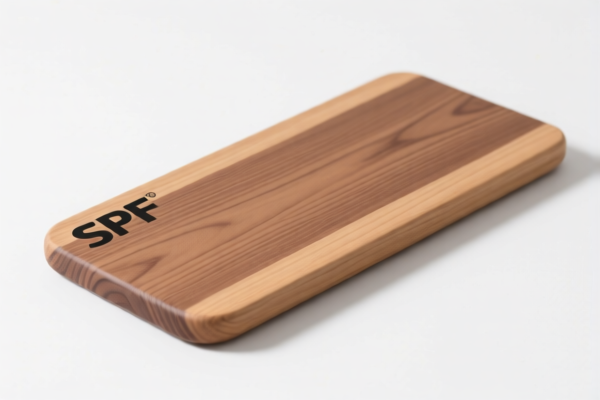
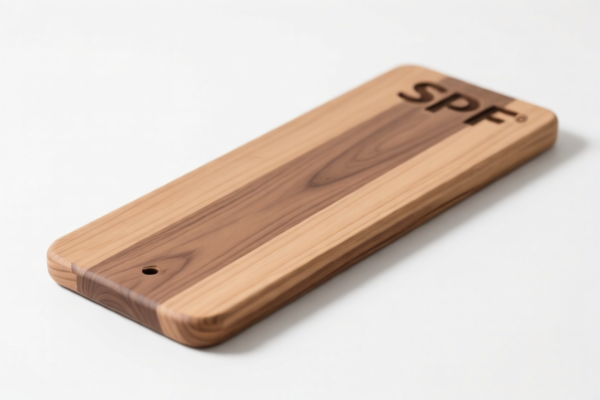
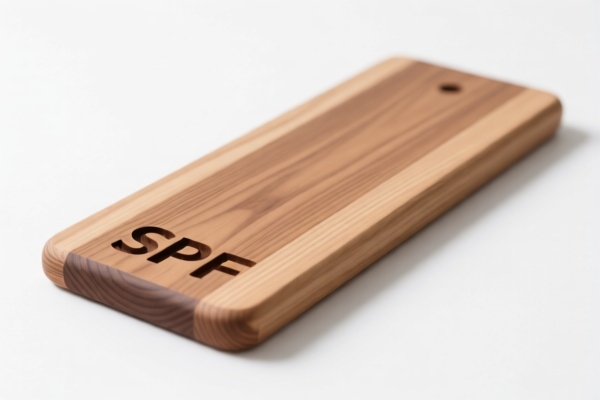
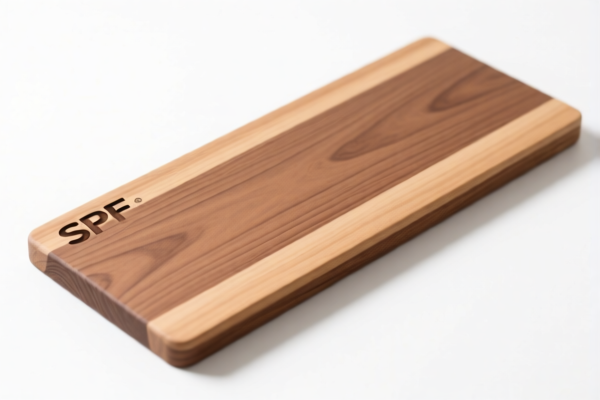
AI Analysis
⚡ Sulfur Fiber Support Board: The High-Temperature Guardian
🌐 HS Code Reference & Customs Clearance Guide | 2026 Latest Tariff Analysis | Professional Compliance Strategy
📌 1. Product Definition & Classification: What is a "Sulfur Fiber Support Board"?
A Sulfur Fiber Support Board is a specialized industrial material composed primarily of sulfur fibers or carbon-based composites, often used in high-temperature, corrosive, or chemically aggressive environments. While the name suggests "sulfur," in international trade classification (HS Code), materials described as "carbon fibers" or "articles of carbon fibers for non-electrical uses" fall under Chapter 68.
⚠️ Critical Classification Note:
- If the board is made of carbon fibers (or carbonized sulfur-derived carbon) and is not electrical, it falls under HS 6815.1x.
- If it is a raw Carbon Fiber material (uncut, unreinforced resin matrix yet), it may fall under 6815.11.
- If it is a finished article (cut, shaped, molded board) for non-electrical uses, it falls under 6815.13.
- Note: "Sulfur" itself is not the primary classifier here; the final form and material composition (Carbon vs. Raw Fiber) determine the code.
📦 2. HS Code Classification Details (2026 Latest Tariff Authority)
Based on the provided data, the relevant HS Codes are:
| HS Code | Product Description | Application Scenario | Tax Rate (US Import from CN) |
|---|---|---|---|
6815.11.00.00 |
Carbon fibers (Raw/Unprocessed articles of carbon fibers for non-electrical uses) | Raw carbon fiber bundles, uncut mats, pre-preg sheets before molding | 25.0% |
6815.13.00.00 |
Other articles of carbon fibers (Non-electrical uses) | Shaped boards, cut panels, molded supports, refractory linings | 25.0% |
🔍 Key Distinction:
-6815.11.00.00: For raw carbon fiber materials. If your "Sulfur Fiber Support Board" is a raw, uncut mat of fibers, use this.
-6815.13.00.00: For finished articles. If the material is cut, shaped, or molded into a board for support purposes, this is the correct classification. Most "Support Boards" are finished articles.
💰 3. 2026 Latest Tariff Rate Breakdown (Including Additional Duties)
✅ Applicable Country: United States (US)
✅ Origin: China (CN)
✅ Effective Date: 2025 onwards (Subject to Section 301 & IEEPA)
🎯 1. 6815.11.00.00 —— Carbon Fibers (Raw Material)
| Item | Content |
|---|---|
| Base Tariff | 0% (Ad Valorem) |
| Section 301 Additional Duty | +25% |
| Total Tariff | 25.0% |
| De Minimis Exemption | ❌ Not Eligible (Section 301 duties apply to all values) |
| Legal Basis | USITC Footnote 9903.88.01 / Section 301 Tariff List |
📌 Explanation:
- Raw carbon fibers are subject to the 25% Section 301 tariff.
- No base duty, but the additional tariff is significant.
- Total Cost Impact: 25% of CIF value.
🎯 2. 6815.13.00.00 —— Other Articles of Carbon Fibers (Finished Boards)
| Item | Content |
|---|---|
| Base Tariff | 0% (Ad Valorem) |
| Section 301 Additional Duty | +25% |
| Total Tariff | 25.0% |
| De Minimis Exemption | ❌ Not Eligible |
| Legal Basis | USITC Footnote 9903.88.01 / Section 301 Tariff List |
📌 Explanation:
- Finished carbon fiber articles (like support boards) also face the 25% Section 301 tariff.
- Total Cost Impact: 25% of CIF value.⚠️ Important:
- Both codes have the same 25% tariff rate.
- The key is correct classification to avoid penalties for misdeclaration.
- If customs determines the product is not "carbon fiber" but something else, it may be reclassified with different (potentially higher or lower) rates.
🛠️ 4. Customs Clearance Practical Advice
✅ 1. Preparation Checklist (Essential Documents)
| Document | Required? | Purpose |
|---|---|---|
| Product Specification Sheet | ✔️ | Must detail: Material composition (e.g., "Carbonized Sulfur Fiber"), density, tensile strength, thermal resistance. |
| Photos of Product | ✔️ | Show raw fiber vs. finished board. Clearly label "Support Board" or "Raw Carbon Fiber." |
| Commercial Invoice | ✔️ | Must specify: "Carbon Fiber Support Board for Non-Electrical Use" or "Raw Carbon Fibers." |
| Packing List | ✔️ | Detail weight, dimensions, and packaging. |
| Certificate of Origin | ✔️ | To prove origin (China) and apply correct tariffs. |
| Material Safety Data Sheet (MSDS) | ✔️ | Required for chemical materials, especially if sulfur-derived. |
✅ 2. Declaration Tips (Avoid Pitfalls)
| Scenario | Correct Declaration | Incorrect Declaration |
|---|---|---|
| Finished Board | 6815.13.00.00 - "Other articles of carbon fibers for non-electrical uses" |
"Sulfur Board" (vague, may be rejected) |
| Raw Fiber Mat | 6815.11.00.00 - "Carbon fibers" |
"Support Board" (misleading if uncut) |
| Electrical Component | ❌ Not in Scope (These codes are for non-electrical uses) | If electrical, it may fall under Chapter 85 (e.g., 8545) with different rates. |
🔥 Key Keyword for Declaration:
"Carbon Fiber" is the preferred term over "Sulfur Fiber" in HS classification, as sulfur-based fibers are typically carbonized into carbon fibers. Use "Non-Electrical Use" to justify Chapter 68.
✅ 3. Special Cases
| Case | Handling Advice |
|---|---|
| Sulfur-Based but Carbonized | Declare as Carbon Fiber. Provide lab test results showing carbon content >90%. |
| Electrical Insulation Use | If used for electrical insulation, it may not qualify for 6815.1x. Check Chapter 85 or 39. |
| Mixed Materials | If board contains >50% carbon fiber by weight, use 6815.1x. Otherwise, reclassify. |
🌍 5. Global Market Comparison (2026)
| Country/Region | Recommended HS Code | Tariff Rate | Remarks |
|---|---|---|---|
| 🇺🇸 USA | 6815.13.00.00 |
25% | Section 301 additional duty applies. |
| 🇨🇳 China | 6815.13.00.00 |
0-10% | Varies by exact sub-code; no additional duties. |
| 🇪🇺 EU | 6815.19 |
0-5% | Low duty; no Section 301 equivalent. |
| 🇯🇵 Japan | 6815.19 |
0-5% | Favorable trade agreement possible. |
📌 Conclusion:
- USA is the only major market with a 25% additional duty on these carbon fiber articles.
- EU/Japan are more cost-effective for clearance.
- Consider supply chain diversification if exporting to the US to mitigate tariff risks.
📌 6. Common Errors & Pitfalls
❌ Error 1: Declaring as "Sulfur Board" without mentioning carbon content.
👉 Consequence: Customs may reject or reclassify, causing delays.
❌ Error 2: Using 6815.11 for a cut/molded board.
👉 Consequence: Misclassification; may face penalties for under-declaring finished goods.
❌ Error 3: Ignoring "Non-Electrical Use" requirement.
👉 Consequence: If used electrically, the product may fall under Chapter 85, with different tariffs and regulations.
✅ Correct Declaration Example:
"Carbon Fiber Support Board, Non-Electrical Use, Raw Carbonized Fiber, HS Code 6815.13.00.00"
🎯 7. Conclusion: Professional Clearance for High-Performance Materials
🎯 Key Takeaway:
🔹 "Sulfur Fiber" = Carbon Fiber in HS Terms.
🔹 "Support Board" = Finished Article (6815.13).
🔹 "US Import" = 25% Additional Duty.📌 Pro Tip:
- Always provide lab reports confirming carbon content and non-electrical use.
- If possible, apply for Advance Rulings from US Customs to confirm classification.
- Consider third-country transshipment (e.g., Vietnam, Malaysia) if tariffs are prohibitive, but ensure substantial transformation occurs to avoid anti-circumvention laws.
📣 Immediate Action:
📞 Contact a Customs Broker with experience in Chapter 68 products.
🚀 Prepare Detailed Specs and Lab Tests to support your HS Code.
💼 Optimize Supply Chain to mitigate 25% US tariffs.
✨ Precision in Classification Saves Millions!
💼 Your High-Temperature Solution, Cleared Globally!
Customer Reviews
About HS Code Classification
The Harmonized System (HS) is an internationally standardized nomenclature developed by the World Customs Organization (WCO) to classify traded products. Over 200 countries use the HS system as the basis for customs tariffs, trade statistics, and import/export regulations.
Each HS code follows a hierarchical structure:
- Chapter (2 digits) — Broad category of goods (e.g., Chapter 84: Machinery and Mechanical Appliances)
- Heading (4 digits) — More specific grouping within the chapter
- Subheading (6 digits) — Internationally standardized breakdown, used by all WCO member countries
- National subdivisions (8-10 digits) — Country-specific extensions for further classification, such as US HTSUS 10-digit codes
Correct HS code classification is essential for smooth customs clearance, accurate duty payment, and compliance with trade regulations. Misclassification can lead to customs delays, overpayment of duties, or penalties.
When importing from CN to US, the applicable tariff rates may include:
- Most-Favored-Nation (MFN) rate — The standard duty rate applied to WTO members
- General rate — Applied to countries without trade agreements
- Trade remedy duties — Additional tariffs such as Section 301 (anti-dumping), Section 232 (national security), or countervailing duties
The information provided on this page is for reference purposes only. For official classification, please consult with your local customs authority or a licensed customs broker.