Sulfur containing Sprout Inhibitor
CN → US| HS Code | Tariff Rate | Origin | Destination | Doc |
|---|---|---|---|---|
| 3808997000 | 40.0% | CN | US | Official Doc |
| 3808931500 | 41.5% | CN | US | Official Doc |
| 2802000000 | 35.0% | CN | US | Official Doc |
| 3101000000 | 35.0% | CN | US | Official Doc |
| 3808931500 | 41.5% | CN | US | Official Doc |
Product Images
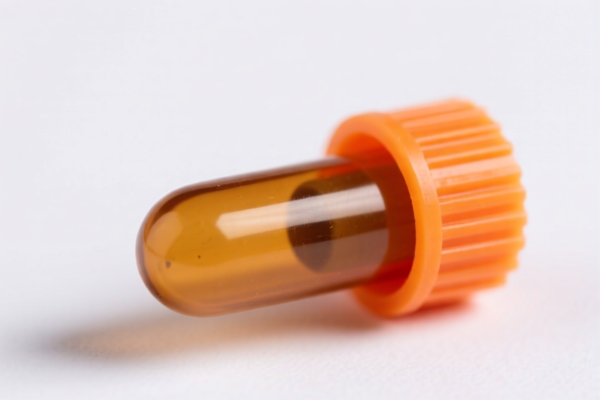
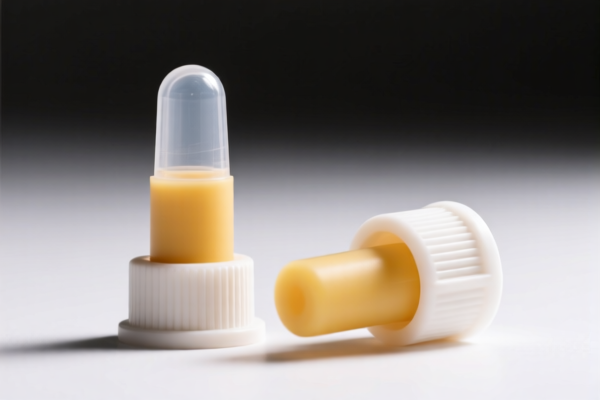
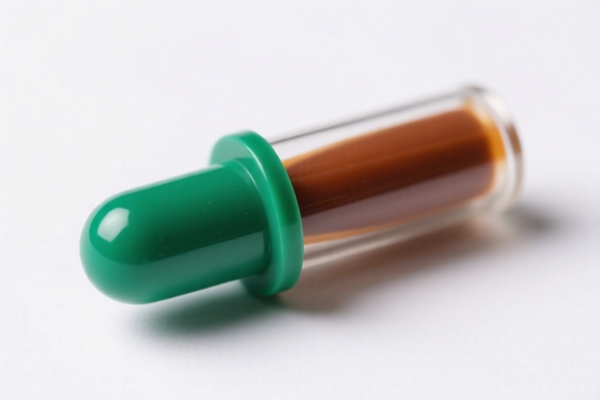
AI Analysis
🌾 Sulfur-Containing Sprout Inhibitor: Comprehensive HS Code & Customs Clearance Guide
🌐 HS Code Classification & Customs Strategy | 2024-2025 Tariff Breakdown | Professional Clearance Protocol
📌 I. Product Definition & Classification: What is a "Sulfur-Containing Sprout Inhibitor"?
A Sulfur-Containing Sprout Inhibitor is a chemical formulation used primarily in the storage and transport of tubers (e.g., potatoes, onions, garlic) and bulbs to prevent sprouting during post-harvest storage.
Its core active ingredient is Sulfur (elemental sulfur), which acts as a fungicide and growth regulator.
In international trade, this product falls into a gray zone between Chemical Preparations, Fertilizers, and Agricultural Chemicals. The correct HS Code depends on whether the product is classified strictly by its active ingredient (Sulfur) or by its specific agricultural function (Sprout Inhibitor).
⚠️ Critical Classification Distinction:
- If classified as "Pure Sulfur": It falls under Chemical Elements (Chapter 28).
- If classified as "Chemical Preparation for Agriculture": It falls under Chapter 38 (Chemical Preparations).
- If classified as "Fertilizer": It falls under Chapter 31 (Fertilizers).Note: In many jurisdictions (especially the US), the specific functional use (Sprout Inhibitor) often pushes it into Chapter 38, resulting in higher tariffs.
📦 II. HS Code Classification Breakdown (Based on Provided Data)
| HS Code | Product Description | Classification Logic | Applicable Tax Rate |
|---|---|---|---|
| 3808.99.70.00 | Chemical Preparations, N.E.S. (Not Elsewhere Specified) Specifically for "Sprout Inhibitor" purposes, containing Sulfur as an inorganic component. |
Functional Classification: Matches the specific use (Sprout Inhibitor) with Sulfur as the inorganic material base. | 40.0% |
| 3808.93.15.00 | Herbicides, Fungicides, & Plant Growth Regulators (N.E.S.) Contains Sulfur, classified as a chemical preparation with anti-sprouting/aromatic properties. |
Functional/Chemical Mix: Matches the "Herbicide/Plant Growth Regulator" category. Includes "Aromatic/Modified Aromatic" chemical attributes. | 41.5% |
| 2802.00.00.00 | Sulfur (Sublimed, Precipitated, or Colloidal) Matches the raw material core: Elemental Sulfur. |
Material-Based Classification: Focuses solely on the ingredient (Sulfur), ignoring the specific inhibitor function. | 35.0% |
| 3101.00.00.00 | Animal or Vegetable Fertilizers (including Chemical Fertilizers) Classifies Sulfur as a chemical component within a fertilizer/growth regulator范畴. |
Functional/Fertilizer Mix: Matches "Plant Growth Regulator/Fertilizer" category based on the chemical nature of Sulfur. | 35.0% |
🔍 Key Insight:
- The lowest tariff (35.0%) is achieved by classifying as Pure Sulfur (2802) or Fertilizer (3101).
- The highest tariff (41.5%) applies when strictly classified as a Herbicide/Growth Regulator (3808.93.15) due to the "Specific Use" tag.
- 3808.99.70.00 acts as a "catch-all" for chemical preparations that don't fit specific herbicide sub-categories but are still functional.
💰 III. 2024-2025 Tariff Rate Breakdown (Detailed)
✅ Applicable Market: United States (US)
✅ Origin: China (CN)
✅ Effective Time: Current (Includes 301 & IEEPA provisions)
🎯 1. HS Code 2802.00.00.00 & 3101.00.00.00 (Lowest Rate: 35%)
| Tax Component | Rate | Legal Basis |
|---|---|---|
| Basic Duty (MFN) | 0.0% | Standard duty for pure sulfur or basic fertilizers. |
| Section 301 Additional Duty | +25.0% | "China Specific" tariff for chemical products. |
| IEEPA (Section 122) Duty | +10.0% | Additional tariff under International Emergency Economic Powers Act for specific chemical imports. |
| TOTAL DUTY | 35.0% | (0 + 25 + 10)% |
📌 Interpretation:
- If you can prove the product is 99%+ Elemental Sulfur or a basic Fertilizer, you avoid the "Chemical Preparation" penalty.
- Strategy: Emphasize the material content over the anti-sprouting function in the commercial invoice and technical data sheets.
🎯 2. HS Code 3808.99.70.00 (Mid Rate: 40.0%)
| Tax Component | Rate | Legal Basis |
|---|---|---|
| Basic Duty | 5.0% | Duty for "Other Chemical Preparations." |
| Section 301 Additional Duty | +25.0% | "China Specific" tariff. |
| IEEPA (Section 122) Duty | +10.0% | Additional tariff. |
| TOTAL DUTY | 40.0% | (5 + 25 + 10)% |
📌 Interpretation:
- This is the standard "Chemical Preparation" rate. It is higher than pure sulfur because it is considered a processed product with a specific function, not just a raw material.
🎯 3. HS Code 3808.93.15.00 (Highest Rate: 41.5%)
| Tax Component | Rate | Legal Basis |
|---|---|---|
| Basic Duty | 6.5% | Duty for "Herbicides, Fungicides, and Similar Products." |
| Section 301 Additional Duty | +25.0% | "China Specific" tariff. |
| IEEPA (Section 122) Duty | +10.0% | Additional tariff. |
| TOTAL DUTY | 41.5% | (6.5 + 25 + 10)% |
📌 Interpretation:
- This category is the most expensive. Customs officials view "Sprout Inhibitors" as Plant Growth Regulators or Herbicides.
- If the product packaging explicitly says "Sprout Inhibitor" or "Anti-Sprouting Agent," US Customs (CBP) will almost certainly assign this code.
🛠️ IV. Customs Clearance Practical Advice (Risk Avoidance Guide)
✅ 1. Preparation Checklist (Must-Have Documents)
| Document | Required? | Why? |
|---|---|---|
| Technical Data Sheet (TDS) | ✅ Yes | Must clearly state the % of Elemental Sulfur vs. other carriers. |
| Safety Data Sheet (SDS) | ✅ Yes | Must confirm the product is "Inorganic" (Sulfur) and not a complex organic pesticide. |
| Product Label & Photos | ✅ Yes | Labels saying "Pesticide," "Insecticide," or "Herbicide" will trigger 3808.93. Labels saying "Sulfur" or "Fertilizer" favor 2802/3101. |
| Composition Declaration | ✅ Yes | Detailed breakdown of active ingredients to prove it's primarily Sulfur. |
| Commercial Invoice | ✅ Yes | DO NOT use the term "Herbicide" or "Insecticide" unless strictly necessary. Use "Chemical Preparation" or "Sulfur Compound." |
✅ 2. Declaration Strategy (Crucial Tips)
🔥 Golden Rule: "Describe the Material, Not Just the Function!"
| Scenario | Recommended Declaration | Risk Level |
|---|---|---|
| High Purity Sulfur | "Elemental Sulfur, 99.5%, for Agricultural Use" | ✅ Low (Favors 2802) |
| Chemical Mixture | "Sulfur-based Chemical Preparation, No Organic Solvents" | ⚠️ Medium (Favors 3808.99) |
| Explicit "Sprout Inhibitor" | "Sprout Inhibitor (Sulfur-based)" | ❌ High (Triggers 3808.93, 41.5%) |
| Fertilizer Formulation | "Plant Growth Regulator / Fertilizer Additive" | ⚠️ Medium (Favors 3101) |
📌 Warning:
- If the product is labeled as a "Pesticide" (EPA registration required in the US), it MUST be classified under 3808.
- Strategy: If the product does not require EPA registration (e.g., it's a raw sulfur compound), avoid the term "Pesticide" or "Inhibitor" on the outer packaging if possible.
✅ 3. Special Handling Scenarios
| Situation | Action |
|---|---|
| Product contains other chemicals | If other organic compounds are present, the "Inorganic Sulfur" defense weakens. Declare as 3808.99 to avoid misclassification penalties. |
| USDA/APHIS Inspection | Even if classified as chemical, Sulfur products may require APHIS clearance to prevent soil contamination. |
| EPA Registration | If the product claims to kill pests or inhibit growth, it may be considered a Pesticide by the EPA. Ensure you have an EPA Registration Number if required. |
🌍 V. Market Comparison & Tariff Optimization
| Market | Recommended HS Code | Tariff Estimate | Strategy |
|---|---|---|---|
| 🇺🇸 USA | 2802.00.00 or 3101.00.00 |
35% (vs 41.5% if misclassified) | Avoid "Herbicide" labels. |
| 🇪🇺 EU | 2802.00 or 3808 |
0% - 6% (Variable) | EU is generally more lenient on "Sulfur" classification. |
| 🇨🇳 China | 2802.00 |
0% | Domestic classification usually favors "Sulfur". |
📌 Conclusion:
- USA is the most critical market. The 6.5% difference (41.5% vs 35.0%) can be a profit killer.
- Best Practice: Classify as2802.00.00.00(Sulfur) if the product is >90% Sulfur and not a registered pesticide.
- Risk: If the product is a complex formulation with organic binders,3808.99.70.00(40%) is the safer "middle ground" than3808.93(41.5%).
📌 VI. Common Pitfalls & "Blood and Tears" Lessons
❌ Mistake 1: Using "Pesticide" or "Sprout Killer" on the label.
👉 Result: Automatically pushed to 3808.93.15.00 (41.5%).
👉 Fix: Use neutral terms like "Sulfur Compound" or "Plant Treatment Agent."
❌ Mistake 2: Declaring as 2802 (Pure Sulfur) when the product is a paste or powder with binders.
👉 Result: CBP will inspect, find organic binders, and reclassify to 3808 with penalties.
👉 Fix: Ensure the formulation is primarily elemental sulfur. If not, declare 3808.99.70.00 upfront.
❌ Mistake 3: Ignoring Section 122 (10% tariff).
👉 Result: Underpaying duties leads to audits and back-tariff payments.
👉 Fix: Always calculate the 10% IEEPA tariff into your Landed Cost.
✅ Correct Approach:
"Pure Elemental Sulfur, 99.8%, Granular, for Agricultural Storage, No Organic Binders, Not a Registered Pesticide."
🎯 VII. Final Verdict & Action Plan
🎯 Summary:
- Best Case Scenario: Classify as
2802.00.00.00(35% Total Duty) by emphasizing the Sulfur content.- Safe Scenario: Classify as
3808.99.70.00(40% Total Duty) if it's a chemical mix but not a registered pesticide.- Worst Case Scenario: Classify as
3808.93.15.00(41.5% Total Duty) if it's labeled as a herbicide/inhibitor.📌 Strategic Advice:
1. Labeling: Remove "Inhibitor" or "Pesticide" from the commercial invoice and packaging if legally permissible.
2. Composition: Ensure the TDS highlights >90% Elemental Sulfur.
3. Pre-Ruling: If in doubt, apply for a Binding Ruling from US Customs and Border Protection (CBP) before shipping large volumes.
📣 Immediate Action Required:
📞 Contact your Customs Broker with the TDS and SDS.
🚀 Adjust your packaging labels to minimize the risk of high classification codes.
💰 Update your Landed Cost model to include 35% (Best Case) to 41.5% (Worst Case) tariffs.
✨ Professional Customs Clearance Starts with the Right HS Code!
💼 Every 0.1% in duty calculation matters for your bottom line!
Customer Reviews
About HS Code Classification
The Harmonized System (HS) is an internationally standardized nomenclature developed by the World Customs Organization (WCO) to classify traded products. Over 200 countries use the HS system as the basis for customs tariffs, trade statistics, and import/export regulations.
Each HS code follows a hierarchical structure:
- Chapter (2 digits) — Broad category of goods (e.g., Chapter 84: Machinery and Mechanical Appliances)
- Heading (4 digits) — More specific grouping within the chapter
- Subheading (6 digits) — Internationally standardized breakdown, used by all WCO member countries
- National subdivisions (8-10 digits) — Country-specific extensions for further classification, such as US HTSUS 10-digit codes
Correct HS code classification is essential for smooth customs clearance, accurate duty payment, and compliance with trade regulations. Misclassification can lead to customs delays, overpayment of duties, or penalties.
When importing from CN to US, the applicable tariff rates may include:
- Most-Favored-Nation (MFN) rate — The standard duty rate applied to WTO members
- General rate — Applied to countries without trade agreements
- Trade remedy duties — Additional tariffs such as Section 301 (anti-dumping), Section 232 (national security), or countervailing duties
The information provided on this page is for reference purposes only. For official classification, please consult with your local customs authority or a licensed customs broker.