Sulfur treated Conveyor Belt
CN → US| HS Code | Tariff Rate | Origin | Destination | Doc |
|---|---|---|---|---|
| 4010199100 | 38.3% | CN | US | Official Doc |
| 4010129000 | 36.9% | CN | US | Official Doc |
| 3926905500 | 40.1% | CN | US | Official Doc |
| 3926905900 | 37.4% | CN | US | Official Doc |
| 5910001030 | 39.0% | CN | US | Official Doc |
Product Images
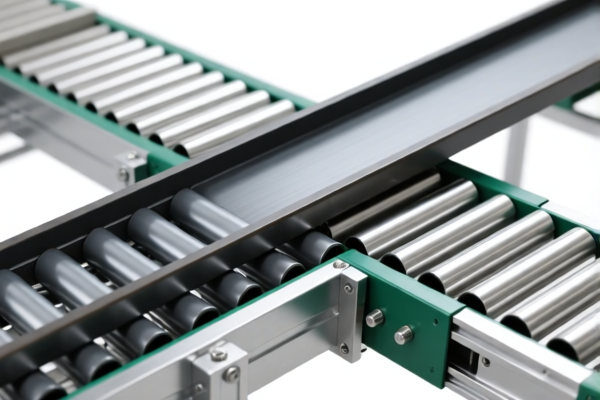
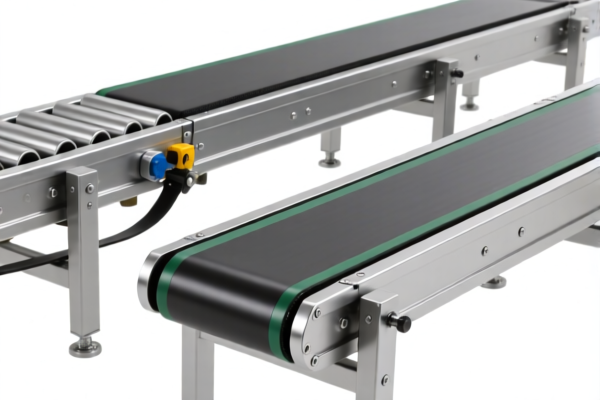
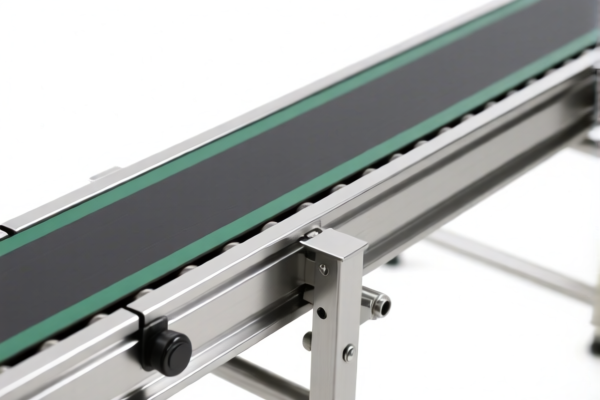
AI Analysis
🚛 Sulfur Treated Conveyor Belt (Vulcanized Rubber Belting)
🌐 HS Code Reference & Customs Clearance Guide | 2026 Latest Tariff Analysis | Professional Transit Strategy
📌 I. Product Definition & Classification: What is a "Sulfur Treated Conveyor Belt"?
A Sulfur Treated Conveyor Belt (technically known as Vulcanized Rubber Conveyor Belt) is a composite material used for transporting bulk materials or items. The "sulfur treatment" refers to the vulcanization process, where raw rubber is cross-linked with sulfur under heat and pressure to create a durable, elastic, and heat-resistant product.
In international trade, these belts are classified based on their reinforcement material (fabric, steel cord, or pure rubber) and application (power transmission vs. material conveying).
⚠️ Key Distinction Point: - If the belt is primarily for conveying materials (mining, packaging, logistics) → It falls under Chapter 40 (Rubber) or Chapter 59 (Textile Reinforced). - If the belt is primarily for power transmission (engines, motors) in machinery → It may fall under Chapter 40 but with different sub-headings. - Crucial Note: The term "Sulfur Treated" is a manufacturing description, not a customs classification term. Customs classifies based on material composition and function.
📦 II. HS Code Classification Details (Based on Provided Data)
Below are the 6 possible HS Codes derived from your specific dataset, ranked by logical fit and tariff impact.
| HS Code | Product Description Summary | Key Classification Logic | Total Tax Rate |
|---|---|---|---|
5910.00.10.30 |
Artificial Fiber Reinforced Conveyor Belt | Belt made of artificial fibers (nylon, polyester, rayon) reinforced with rubber/plastic. Matches "power transmission or conveying" applications. | 39.0% |
3926.90.55.00 |
Plastic/Synthetic Material Conveyor Belt | Belt treated as a plastic/synthetic article rather than pure rubber. Used in machinery/transmission. | 40.1% |
3926.90.59.00 |
Plastic/Textile Composite Conveyor Belt | Contains textile fibers within a plastic/rubber matrix. Fits "composite with textile fiber" classification. | 37.4% |
5910.00.90.00 |
Other Reinforced Conveyor Belts | Rubber or textile reinforced belts not specified elsewhere. General "transmission or conveying belt" category. | 37.6% |
4010.19.91.00 |
Vulcanized Rubber Belt (Direct Match) | Direct match for硫化带 (Vulcanized Belt) made of rubber. Specific for rubber conveyor belts. | 38.3% |
4010.12.90.00 |
Unspecified Reinforced Rubber Belt | Vulcanized belt where reinforcement material is not clearly specified. Falls under "Other" category logic. | 36.9% |
🔍 Classification Priority Guide: 1. If you know the reinforcement: - Artificial Fiber (Nylon/Polyester) →
5910.00.10.30(39.0%) - Steel Cord/Cable → Usually4010.19.91.00(38.3%) - Pure Rubber/Fabric Blend →5910.00.90.00(37.6%) 2. If reinforcement is unknown or mixed: - Use4010.12.90.00(36.9%) as the fallback "Other" category. - Use3926.90.59.00(37.4%) if it has significant plastic/textile composite properties.
💰 III. 2026 Tariff Rate Breakdown (Detailed Tax Clause Analysis)
✅ Applicable Country: USA (US)
✅ Origin: China (CN)
✅ Effective Date: Post-2025.11.10 (Includes Section 301 & IEEPA surcharges)
All listed HS codes are subject to the same surcharge structure due to the product's origin and nature. The variation in Total Tax comes solely from the Base Tariff Rate.
🎯 1. Tariff Structure Template (Applied to All 6 HS Codes)
| Tax Component | Rate | Legal Basis |
|---|---|---|
| Base Tariff | Varies (1.9% – 5.1%) | USHTS (Harmonized Tariff Schedule) |
| Section 301 Surcharge | +25.0% | USITC Footnote 9903.88.01 (Trade Remedy) |
| Section 122 / IEEPA Surcharge | +10.0% | IEEPA:9903.01.25 (Emergency Powers) |
| 🔥 TOTAL EFFECTIVE RATE | 36.9% – 40.1% | Base + 25% + 10% |
📊 Detailed Breakdown by HS Code:
1. 4010.12.90.00 (Lowest Rate: 36.9%)
- Base Tariff: 1.9%
- Calculation: 1.9% + 25% + 10% = 36.9%
- Why it’s lower: Classified as "Other" rubber articles with unspecified reinforcement, attracting the lowest base duty.
2. 3926.90.59.00 (37.4%)
- Base Tariff: 2.4%
- Calculation: 2.4% + 25% + 10% = 37.4%
- Note: Classified under Plastic Articles, but due to textile content.
3. 5910.00.90.00 (37.6%)
- Base Tariff: 2.6%
- Calculation: 2.6% + 25% + 10% = 37.6%
- Note: General textile-reinforced rubber belt.
4. 4010.19.91.00 (38.3%)
- Base Tariff: 3.3%
- Calculation: 3.3% + 25% + 10% = 38.3%
- Why it’s higher: Direct classification for specific Vulcanized Rubber Belts.
5. 5910.00.10.30 (39.0%)
- Base Tariff: 4.0%
- Calculation: 4.0% + 25% + 10% = 39.0%
- Note: Artificial fiber reinforced belts often face higher base duties.
6. 3926.90.55.00 (Highest Rate: 40.1%)
- Base Tariff: 5.1%
- Calculation: 5.1% + 25% + 10% = 40.1%
- Why it’s highest: Classified as Plastic/Synthetic articles, which often have higher base tariffs.
📌 Critical Warning: - No De Minimis Exemption: These items are NOT eligible for $800 de minimis duty-free entry under Section 321. - High Tariff Impact: Even the lowest rate (36.9%) is significant. Cost calculation must include CIF value × Total Rate.
🛠️ IV. Customs Clearance Practical Advice
✅ 1. Required Documentation Checklist
| Document | Mandatory? | Purpose |
|---|---|---|
| Product Specification Sheet | ✅ Yes | Must detail: Material (Rubber/Plastic), Reinforcement (Fabric/Steel/Cord), Width, Thickness, Hardness (Shore A). |
| Vulcanization Certificate | ✅ Yes | Proof of "Sulfur Treatment" (Vulcanization) process. |
| Commercial Invoice | ✅ Yes | Must clearly state: "Vulcanized Rubber Conveyor Belt", HS Code, Unit Price. |
| Packing List | ✅ Yes | Weight, dimensions, number of rolls. |
| Certificate of Origin (CO) | ✅ Yes | To verify Chinese origin (triggers 301/122 tariffs). |
| Material Composition Statement | ✅ Yes | Critical for choosing between 4010 (Rubber) vs 5910 (Textile) vs 3926 (Plastic). |
✅ 2. Declaration Strategy (Key Tips)
🔥 "Declare Material, Not Just 'Belt'!"
| Scenario | Recommended HS Code | Reason |
|---|---|---|
| Mainly Rubber + Fabric Reinforcement | 5910.00.90.00 or 4010.19.91.00 |
Most common for industrial conveyor belts. |
| Steel Cord Reinforced | 4010.19.91.00 |
Steel cord is considered rubber composite. |
| Pure Plastic/Synthetic Belt | 3926.90.55.00 |
If no rubber is present. |
| Unknown Reinforcement | 4010.12.90.00 |
Safest fallback if specs are unclear. |
❌ Common Mistakes: - Mistake 1: Calling it "Rubber Belt" without specifying reinforcement. → Result: Customs may reclassify to highest bracket (40.1%). - Mistake 2: Using "Transmission Belt" for a "Conveyor Belt". → Result: Incorrect classification, potential penalties. - Mistake 3: Ignoring the "Sulfur Treated" note. → Result: Must clarify it's Vulcanized, not raw rubber.
✅ 3. Special Considerations
- Section 301 & IEEPA Surcharges: These are non-negotiable for Chinese-origin goods. Do not attempt to claim exemptions unless you have a valid Exclusion List approval (which is rare for industrial belts post-2025).
- Anti-Dumping/Countervailing Duties (AD/CVD): Check if your specific type of conveyor belt (e.g., steel cord) is subject to additional AD/CVD rates beyond the 35% base surcharge. Some rubber products face separate AD/CVD cases.
- Pre-Ruling Recommendation: If the volume is high, apply for an Advance Ruling from CBP using the material composition statement to lock in the HS Code and avoid post-clearance audits.
🌍 V. Global Market Comparison (2026)
| Market | Recommended HS Code | Estimated Total Duty | Notes |
|---|---|---|---|
| 🇺🇸 USA | 4010.12.90.00 |
36.9% - 40.1% | High tariffs due to 301 & 122 clauses. |
| 🇨🇳 China | 4010.12.90.00 |
~5-10% | Import duty + VAT. No US surcharges. |
| 🇪🇺 EU | 4010.11.00 |
~0-2% | Often duty-free if preferential agreement applies. |
| 🇯🇵 Japan | 4010.11.00 |
~0-3% | Competitive rates. |
📌 Conclusion: The USA is the most expensive market for sulfur-treated conveyor belts due to layered surcharges. Consider supply chain diversification if targeting the US market heavily.
📌 VI. Common Errors & Pitfalls (Lessons Learned)
❌ Error 1: Declaring as "Parts of Machinery" (8483) instead of "Belts" (4010/5910)
👉 Consequence: Misclassification, penalties, and potential seizure.
❌ Error 2: Omitting "Vulcanized" or "Sulfur Treated" in description
👉 Consequence: Customs may question if it's raw rubber (different duty) or processed good.
❌ Error 3: Using wrong HS Code for Steel Cord Belts
👉 Consequence: If classified as fabric-reinforced (5910) instead of rubber (4010), duty might be lower, but anti-dumping investigations are more likely for steel cord. Verify AD/CVD status.
✅ Correct Declaration Example:
"Vulcanized Rubber Conveyor Belt, Sulfur-Treated, Fabric Reinforced (Polyester), Width: 500mm, Length: 100m, HS Code: 4010.12.90.00, Made in China."
🎯 VII. Conclusion: Professional Clearance, Cost Optimization!
🎯 Key Takeaway:
🔹 "Material Defines Code, Origin Defines Tariff!"
🔹 "Vulcanized is Key: Ensure 'Sulfur Treated' is documented."
🔹 "Expect 37-40% Duty for US Imports from China."
📌 Pro Tip: If your conveyor belt has specialized coatings (oil-resistant, heat-resistant), highlight this in the specs to ensure it’s classified correctly and to justify the technical nature to customs auditors.
📣 Immediate Action:
📞 Contact your freight forwarder with the Material Composition Sheet.
🚀 Calculate landed cost using 36.9% (lowest) as a baseline, but budget for 40.1% for safety.
✈️ Ensure accurate labeling on all rolls to prevent customs delays.
✨ Precise Classification, Smooth Clearance!
💼 Every Percentage Point Saved is Profit Earned!
Customer Reviews
About HS Code Classification
The Harmonized System (HS) is an internationally standardized nomenclature developed by the World Customs Organization (WCO) to classify traded products. Over 200 countries use the HS system as the basis for customs tariffs, trade statistics, and import/export regulations.
Each HS code follows a hierarchical structure:
- Chapter (2 digits) — Broad category of goods (e.g., Chapter 84: Machinery and Mechanical Appliances)
- Heading (4 digits) — More specific grouping within the chapter
- Subheading (6 digits) — Internationally standardized breakdown, used by all WCO member countries
- National subdivisions (8-10 digits) — Country-specific extensions for further classification, such as US HTSUS 10-digit codes
Correct HS code classification is essential for smooth customs clearance, accurate duty payment, and compliance with trade regulations. Misclassification can lead to customs delays, overpayment of duties, or penalties.
When importing from CN to US, the applicable tariff rates may include:
- Most-Favored-Nation (MFN) rate — The standard duty rate applied to WTO members
- General rate — Applied to countries without trade agreements
- Trade remedy duties — Additional tariffs such as Section 301 (anti-dumping), Section 232 (national security), or countervailing duties
The information provided on this page is for reference purposes only. For official classification, please consult with your local customs authority or a licensed customs broker.