Sulfurated Cork Rubber Strip
CN → US| HS Code | Tariff Rate | Origin | Destination | Doc |
|---|---|---|---|---|
| 4016935010 | 37.5% | CN | US | Official Doc |
| 4016931010 | 37.5% | CN | US | Official Doc |
| 4504105000 | 35.0% | CN | US | Official Doc |
| 4504101000 | 35.0% | CN | US | Official Doc |
| 4017000000 | 37.7% | CN | US | Official Doc |
Product Images
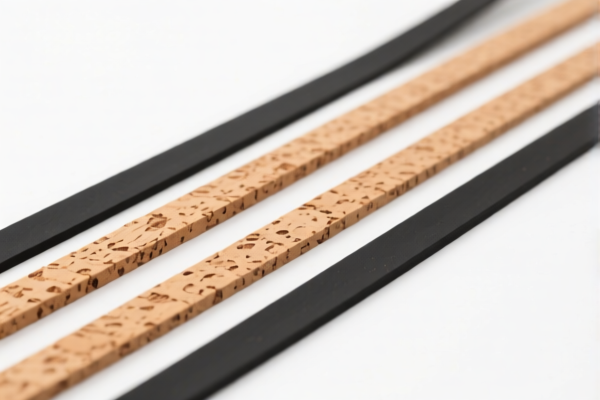
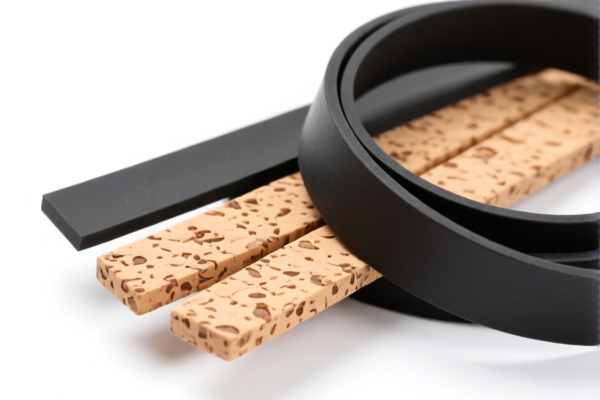
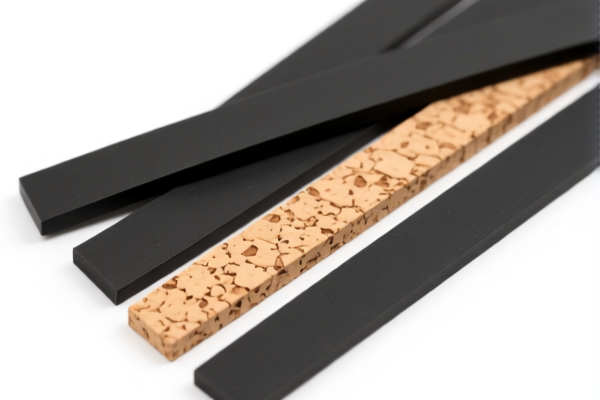
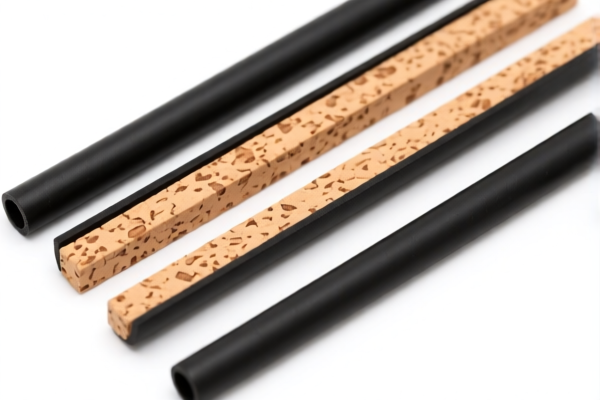
AI Analysis
🛑 STOP! Critical Classification Alert for "Sulfurated Cork Rubber Strip"
🌐 HS Code Reference & Customs Clearance Guide | 2026 Latest Tariff Analysis | Professional Clearance Strategy
📌 I. Product Definition & Classification: Is It Rubber or Cork?
"Sulfurated Cork Rubber Strip" is a composite material. In international trade, the classification depends heavily on the primary material and processing method. The term "Sulfurated" (Vulcanized) and "Cork Rubber" creates ambiguity.
Key Distinction: * Vulcanized Rubber Products (Chapter 40): If the primary matrix is rubber, and cork is merely a filler or additive. * Cork Products (Chapter 45): If the primary matrix is cork, even if bound with rubber or sulfurated.
⚠️ Critical Clarification Point:
- If the product is described as "Vulcanized Rubber" with cork fillers → Likely Chapter 40.
- If the product is "Sulfurated Cork" (Cork bound with rubber) → Likely Chapter 45.
- Shape Matters: Seals/Gaskets vs. Strips/Tapes.
📦 II. HS Code Classification Details (Based on Provided Data)
Based strictly on the provided <DATA>, here are the 5 possible HS Codes and their corresponding tax implications. Note that while some summaries seem identical in the provided JSON, the HS Codes differ significantly in legal classification.
| HS Code | Product Summary (From Data) | Material Nature | Form/Shape |
|---|---|---|---|
| 4016.93.50.10 | Sulfurated Cork Rubber Seal | Vulcanized Rubber | Seal |
| 4016.93.10.10 | Sulfurated Cork Rubber Seal | Vulcanized Rubber | Other Sealing Elements |
| 4504.10.50.00 | Sulfurated Cork Rubber Seal | Processed Cork (Combined) | Sheet |
| 4504.10.10.00 | Sulfurated Cork Rubber Seal | Ground/Fine Cork + Rubber | Vulcanized Sheets/Plates |
| 4017.00.00.00 | Other Vulcanized Rubber Car Sealing Strips | Vulcanized Rubber | Sealing Strip |
🔍 Key Takeaway:
- Codes4016.93.xxclassify the item as Rubber.
- Codes4504.10.xxclassify the item as Cork.
- Code4017.00.00.00is specific to Car Sealing Strips.
- Misclassification Risk: Declaring a Cork-based product as Rubber (or vice versa) can lead to duty audits and penalties.
💰 III. 2026 Latest Tariff Rate Breakdown (Detailed Tax Analysis)
✅ Applicable Country: United States (US)
✅ Origin: China (CN)
✅ Applicable Dates: Based on current USITC and USTR directives (Section 301 & 122/IEEPA)
🎯 1. Rubber-Based Classifications (HS 4016.93)
| HS Code | Description | Tax Detail Breakdown | Total Tax Rate |
|---|---|---|---|
| 4016.93.50.10 | Sulfurated Cork Rubber Seal (Rubber) | Base: 2.5% Additional (Sec 301): 25.0% 122 Clause: 10% |
37.5% |
| 4016.93.10.10 | Sulfurated Cork Rubber Seal (Other Sealing Elements) | Base: 2.5% Additional (Sec 301): 25.0% 122 Clause: 10% |
37.5% |
📌 Explanation:
- These codes fall under Chapter 40 (Rubber and Articles Thereof).
- The 2.5% is the MFN (Most Favored Nation) base duty.
- The 25.0% is the Section 301 retaliatory tariff on Chinese rubber goods.
- The 10% is the "122 Clause" tariff (often linked to specific trade remedy actions or USTR exclusions).
- Total Liability: 37.5% on CIF value.
🎯 2. Cork-Based Classifications (HS 4504.10)
| HS Code | Description | Tax Detail Breakdown | Total Tax Rate |
|---|---|---|---|
| 4504.10.50.00 | Sulfurated Cork Rubber Seal (Cork Matrix) | Base: 0.0% Additional (Sec 301): 25.0% 122 Clause: 10% |
35.0% |
| 4504.10.10.00 | Sulfurated Cork Rubber Seal (Ground Cork + Rubber) | Base: 0.0% Additional (Sec 301): 25.0% 122 Clause: 10% |
35.0% |
📌 Explanation:
- These codes fall under Chapter 45 (Cork and Articles of Cork).
- Base Duty is 0%, which is significantly lower than the rubber category.
- However, the Additional Tariffs (25% + 10%) remain the same due to the Chinese origin.
- Savings: 2.5% compared to rubber-based classifications.
- Risk: Must prove that Cork is the essential character, not just a filler in rubber.
🎯 3. Specific Automotive Seal Strip (HS 4017.00)
| HS Code | Description | Tax Detail Breakdown | Total Tax Rate |
|---|---|---|---|
| 4017.00.00.00 | Other Vulcanized Rubber Car Sealing Strips | Base: 2.7% Additional (Sec 301): 25.0% 122 Clause: 10% |
37.7% |
📌 Explanation:
- This code is highly specific to automotive applications.
- If the "Strip" is not for cars (e.g., industrial, window, door), this code may be incorrect.
- Slightly Higher Rate: 37.7% vs 37.5% for general rubber seals.
🛠️ IV. Customs Clearance Practical Advice (Avoiding Pitfalls)
✅ 1. Essential Documentation Checklist
| Document | Requirement | Why It Matters |
|---|---|---|
| ✅ Product Specification Sheet | Must detail Material Composition (e.g., "90% Cork, 10% Rubber") | Determines Chapter 40 vs. 45. |
| ✅ Photos | Clear images of cross-section (showing cork/rubber mix) | Proves "Vulcanized" status and structure. |
| ✅ Commercial Invoice | Must use precise description: "Sulfurated Cork Rubber Sealing Strip, HS 4504.10.10.00" | Prevents misclassification by customs brokers. |
| ✅ Certificate of Origin | Proof of China Origin | Triggers Section 301 and 122 tariffs. |
| ✅ Bill of Lading | Matches Invoice description | Consistency is key to avoid delays. |
✅ 2. Classification Strategy & Keywords
🔥 Golden Rule: "Material First, Shape Second, Use Third."
| Scenario | Recommended HS Code | Reasoning |
|---|---|---|
| Primary Material is Cork (Cork bound with rubber) | 4504.10.10.00 or 4504.10.50.00 | Lower base duty (0%). Must prove cork is essential character. |
| Primary Material is Rubber (Rubber with cork filler) | 4016.93.50.10 | Standard rubber seal classification. |
| Specifically for Automobiles | 4017.00.00.00 | Only if explicitly designed for car body/window sealing. |
| General Purpose Seal/Gasket | 4016.93.10.10 | "Other sealing elements" if not specifically covered elsewhere. |
✅ 3. Critical Warnings & Pitfalls
❌ Pitfall 1: Mislabeling as "Natural Cork"
👉 Consequence: If you declare as 4503 (Natural Cork) without the "processed/vulcanized" detail, customs will reclassify it, leading to penalties for undeclared value-added processing.
❌ Pitfall 2: Ignoring the "122 Clause" (10%)
👉 Consequence: Many brokers miss the 10% 122 Clause tariff. This applies to ALL codes in the provided data. Failing to include it results in underpayment and future audits.
❌ Pitfall 3: Confusing "Strip" vs. "Seal"
👉 Consequence: 4017.00.00.00 is for Car Sealing Strips. If your product is an industrial gasket, using this code is incorrect and may trigger an audit for misclassification.
✅ Best Practice for Declaration:
"Vulcanized Cork-Rubber Composite Sealing Strip, HS 4504.10.10.00, 100% Made in China, Subject to Sec 301 and 122 Tariffs."
🌍 V. Global Market Comparison (Contextual Note)
| Region | Typical Duty on Rubber/Cork Seals | US Specifics |
|---|---|---|
| 🇺🇸 USA | 35.0% - 37.7% (High due to Sec 301 + 122) | Must pay: Base + 25% + 10%. No de minimis exemption for these codes. |
| 🇨🇳 China | 0% - 5% (Import) | Favorable for raw materials. |
| 🇪🇺 EU | 0% - 4% | No Section 301 equivalent. Generally lower burden. |
📌 Conclusion for US Importers:
The 2.5% difference between Cork (35.0%) and Rubber (37.5%) base duties is marginal. The real cost driver is the 35% combined additional tariff (25% + 10%).
Focus on correct classification to avoid penalties, not just minor rate differences.
📌 VI. Final Checklist for Clearance
- Confirm Material Composition: Is it >50% Cork (Ch 45) or >50% Rubber (Ch 40)?
- Verify End-Use: Is it for a car (Ch 4017) or general industry (Ch 4016/4504)?
- Calculate Total Landed Cost: CIF Value × (1 + 35%~37.7%).
- Prepare Proof of Origin: Certificate of Origin is mandatory.
- Consult a Licensed Customs Broker: For pre-classification ruling if the material mix is complex.
🎯 VII. Conclusion: Precision is Profit
🎯 Remember:
🔹 "Cork or Rubber? It changes the Base Rate!"
🔹 "Don't forget the 10% 122 Clause on ALL items!"
🔹 "35%~38% Total Duty is Standard for China-Origin Seals!"
📌 Pro Tip:
If you are importing large volumes, consider HTS Code 4504.10.10.00 (Cork-based) for a 2.5% savings on the base duty, provided your product composition supports it. However, ensure your product spec sheet explicitly states "Sulfurated Cork" to justify Chapter 45.
📣 Action Required:
📞 Contact your customs broker immediately with the product spec sheet.
📄 Request an HTS Code Pre-Ruling if the material composition is ambiguous.
💼 Budget for ~36% Total Duty in your landed cost calculations.
✨ Professional Clearance, Start with Accurate Classification!
💼 Every percent saved is pure profit!
Customer Reviews
About HS Code Classification
The Harmonized System (HS) is an internationally standardized nomenclature developed by the World Customs Organization (WCO) to classify traded products. Over 200 countries use the HS system as the basis for customs tariffs, trade statistics, and import/export regulations.
Each HS code follows a hierarchical structure:
- Chapter (2 digits) — Broad category of goods (e.g., Chapter 84: Machinery and Mechanical Appliances)
- Heading (4 digits) — More specific grouping within the chapter
- Subheading (6 digits) — Internationally standardized breakdown, used by all WCO member countries
- National subdivisions (8-10 digits) — Country-specific extensions for further classification, such as US HTSUS 10-digit codes
Correct HS code classification is essential for smooth customs clearance, accurate duty payment, and compliance with trade regulations. Misclassification can lead to customs delays, overpayment of duties, or penalties.
When importing from CN to US, the applicable tariff rates may include:
- Most-Favored-Nation (MFN) rate — The standard duty rate applied to WTO members
- General rate — Applied to countries without trade agreements
- Trade remedy duties — Additional tariffs such as Section 301 (anti-dumping), Section 232 (national security), or countervailing duties
The information provided on this page is for reference purposes only. For official classification, please consult with your local customs authority or a licensed customs broker.