Sulfurated Rubber Inflatable Airbag
CN → US| HS Code | Tariff Rate | Origin | Destination | Doc |
|---|---|---|---|---|
| 4016996050 | 37.5% | CN | US | Official Doc |
| 4016910000 | 37.7% | CN | US | Official Doc |
| 9404210095 | 38.0% | CN | US | Official Doc |
| 9404902090 | 23.5% | CN | US | Official Doc |
| 4016950000 | 21.7% | CN | US | Official Doc |
Product Images
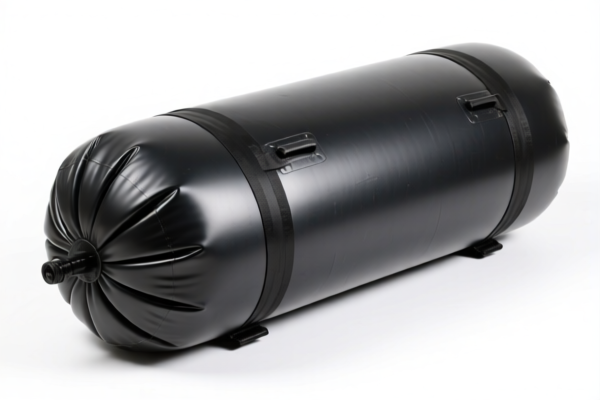
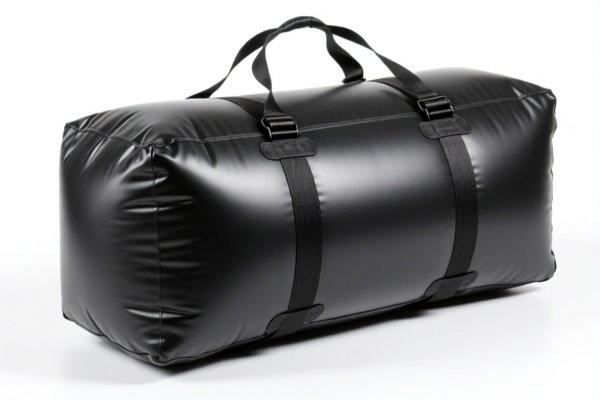
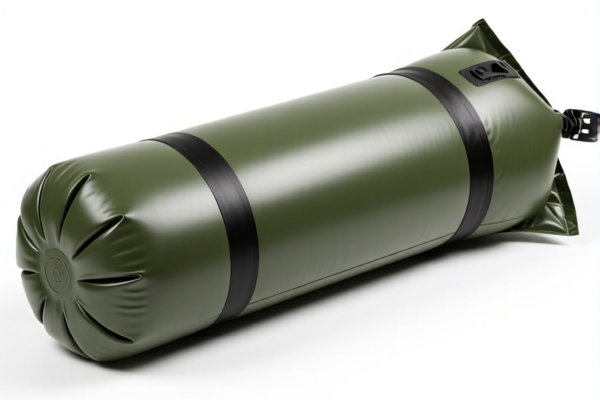
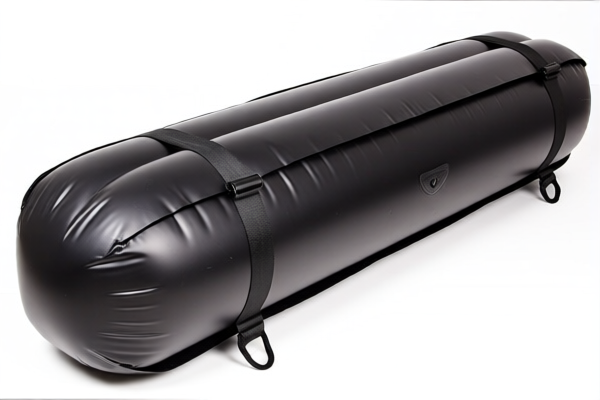
AI Analysis
🛡️ Sulfurated Rubber Inflatable Airbag
🌐 HS Code Reference & Customs Clearance Guide | 2026 Latest Tariff Analysis | Professional Clearance Strategy
📌 Part 1: Product Definition & Classification: What is a "Sulfurated Rubber Inflatable Airbag"?
An inflatable airbag made of sulfurated (vulcanized) rubber is an industrial or safety component designed to expand under pressure. In international trade, the classification depends heavily on its material composition and specific use. While "rubber" generally points to Chapter 40, "airbags" for safety (automotive) might point to Chapter 87 or 94, but here the material (sulfurated rubber) and the form (inflatable pad/bag) create specific classification paths.
⚠️ Key Distinction Point:
- If it is a non-inflatable pad/mat made of vulcanized rubber → Chapter 40 (Rubber Articles)
- If it is an inflatable article made of vulcanized rubber → Chapter 40 (specifically for other rubber articles)
- If it is mistakenly classified as furniture bedding (due to "pad" appearance) → Chapter 94 (This is a high-risk error zone due to duty rate differences)
📦 Part 2: HS Code Classification Details (2026 Latest Tariff Authority Comparison)
Based on the provided data, here are the 5 matched HS Codes with their matching logic and tax implications for imports from China to the US.
| HS Code | Product Description | Matching Logic | Total Tax Rate |
|---|---|---|---|
4016.99.60.50 |
Other vulcanized rubber articles, n.e.s. | Material Match: Vulcanized rubber. Form: Pad (Article). Logic: Fits general rubber article category, not a vehicle part. | 37.5% |
4016.91.00.00 |
Floor coverings and mats, of vulcanized rubber | Name Match: Explicitly mentions "Vulcanized Rubber" and "Pad" (Mats/Floor Coverings). Logic: Direct match for rubber mats/pads. | 37.7% |
9404.21.00.95 |
Mattresses and bedding, of plastic materials (incl. rubber) | Inference Match: "Pad" implies bedding/padding. Logic: Riskier classification assuming it falls under "plastic/rubber bedding" fallback. | 38.0% |
9404.90.20.90 |
Other articles of bedding and furnishing | Use/Shape Match: Pad/Cushion shape. Logic: If used as a cushion/pad for furniture, might be routed here. Note: Lower base duty but still high with surcharges. | 23.5% |
4016.95.00.00 |
Other inflatable articles, of vulcanized rubber | Explicit Match: Explicitly mentions "Inflatable" + "Vulcanized Rubber". Logic: Direct match for inflatable rubber articles. | 21.7% |
🔍 Critical Analysis:
-4016.95.00.00(21.7%) is likely the most accurate for an inflatable airbag made of rubber, as it specifically covers "inflatable articles" of rubber.
-9404.90.20.90(23.5%) offers the lowest total tax but requires the product to be clearly defined as a "cushion/pad for bedding/furniture" rather than an industrial airbag. Misclassification here could lead to customs disputes if the item is used for industrial purposes.
-4016.91.00.00(37.7%) is a safe fallback if the airbag is considered a "mat" or "floor covering" (e.g., anti-fatigue mats), but it is more expensive.
💰 Part 3: 2026 Latest Tariff Rate Breakdown (Including Surcharges & Policy Add-ons)
✅ Applicable Country: USA (US)
✅ Origin: China (CN)
✅ Effective Date: November 10, 2025 (and onwards)
🎯 1. 4016.95.00.00 —— Inflatable Articles of Vulcanized Rubber (RECOMMENDED)
| Item | Content |
|---|---|
| Base Tariff | 4.2% (ad valorem) |
| USITC Surcharge (Section 301) | +7.5% |
| IEEPA Surcharge (122 Provisions) | +10% |
| Total Rate | 21.7% |
| Tax Calculation | CIF Value × 21.7% |
| De Minimis Exemption? | ❌ No (deny_de_minimis) |
| Legal Basis Path | IEEPA:9903.01.24 → USITC:4016.95.00.00 → FOOTNOTE:9903.88.01 |
📌 Explanation:
- This code has the lowest total duty among all options (21.7%).
- The base tariff is 4.2%.
- Added 7.5% under USITC Section 301 (for rubber articles).
- Added 10% under IEEPA (China-specific).
- Strategy: Use this if the product is clearly an inflatable rubber item.
🎯 2. 9404.90.20.90 —— Other Bedding/Furnishing Articles (LOWEST DUTY, HIGHEST RISK)
| Item | Content |
|---|---|
| Base Tariff | 6.0% |
| USITC Surcharge | +7.5% |
| IEEPA Surcharge | +10% |
| Total Rate | 23.5% |
| Tax Calculation | CIF Value × 23.5% |
| De Minimis Exemption? | ❌ No |
| Legal Basis Path | IEEPA:9903.01.24 → USITC:9404.90.20.90 → FOOTNOTE:9903.88.01 |
📌 Note:
- While 23.5% is low, Class 94 is for furniture/bedding. If Customs determines this is an industrial airbag (not a cushion), you will be reassigned to Class 40 with higher duties.
- Only use if the airbag is explicitly marketed and used as a cushion or pad for furniture/sleeping.
🎯 3. 4016.99.60.50 & 4016.91.00.00 —— Other Rubber Articles / Mats (HIGH DUTY)
| Item | Content |
|---|---|
| Base Tariff | 2.5% - 2.7% |
| USITC Surcharge | +25.0% |
| IEEPA Surcharge | +10% |
| Total Rate | 37.5% - 37.7% |
| Tax Calculation | CIF Value × ~37.6% |
| De Minimis Exemption? | ❌ No |
| Legal Basis Path | IEEPA:9903.01.25 → IEEPA:9903.01.24 → USITC:4016.xxxx → FOOTNOTE:9903.88.01 |
📌 Explanation:
- These codes attract the highest additional surcharge (25%) from USITC.
-4016.91.00.00is for mats/floor coverings. If your airbag is used as a floor mat, this applies.
-4016.99.60.50is a "catch-all" for rubber articles not elsewhere specified.
🛠️ Part 4: Customs Clearance Practical Advice (Battle-Tested Pitfall Guide)
✅ 1. Required Documentation Checklist (Non-Negotiable)
| Document | Mandatory? | Description |
|---|---|---|
| ✅ Product Specification Sheet | ✔️ | Must specify: Material (Vulcanized Rubber), Form (Inflatable), Use (Industrial/Safety/Furniture). |
| ✅ Photos | ✔️ | Clear images of the airbag inflated and deflated. Show seams and valves. |
| ✅ Certificate of Origin (CO) | ✔️ | Proves Chinese origin (triggers surcharges). |
| ✅ Commercial Invoice | ✔️ | Description must be precise: "Vulcanized Rubber Inflatable Airbag, Model XYZ." Avoid vague terms like "Rubber Pad" unless intended for Class 4016.91. |
| ✅ Usage Declaration | ✔️ | Letter explaining if it is for industrial use (supports 4016.95) or furniture use (supports 9404.90). |
✅ 2. Declaration Strategy (Key Mantra)
🔥 "Be Inflatable, Be Rubber, Be Specific!"
| Scenario | Correct HS Code | Wrong Action |
|---|---|---|
| Industrial/Safety Airbag (e.g., lift bags, safety cushions) | 4016.95.00.00 |
Calling it a "pad" → Risk of Class 94 audit |
| Furniture Cushion/Air Mattress (e.g., camping pad, office cushion) | 9404.90.20.90 |
Calling it an "industrial airbag" → Duty jump to 37% |
| Anti-Fatigue Floor Mat | 4016.91.00.00 |
Calling it "inflatable" when it's flat → Misclassification |
✅ 3. Special Handling Tips
| Situation | Advice |
|---|---|
| Vague Name "Rubber Pad" | If the airbag can double as a cushion, you might qualify for 9404.90.20.90 (23.5%), but you must prove its primary use is for bedding/furniture. If it's for industrial lifting, you must use 4016.95.00.00. |
| Dual-Use Products | Provide a Statement of Use. If the buyer declares it for industrial use, use Class 40. If for home use, use Class 94. |
| Pre-Ruling | Highly recommended. Apply for a Binding Tariff Information (BTI) or US Customs Ruling before shipment to lock in the 21.7% rate. |
🌍 Part 5: Global Market Clearance Comparison (2026 Latest)
| Country/Region | Recommended HS Code | Tariff (CN Origin) | Certifications | Notes |
|---|---|---|---|---|
| 🇺🇸 USA | 4016.95.00.00 |
21.7% | None specific | Best Rate for Inflatable Rubber. High scrutiny on "pad" vs "airbag". |
| 🇨🇳 China | 4016.95.00.00 |
5-10% | GB Standards | Lower impact of US tariffs. |
| 🇪🇺 EU | 4016.99.90 |
3-4% | REACH | No Section 301/IEEPA surcharges. |
| 🇬🇧 UK | 4016.99.90 |
3-4% | UKCA | Post-Brexit rules apply. |
| 🇯🇵 Japan | 4016.99.90 |
5-6% | JIS | Stable, low tariffs. |
📌 Conclusion:
- The USA is the only market with heavy surcharges (301 + IEEPA).
- Class 40 (Rubber) is your friend if you are precise (4016.95= 21.7%).
- Class 94 (Bedding) is a trap if not properly justified (9404.90= 23.5% but risky).
- Class 40 (Mats/Other) is expensive (37.5%+). Avoid unless the product is clearly a mat.
📌 Part 6: Common Mistakes & Pitfalls (Blood Lessons)
❌ Mistake 1: Using "Rubber Pad" as the generic name without specifying "Inflatable".
👉 Consequence: Customs may classify as 4016.91 (Mats) or 4016.99 (Other), triggering the 25% USITC surcharge → Total duty 37.5%.
💡 Fix: Always use "Inflatable Airbag" in the description if it has air chambers/valves.
❌ Mistake 2: Classifying an industrial airbag as "Furniture" (9404).
👉 Consequence: If Customs proves it's for industrial use, you face penalties + back duties (difference between 23.5% and 21.7% is small, but the compliance risk is huge).
💡 Fix: Match the product documentation to the buyer's declared use.
❌ Mistake 3: Ignoring the "122 Clause" (IEEPA 10%).
👉 Consequence: Underestimating total landed cost. All listed rates include this 10%.
💡 Fix: Always calculate CIF × 21.7% (or 37.5%) for accurate pricing.
🎯 Part 7: Conclusion: Precision Classification Saves Money!
🎯 Remember the Mantra:
🔹 "Inflatable + Rubber = 4016.95 (21.7%)!"
🔹 "Pad + Furniture Use = 9404.90 (23.5%) – But Risky!"
🔹 "Mat + Rubber = 4016.91 (37.7%) – Expensive!"
🔹 "Don't Guess, Specify – Save 15% Duty!"
📌 Pro Tip:
If your airbag is manufactured in Vietnam, Mexico, or Thailand, you may qualify for IEEPA Exemptions (lower or 0% tariffs).
Recommendation: Apply for a Pre-Ruling from US Customs and Border Protection (CBP) before your first shipment. This locks in the 21.7% rate for 4016.95.00.00 and avoids audits.
📣 Immediate Action:
📞 Contact your freight forwarder + Provide Product Photos + Declare "Vulcanized Rubber Inflatable Airbag"
🚀 Clearance Smooth, Costs Low, Profit High!
✨ Professional Clearance Starts with Accurate Classification!
💼 Every cent of your cost deserves precise calculation!
Customer Reviews
About HS Code Classification
The Harmonized System (HS) is an internationally standardized nomenclature developed by the World Customs Organization (WCO) to classify traded products. Over 200 countries use the HS system as the basis for customs tariffs, trade statistics, and import/export regulations.
Each HS code follows a hierarchical structure:
- Chapter (2 digits) — Broad category of goods (e.g., Chapter 84: Machinery and Mechanical Appliances)
- Heading (4 digits) — More specific grouping within the chapter
- Subheading (6 digits) — Internationally standardized breakdown, used by all WCO member countries
- National subdivisions (8-10 digits) — Country-specific extensions for further classification, such as US HTSUS 10-digit codes
Correct HS code classification is essential for smooth customs clearance, accurate duty payment, and compliance with trade regulations. Misclassification can lead to customs delays, overpayment of duties, or penalties.
When importing from CN to US, the applicable tariff rates may include:
- Most-Favored-Nation (MFN) rate — The standard duty rate applied to WTO members
- General rate — Applied to countries without trade agreements
- Trade remedy duties — Additional tariffs such as Section 301 (anti-dumping), Section 232 (national security), or countervailing duties
The information provided on this page is for reference purposes only. For official classification, please consult with your local customs authority or a licensed customs broker.