Summer Car Tires
CN → US| HS Code | Tariff Rate | Origin | Destination | Doc |
|---|---|---|---|---|
| 4012118000 | 38.4% | CN | US | Official Doc |
| 4011101070 | 39.0% | CN | US | Official Doc |
| 4012114000 | 39.0% | CN | US | Official Doc |
| 4011105000 | 38.4% | CN | US | Official Doc |
Product Images
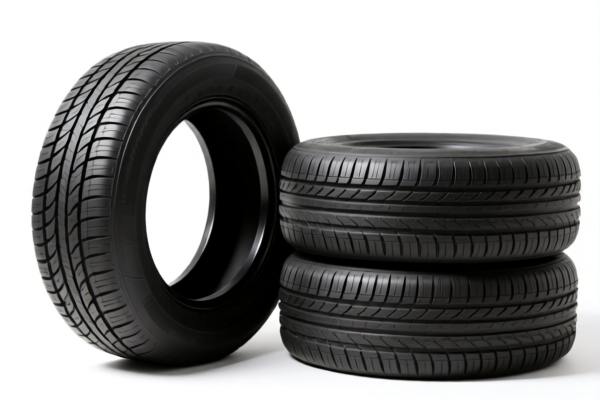
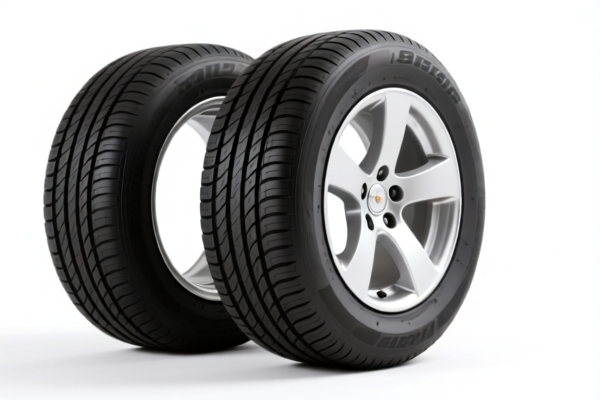
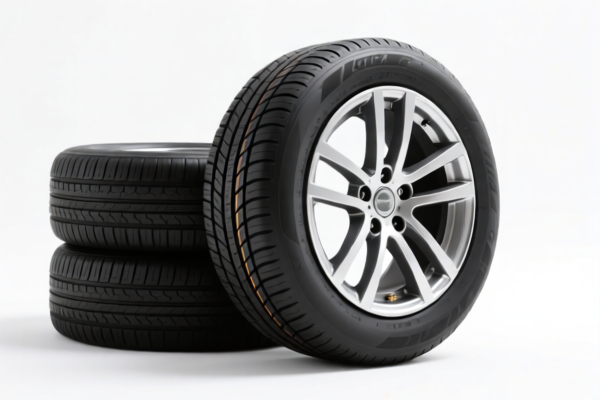
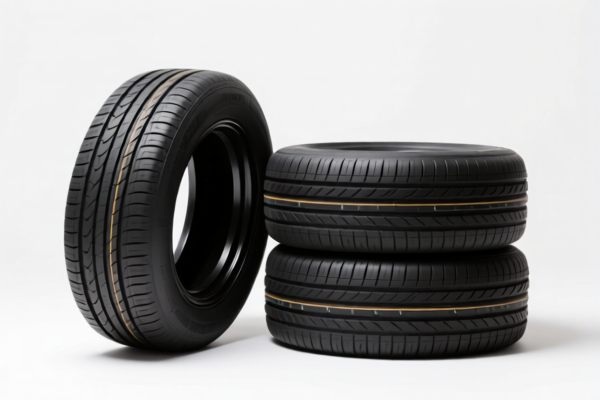
AI Analysis
🚗 Summer Car Tires: The Ultimate High-Performance Road Grip
🌐 HS Code Reference & Customs Clearance Guide | 2026 Latest Tariff Analysis | Professional-Level Clearance Strategy
📌 I. Product Definition & Classification: Do You Really Understand "Summer Car Tires"?
Summer tires are specialized pneumatic tires designed for optimal performance in dry and wet conditions at temperatures generally above 7°C (45°F). They feature a harder rubber compound and aggressive tread patterns to maximize contact with the road, providing superior handling, braking, and cornering capabilities compared to all-season or winter tires.
In international trade, they are categorized based on their state (New vs. Retreaded/Used) and construction type (Radial vs. Other).
⚠️ Critical Distinction:
- New Radial Tires: The most common type for modern passenger vehicles. Must declare as "Radial".
- New Non-Radial Tires: Less common now, often bias-ply. Declared as "Other".
- Retreaded Tires: Old tires with new treads applied. Strictly separated from new tires in classification.
- Inner Tubes: Separate component. Often ignored but critical if imported separately.
📦 II. HS Code Classification Details (2026 Latest Tariff Authority Comparison)
Based on the provided data, here is the precise mapping for Summer Car Tires:
| HS Code | Product Description | Application Scenario | Tax Rate (Total) | Key Characteristics |
|---|---|---|---|---|
4011.10.10.70 |
New pneumatic tires; Motor cars; Radial; Rim diameter > 18 inches (45.72 cm) | High-performance sports cars, luxury sedans, large SUVs | 29.0% | Base: 4.0% + Additional: 25.0% |
4011.10.50.00 |
New pneumatic tires; Motor cars; Radial (if <18") or Other (Non-radial); Smaller rims or non-radial | Standard passenger cars, economy vehicles, older models | 28.4% | Base: 3.4% + Additional: 25.0% |
4012.11.40.00 |
Retreaded tires; Motor cars; Radial | Eco-friendly replacement, budget-conscious fleet management | 0.0% | Base: 0.0% + Additional: 0.0% |
4012.11.80.00 |
Retreaded tires; Motor cars; Other (Non-radial) | Vintage car restorations, niche markets | 0.0% | Base: 0.0% + Additional: 0.0% |
4013.10.00.10 |
Inner tubes; Motor cars | Often sold separately or as spare parts; Must be declared if included | 0.0% | Base: 0.0% + Additional: 0.0% |
4013.90.50.50 |
Inner tubes; Other types | Non-motor car applications (e.g., bicycles, trailers) | 0.0% | Base: 0.0% + Additional: 0.0% |
🔍 Key Reminder:
- "Summer" is a seasonal descriptor, NOT a customs classification criterion. Customs classifies by construction (Radial/Non-radial), size (Rim Diameter), and condition (New/Retreaded).
- Radial vs. Bias-Ply: Most modern summer tires are radial. If you import bias-ply (non-radial) tires, they fall under4011.10.50.00.
- Rim Diameter Threshold: The 18-inch (45.72 cm) mark is critical. Tires greater than 18 inches go to4011.10.10.70; others go to4011.10.50.00.
💰 III. 2026 Latest Tariff Rate Breakdown (Including Surcharges)
✅ Applicable Country: United States (US)
✅ Origin: China (CN)
✅ Effective Time: 2025-11-10 onwards (Including subsequent imports)
🎯 1. 4011.10.10.70 —— New Radial Tires (Rim Diameter > 18 inches)
| Item | Content |
|---|---|
| Base Tariff | 4.0% |
| Section 301 Additional Tariff | +25.0% |
| Total Tariff | 29.0% |
| Tax Calculation | CIF Value × 29.0% |
| De Minimis Exemption Eligible? | ❌ No (Denied for large tires due to Section 301) |
| Legal Basis Path | USITC:4011.10.10.70 → SECTION_301:4011.10.10.70 |
📌 Explanation:
- Large-diameter radial tires (often found on performance cars) attract the highest duty among new tires.
- The 25% additional tariff is applied on top of the 4% base duty.
- Total Cost Impact: 29% of the CIF value.
🎯 2. 4011.10.50.00 —— New Radial Tires (Rim Diameter ≤ 18") or Non-Radial
| Item | Content |
|---|---|
| Base Tariff | 3.4% |
| Section 301 Additional Tariff | +25.0% |
| Total Tariff | 28.4% |
| Tax Calculation | CIF Value × 28.4% |
| De Minimis Exemption Eligible? | ❌ No |
| Legal Basis Path | USITC:4011.10.50.00 → SECTION_301:4011.10.50.00 |
📌 Explanation:
- This category covers standard passenger car tires (typically 15-17 inches) or older bias-ply constructions.
- Total Cost Impact: 28.4% of the CIF value.
🎯 3. 4012.11.40.00 & 4012.11.80.00 —— Retreaded Tires
| Item | Content |
|---|---|
| Base Tariff | 0.0% |
| Additional Tariff | 0.0% |
| Total Tariff | 0.0% |
| De Minimis Exemption Eligible? | ✅ Yes (Generally lower duty burden) |
📌 Explanation:
- Zero Duty! Retreaded tires are encouraged in some trade contexts for sustainability.
- Crucial: Must be genuinely retreaded (re-capped). New tires cannot be falsely declared as retreaded to avoid taxes → Severe Penalties.
🎯 4. Inner Tubes (4013.10.00.10)
| Item | Content |
|---|---|
| Total Tariff | 0.0% |
| Note | Often overlooked but tax-free. |
🛠️ IV. Customs Clearance Practical Advice (Real-World Pitfall Avoidance)
✅ 1. Required Documentation Checklist (Non-negotiable)
| Document | Mandatory? | Description |
|---|---|---|
| ✅ Commercial Invoice | ✔️ | Must clearly state: "New Pneumatic Tires," "Retreaded Tires," or "Inner Tubes." Specify "Summer Tires" for product description. |
| ✅ Packing List | ✔️ | List quantities per size (e.g., 205/55R16). Must match invoice. |
| ✅ Product Specification Sheet | ✔️ | Include: Tread pattern, DOT code, size, speed rating, load index, Radial/Non-Radial status. |
| ✅ Manufacturer’s Declaration | ✔️ | Confirming origin (China) and whether tires are new or retreaded. |
| ✅ DOT Certification | ✔️ | Tires sold in the US must meet DOT standards. Provide DOT code. |
| ✅ Bill of Lading / Air Waybill | ✔️ | Standard shipping documents. |
✅ 2. Declaration Tips (Critical Rules)
🔥 "Size Matters, Construction Counts, New vs. Retreaded is Key!"
| Scenario | Correct Declaration | Wrong Practice |
|---|---|---|
| New Tire, 19-inch Radial | 4011.10.10.70 |
Misdeclare as 4011.10.50.00 → Risk of audit & penalty |
| New Tire, 16-inch Radial | 4011.10.50.00 |
Misdeclare as 4012.11.40.00 (Retreaded) → Fraud! |
| Retreaded Tire | 4012.11.40.00 |
Declare as "New" → Pay 28.4% unnecessarily; or declare "New" when it's retreaded → Penalty |
| Inner Tubes Included | Declare separately as 4013.10.00.10 |
Bury in tire code → Confusion, but no tax penalty (both low/zero) |
✅ 3. Special Situations Handling
| Situation | Handling Advice |
|---|---|
| Mix of Tire Sizes in One Container | Declare each HS Code separately on the customs entry. Do not average or pick one code. |
| "All-Season" Tires | If marketed as "All-Season," still classify as New Pneumatic Tires (4011.10.x0.xx). The "Summer" label is a marketing term, not a customs one. |
| Wheel + Tire Combo | Split the declaration! Tires go to 4011.xxxx.xx, Wheels go to 8708.99.xx. Never declare as a single unit to simplify, unless specifically advised by a broker. This avoids incorrect tariff application. |
| Return of Defective Tires | If returning defective goods to the manufacturer, apply for Return Entry (HTS 9801.00.10) to reclaim duties. |
🌍 V. Global Market Comparison (2026 Latest)
| Country/Region | Recommended HS Code (New Radial) | Tariff (China Origin) | Certification Requirement | Note |
|---|---|---|---|---|
| 🇺🇸 USA | 4011.10.10.70 or 4011.10.50.00 |
28.4% - 29.0% | DOT Safety Standard | High tariffs due to Section 301. |
| 🇨🇳 China | 4011.10.10.00 |
~20-25% (Import Duty) | CCC (if applicable) | Different sub-codes; check CN tariff book. |
| 🇪🇺 EU | 4011.10.00 |
0% (Most FTA) / 4.5% | ECE R117 (Noise/Wet Grip) | No Section 301 equivalents. |
| 🇨🇦 Canada | 4011.10.00.00 |
0% (if CUSMA compliant) | CMVSS | Favorable if made in US/Mexico. |
| 🇦🇺 Australia | 4011.10.00 |
5% | ADR (Australian Design Rules) | Moderate duty. |
📌 Conclusion:
- The US market is the most expensive for new Chinese tires due to the 25% Section 301 surcharge.
- Retreaded tires offer a 0% duty loophole in the US, making them attractive for cost-sensitive buyers.
- Certifications (DOT in US, ECE in EU) are more critical than just HS codes. Non-compliance leads to seizure.
📌 VI. Common Mistakes & Pitfall Guide (Blood & Tears Lessons)
❌ Mistake 1: Declaring all tires under one HS Code (e.g., 4011.10.50.00) when the shipment contains 19-inch tires.
👉 Consequence: Underpayment of duty. Customs will audit, charge back taxes + interest + penalties.
✅ Fix: Split declarations by rim diameter and construction type.
❌ Mistake 2: Calling "Summer Tires" a separate HS Code.
👉 Consequence: Confusion. Summer tires are just a subtype of new pneumatic tires.
✅ Fix: Use product description "Summer Performance Tire" but code under 4011.10.x0.xx.
❌ Mistake 3: Falsely declaring New Tires as Retreaded to save 28.4%.
👉 Consequence: Fraud. Heavy fines, blacklisting, and potential criminal charges.
✅ Fix: Only use 4012 codes for genuinely retreaded tires.
❌ Mistake 4: Ignoring Inner Tubes.
👉 Consequence: Minor, but if imported separately, ensure 4013.10.00.10 is used for car tubes.
✅ Fix: Declare separately if volume is significant.
🎯 VII. Conclusion: Professional Declaration Saves Money & Time
🎯 Remember the Mantra:
🔹 "Size > 18"? Use
4011.10.10.70(29%).
🔹 Size ≤ 18 or Non-Radial? Use4011.10.50.00(28.4%).
🔹 Retreaded? Use4012codes (0%).
🔹 "Summer" is just a label; Classify by Construction & Size!
📌 Pro Tip:
If you are importing high-value performance tires (>18 inches), the 29% tariff is significant. Consider:
1. Advance Ruling: Request a binding ruling from CBP to confirm classification.
2. Supply Chain Shift: Explore sourcing from non-China countries to avoid Section 301 tariffs (if applicable).
3. Retreaded Option: For non-performance fleets, retreaded tires (4012) offer 0% duty.
📣 Immediate Action:
📞 Contact a licensed customs broker.
📸 Provide clear photos of the tire sidewall (showing DOT code, size, "Radial" marking).
🚀 Ensure DOT compliance before shipping to avoid US border rejection.
✨ Professional Clearance Starts with Accurate Classification!
💼 Your Every Tire, Worth Precise Calculation!
Customer Reviews
About HS Code Classification
The Harmonized System (HS) is an internationally standardized nomenclature developed by the World Customs Organization (WCO) to classify traded products. Over 200 countries use the HS system as the basis for customs tariffs, trade statistics, and import/export regulations.
Each HS code follows a hierarchical structure:
- Chapter (2 digits) — Broad category of goods (e.g., Chapter 84: Machinery and Mechanical Appliances)
- Heading (4 digits) — More specific grouping within the chapter
- Subheading (6 digits) — Internationally standardized breakdown, used by all WCO member countries
- National subdivisions (8-10 digits) — Country-specific extensions for further classification, such as US HTSUS 10-digit codes
Correct HS code classification is essential for smooth customs clearance, accurate duty payment, and compliance with trade regulations. Misclassification can lead to customs delays, overpayment of duties, or penalties.
When importing from CN to US, the applicable tariff rates may include:
- Most-Favored-Nation (MFN) rate — The standard duty rate applied to WTO members
- General rate — Applied to countries without trade agreements
- Trade remedy duties — Additional tariffs such as Section 301 (anti-dumping), Section 232 (national security), or countervailing duties
The information provided on this page is for reference purposes only. For official classification, please consult with your local customs authority or a licensed customs broker.