Summer Synthetic Fiber Dress
CN → US| HS Code | Tariff Rate | Origin | Destination | Doc |
|---|---|---|---|---|
| 6204434030 | 33.5% | CN | US | Official Doc |
| 6204434040 | 33.5% | CN | US | Official Doc |
| 5407522020 | 49.9% | CN | US | Official Doc |
| 6104432010 | 33.5% | CN | US | Official Doc |
| 6104432020 | 33.5% | CN | US | Official Doc |
Product Images
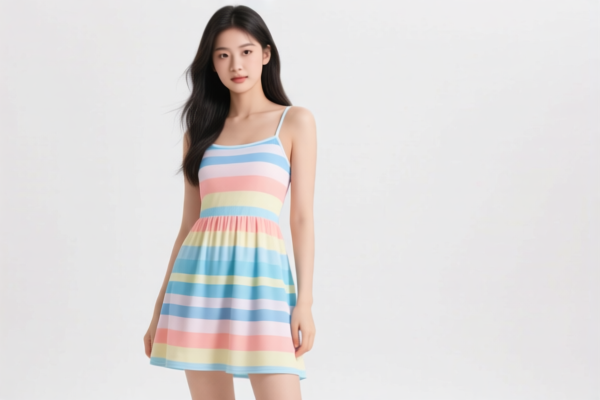

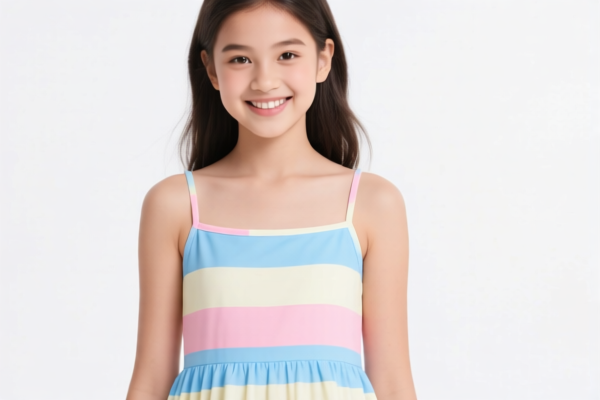
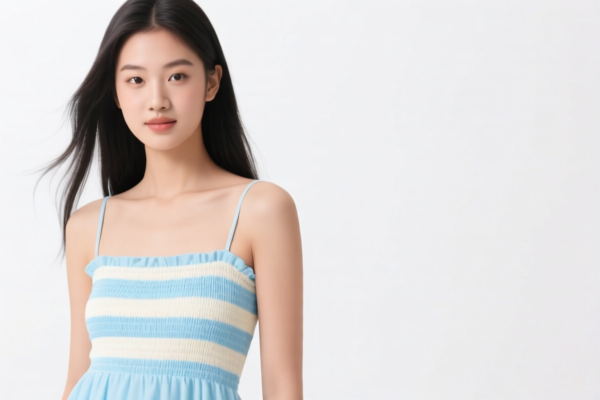
AI Analysis
👗 Summer Synthetic Fiber Dress (Synthetic Fiber Dress)
🌐 HS Code Reference & Customs Clearance Guide | 2026 Latest Tariff Analysis | Professional Level Clearance Strategy
📌 I. Product Definition & Classification: Do You Really Understand "Synthetic Fiber Dresses"?
A Summer Synthetic Fiber Dress is a lightweight, breathable garment typically made from man-made fabrics such as polyester, nylon, or acrylic blends. It is designed for warm weather and is generally categorized as women’s apparel unless specified otherwise. In international trade, its classification hinges on two key factors: 1. Material Composition: 100% synthetic fibers (e.g., polyester). 2. Garment Type: A one-piece dress.
⚠️ Key Distinction:
- If the dress is knitted (looped stitches, stretchy) → Falls under Chapter 61 (Articles of Apparel and Clothing Accessories, Knitted or Crocheted).
- If the dress is woven (interlaced threads, non-stretchy) → Falls under Chapter 62 (Articles of Apparel and Clothing Accessories, Not Knitted or Crocheted).
- Note: Most "synthetic fiber dresses" in commercial contexts are woven unless specified as "knit" or "jersey." However, both knitted and woven options are listed below for completeness.
📦 II. HS Code Classification Details (2026 Latest Tariff Authoritative Comparison)
| HS Code | Product Description | Applicable Scenario | Material/Structure | Total Tax Rate |
|---|---|---|---|---|
5407.52.20.20 |
Woven fabric of synthetic filaments, dyed | Fabric Only / Bulk Roll | Synthetic Fiber (Woven) | 49.9% |
6204.43.40.40 |
Woven dresses, of synthetic fibers, women’s | Women’s Woven Dress | Synthetic Fiber (Woven) | 33.5% |
6104.43.20.10 |
Knitted dresses, of synthetic fibers, women’s | Women’s Knitted Dress | Synthetic Fiber (Knitted) | 33.5% |
6104.43.20.20 |
Knitted dresses, of synthetic fibers, unspecified gender | Unisex/Unspecified Knitted Dress | Synthetic Fiber (Knitted) | 33.5% |
6204.43.40.30 |
Woven dresses, of synthetic fibers, women’s | Women’s Woven Dress | Synthetic Fiber (Woven) | 33.5% |
🔍 Critical Note:
-5407.52.20.20applies to fabrics or unconstructed materials, not finished garments. If you are shipping a finished dress, this code is incorrect and will lead to significant penalties.
-6204.xxxxcodes are for woven dresses.
-6104.xxxxcodes are for knitted dresses.
- Most standard "summer dresses" are woven, so6204.43.40.40or6204.43.40.30are the most likely correct codes.
💰 III. 2026 Latest Tariff Rate Breakdown (Including Additional Taxes & Policy Surcharges)
✅ Applicable Country: United States (US)
✅ Origin: China (CN)
✅ Effective Date: 2025/2026 (Including subsequent imports)
🎯 1. 5407.52.20.20 —— Woven Fabric of Synthetic Filaments (NOT for Finished Dresses)
| Item | Content |
|---|---|
| Base Tariff | 14.9% (ad valorem) |
| Section 301 Surcharge | +25.0% |
| Section 122 Surcharge | +10.0% |
| Total Tax Rate | 49.9% |
| Tax Calculation | CIF Value × 49.9% |
| De Minimis Eligible? | ❌ No (deny_de_minimis) |
| Legal Basis Path | IEEPA:9903.01.25 → IEEPA:9903.01.24 → USITC:5407.52.20.20 → FOOTNOTE:9903.88.01 |
📌 Explanation:
- Base 14.9%: Standard USITC tariff for synthetic woven fabrics.
- Section 301 (25%): Trade war tariff on Chinese goods.
- Section 122 (10%): National security tariff on synthetic fibers.
- Total 49.9%: Extremely high. Do not use this code for finished dresses!
🎯 2. 6204.43.40.40 / 6204.43.40.30 —— Women’s Woven Dresses, Synthetic Fiber
| Item | Content |
|---|---|
| Base Tariff | 16.0% (ad valorem) |
| Section 301 Surcharge | +7.5% |
| Section 122 Surcharge | +10.0% |
| Total Tax Rate | 33.5% |
| Tax Calculation | CIF Value × 33.5% |
| De Minimis Eligible? | ❌ No (deny_de_minimis) |
| Legal Basis Path | IEEPA:9901.25 → IEEPA:9903.01.24 → USITC:6204.43.40.40 → FOOTNOTE:9903.88.01 |
📌 Note:
-6204.43.40.40and6204.43.40.30have identical tax rates.
- Difference: The suffixes (.40vs.30) may relate to specific fiber content percentages or sub-classifications within "synthetic fibers," but the total tax burden is the same.
- Crucial: Ensure the dress is women’s apparel. If gender is unspecified, customs may still accept this code but could question the classification.
🎯 3. 6104.43.20.10 / 6104.43.20.20 —— Knitted Dresses, Synthetic Fiber
| Item | Content |
|---|---|
| Base Tariff | 16.0% (ad valorem) |
| Section 301 Surcharge | +7.5% |
| Section 122 Surcharge | +10.0% |
| Total Tax Rate | 33.5% |
| Tax Calculation | CIF Value × 33.5% |
| De Minimis Eligible? | ❌ No (deny_de_minimis) |
| Legal Basis Path | IEEPA:9901.25 → IEEPA:9903.01.24 → USITC:6104.43.20.10 → FOOTNOTE:9903.88.01 |
📌 Note:
- Applies only if the dress is knitted (e.g., jersey, tricot).
-6104.43.20.10specifies women’s knitted dresses.
-6104.43.20.20is for unspecified gender knitted dresses.
- Rate: Same as woven dresses (33.5%), but structure matters for classification.
🛠️ IV. Customs Clearance Practical Advice (Battle-Proven Pitfall Avoidance Guide)
✅ 1. Required Documents Checklist (None Can Be Omitted)
| Document | Must Provide | Description |
|---|---|---|
| ✅ Product Specification Sheet | ✔️ | Includes fabric composition (e.g., "100% Polyester"), weight, length, sleeve type. |
| ✅ Product Photos (With Label) | ✔️ | Clear shots of front, back, hangtag, and fabric texture to prove "synthetic fiber." |
| ✅ Commercial Invoice | ✔️ | Must state "Synthetic Fiber Dress, Women’s, Woven/Knitted, Model XYZ." |
| ✅ Packing List | ✔️ | Shows quantity, weight, and dimensions. |
| ✅ Origin Certificate (CO) | ✔️ | If not from China, may apply for preferential rates. |
| ✅ Fiber Content Test Report | ✔️ | Third-party lab report proving "Synthetic Fiber" (e.g., Polyester). |
✅ 2. Declaration Tips (Key Mantra)
🔥 “Woven vs. Knit, Gender Must Be Clear, Fabric Proof is Key, Avoid 49.9% Trap!”
| Scenario | Correct Declaration | Wrong Practice |
|---|---|---|
| Finished Woven Dress (Women) | 6204.43.40.40 or 6204.43.40.30 |
Misdeclare as fabric (5407.52.20.20) → 49.9% tax + penalty |
| Finished Knitted Dress (Women) | 6104.43.20.10 |
Misdeclare as woven → Classification error |
| Unspecified Gender Dress | 6104.43.20.20 (Knit) or 6204.43.40.40 (Woven, if assumed women) |
No gender specified → Customs may reclassify or hold |
| Fabric Rolls (Unfinished) | 5407.52.20.20 |
Declare as dress → Major compliance violation |
✅ 3. Special Case Handling
| Case | Handling Advice |
|---|---|
| Mixed Materials (e.g., 80% Polyester, 20% Cotton) | Still classified under synthetic fiber code if synthetic is >50%. Provide blend ratio. |
| Dress with Lace Trim | If lace is synthetic and main body is synthetic, use synthetic fiber code. If lace is natural fiber, may change classification. |
| Sample vs. Bulk | Both are subject to tariffs. De minimis does not apply (33.5%+). |
| OEM Private Label | Provide client order and design specs. Avoid "generic" descriptions. |
🌍 V. Global Main Market Clearance Comparison (2026 Latest)
| Country/Region | Recommended HS Code | Tariff | Certification | Notes |
|---|---|---|---|---|
| 🇺🇸 USA | 6204.43.40.40 |
33.5% (China) | FTC Labeling | High tariff due to Section 301 & 122 |
| 🇨🇳 China | 6204.43.40.40 |
5% | CCC (if applicable) | Low tariff, no surcharges |
| 🇪🇺 EU | 6204.43.40 |
12% | CE (if applicable) | No Section 301/122 equivalent |
| 🇬🇧 UK | 6204.43.40 |
12% | UKCA | Post-Brexit rules apply |
| 🇨🇦 Canada | 6204.43.40 |
16% | None | CUSMA may reduce to 0% if Canadian content |
📌 Conclusion:
- USA has the highest tariff burden for Chinese-made synthetic dresses.
- EU and UK have moderate tariffs but no additional "war" surcharges.
- Consider diversifying production to Southeast Asia (Vietnam, Cambodia) to avoid US surcharges.
📌 VI. Common Mistakes & Pitfall Guide (Lessons Learned the Hard Way)
❌ Mistake 1: Declaring a finished dress as fabric (5407.52.20.20)
👉 Consequence: 49.9% tax instead of 33.5% → Overpayment + Audit Risk
❌ Mistake 2: Ignoring gender specification
👉 Consequence: Customs may assign a higher default rate or hold shipment for clarification.
❌ Mistake 3: Failing to prove synthetic fiber content
👉 Consequence: If customs suspects natural fiber, classification changes → Tax discrepancy
❌ Mistake 4: Not distinguishing woven vs. knitted
👉 Consequence: Wrong Chapter (61 vs 62) → Classification error, potential fines
✅ Correct Practice:
“Women’s Synthetic Fiber Woven Dress, 100% Polyester, Short Sleeve, Summer Collection, Model XYZ, Certified by SGS”
🎯 VII. Conclusion: Precision Declaration, Cost Efficiency, Smooth Clearance!
🎯 Remember the Mantra:
🔹 “Woven vs. Knit, Gender Must Be Clear, Fabric Proof is Key, Avoid 49.9% Trap!”
🔹 “HS Code Defines Destiny, 33.5% vs 49.9% is a Huge Gap, Declaration Precision Saves Thousands!”
📌 Pro Tip:
If your dress is originated from Vietnam, Cambodia, Bangladesh, or India, you may apply for preferential tariffs under various trade agreements, significantly reducing the duty burden.
Recommend pre-clearance ruling for large shipments to avoid surprises.
📣 Immediate Action:
📞 Contact a professional customs broker + Provide product photos + Apply for HS Code pre-ruling
🚀 Ensure your dresses clear customs smoothly, efficiently, and profitably!
✨ Professional Clearance Starts with Accurate Classification!
💼 Every cent of cost deserves precise calculation!
Customer Reviews
About HS Code Classification
The Harmonized System (HS) is an internationally standardized nomenclature developed by the World Customs Organization (WCO) to classify traded products. Over 200 countries use the HS system as the basis for customs tariffs, trade statistics, and import/export regulations.
Each HS code follows a hierarchical structure:
- Chapter (2 digits) — Broad category of goods (e.g., Chapter 84: Machinery and Mechanical Appliances)
- Heading (4 digits) — More specific grouping within the chapter
- Subheading (6 digits) — Internationally standardized breakdown, used by all WCO member countries
- National subdivisions (8-10 digits) — Country-specific extensions for further classification, such as US HTSUS 10-digit codes
Correct HS code classification is essential for smooth customs clearance, accurate duty payment, and compliance with trade regulations. Misclassification can lead to customs delays, overpayment of duties, or penalties.
When importing from CN to US, the applicable tariff rates may include:
- Most-Favored-Nation (MFN) rate — The standard duty rate applied to WTO members
- General rate — Applied to countries without trade agreements
- Trade remedy duties — Additional tariffs such as Section 301 (anti-dumping), Section 232 (national security), or countervailing duties
The information provided on this page is for reference purposes only. For official classification, please consult with your local customs authority or a licensed customs broker.