Surface Finished Plastic Rod
CN → US| HS Code | Tariff Rate | Origin | Destination | Doc |
|---|---|---|---|---|
| 3916100000 | 40.8% | CN | US | Official Doc |
| 3916903000 | 41.5% | CN | US | Official Doc |
Product Images
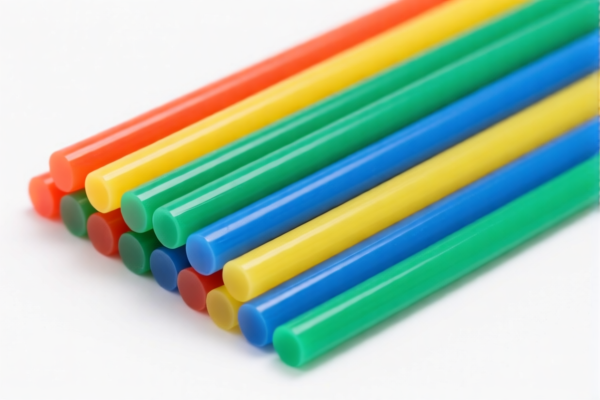
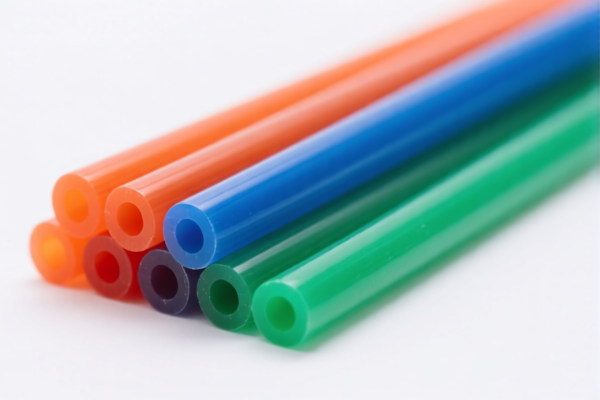

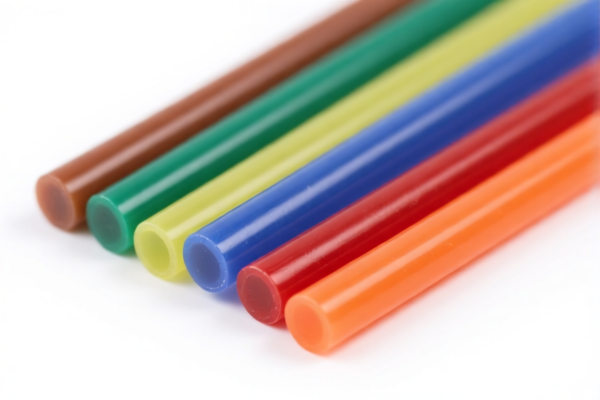
AI Analysis
🛍️ Surface Finished Plastic Rod (Finished Plastics Profile)
🌐 HS Code Reference & Customs Clearance Guide | 2026 Latest Tariff Analysis | Professional Entry Strategy 📌 1. Product Definition & Classification: What is a "Surface Finished Plastic Rod"?
A Surface Finished Plastic Rod falls under Chapter 39 of the Harmonized System (Plastics and Articles Thereof). The key distinction here is the processing level and cross-sectional dimensions.
The term "Surface Finished" implies that the rod has undergone surface treatments (such as polishing, sanding, or coating) but has not been further worked into a specific manufactured article (like a gear, knob, or screw). It remains in a semi-finished state.
Critical Classification Criteria: 1. Material Type: Is it Polyethylene (PE) or "Other Plastic"? 2. Dimensional Threshold: Does any cross-sectional dimension exceed 1 mm? * ✅ Yes: Classified as Rod/Stick/Profile (Heading 3916). * ❌ No: If ≤ 1mm, it would be "Monofilament" (Heading 3915/3914 depending on form), but standard "rods" almost always exceed 1mm.
📦 2. HS Code Classification Details (2026 Latest Tariff Mapping)
Based on the provided data, there are two primary HS Codes depending on the polymer type. Both fall under Heading 3916: Monofilament of which any cross-sectional dimension exceeds 1 mm, rods, sticks and profile shapes, whether or not surface-worked but not otherwise worked, of plastics.
| HS Code | Product Description | Applicable Scenario | Polymer Type |
|---|---|---|---|
3916.10.00.00 |
Of polymers of ethylene (e.g., PE rods) | High-density polyethylene (HDPE), Low-density polyethylene (LDPE) rods. | Polyethylene (PE) |
3916.90.30.00 |
Of other plastics (General Plastics) | PVC, PP, ABS, PC, Nylon, Acrylic rods. | Non-PE Plastics |
⚠️ Key Distinction: - If your rod is made of Polyethylene (PE) → Use
3916.10.00.00. - If your rod is made of any other plastic (PP, PVC, ABS, etc.) → Use3916.90.30.00.
💰 3. 2026 Latest Tariff Rate Breakdown (US Import from China)
✅ Applicable Country: United States (US)
✅ Origin: China (CN)
✅ Effective Time: Current 2026 Tariff Structure (Section 301 + Base)
🎯 1. 3916.10.00.00 – Rods of Polymers of Ethylene
| Item | Detail |
|---|---|
| Base Tariff | 5.8% |
| Section 301 Additional Tariff | 25.0% |
| Total Effective Tax Rate | 30.8% |
| Tax Calculation | CIF Value × 30.8% |
| De Minimis Eligibility | ❌ Not Eligible (Value > $800 usually triggers formal entry; Section 301 applies regardless of value if formal entry is required) |
| Legal Basis | HTSUS 3916.10.00.00 + USITC Footnote 9903.01.25 |
📌 Interpretation: - Polyethylene is a common plastic. Even though it's "surface finished," it is still considered a semi-finished profile. - The 25% Section 301 tariff applies to all plastics from China under this heading. - Total burden: 30.8%.
🎯 2. 3916.90.30.00 – Rods of Other Plastics (Other)
| Item | Detail |
|---|---|
| Base Tariff | 6.5% |
| Section 301 Additional Tariff | 25.0% |
| Total Effective Tax Rate | 31.5% |
| Tax Calculation | CIF Value × 31.5% |
| De Minimis Eligibility | ❌ Not Eligible |
| Legal Basis | HTSUS 3916.90.30.00 + USITC Footnote 9903.01.25 |
📌 Interpretation: - This code captures all plastics EXCEPT polyethylene (e.g., PVC, PP, ABS, Polycarbonate, Nylon). - The base rate is slightly higher (6.5% vs 5.8%), leading to a 0.7% higher total tax compared to PE rods. - Total burden: 31.5%.
🛠️ 4. Customs Clearance Practical Advice (Avoid Pitfalls)
✅ 1. Required Documentation Checklist
| Document | Required? | Explanation |
|---|---|---|
| Product Specification Sheet | ✔️ | Must clearly state Material Type (PE vs. Other), Diameter/Dimensions, and Surface Finish (e.g., polished, matte). |
| Material Certificate | ✔️ | To prove if it is PE or other plastic. Critical for correct HS Code selection. |
| Commercial Invoice | ✔️ | Must accurately describe item as "Plastic Rod" or "Plastic Profile," NOT "Plastic Part" or "Finished Good." |
| Packing List | ✔️ | Weight and dimensions of packages. |
| Country of Origin Certificate | ✔️ | To determine origin for Section 301 applicability. |
✅ 2. Declaration Tips (Crucial Keywords)
🔥 Golden Rule: "Describe Process, Not Final Use."
| Situation | Correct Declaration | Incorrect Declaration |
|---|---|---|
| Surface Finished PE Rod | "Plastic Rod, Polyethylene, Surface Finished, Not Further Worked" | "PE Pipe Fitting" or "PE Handle" (Implies finished article) |
| Surface Finished PP Rod | "Plastic Rod, Polypropylene, Surface Finished, Not Further Worked" | "Plastic Gear Blank" or "Custom Plastic Part" |
| Mixed Material Rods | List each material separately if possible | "Mixed Plastic Rod" (Ambiguous, leads to audit) |
⚠️ Warning:
- Do NOT declare as "Plastic Parts" or "Plastic Components." If the rod is merely "surface finished" but not cut to specific final shapes (like a knob or tube fitting), it remains a semi-finished profile (3916).
- Misdeclaring as a "part" (e.g., 3926) may seem to offer a lower base rate, but customs will classify it back to 3916 if it’s just a rod, leading to penalties.
✅ 3. Special Handling Scenarios
| Scenario | Advice |
|---|---|
| Rod vs. Monofilament | If the cross-section is > 1mm, it is a Rod (3916). If ≤ 1mm, it might be monofilament/filament, which has different classification. Ensure dimensions are > 1mm. |
| Surface Finish | "Surface Finished" (polished/sanded) does not change the classification from 3916 to a finished article. It remains 3916. |
| Coated Rods | If coated with a thin layer of another plastic, it may still be 3916. If the coating is the primary characteristic, review 3917 or 3926. For standard "surface finished" rods, stick to 3916. |
🌍 5. Global Market Comparison (2026)
| Country/Region | Recommended HS Code | Tariff (China Origin) | Notes |
|---|---|---|---|
| 🇺🇸 USA | 3916.10.00.00 / 3916.90.30.00 |
30.8% - 31.5% | Includes 25% Section 301 surcharge. |
| 🇨🇳 China | 3916.10.00.00 / 3916.90.30.00 |
5.0% - 6.5% | Base import duty. No Section 301. |
| 🇪🇺 EU | 3916.10 / 3916.90 |
6.5% - 6.7% | No additional punitive tariffs. |
| 🇦🇺 Australia | 3916.10 / 3916.90 |
5.0% | FTA benefits may apply depending on origin. |
📌 Conclusion: - The USA is the most expensive market due to the 25% Section 301 tariff. - China Origin plastic rods face a 30.8% - 31.5% total duty in the US. - Ensure accurate material identification (PE vs. Other) to avoid misclassification audits.
📌 6. Common Mistakes & Pitfalls
❌ Mistake 1: Declaring "Plastic Rods" as "Plastic Parts" (e.g., 3926.90) to avoid Section 301. 👉 Consequence: Customs will reclassify to 3916 + 25% Section 301 + Penalties.
❌ Mistake 2: Ignoring the "Surface Finished" aspect. 👉 Consequence: If the rod is further worked (cut, drilled, threaded), it becomes a "part" (3926). If only surface finished, it stays 3916. Misdeclaring leads to classification errors.
❌ Mistake 3: Incorrect Material Identification. 👉 Consequence: Using 3916.90 for PE rods misses the lower base rate (5.8% vs 6.5%). While the 25% surcharge dominates, accuracy is key for compliance.
✅ Correct Approach:
"Plastic Rod, Polyethylene (or Polypropylene), Surface Finished, Cylindrical, Cross-section > 1mm, Not Further Worked"
🎯 7. Conclusion: Precise Classification Saves Money
🎯 Key Takeaway:
🔹 "Surface Finished = Semi-Finished (3916)"
🔹 "PE = Lower Base Rate (5.8%)"
🔹 "Other Plastic = Slightly Higher Base (6.5%)"
🔹 "China to US = +25% Section 301"
🔹 Total Tax: 30.8% (PE) / 31.5% (Other)
📌 Pro Tip:
If your plastic rod is exported to the US, budget for ~31% duty. Consider: 1. Pre-Ruling: Apply for an Advance Ruling from US Customs to confirm HS Code. 2. Supply Chain Review: If possible, source from non-China countries to avoid Section 301 tariffs. 3. Accurate Documentation: Clearly state "Surface Finished" and "Not Further Worked" on invoices to prevent customs delays.
📣 Immediate Action:
📞 Consult a licensed customs broker.
📄 Provide material certifications and dimensional specs.
🚀 Ensure correct HS Code declaration to avoid 30%+ tax shocks.
✨ Professional Customs Clearance Starts with Accurate Classification! 💼 Every Percentage Point of Duty Counts!
Customer Reviews
About HS Code Classification
The Harmonized System (HS) is an internationally standardized nomenclature developed by the World Customs Organization (WCO) to classify traded products. Over 200 countries use the HS system as the basis for customs tariffs, trade statistics, and import/export regulations.
Each HS code follows a hierarchical structure:
- Chapter (2 digits) — Broad category of goods (e.g., Chapter 84: Machinery and Mechanical Appliances)
- Heading (4 digits) — More specific grouping within the chapter
- Subheading (6 digits) — Internationally standardized breakdown, used by all WCO member countries
- National subdivisions (8-10 digits) — Country-specific extensions for further classification, such as US HTSUS 10-digit codes
Correct HS code classification is essential for smooth customs clearance, accurate duty payment, and compliance with trade regulations. Misclassification can lead to customs delays, overpayment of duties, or penalties.
When importing from CN to US, the applicable tariff rates may include:
- Most-Favored-Nation (MFN) rate — The standard duty rate applied to WTO members
- General rate — Applied to countries without trade agreements
- Trade remedy duties — Additional tariffs such as Section 301 (anti-dumping), Section 232 (national security), or countervailing duties
The information provided on this page is for reference purposes only. For official classification, please consult with your local customs authority or a licensed customs broker.