Surface Grinder
CN → US| HS Code | Tariff Rate | Origin | Destination | Doc |
|---|---|---|---|---|
| 8460120080 | 39.4% | CN | US | Official Doc |
| 8460190110 | 39.4% | CN | US | Official Doc |
| 8479899599 | 87.5% | CN | US | Official Doc |
| 8460290110 | 39.4% | CN | US | Official Doc |
| 8460290130 | 39.4% | CN | US | Official Doc |
Product Images
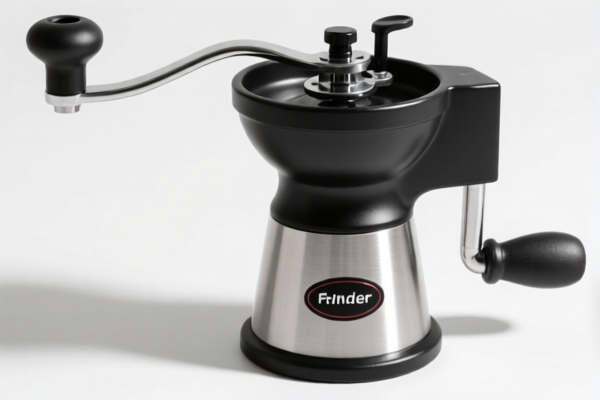
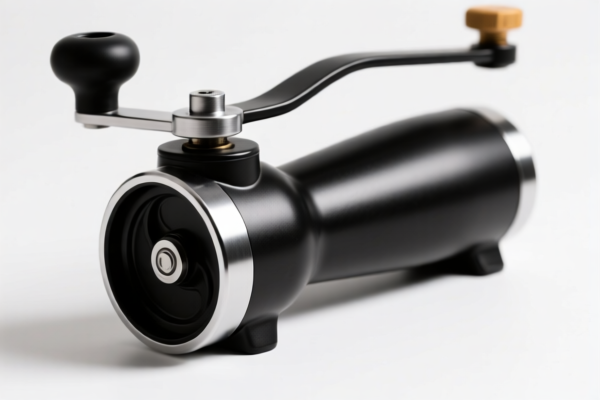
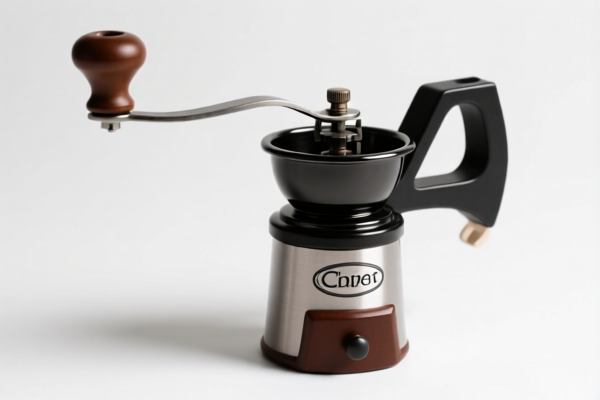
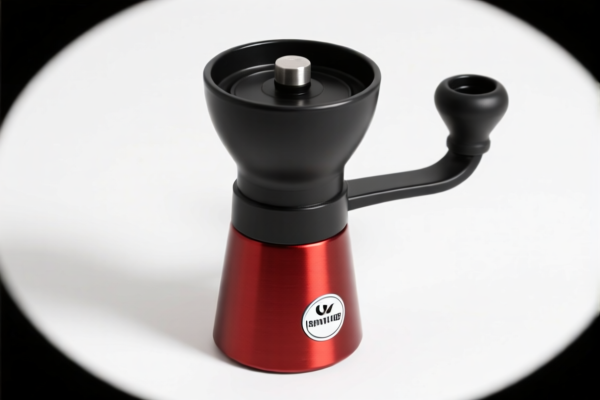
AI Analysis
🔩 Surface Grinder (平面磨床)
🌐 HS Code Reference & Customs Clearance Guide | 2024 Latest Tariff Analysis | Professional Compliance Strategy
📌 Part 1: Product Definition & Classification – What Exactly is a "Surface Grinder"?
A Surface Grinder is a machine tool used to produce flat surfaces, either by removing large amounts of material quickly or for fine finishing. In international trade, classification hinges on the specific grinding mechanism and control system:
- Cylindrical/Centerless Grinders: Used for grinding cylindrical surfaces.
- Plain Surface Grinders (Flat Grinders): Specifically designed to grind flat surfaces. This is the most common category for general-purpose surface grinding.
- Special Purpose Grinders: Machines with individual functions not covered by other headings (e.g., specific automated setups).
⚠️ Key Distinction Point:
- If the machine is primarily for flat surface grinding → It falls under Heading 8460 (Grinding, sharpening, polishing, deburring, etc., with wheels).
- If the machine is a general-purpose mechanical appliance with individual functions not elsewhere specified → It might fall under Heading 8479.
- Critical Note: The HS Code choice drastically affects the tariff rate due to Section 301 and Section 232 tariffs.
📦 Part 2: HS Code Classification Details (2024 Latest Tariff Book)
| HS Code | Product Description | Application Scenario | Tariff Rate | Legal Basis/Notes |
|---|---|---|---|---|
8460.12.00.80 |
Surface Grinder, Plain – Other plain surface grinders | General flat grinding, standard CNC or manual surface grinders | 39.4% | Base: 4.4%, 301 Tariff: 25%, 232 Tariff: 10% |
8460.19.01.10 |
Surface Grinder, Other – Other grinding machines with wheels | Machines similar to plain surface grinders but not explicitly listed as "plain" | 39.4% | Base: 4.4%, 301 Tariff: 25%, 232 Tariff: 10% |
8460.29.01.10 |
Metal Grinding Machine – Other grinding machines for metal | Specific metal grinding applications, meets material/usage requirements | 39.4% | Base: 4.4%, 301 Tariff: 25%, 232 Tariff: 10% |
8460.29.01.30 |
Metal Grinding Machine – Other grinding machines for metal (Residual) | Fallback category for other metal grinding machines not elsewhere specified | 39.4% | Base: 4.4%, 301 Tariff: 25%, 232 Tariff: 10% |
8479.89.95.99 |
Surface Grinder, Special Purpose – Other machines with individual functions | Machines with unique, individual functions not covered by 8460 | 87.5% | Base: 2.5%, 301 Tariff: 25%, 232 Tariff: 10%, Steel/Aluminum/Copper Tariff: 50% |
🔍 Critical Reminder:
- Most standard surface grinders will fall under 8460.12.00.80 or 8460.29.01.10/30, resulting in a 39.4% total tariff.
- Misclassification Risk: If a machine is incorrectly classified under 8479.89.95.99 (due to ambiguity in "individual function"), the tariff skyrockets to 87.5% due to the additional 50% tariff on steel/aluminum/copper products.
- Do NOT assume all grinding machines are the same. The specific type (plain vs. special purpose) determines the HS code and tariff.
💰 Part 3: 2024 Latest Tariff Rate Breakdown (Including Surcharges)
✅ Applicable Country: USA (US)
✅ Origin: China (CN)
✅ Effective Date: Current tariffs apply (Section 301 & 232 remain in effect)
🎯 1. 8460.12.00.80 / 8460.29.01.10 / 8460.29.01.30 – Standard Surface Grinders
| Item | Detail |
|---|---|
| Base Tariff | 4.4% (ad valorem) |
| Section 301 Tariff | +25.0% (Additional duties on Chinese goods) |
| Section 232 Tariff | +10.0% (On steel/aluminum products, applies if machine contains significant steel components) |
| Total Tariff Rate | 39.4% |
| Tax Calculation | CIF Value × 39.4% |
| De Minimis Exemption | ❌ Not Eligible (Deny de minimis for Section 301 goods) |
| Legal Path | HTSUS:8460 → Section 301: Footnote 9903.88.01 → Section 232: Footnote 9903.04.01 |
📌 Explanation:
- 39.4% is the standard high tariff for industrial grinding machines from China.
- This rate applies to the majority of surface grinders classified under 8460.
- No exemptions are available for de minimis shipments (under $800).
🎯 2. 8479.89.95.99 – Special Purpose Surface Grinders
| Item | Detail |
|---|---|
| Base Tariff | 2.5% (ad valorem) |
| Section 301 Tariff | +25.0% |
| Section 232 Tariff | +10.0% |
| Steel/Aluminum/Copper Surcharge | +50.0% (Additional tariff on certain metal products) |
| Total Tariff Rate | 87.5% |
| Tax Calculation | CIF Value × 87.5% |
| De Minimis Exemption | ❌ Not Eligible |
| Legal Path | HTSUS:8479 → Section 301: Footnote 9903.88.01 → Section 232: Footnote 9903.04.01 → Steel/Aluminum Surcharge |
📌 Warning:
- 87.5% is an extremely high tariff. It applies if the machine is classified as a "special purpose machine" with individual functions not covered by other headings.
- The 50% surcharge is applied specifically to steel, aluminum, and copper products, which most industrial machines contain.
- Avoid this classification unless absolutely necessary, as it can double the cost compared to standard classification.
🛠️ Part 4: Customs Clearance Practical Advice (Pitfall Avoidance Guide)
✅ 1. Required Documentation Checklist (Mandatory)
| Document | Must Provide | Purpose |
|---|---|---|
| ✅ Product Specification Sheet | ✔️ | Details: Weight, dimensions, power, grinding wheel type, control system |
| ✅ Technical Drawings | ✔️ | To prove machine type (e.g., flat vs. cylindrical) |
| ✅ Product Photos (Clear) | ✔️ | Show whole machine, labels, and key components |
| ✅ Commercial Invoice | ✔️ | Must state: "Surface Grinder, Model XYZ, Made in China" |
| ✅ Packing List | ✔️ | Confirm packaging structure to avoid component splitting |
| ✅ Origin Certificate | ✔️ | If not from China, can reduce/eliminate surcharges |
✅ 2. Declaration Tips (Key Rules)
🔥 "Accurate Description, Correct HS Code, Avoid 87.5%!"
| Scenario | Correct Declaration | Wrong Action |
|---|---|---|
| Standard Flat Surface Grinder | 8460.12.00.80 or 8460.29.01.10 |
Misclassify as 8479.89.95.99 → 87.5% |
| Machine with CNC Control | Still 8460 series if primarily grinding |
Do not split into "computer" + "grinder" |
| Special Purpose Grinder | Only use 8479.89.95.99 if truly unique function |
Avoid if standard 8460 classification applies |
| Partial Disassembly | Declare as whole machine | Split into parts → Higher tariffs on components |
✅ 3. Special Cases Handling
| Scenario | Handling Advice |
|---|---|
| OEM Custom Grinder | Provide client order + design drawings to prove standard function |
| Grinder with Automatic Feeding | Still 8460 if primary function is grinding |
| Grinder for Non-Metal Materials | Clarify material in declaration; may affect classification |
| Used Grinder | Provide proof of origin and condition; tariffs still apply |
🌍 Part 5: Global Market Comparison (2024 Latest)
| Country/Region | Recommended HS Code | Tariff (China Origin) | Certification | Notes |
|---|---|---|---|---|
| 🇺🇸 USA | 8460.12.00.80 |
39.4% | N/A | 87.5% if misclassified under 8479 |
| 🇨🇳 China | 8460.12.00.80 |
5% | CCC | No Section 301/232 |
| 🇪🇺 EU | 8460.12.00.80 |
0% | CE | No additional tariffs |
| 🇬🇧 UK | 8460.12.00.80 |
0% | UKCA | Post-Brexit, no Section 301 |
| 🇯🇵 Japan | 8460.12.00.80 |
0% | PSE | No additional tariffs |
📌 Conclusion:
- USA has the highest tariffs for Chinese-made surface grinders.
- EU, UK, Japan offer 0% tariff, making them more attractive markets.
- Accurate classification is critical in the USA to avoid the 87.5% rate.
📌 Part 6: Common Mistakes & Pitfalls (Lessons Learned)
❌ Mistake 1: Misclassifying a standard surface grinder under 8479.89.95.99
👉 Consequence: Tariff jumps from 39.4% to 87.5% → Cost increases by 122%!
❌ Mistake 2: Not providing technical drawings
👉 Consequence: Customs cannot verify HS code → Delay in clearance or return shipment
❌ Mistake 3: Declaring as "Machine Tool" without specificity
👉 Consequence: Ambiguity leads to higher scrutiny → Potential penalties
❌ Mistake 4: Assuming de minimis exemption applies
👉 Consequence: Shipment under $800 still subject to tariffs → Unexpected costs
✅ Correct Practice:
"Surface Grinder, CNC Controlled, Model XYZ, Grinding Wheel Diameter: 300mm, Made in China, HS Code 8460.12.00.80"
🎯 Part 7: Conclusion – Professional Declaration, Cost Efficiency!
🎯 Key Takeaways:
🔹 "Standard Grinder = 39.4%, Special Purpose = 87.5%"
🔹 "HS Code determines your cost, misclassification can double your expense!"
🔹 "Always provide technical docs to justify HS code choice."
📌 Pro Tip:
- If your surface grinder has unique features, consult a customs broker before shipping.
- Consider pre-ruling (Advance Ruling) from US Customs to confirm HS code and tariff rate.
- For non-China origins, tariffs may be significantly lower.
📣 Immediate Action:
📞 Contact a professional customs broker
📄 Provide product specs + drawings
🚀 Ensure smooth clearance, minimize costs, maximize profit!
✨ Professional Customs Clearance Starts with Accurate Classification!
💼 Every dollar saved is a dollar earned!
Customer Reviews
About HS Code Classification
The Harmonized System (HS) is an internationally standardized nomenclature developed by the World Customs Organization (WCO) to classify traded products. Over 200 countries use the HS system as the basis for customs tariffs, trade statistics, and import/export regulations.
Each HS code follows a hierarchical structure:
- Chapter (2 digits) — Broad category of goods (e.g., Chapter 84: Machinery and Mechanical Appliances)
- Heading (4 digits) — More specific grouping within the chapter
- Subheading (6 digits) — Internationally standardized breakdown, used by all WCO member countries
- National subdivisions (8-10 digits) — Country-specific extensions for further classification, such as US HTSUS 10-digit codes
Correct HS code classification is essential for smooth customs clearance, accurate duty payment, and compliance with trade regulations. Misclassification can lead to customs delays, overpayment of duties, or penalties.
When importing from CN to US, the applicable tariff rates may include:
- Most-Favored-Nation (MFN) rate — The standard duty rate applied to WTO members
- General rate — Applied to countries without trade agreements
- Trade remedy duties — Additional tariffs such as Section 301 (anti-dumping), Section 232 (national security), or countervailing duties
The information provided on this page is for reference purposes only. For official classification, please consult with your local customs authority or a licensed customs broker.