Surface Worked Ethylene Polymer Rods
CN → US| HS Code | Tariff Rate | Origin | Destination | Doc |
|---|---|---|---|---|
| 3916100000 | 40.8% | CN | US | Official Doc |
| 3916905000 | 40.8% | CN | US | Official Doc |
Product Images
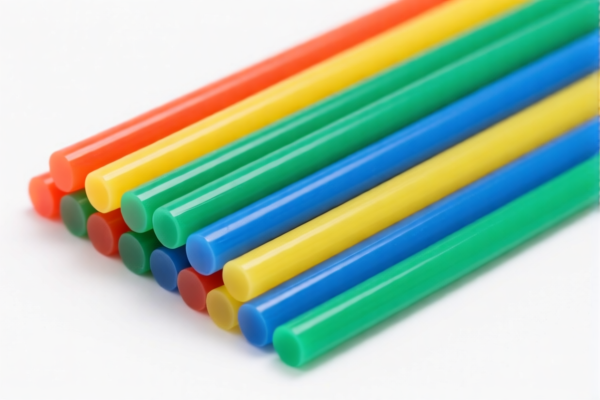
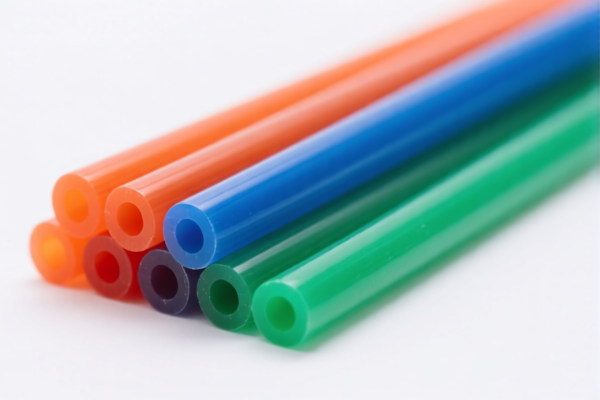

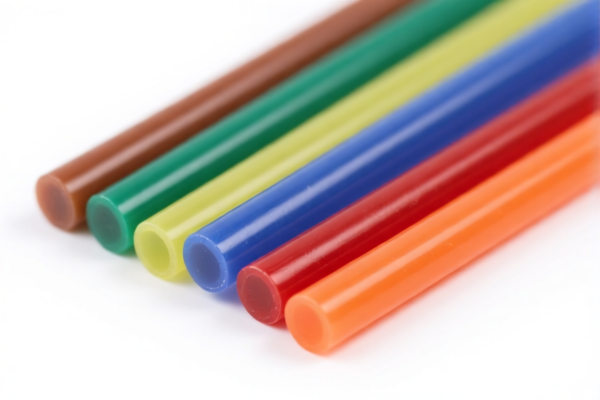
AI Analysis
🧪 Surface Worked Ethylene Polymer Rods & Profile Shapes
🌐 HS Code Reference & Customs Clearance Guide | 2026 Latest Tariff Analysis | Professional Strategy
📌 I. Product Definition & Classification: What Exactly Are "Ethylene Polymer Rods"?
Surface Worked Ethylene Polymer Rods refer to plastic products made primarily from Polyethylene (PE) or copolymers where ethylene is the principal monomer. These are not finished consumer goods but rather semi-finished industrial materials.
Key characteristics defined by customs classification: * Material: Plastics (specifically Polymers of Ethylene). * Form: Monofilaments (cross-section > 1mm), rods, sticks, or profile shapes. * Processing State: "Surface-worked" means they have been treated on the surface (e.g., polished, coated, printed, or textured) but have NOT been otherwise worked (i.e., no drilling, threading, machining into specific mechanical parts, or assembly). They remain in their basic extruded or molded form.
⚠️ Critical Distinction:
- If the product is a simple rod/strip used as raw material for further manufacturing → Chapter 39 (Plastics).
- If the product is a finished mechanical part (e.g., a gear, bolt, or specialized seal with complex geometry) → Chapter 84 or 85.
- Surface work alone (polishing/printing) does NOT change the chapter. It remains a plastic article.
📦 II. HS Code Classification Details (2026 Latest Tariff Authority)
Based on the input data, the products fall under two primary HS Codes depending on the specific polymer type.
| HS Code | Product Description | Applicability | Key Feature |
|---|---|---|---|
3916.10.00.00 |
Of polymers of ethylene | Specific to Polyethylene (PE) rods, sticks, or monofilaments (>1mm cross-section) | ✅ Specific Material: Only for Ethylene-based plastics. |
3916.90.50.00 |
Of other plastics: Other | For rods/profiles made of non-ethylene plastics (e.g., PP, PVC, PS, ABS) | ✅ General Category: For all other plastic types not listed elsewhere. |
🔍 Focus Note:
The user query specifically mentions "Ethylene Polymer". Therefore,3916.10.00.00is the primary and correct classification.
3916.90.50.00is included here only as a comparative reference for non-ethylene plastics, which should NOT be used for Polyethylene products.
💰 III. 2026 Latest Tariff Rate Details (Including Add-on Taxes)
✅ Applicable Country: United States (US)
✅ Origin: China (CN) (Assumed based on standard trade context; rates shown are typical for CN-US trade)
✅ Effective Date: Current 2026 Trade Policy
🎯 1. 3916.10.00.00 —— Polymers of Ethylene Rods/Profiles
| Item | Content |
|---|---|
| Base Tariff Rate | 0.0% (ad valorem) |
| Section 301 Add-on Tariff | 0.0% |
| Total Effective Tax Rate | 0.0% |
| Tax Calculation | CIF Value × 0.0% = $0 |
| De Minimis Eligibility | ✅ Yes (if value is low enough per carrier policy, though bulk industrial goods usually declared formally) |
| Legal Basis | HTSUS: 3916.10 + USITC Footnote (No Section 301 liability for this specific subheading) |
📌 Explanation:
- Why 0%? Plastics rods/monofilaments of ethylene are generally considered basic industrial raw materials. Under current US trade policy (as reflected in the provided data), they are exempt from the aggressive Section 301 tariffs that apply to many other manufactured goods (like steel, aluminum, or consumer electronics).
- No Surcharge: The data explicitly states加征关税: 0.0%. This is a significant advantage for importers compared to many other plastic products or metal goods.
- Verification: Always check if the specific ethylene copolymer has any special chemical additives that might shift it to Chapter 38, but standard PE rods stay in 3916.
🎯 2. 3916.90.50.00 —— Other Plastics (Non-Ethylene)
| Item | Content |
|---|---|
| Base Tariff Rate | 0.0% |
| Section 301 Add-on Tariff | 0.0% |
| Total Effective Tax Rate | 0.0% |
| Note | Same 0% rate applies, but do not use this code for Ethylene products. |
🛠️ IV. Customs Clearance Practical Advice (Real-World Pitfall Guide)
✅ 1. Documentation Checklist (Essential for Smooth Clearance)
| Document | Must Provide? | Explanation |
|---|---|---|
| ✅ Product Specification Sheet | ✔️ | Must clearly state: "Polymer Type: Ethylene (PE/HDPE/LDPE)", Shape: Rod/Profile, Dimensions. |
| ✅ Material Safety Data Sheet (MSDS) | ✔️ | Proves chemical composition (ethylene-based). |
| ✅ Commercial Invoice | ✔️ | Description must read: "Surface Worked Polyethylene Rods, HS 3916.10.00" |
| ✅ Packing List | ✔️ | Detail weight, quantity, and packaging type. |
| ✅ Photo of Product | ✔️ | Show the surface work (e.g., polished, printed logo) to confirm it is "surface worked" and not a finished part. |
| ✅ Bill of Lading/Air Waybill | ✔️ | Standard shipping docs. |
✅ 2. Declaration Tips (Key Mnemonic)
🔥 “Raw Material Form, Surface Only, Ethylene Code, Zero Tax Policy!”
| Scenario | Correct Declaration | Wrong Practice | Consequence |
|---|---|---|---|
| PE Rods, polished | 3916.10.00.00 |
Declare as "Plastic Parts" | Risk of re-classification & audit |
| PE Rods, drilled holes | NOT 3916.10 |
Still declare 3916.10 |
Rejection: Drilling = "Other Worked". Must move to Chapter 3919 or 3926 (Higher scrutiny). |
| PP Rods (Wrong Material) | 3916.90.50.00 |
Declare as 3916.10 |
Penalty: Material mismatch. Fines + back taxes. |
| Finished PE Gear | 3926.90.99 |
Declare as 3916.10 |
Penalty: Incorrect HS. Gear is a "part", not a raw profile. |
✅ 3. Special Considerations
| Situation | Handling Advice |
|---|---|
| "Surface Worked" Meaning | Ensure it’s just polishing, painting, or simple printing. If it’s cut to size for a specific machine part, it may be considered "worked otherwise" and could face different scrutiny, though often still in Ch 39 if basic shape is retained. |
| Ethylene vs. Other Polymers | Customs may ask for a Material Certificate or Lab Test to prove it is Ethylene-based. Have this ready! |
| Anti-Dumping/Countervailing | While base tax is 0%, check if specific ethylene producers are subject to anti-dumping duties in your specific country context. (For US-China, current data shows 0%). |
🌍 V. Global Market Comparison (2026 Latest)
| Country/Region | Recommended HS Code | Tariff Rate | Certification Required | Remarks |
|---|---|---|---|---|
| 🇺🇸 USA | 3916.10.00.00 |
0.0% | None (Standard) | Zero Tax Advantage. |
| 🇨🇳 China | 3916.10.00.00 |
0.0% | None | Import duty is also 0% for raw plastic profiles. |
| 🇪🇺 EU | 3916.10 |
4.0% - 6.5% | REACH Compliance | EU applies standard duty; higher than US. |
| 🇬🇧 UK | 3916.10 |
4.0% - 6.5% | UKCA Mark | Similar to EU post-Brexit. |
| 🇯🇵 Japan | 3916.10 |
3.5% - 6.0% | PSE (if electrical component) | Standard MFN rate. |
📌 Conclusion:
- The USA offers the most favorable tariff (0%) for these ethylene polymer rods among major markets.
- EU and UK charge standard import duties (~4-6.5%).
- China also has 0% duty for imports of raw plastic profiles.
📌 VI. Common Errors & Pitfall Guide (Lessons Learned)
❌ Error 1: Confusing "Surface Worked" with "Finished Product"
👉 Impact: If you declare a rod with simple polishing as a "finished part," customs may ask for extra documentation. If you declare a drilled rod as "surface worked," it’s a false declaration.
👉 Fix: Ensure the product is in its basic extruded/molded form with only superficial surface treatment.
❌ Error 2: Misidentifying Ethylene vs. Propylene
👉 Impact: Using 3916.90.50.00 for Polypropylene (PP) rods is technically correct for PP, but if you call it "Ethylene" on the invoice, it’s fraud. If you call PP rods "Ethylene" to get a specific code, it’s misclassification.
👉 Fix: Always match the HS Code to the actual chemical composition. For Ethylene, use 3916.10.
❌ Error 3: Ignoring Add-on Tariffs for other plastic types
👉 Impact: Some plastic films or sheets have 25% tariffs. But rods/profiles generally do not have Section 301 tariffs in the current dataset.
👉 Fix: Rely on the specific HS Code 3916.10 which shows 0% total tax.
🎯 VII. Conclusion: Professional Declaration for Cost Savings
🎯 Remember the Golden Rule:
🔹 "Ethylene Rods = 3916.10 = 0% Tax!"
🔹 "Surface Work Only = Still Raw Material = Safe Declaration"
🔹 "Do Not Confuse With PP/PVC = Use 3916.90"
📌 Pro Tip:
If your rods are co-extruded (multiple layers), ensure the essential character is defined by Ethylene. If so, 3916.10 still applies.
Always attach a Material Data Sheet (MDS) to your customs entry to prove the "Ethylene" content, ensuring a smooth 0% tariff clearance.
📣 Immediate Action:
📞 Verify Material: Confirm 100% Ethylene/Polyethylene base.
📄 Label Correctly: "Surface Worked Polyethylene Rods, HS 3916.10.00.00"
🚀 Maximize Savings: Enjoy 0% Duty under current US-China trade terms.
✨ Precision in Classification, Profit in Logistics!
💼 Every Percent of Tax Saved is Pure Profit!
Customer Reviews
About HS Code Classification
The Harmonized System (HS) is an internationally standardized nomenclature developed by the World Customs Organization (WCO) to classify traded products. Over 200 countries use the HS system as the basis for customs tariffs, trade statistics, and import/export regulations.
Each HS code follows a hierarchical structure:
- Chapter (2 digits) — Broad category of goods (e.g., Chapter 84: Machinery and Mechanical Appliances)
- Heading (4 digits) — More specific grouping within the chapter
- Subheading (6 digits) — Internationally standardized breakdown, used by all WCO member countries
- National subdivisions (8-10 digits) — Country-specific extensions for further classification, such as US HTSUS 10-digit codes
Correct HS code classification is essential for smooth customs clearance, accurate duty payment, and compliance with trade regulations. Misclassification can lead to customs delays, overpayment of duties, or penalties.
When importing from CN to US, the applicable tariff rates may include:
- Most-Favored-Nation (MFN) rate — The standard duty rate applied to WTO members
- General rate — Applied to countries without trade agreements
- Trade remedy duties — Additional tariffs such as Section 301 (anti-dumping), Section 232 (national security), or countervailing duties
The information provided on this page is for reference purposes only. For official classification, please consult with your local customs authority or a licensed customs broker.