Surveillance Camera
CN → US| HS Code | Tariff Rate | Origin | Destination | Doc |
|---|---|---|---|---|
| 8525893000 | 35.0% | CN | US | Official Doc |
| 8525895050 | 35.0% | CN | US | Official Doc |
| 9013809100 | 22.0% | CN | US | Official Doc |
| 9013105000 | 22.8% | CN | US | Official Doc |
| 8543709860 | 37.6% | CN | US | Official Doc |
Product Images
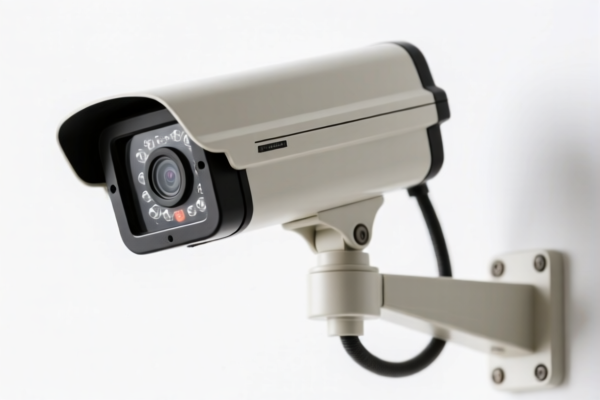
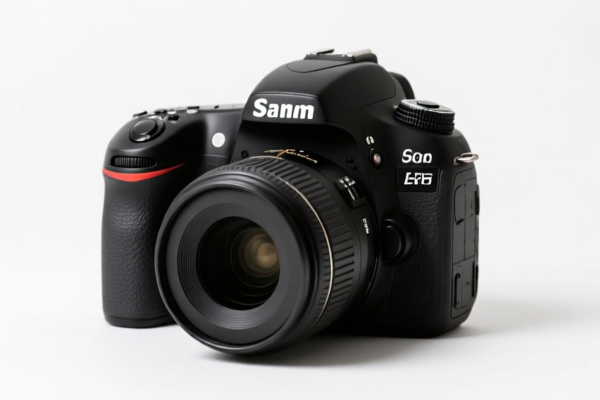

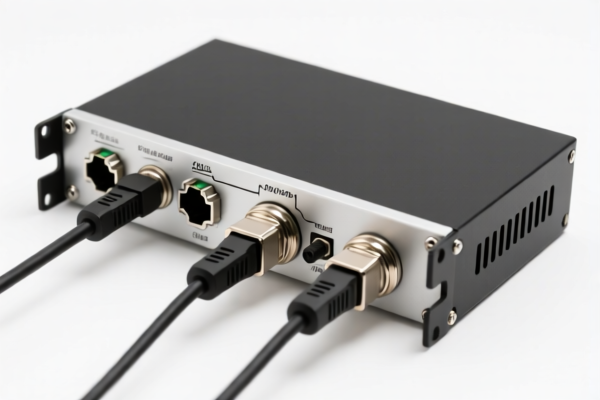
AI Analysis
📹 Surveillance Camera (Video Surveillance Systems)
🌐 HS Code Reference & Clearance Guide | 2026 Latest Tariff Analysis | Professional Customs Strategy
📌 Part 1: Product Definition & Classification: Do You Really Understand "Surveillance Camera"?
A Surveillance Camera is a critical component in security, AI monitoring, traffic control, and smart city infrastructure. In international trade, its classification depends heavily on intended use, technical specifications, and functional integration.
International customs authorities (especially the US Customs and Border Protection) typically categorize surveillance cameras into three main groups:
- Broadcast/Television Cameras: Designed for direct transmission to TV or broadcast systems.
- Optical Imaging Devices: Focused on capturing images via lenses, treated as general optical instruments.
- Other Machine/Equipment: Standalone electronic devices with independent processing capabilities (often AI-enabled).
⚠️ Critical Distinction:
- If it's a broadcast-grade camera (direct TV feed) → HS 8525.89.50.50
- If it's a pure optical imaging unit → HS 9013.80.91.00
- If it's a standalone smart device → HS 8543.70.98.60
Misclassification can lead to a 15% difference in tax rates and potential audits.
📦 Part 2: HS Code Classification Details (2026 Latest Tariff Reference)
Based on the provided data, here is the authoritative breakdown for Surveillance Cameras:
| HS Code | Product Description | Application Scenario | Total Tax Rate (China Origin) |
|---|---|---|---|
| 8525.89.30.00 | Video surveillance camera (Image capture, TV camera function) | Standard security CCTV, broadcasting equipment | 35.0% |
| 8525.89.50.50 | Broadcast/Television transmission camera | Professional broadcast, high-end studio, transmission units | 35.0% |
| 9013.80.91.00 | Optical imaging device (Other optical instruments) | Pure lens/capture modules, non-electronic processing units | 22.0% |
| 9013.10.50.00 | Optical imaging device (General optical appliance fallback) | General purpose optical camera units, non-specific use | 22.8% |
| 8543.70.98.60 | Independent electronic equipment (Other machines) | Smart cameras with onboard AI, edge computing, network integration | 37.6% |
| 8543.70.60.00 | Electronic imaging device (Network/Instrument specific) | Cameras requiring specific network connection or instrument linkage | 35.0% |
🔍 Key Insight:
- Optical Codes (9013) offer the lowest tax burden (22-22.8%) but require the device to be treated strictly as an optical instrument, often excluding complex processing features. - Broadcast Codes (8525) and Electronic Codes (8543) attract higher taxes (35-37.6%) because they are classified as active electronic/broadcast machinery subject to heavier US tariffs. - Smart/AI Cameras often fall under 8543.70.98.60 (37.6%) due to their "independent function."
💰 Part 3: 2026 Tariff Rate Breakdown (US Customs Specifics)
✅ Target Market: United States (US)
✅ Country of Origin: China (CN)
✅ Regulatory Framework: Section 301 (USITC) + Section 122 (EO 13936)
🎯 Scenario A: High-Risk Classification (8525 & 8543 Series)
Applies to: 8525.89.30.00, 8525.89.50.50, 8543.70.98.60, 8543.70.60.00
| Tax Component | Rate | Legal Basis | Impact |
|---|---|---|---|
| Base Duty | 0.0% | Harmonized Tariff Schedule (HTS) | Free entry base |
| Section 301 Add-on | +25.0% | USITC "Made in China" 301 Tariff | Heavy Burden |
| Section 122 Add-on | +10.0% | EO 13936 (National Security) | Targeted Ban/Add-on |
| TOTAL EFFECTIVE RATE | 35.0% - 37.6% | Combined | Critical for Profit Margin |
📌 Explanation:
- 25% (301): Standard punitive tariff on "Video Cameras" and "Electronic Machinery" from China. - 10% (122): Additional tariff applied to specific technology categories deemed a national security risk. - Result: A $10,000 shipment could incur $3,500 - $3,760 in duties alone.
🎯 Scenario B: Low-Risk Classification (9013 Series)
Applies to: 9013.80.91.00, 9013.10.50.00
| Tax Component | Rate | Legal Basis | Impact |
|---|---|---|---|
| Base Duty | 4.5% - 5.3% | Harmonized Tariff Schedule (HTS) | Slight base burden |
| Section 301 Add-on | +7.5% | USITC "Optical Appliances" Tier | Moderate Burden |
| Section 122 Add-on | +10.0% | EO 13936 | Targeted Add-on |
| TOTAL EFFECTIVE RATE | 22.0% - 22.8% | Combined | Significant Savings |
📌 Explanation:
- 7.5% (301): Optical instruments often fall in a lower tariff tier compared to active electronics. - 10% (122): Still applies, but the base is lower. - Result: A $10,000 shipment incurs only $2,200 - $2,280 in duties. - 💡 Strategy: If your camera is a sensor module or optical unit without heavy AI processing, classify under 9013 to save ~13-15% in taxes.
🛠️ Part 4: Customs Clearance Practical Advice (Risk Avoidance)
✅ 1. Document Preparation Checklist (Non-Negotiable)
| Document | Requirement | Purpose |
|---|---|---|
| Tech Spec Sheet | ✔️ Must include: Sensor type, lens focal length, ON/OFF of AI chip | Determines if it's "Optical" (9013) or "Electronic" (8543) |
| Circuit Diagram | ✔️ Highlight the Main Processor | Proves if it's a standalone machine or just a lens |
| Product Photos | ✔️ Show front/rear, ports, label, model number | Visual verification for CBP officers |
| Function Description | ✔️ Explicitly state: "Capture only" vs. "AI Processing" | Crucial for Section 122 classification |
| Commercial Invoice | ✔️ Use precise HS description, avoid generic "Camera" | Prevents "Description Mismatch" flags |
| Origin Certificate | ✔️ Verify Country of Origin | Essential for 122条款 applicability |
✅ 2. Declaration Strategy (The "Golden Rules")
🔥 Rule: "Don't Overstate Functionality to Avoid Higher Taxes, But Don't Understate to Avoid Fraud."
| Product Reality | Recommended HS Code | Why? |
|---|---|---|
| Simple Lens/Capture Module (No heavy CPU) | 9013.80.91.00 | Lowest tax (22%). Treat as "Optical Instrument". |
| Standard CCTV (Basic recording, network IP) | 8525.89.30.00 | Standard for TV/Broadcast function. |
| Smart Camera (On-board Face ID, Edge AI) | 8543.70.98.60 | Cannot hide the "Independent Function" – declare correctly. |
| Specialized Transmission Unit | 8525.89.50.50 | If it transmits directly to broadcast feed. |
⚠️ Warning:
If you declare a Smart AI Camera as an "Optical Device" (9013) to save tax, Customs will audit you if the AI chip is visible or in the specs.
Penalty: 30% fine + Back taxes + Possible seizure.
✅ 3. Special Handling for Section 122 (The 10% Add-on)
The Section 122 tariff (10%) applies to all listed HS codes in the dataset. - Why? The US government views cameras as dual-use technology (Surveillance + Civilian). - Action: Do not try to claim an exemption unless you can prove it is strictly non-surveillance (e.g., a medical imaging sensor), which is difficult for general "Surveillance Cameras". - Mitigation: Ensure the Base Duty is minimized by choosing 9013 if technically feasible.
🌍 Part 5: Market Comparison & Conclusion
| Classification | Base Tax | 301 Add-on | 122 Add-on | Total | Strategic Value |
|---|---|---|---|---|---|
| Optical (9013) | ~5% | 7.5% | 10% | 22-23% | 🟢 Best for Cost Saving |
| Broadcast/Electronic (8525/8543) | 0% | 25% | 10% | 35-37.6% | 🔴 High Cost |
🎯 Final Conclusion:
- Technical Analysis is Key: If your product is a pure optical capture unit, push for 9013 classification to save ~13% in duties.
- Be Honest with Features: If the camera has AI processing, 8543 is the correct classification. Trying to hide this feature leads to audits.
- Budget Planning: Assume a 35% total tax rate for standard IP cameras and 22% for optical modules.
- Section 122 is Unavoidable: The 10% surcharge applies to all camera types in this dataset. Plan your margins accordingly.
📌 Pro Tip:
"For standard security cameras, check if you can strip out the 'AI Processing' unit and sell it separately as an Optical Module (9013) while keeping the processor as a separate component (8543). Sometimes, splitting the shipment allows for a lower overall tax rate on the camera head!"
✨ Customs Success Starts with Precision!
💼 Don't let a wrong HS Code cost you 37% of your profit.
🚀 Choose the right classification, save the tax, ship with confidence!
Customer Reviews
About HS Code Classification
The Harmonized System (HS) is an internationally standardized nomenclature developed by the World Customs Organization (WCO) to classify traded products. Over 200 countries use the HS system as the basis for customs tariffs, trade statistics, and import/export regulations.
Each HS code follows a hierarchical structure:
- Chapter (2 digits) — Broad category of goods (e.g., Chapter 84: Machinery and Mechanical Appliances)
- Heading (4 digits) — More specific grouping within the chapter
- Subheading (6 digits) — Internationally standardized breakdown, used by all WCO member countries
- National subdivisions (8-10 digits) — Country-specific extensions for further classification, such as US HTSUS 10-digit codes
Correct HS code classification is essential for smooth customs clearance, accurate duty payment, and compliance with trade regulations. Misclassification can lead to customs delays, overpayment of duties, or penalties.
When importing from CN to US, the applicable tariff rates may include:
- Most-Favored-Nation (MFN) rate — The standard duty rate applied to WTO members
- General rate — Applied to countries without trade agreements
- Trade remedy duties — Additional tariffs such as Section 301 (anti-dumping), Section 232 (national security), or countervailing duties
The information provided on this page is for reference purposes only. For official classification, please consult with your local customs authority or a licensed customs broker.