Surveillance Camera Model
CN → US| HS Code | Tariff Rate | Origin | Destination | Doc |
|---|---|---|---|---|
| 8525893000 | 35.0% | CN | US | Official Doc |
| 8525895050 | 35.0% | CN | US | Official Doc |
| 9013809100 | 22.0% | CN | US | Official Doc |
| 9013105000 | 22.8% | CN | US | Official Doc |
| 8543709860 | 37.6% | CN | US | Official Doc |
Product Images
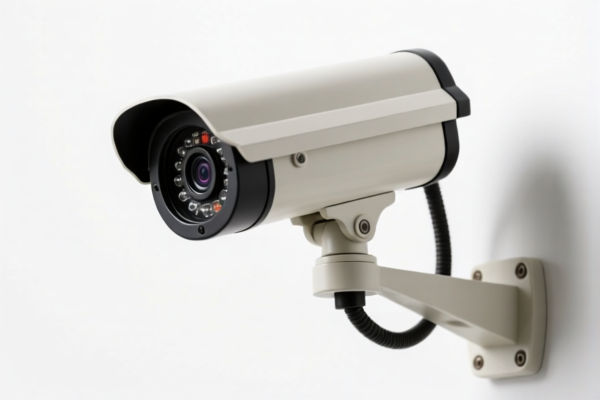
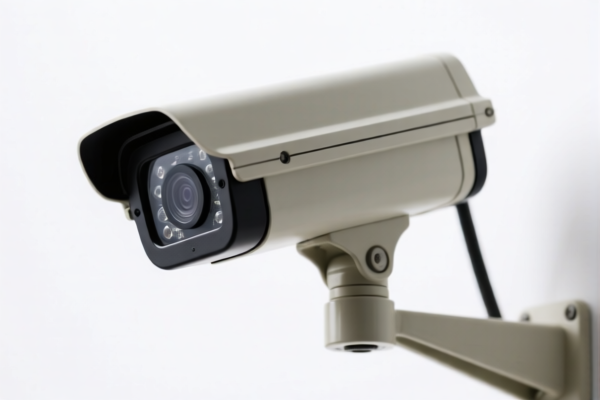
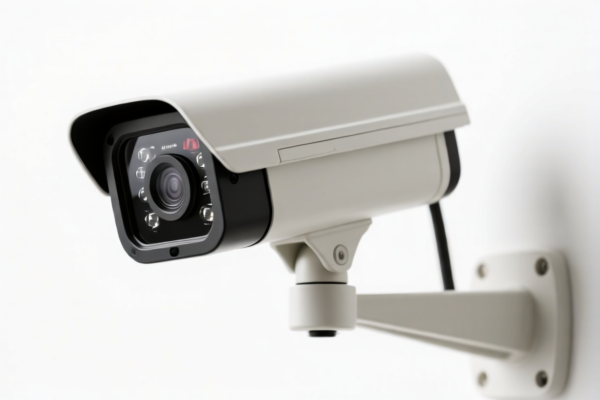
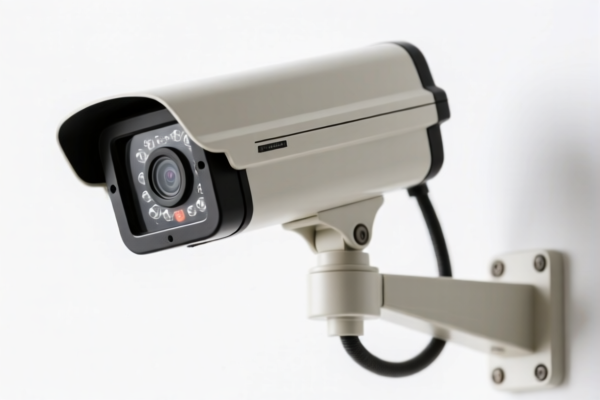
AI Analysis
📷 Surveillance Camera Models: The Ultimate HS Code & Tariff Strategy Guide (2026)
🌐 HS Code Reference & Customs Clearance Guide | 2026 Latest Tariff Analysis | Professional Clearance Strategy
📌 One Product, Multiple Classifications: Why "Surveillance Camera" is a Compliance Minefield
A surveillance camera is not just a camera. Depending on its internal optical structure, functionality, and integration, it can be classified into vastly different HS codes. The difference? Tax rates ranging from 22% to 37.6%.
In international trade (especially with the US market), misclassification can lead to severe penalties, delayed shipments, and unexpected costs. Below is the authoritative breakdown based on the provided data.
📦 1. HS Code Classification Matrix (2026 Latest Tariff Codes)
| HS Code | Product Description & Logic | Key Determining Factor | Total Tax Rate (US/CN Origin) |
|---|---|---|---|
| 8525.89.30.00 | Video Camera Apparatus Cameras for image capture, consistent with television cameras. |
Core Function: Primary purpose is video/image capture. No conflicting material usage. | 35.0% |
| 8525.89.50.50 | Other Broadcast/Transmission Equipment Cameras for broadcast or TV transmission. |
Application: Specifically designed for broadcast/TV transmission systems rather than standalone security use. | 35.0% |
| 9013.80.91.00 | Optical Instruments (Laser/Optic) Cameras viewed as optical imaging devices within "Laser and other optical appliances." |
Technology: Heavy emphasis on optical lenses/imaging technology, categorized under optical instruments. | 22.0% |
| 9013.10.50.00 | Other Optical Appliances Cameras falling under the "catch-all" category for optical appliances. |
Technology: Similar to above, but for general optical apparatus not specifically listed elsewhere. | 22.8% |
| 8543.70.98.60 | Independent Electronic Devices Cameras with independent functions, fitting the catch-all for machines/devices. |
Functionality: Treated as a standalone electronic device with specific independent functions. | 37.6% |
🔍 Critical Insight:
- Optical vs. Electronic: If the customs officer views the camera primarily as an optical tool (lenses, light capture), it goes to Ch. 90 (22-22.8%).
- Electronic vs. Broadcast: If viewed as a broadcast/electronic device, it goes to Ch. 85 (35-37.6%).
- Risk: The highest rate (37.6%) applies to the "Independent Electronic Device" classification, which is often used for complex, smart, or non-standard cameras.
💰 2. 2026 Tariff Rate Breakdown (Detailed Tax Analysis)
✅ Applicable Region: United States (US)
✅ Origin: China (CN)
✅ Effective Date: Current US Trade Policy (Section 301 & IEEPA)
🎯 Category A: High-Tariff Electronic/Broadcast Class (Ch. 85)
1. 8525.89.30.00 & 8525.89.50.50
- Description: Video cameras and broadcast transmission equipment.
- Tax Structure: | Component | Rate | Legal Basis | |-----------|------|-------------| | Base Tariff | 0.0% | Standard MFN Rate | | Section 301 (Add-on) | +25.0% | USITC Footnote / Trade Act | | IEEPA (122 Clause) | +10.0% | Executive Order on Chinese Imports | | TOTAL RATE | 35.0% | |
⚠️ Note: These two codes have identical total rates. The distinction lies in the summary logic: -
8525.89.30.00: Focuses on image capture utility (standard surveillance). -8525.89.50.50: Focuses on broadcast/transmission utility.
2. 8543.70.98.60 (The Highest Risk)
- Description: Independent electronic device (machine/device catch-all).
- Tax Structure: | Component | Rate | Legal Basis | |-----------|------|-------------| | Base Tariff | 2.6% | Standard MFN Rate | | Section 301 (Add-on) | +25.0% | USITC Footnote / Trade Act | | IEEPA (122 Clause) | +10.0% | Executive Order on Chinese Imports | | TOTAL RATE | 37.6% | |
🚨 Critical Warning: This is the most expensive classification. Avoid this unless the device has unique, independent functions not covered by standard camera codes. Misclassifying a standard security camera here is a compliance risk.
🎯 Category B: Lower-Tariff Optical Class (Ch. 90)
3. 9013.80.91.00 & 9013.10.50.00
- Description: Optical appliances and imaging instruments.
- Tax Structure: | Component | Rate | Legal Basis | |-----------|------|-------------| | Base Tariff | 4.5% - 5.3% | Standard MFN Rate | | Section 301 (Add-on) | +7.5% | USITC Footnote / Trade Act | | IEEPA (122 Clause) | +10.0% | Executive Order on Chinese Imports | | TOTAL RATE | 22.0% - 22.8% | |
💡 Strategy: If your camera's primary value proposition is its optical quality (high-end lenses, specific optical mechanics), arguing for Ch. 90 can save you 12-15% in duties compared to Ch. 85 codes. However, you must provide strong technical evidence that it is an "optical instrument."
🛠️ 3. Customs Clearance Practical Advice (Actionable Strategy)
✅ Step 1: Preparation of Technical Documentation
To justify your HS Code, you must provide more than just a commercial invoice.
| Document | Purpose | Key Details to Include |
|---|---|---|
| Technical Data Sheet | Prove Function | Specify if it's for "Broadcast," "General Surveillance," or "Optical Measurement." |
| Circuit Diagram/Block Diagram | Prove Composition | Show if the core value is in the Optical Lens (Ch. 90) or the Electronic Processor (Ch. 85). |
| User Manual | Prove Use Case | Does the manual say "Broadcast Studio Use" (supports 8525.89.50.50) or "General Security" (supports 8525.89.30.00)? |
| Product Photos | Visual Proof | Clear shots of lenses, sensors, and interfaces. |
✅ Step 2: Smart Classification Strategy
| Scenario | Recommended HS Code | Why? |
|---|---|---|
| Standard IP Camera | 8525.89.30.00 |
Most accurate for general image capture. Safe bet at 35%. |
| High-End Broadcast Camera | 8525.89.50.50 |
If used in TV/Studio environments, this is technically precise. Rate 35%. |
| Premium Optical Lens-Centric Camera | 9013.80.91.00 |
If the lens is the primary component and value driver, argue for Optical Instrument. Potential savings: 13% (35% vs 22%). |
| Complex Smart/AI Camera | 8543.70.98.60 |
⚠️ Avoid unless necessary. Highest tax (37.6%). Only use if it has unique independent electronic functions not covered by other codes. |
✅ Step 3: Common Pitfalls & How to Avoid Them
❌ Pitfall 1: Using "Camera" as a Generic Description
👉 Risk: Customs may default to the highest tariff (8543.70.98.60) or choose the one that triggers the most scrutiny.
✅ Fix: Use precise terms: "Solid-State Video Camera for Surveillance" or "Optical Imaging Apparatus."
❌ Pitfall 2: Ignoring the "122 Clause" IEEPA Tariff
👉 Risk: Forgetting the +10% IEEPA tax.
✅ Fix: All listed codes include this +10% surcharge. Do not calculate tariffs without it.
❌ Pitfall 3: Misclassifying Optical Cameras as Electronics
👉 Risk: Paying 35% when you could pay 22%.
✅ Fix: If the camera is sold as an "Optical Instrument" or "Lens System," provide technical specs emphasizing optical properties (focal length, aperture, glass type) to support 9013 classification.
🌍 4. Global Market Context (2026)
| Region | Recommended Code | Est. Tax Impact | Note |
|---|---|---|---|
| 🇺🇸 USA | Varies (See Above) | 22% - 37.6% | Highly sensitive to Section 301 & IEEPA. Optimize for Ch. 90 if possible. |
| 🇪🇺 EU | 8525 or 9013 | Varies (0-4%) | No Section 301/IEEPA. Focus on accurate functional description. |
| 🇨🇳 China | 8525 or 9013 | 0-10% | Import duties may apply, but no US-style retaliatory tariffs. |
📌 Conclusion for US Imports:
The 13-15% tax difference between9013(Optical) and8525/8543(Electronic) is significant.
- If your product is a standard security camera, stick to8525.89.30.00(35%) for compliance safety.
- If your product is high-end, lens-heavy, or optical-instrument focused, consider9013.80.91.00(22%) with robust technical documentation to claim the lower rate.
- Avoid8543.70.98.60(37.6%) unless absolutely necessary, as it is the most expensive.
📌 Final Checklist for Exporters
- [ ] Define Primary Function: Is it for image capture (Ch. 85) or optical imaging (Ch. 90)?
- [ ] Select Code:
8525.89.30.00(Standard) vs9013.80.91.00(Optical). - [ ] Calculate Cost: Include Base Tariff + 25% (301) + 10% (IEEPA).
- [ ] Prepare Docs: Technical specs highlighting the chosen classification basis.
- [ ] Consult Broker: Get an Advance Ruling from CBP if the value is high.
🎯 Pro Tip:
"Optics save money, Electronics save time."
Arguing for9013(Optical) saves ~13% in tax but requires stronger technical justification.
Using8525(Electronic) is compliant-safe but costs ~13% more.
Know your product, choose your code, and protect your margin!
✨ Precision in Classification, Profit in Clearance.
📞 Contact a licensed customs broker for a pre-classification review.
Customer Reviews
About HS Code Classification
The Harmonized System (HS) is an internationally standardized nomenclature developed by the World Customs Organization (WCO) to classify traded products. Over 200 countries use the HS system as the basis for customs tariffs, trade statistics, and import/export regulations.
Each HS code follows a hierarchical structure:
- Chapter (2 digits) — Broad category of goods (e.g., Chapter 84: Machinery and Mechanical Appliances)
- Heading (4 digits) — More specific grouping within the chapter
- Subheading (6 digits) — Internationally standardized breakdown, used by all WCO member countries
- National subdivisions (8-10 digits) — Country-specific extensions for further classification, such as US HTSUS 10-digit codes
Correct HS code classification is essential for smooth customs clearance, accurate duty payment, and compliance with trade regulations. Misclassification can lead to customs delays, overpayment of duties, or penalties.
When importing from CN to US, the applicable tariff rates may include:
- Most-Favored-Nation (MFN) rate — The standard duty rate applied to WTO members
- General rate — Applied to countries without trade agreements
- Trade remedy duties — Additional tariffs such as Section 301 (anti-dumping), Section 232 (national security), or countervailing duties
The information provided on this page is for reference purposes only. For official classification, please consult with your local customs authority or a licensed customs broker.