Sushi Box
CN → US| HS Code | Tariff Rate | Origin | Destination | Doc |
|---|---|---|---|---|
| 7013492090 | 32.5% | CN | US | Official Doc |
| 7013496090 | 24.7% | CN | US | Official Doc |
| 4823690040 | 35.0% | CN | US | Official Doc |
| 4823610040 | 35.0% | CN | US | Official Doc |
| 3924104000 | 13.4% | CN | US | Official Doc |
| 3924103000 | 22.8% | CN | US | Official Doc |
Product Images
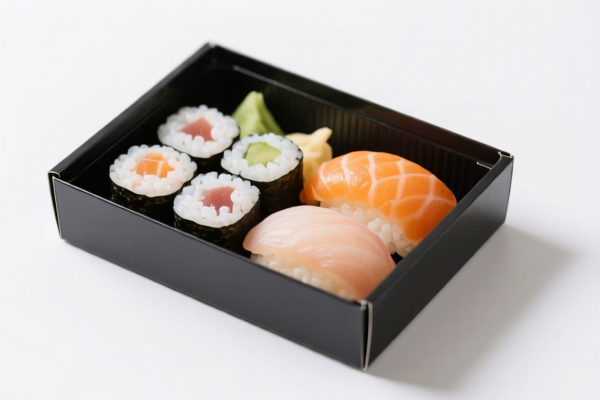
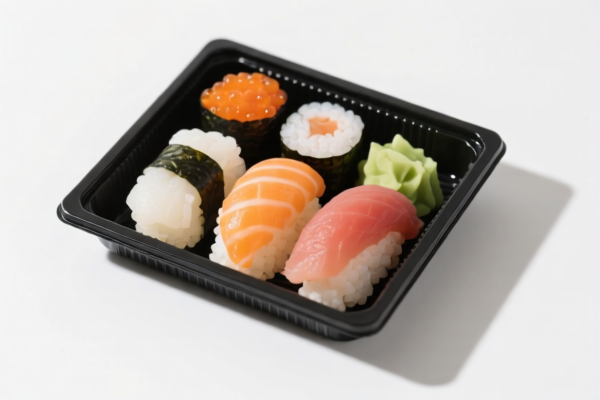
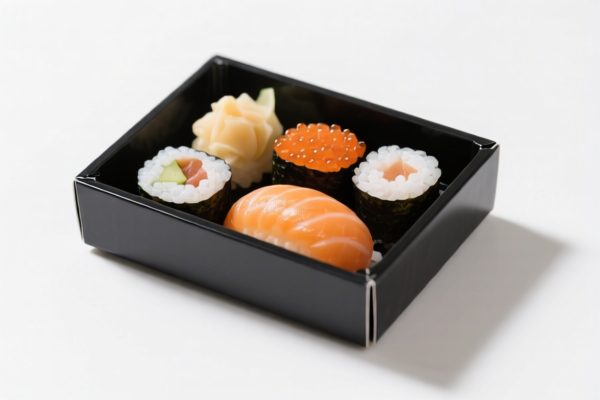
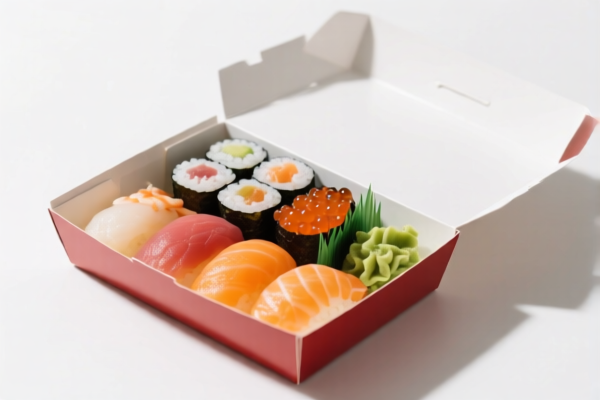
AI Analysis
🍣 Sushi Box (Paper or Paperboard Trays, Dishes, Plates, Cups, and the Like)
🌐 HS Code & Tariff Guide | 2026 Updated Customs Classification | Expert Clearance Strategy
📌 One Product, Multiple Categories – Know the Right HS Code to Avoid 25%+ Tariffs!
📦 1. Product Definition & Classification: What Exactly Is a “Sushi Box”?
A sushi box is a food container typically made from paper, paperboard, or cellulose fibers, designed to hold sushi, rice balls, or other delicate foods. It is often used in restaurants, takeout services, and retail packaging.
In international trade, it falls under Chapter 48 – Paper and Paperboard; Articles of Paper Pulp, Paper, Paperboard, Cellulose Wadding, and Webs of Cellulose Fibers.
⚠️ Critical Distinction:
- If the box is made from paper or paperboard → HS Code 4823.69.00.40
- If the box is made from bamboo → HS Code 4823.61.00.40
- If it's glassware (e.g., glass sushi trays) → Different HS Code entirely (see below)🔍 Key Tip:
- Even if the box has a lacquer coating or wax layer, it still counts as paper/paperboard unless it's primarily glass or bamboo.
📌 2. HS Code Classification Breakdown (2026 Official Tariff Table)
| HS Code | Product Description | Material | Value Threshold | Key Condition |
|---|---|---|---|---|
4823.69.00.40 |
Trays, dishes, plates, cups, and the like, of paper or paperboard: Other | Paper / Paperboard | N/A | Not made of bamboo, not for glass |
4823.61.00.40 |
Trays, dishes, plates, cups, and the like, of paper or paperboard: Of bamboo | Bamboo-based fiber | N/A | Must be natural bamboo fiber, not treated or laminated |
7013.49.20.90 |
Glassware for table/kitchen use (not drinking glasses): Other, valued ≤ $3 each | Glass | ≤ $3 | Non-glass-ceramic, not for drinking |
7013.49.60.90 |
Glassware for table/kitchen use: Other, valued > $3 each, > $5 each | Glass | > $3, > $5 | Higher value = lower tariff |
✅ Important:
- Paper-based sushi boxes = 4823.69.00.40
- Bamboo-based sushi boxes = 4823.61.00.40
- Glass sushi trays = 7013.49.20.90 or 7013.49.60.90
- Do NOT confuse these categories – misclassification leads to overpayment, delays, or penalties.
💰 3. 2026 Tariff Breakdown (U.S. Market | China Origin)
✅ Applicable Country: United States (US)
✅ Origin: China (CN)
✅ Effective Date: November 10, 2025 (inclusive)
✅ Applicable to All Importers
🎯 1. 4823.69.00.40 — Paper/Paperboard Sushi Boxes (Other)
| Item | Detail |
|---|---|
| Base Tariff | 0.0% (ad valorem) |
| Additional Duty (USITC 301) | +25.0% |
| Total Effective Duty | 25.0% |
| Tax Calculation | CIF Value × 25.0% |
| De Minimis Threshold | ❌ Not applicable (denied) |
| Legal Basis | USITC: 4823.69.00.40 → FOOTNOTE: 9903.88.01 |
📌 Explanation:
- This is not a standard product under the U.S. tariff schedule → subject to 301 Tariff List. - The 25% additional duty applies to all goods from China under Section 301 of the Trade Act of 1974. - Even if the base rate is 0%, the total tax is 25%. - No exemption for low-value or small shipments.
🎯 2. 4823.61.00.40 — Bamboo-Based Sushi Boxes
| Item | Detail |
|---|---|
| Base Tariff | 0.0% |
| Additional Duty (USITC 301) | +25.0% |
| Total Effective Duty | 25.0% |
| Tax Calculation | CIF Value × 25.0% |
| De Minimis Threshold | ❌ Not applicable |
| Legal Basis | USITC: 4823.61.00.40 → FOOTNOTE: 9903.88.01 |
📌 Important Note:
- Bamboo is not exempt from 301 tariffs, even though it’s a natural fiber. - As long as the product is made from bamboo fiber, it falls under 4823.61.00.40 and is still subject to 25%. - Do not assume bamboo = lower tariff – this is a common misconception.
🎯 3. 7013.49.20.90 — Glass Sushi Trays (Valued ≤ $3 Each)
| Item | Detail |
|---|---|
| Base Tariff | 22.5% |
| Additional Duty (USITC 301) | +7.5% |
| Total Effective Duty | 30.0% |
| Tax Calculation | CIF Value × 30.0% |
| De Minimis Threshold | ❌ Not applicable |
| Legal Basis | USITC: 7013.49.20.90 → FOOTNOTE: 9903.88.01 |
📌 Explanation:
- Glassware used for table/kitchen (not drinking glasses) → falls under 7013.49.20.90. - If each unit is ≤ $3, this code applies. - Even if made in China, it’s not exempt – 30% total duty. - No de minimis → even a $1.50 tray triggers full 30%.
🎯 4. 7013.49.60.90 — Glass Sushi Trays (Valued > $3 Each, > $5 Each)
| Item | Detail |
|---|---|
| Base Tariff | 7.2% |
| Additional Duty (USITC 301) | +7.5% |
| Total Effective Duty | 14.7% |
| Tax Calculation | CIF Value × 14.7% |
| De Minimis Threshold | ❌ Not applicable |
| Legal Basis | USITC: 7013.49.60.90 → FOOTNOTE: 9903.88.01 |
📌 Key Insight:
- Higher value = lower tariff → this is counterintuitive but true. - If each glass tray costs over $5, the base tariff drops to 7.2%, and total duty is only 14.7%. - Still subject to 301 → but less than the $3 threshold version. - Strategy: If you’re shipping high-value glass trays, structure pricing above $5 to save.
🛠️ 4. Customs Clearance Best Practices (Pro Tips to Avoid Penalties)
✅ 1. Documentation Checklist (MUST-HAVE)
| Document | Required? | Notes |
|---|---|---|
| ✅ Commercial Invoice | ✔️ | Must clearly state: "Sushi Box, Paperboard, 100 pcs" |
| ✅ Packing List | ✔️ | Include per-unit value, material type |
| ✅ Product Photos (with labels) | ✔️ | Show material, construction, branding |
| ✅ Material Test Report | ✔️ | Prove it’s paper/paperboard or bamboo, not glass |
| ✅ Certificate of Origin (CO) | ✔️ | Required for tariff claims (e.g., if from Vietnam, may qualify for lower rate) |
| ✅ HS Code Pre-Ruling Request | ✔️ | Highly recommended for new or complex products |
✅ 2.申报技巧(申报口诀)
🔥 “材质定编码,价值定税率,拆包必翻车,免税不靠谱!”
| Scenario | Correct HS Code | Wrong Approach | Risk |
|---|---|---|---|
| Paper sushi box | 4823.69.00.40 |
4823.61.00.40 |
Wrong material → audit |
| Bamboo sushi box | 4823.61.00.40 |
4823.69.00.40 |
25% tariff still applies, but wrong code → delay |
| Glass tray ≤ $3 | 7013.49.20.90 |
7013.49.60.90 |
Pay 30% instead of 14.7% |
| Glass tray > $5 | 7013.49.60.90 |
7013.49.20.90 |
Pay 14.7% instead of 30% → cost savings! |
✅ 3. Special Cases & Solutions
| Situation | Recommended Action |
|---|---|
| Mixed shipment (paper + glass boxes) | Split by HS Code – do not combine |
| Custom-designed sushi box with logo | Declare as "Custom Paper Trays, for Sushi Packaging" – avoid "gift" or "decorative" |
| Sushi box with plastic liner | Still paper-based → use 4823.69.00.40 |
| Sushi box made in Vietnam/Mexico | Apply for CO → may qualify for 0% tariff under trade agreements |
| Low-value shipment (< $150) | ❌ No de minimis → still pay 25% or 30% |
🌍 5. Global Tariff Comparison (2026)
| Country | Recommended HS Code | Base Tariff | Additional Duty | Total Duty | Notes |
|---|---|---|---|---|---|
| 🇺🇸 USA (China origin) | 4823.69.00.40 |
0% | +25% | 25.0% | No de minimis |
| 🇨🇳 China | 4823.69.00.40 |
5% | 0% | 5% | No 301 tariff |
| 🇪🇺 EU | 4823.69.00.40 |
0% | 0% | 0% | CE certified |
| 🇦🇺 Australia | 4823.69.00.40 |
5% | 0% | 5% | No extra duty |
| 🇯🇵 Japan | 4823.69.00.40 |
0% | 0% | 0% | No 301 |
📌 Insight:
- China is the only major market with 25%+ tariffs on paper sushi boxes. - EU, Japan, Australia are much friendlier – consider transshipment via Vietnam or Mexico to reduce risk.
🚫 6. Common Mistakes & How to Avoid Them
❌ Mistake 1: Calling a paper sushi box a "gift box" or "decorative item"
👉 Result: Customs may reclassify as non-essential → higher scrutiny, delay, or rejection.
❌ Mistake 2: Not declaring the exact material (paper vs. bamboo vs. glass)
👉 Result: Misclassification → penalties, back taxes, fines.
❌ Mistake 3: Shipping glass trays under $3 each without realizing the 30% tariff
👉 Result: Overpaying by 15% vs. if priced above $5.
❌ Mistake 4: Assuming bamboo is exempt from 301 tariffs
👉 Result: Still pay 25% – no exemption.
✅ Best Practice:
Always declare:
"Sushi Box, Made of Paperboard, 100% Recyclable, Used for Food Packaging, CIF Value: $2.80/unit"
🎯 7. Final Verdict: How to Win the Tariff Game
🔥 “Know the Material, Know the Value, Know the Code – Or Pay the Price!”
- ✅ Paper Box? →
4823.69.00.40→ 25% total duty - ✅ Bamboo Box? →
4823.61.00.40→ 25% total duty - ✅ Glass Tray ≤ $3? →
7013.49.20.90→ 30% total duty - ✅ Glass Tray > $5? →
7013.49.60.90→ 14.7% total duty ✅ Save 15.3%!
📌 Pro Tips for Importers
- 🚀 Request an HS Code Pre-Ruling from U.S. Customs (CBP) before shipment.
- 🌐 Use Vietnam or Mexico as transshipment hubs to avoid 301 tariffs.
- 📊 Structure pricing above $5 for glass trays to reduce tariff from 30% to 14.7%.
- 📸 Take high-res photos showing material, construction, and labeling.
📣 Act Now!
📞 Contact a licensed customs broker + submit product photos + specs
🚀 Get your HS Code confirmed before shipping
💰 Save thousands in tariffs with one correct classification
✨ Precision Classification = Smooth Clearance = Profit Protection!
💼 Your sushi box may be small, but your tariff risk isn’t!
Customer Reviews
About HS Code Classification
The Harmonized System (HS) is an internationally standardized nomenclature developed by the World Customs Organization (WCO) to classify traded products. Over 200 countries use the HS system as the basis for customs tariffs, trade statistics, and import/export regulations.
Each HS code follows a hierarchical structure:
- Chapter (2 digits) — Broad category of goods (e.g., Chapter 84: Machinery and Mechanical Appliances)
- Heading (4 digits) — More specific grouping within the chapter
- Subheading (6 digits) — Internationally standardized breakdown, used by all WCO member countries
- National subdivisions (8-10 digits) — Country-specific extensions for further classification, such as US HTSUS 10-digit codes
Correct HS code classification is essential for smooth customs clearance, accurate duty payment, and compliance with trade regulations. Misclassification can lead to customs delays, overpayment of duties, or penalties.
When importing from CN to US, the applicable tariff rates may include:
- Most-Favored-Nation (MFN) rate — The standard duty rate applied to WTO members
- General rate — Applied to countries without trade agreements
- Trade remedy duties — Additional tariffs such as Section 301 (anti-dumping), Section 232 (national security), or countervailing duties
The information provided on this page is for reference purposes only. For official classification, please consult with your local customs authority or a licensed customs broker.