Suspender Stockings
CN → US| HS Code | Tariff Rate | Origin | Destination | Doc |
|---|---|---|---|---|
| 6217909085 | 32.1% | CN | US | Official Doc |
| 6115966020 | 36.3% | CN | US | Official Doc |
| 6217108500 | 24.6% | CN | US | Official Doc |
Product Images
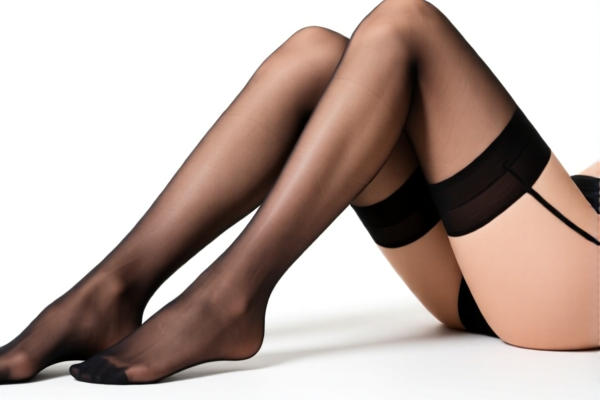
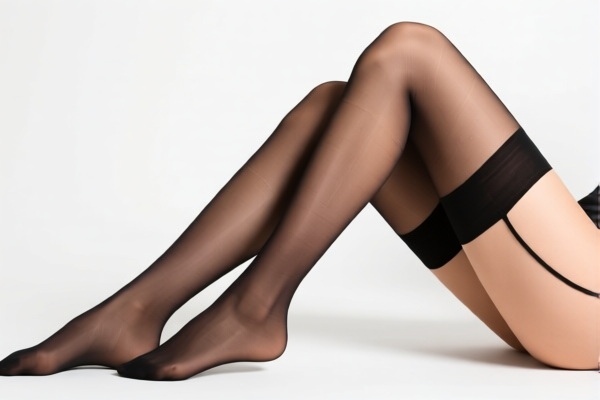
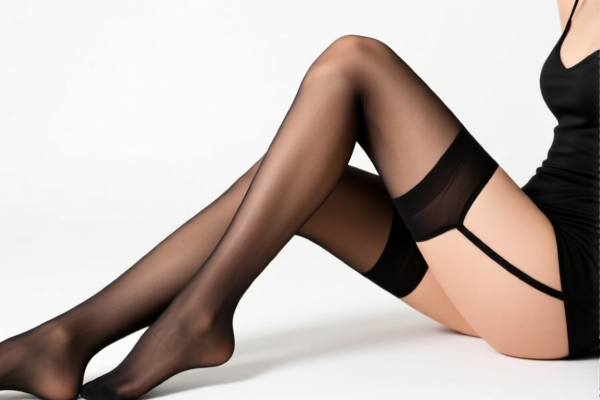
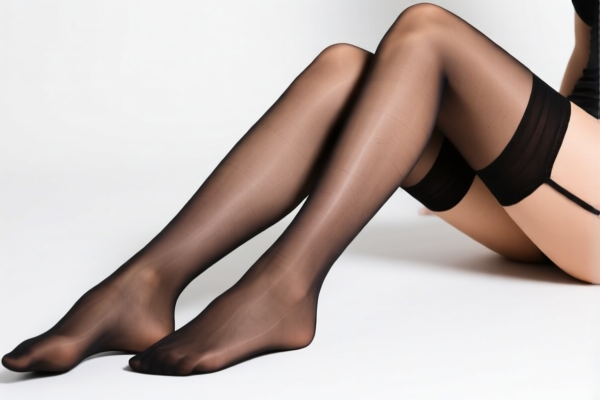
AI Analysis
🩱 Suspender Stockings (Hold-ups / Garters)
🌐 HS Code Reference & Customs Clearance Guide | 2026 Latest Tariff Analysis | Professional Entry Strategy
📌 1. Product Definition & Classification: What Exactly Are "Suspender Stockings"?
Suspender stockings, often referred to as "hold-ups," "stockings with elastic tops," or "garter belts with attached stockings," are intimate apparel items. In international trade, they are classified based on their material composition and structural form (attached vs. separate).
The classification hinges on whether the item is considered a "stocking" (knitted/loomed) or a "part/accessory of clothing" (woven/non-knitted).
⚠️ Key Distinction Point:
- If the item is knitted/loomed (e.g., nylon, spandex blend) and functions as a stocking → Chapter 61.
- If the item is woven or classified as a fashion accessory/attachment (e.g., fabric bands, decorative clips, non-knitted garters) → Chapter 62.
📦 2. HS Code Classification Details (2026 Latest Tariff Authority Cross-Reference)
Based on the provided data, here are the three potential HS Codes and their corresponding tax implications for goods originating from China (CN) to the United States (US).
🏷️ Scenario A: Woven/Accessory Type (Hair Ties, Hair Bands, Similar Garment Accessories)
Note: This classification is applied when the item is considered a generic textile accessory or non-knitted garment attachment.
| Item | Detail |
|---|---|
| HS Code | 6217.10.85.00 |
| Product Description | Made up garments; parts of garments or of clothing accessories; other made up clothing accessories. Specifically: Hair bands, ponytail holders, and similar garment decorations/accessories. Material reasonably inferred as textile. |
| Total Tax Rate | 24.6% |
| Tax Breakdown | - Basic Duty: 14.6% - Section 301 (Add'l Duty): 0.0% - Section 122 Duty: 10% |
| Legal Basis | 6217.10.85.00 (Textile Accessories) |
🔍 Explanation:
- If the suspender stockings are made of woven fabric or are primarily decorative accessories (like elaborate fabric bands not functioning as standard knit hosiery), they may fall here.
- The 10% Section 122 duty is a specific additional tax on certain textile/apparel imports.
- Lowest Total Tax Option: At 24.6%, this is the most cost-effective classification if the product physically meets the definition of a "garment accessory" rather than hosiery.
🏷️ Scenario B: Woven/Accessory Type (Garter Belts/Straps as Garment Parts)
Note: This classification applies when the item is viewed as a part of clothing (e.g., garter belts) made from synthetic fibers, often with additional duties due to material-specific rules.
| Item | Detail |
|---|---|
| HS Code | 6217.90.90.85 |
| Product Description | Parts of garments or clothing accessories: Garter belts and similar items. Morphology matches "garment accessories." Material inferred as synthetic fibers (e.g., nylon, spandex). |
| Total Tax Rate | 32.1% |
| Tax Breakdown | - Basic Duty: 14.6% - Section 301 (Add'l Duty): 7.5% - Section 122 Duty: 10% |
| Legal Basis | 6217.90.90.85 (Other Textile Parts) |
🔍 Explanation:
- This code captures garter belts or suspender bands that are distinct from the stockings themselves.
- Higher Cost Driver: Includes a 7.5% Section 301 additional duty on top of the 10% Section 122 duty.
- Risk: If customs inspectors determine the item is actually hosiery (knitted), this code may be rejected, leading to reclassification and penalties.
🏷️ Scenario C: Knitted/Hosiery Type (Stockings)
Note: This is the most common classification for "suspender stockings" if they are knit/loomed fabric stockings with an elastic top.
| Item | Detail |
|---|---|
| HS Code | 6115.96.60.20 |
| Product Description | Hosiery, incl. stockings, socks, etc.: Other. Matches form (stocking) and use. Material inferred as synthetic fibers (e.g., nylon/spandex) or cotton. |
| Total Tax Rate | 36.3% |
| Tax Breakdown | - Basic Duty: 18.8% - Section 301 (Add'l Duty): 7.5% - Section 122 Duty: 10% |
| Legal Basis | 6115.96.60.20 (Synthetic Fiber Hosiery) |
🔍 Explanation:
- If the product is a knitted stocking (even with an elastic top), it belongs in Chapter 61.
- Highest Cost: The basic duty is higher (18.8%) compared to Chapter 62 (14.6%), plus the 7.5% Section 301 and 10% Section 122.
- Critical Check: Ensure the product is truly knitted. If it is woven or non-knit, this code is incorrect and carries a risk of customs seizure.
💰 3. 2026 Tariff Rate Details & Policy Add-ons
✅ Applicable Country: United States (US)
✅ Origin: China (CN)
✅ Effective Date: Post-November 2025 Policies
🎯 1. 6217.10.85.00 – Garment Accessories (Textile)
| Item | Content |
|---|---|
| Basic Duty | 14.6% |
| Section 301 Add-on | 0.0% |
| Section 122 Add-on | +10% |
| Total Tax Rate | 24.6% |
| Calculation | CIF Value × 24.6% |
| De Minimis Exemption | ❌ No (Section 122 duties often negate de minimis benefits for Chinese textiles) |
| Legal Path | HTSUS:6217.10.85.00 → Section 122 (19 U.S.C. 1862) |
📌 Note: This is the lowest tariff burden if the product qualifies as a "textile accessory" rather than hosiery.
🎯 2. 6217.90.90.85 – Garment Parts (Synthetic)
| Item | Content |
|---|---|
| Basic Duty | 14.6% |
| Section 301 Add-on | +7.5% |
| Section 122 Add-on | +10% |
| Total Tax Rate | 32.1% |
| Calculation | CIF Value × 32.1% |
| De Minimis Exemption | ❌ No |
| Legal Path | HTSUS:6217.90.90.85 → Section 301 (19 U.S.C. 2411) + Section 122 |
🎯 3. 6115.96.60.20 – Hosiery (Synthetic)
| Item | Content |
|---|---|
| Basic Duty | 18.8% |
| Section 301 Add-on | +7.5% |
| Section 122 Add-on | +10% |
| Total Tax Rate | 36.3% |
| Calculation | CIF Value × 36.3% |
| De Minimis Exemption | ❌ No |
| Legal Path | HTSUS:6115.96.60.20 → Section 301 + Section 122 |
🛠️ 4. Customs Clearance Practical Advice
✅ 1. Required Documentation Checklist
| Document | Required? | Purpose |
|---|---|---|
| ✅ Product Spec Sheet | ✔️ | Must detail material composition (e.g., "90% Nylon, 10% Spandex") and construction method (Knitted vs. Woven). |
| ✅ Physical Sample/Photos | ✔️ | Clear images of the elastic top, seam structure, and any hardware (clasps/clips). |
| ✅ Commercial Invoice | ✔️ | Must explicitly state: "Women's Suspender Stockings, Material: [Insert Material], Type: [Knitted/Woven]." |
| ✅ Packing List | ✔️ | Ensure no mixed HS codes in one shipment without clear separation. |
| ✅ Material Test Report | ✔️ | Optional but recommended to prove fabric type (knit vs. woven) if disputed. |
✅ 2. Declaration Strategy (Key Mnemonic)
🔥 "Material Determines Chapter, Knit is Ch61, Woven is Ch62. Accessory vs. Hosiery is the Key!"
| Situation | Correct Declaration | Risk of Misdeclaration |
|---|---|---|
| Knitted Stockings (elastic top) | 6115.96.60.20 |
High. If declared as 6217, customs may assess back taxes + penalties. |
| Woven Garter Belt (no knit fabric) | 6217.90.90.85 |
Medium. Must prove it's not hosiery. |
| Decorative Hair/Body Band (non-functional hosiery) | 6217.10.85.00 |
Low, if clearly accessory. Lowest tax. |
| Mixed Package (Stockings + Garter Belt) | Split Declaration | ⚠️ Critical: Do not lump under one code. Separate lines required. |
✅ 3. Special Handling Tips
| Scenario | Advice |
|---|---|
| "Hold-ups" (Self-supporting Stockings) | These are almost always 6115 (Hosiery) because they are knitted. Expect 36.3% tax. |
| "Garter Belt" (Separate from Stockings) | Can often be classified under 6217 (Parts/Accessories). If woven, aim for 6217.90. |
| Material Ambiguity | If the product is a blend of knit and woven parts, customs may use the "essential character" rule. Knit usually dominates for stockings. |
| Section 122 Impact | Remember, 10% Section 122 duty applies to most textile/apparel imports from China, regardless of Chapter 61 or 62. |
🌍 5. Global Market Comparison (2026)
| Country/Region | Recommended HS Code | Total Tax Rate (China Origin) | Key Certification |
|---|---|---|---|
| 🇺🇸 USA | 6115.96.60.20 (if hosiery) |
36.3% | None specific, but accurate labeling required |
| 🇺🇸 USA | 6217.10.85.00 (if accessory) |
24.6% | Same as above |
| 🇪🇺 EU | 6115.95 or 6217.90 |
0% - 4% | CE (if applicable), REACH compliance |
| 🇬🇧 UK | 6115.95 or 6217.90 |
0% - 4% | UKCA marking (if applicable) |
📌 Conclusion:
- The USA is the most expensive market due to Section 301 (7.5%) and Section 122 (10%) tariffs.
- EU/UK are much more favorable, with no additional Section 122/301 duties.
- If your market is primarily the US, optimize your product design to qualify for Chapter 62 (e.g., make the suspender part woven/accessory) to save 11.7% (36.3% - 24.6%) in taxes.
📌 6. Common Errors & Pitfalls
❌ Error 1: Declaring knitted stockings as "garment accessories" to avoid Section 301.
👉 Consequence: Customs audit → Revaluation + Back Taxes + Penalties.
❌ Error 2: Ignoring Section 122 Duty.
👉 Consequence: Underpayment by 10%. Section 122 applies to most textile/apparel from China.
❌ Error 3: Mixing "Stockings" and "Garter Belts" in one line item.
👉 Consequence: Confusion, potential rejection, or incorrect tax application.
✅ Correct Practice:
"Women's Knit Nylon-Spandex Suspender Stockings, Self-supporting, 20 Denier, Model XYZ" →
6115.96.60.20
"Women's Woven Fabric Garter Belt, Adjustable, Model ABC" →6217.90.90.85
🎯 7. Conclusion: Strategic Cost Optimization
🎯 Remember the Tax Hierarchy:
🔹 Knit Hosiery (
6115): 36.3% (Highest Cost)
🔹 Woven Parts (6217.90): 32.1% (Medium Cost)
🔹 Textile Accessories (6217.10): 24.6% (Lowest Cost)
📌 Strategic Advice:
1. Verify Construction: If possible, design suspender bands as woven rather than knitted to potentially qualify for Chapter 62.
2. Accurate Labeling: Clearly distinguish between "Stockings" (hosiery) and "Garter Accessories" (apparel parts).
3. Pre-Ruling: For high-volume shipments, consider applying for a US Customs Ruling to confirm the HS Code for your specific product design.
✨ Professional Clearance Starts with Accurate Classification!
💼 Every 1% of tax saved is pure profit!
Customer Reviews
About HS Code Classification
The Harmonized System (HS) is an internationally standardized nomenclature developed by the World Customs Organization (WCO) to classify traded products. Over 200 countries use the HS system as the basis for customs tariffs, trade statistics, and import/export regulations.
Each HS code follows a hierarchical structure:
- Chapter (2 digits) — Broad category of goods (e.g., Chapter 84: Machinery and Mechanical Appliances)
- Heading (4 digits) — More specific grouping within the chapter
- Subheading (6 digits) — Internationally standardized breakdown, used by all WCO member countries
- National subdivisions (8-10 digits) — Country-specific extensions for further classification, such as US HTSUS 10-digit codes
Correct HS code classification is essential for smooth customs clearance, accurate duty payment, and compliance with trade regulations. Misclassification can lead to customs delays, overpayment of duties, or penalties.
When importing from CN to US, the applicable tariff rates may include:
- Most-Favored-Nation (MFN) rate — The standard duty rate applied to WTO members
- General rate — Applied to countries without trade agreements
- Trade remedy duties — Additional tariffs such as Section 301 (anti-dumping), Section 232 (national security), or countervailing duties
The information provided on this page is for reference purposes only. For official classification, please consult with your local customs authority or a licensed customs broker.