Sweat absorbing pad
CN → US| HS Code | Tariff Rate | Origin | Destination | Doc |
|---|---|---|---|---|
| 9619001560 | 17.5% | CN | US | Official Doc |
| 6307909884 | 24.5% | CN | US | Official Doc |
| 6307909882 | 24.5% | CN | US | Official Doc |
| 9619009000 | 24.5% | CN | US | Official Doc |
| 5601220091 | 41.3% | CN | US | Official Doc |
Product Images


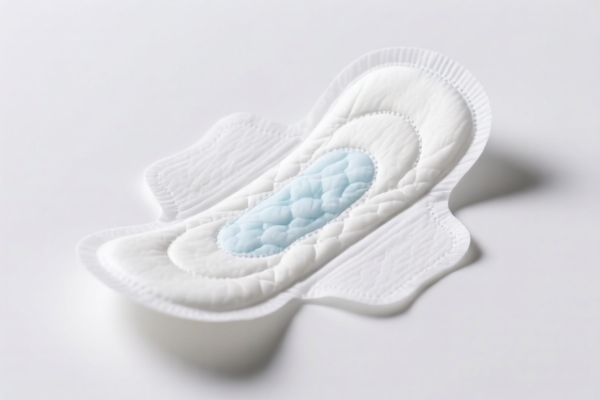
AI Analysis
🧻 Sweat Absorbing Pad: Ultimate HS Code Guide & 2026 Customs Clearance Strategy
🌐 HS Code Classification & Customs Clearance Guide | 2026 Tax Rate Breakdown | Expert Strategy for Global Trade
📌 I. Product Definition: What Exactly is a "Sweat Absorbing Pad"?
A Sweat Absorbing Pad is a hygiene or grooming accessory designed to absorb moisture (sweat, oil, etc.) from the skin, commonly used in sports, personal care, or industrial settings. In international trade, its classification hinges on Material Composition and Functional Form.
It is generally categorized into two main branches: * Hygiene/Disinfection Products (Chapter 96): Non-textile pads, often cellulose-based, used as sanitary inserts. * Textile Products (Chapter 63): Fabric pads (cotton, synthetic fibers), often resembling towels or wipes.
⚠️ Critical Distinction: - If the product is a cellulose fiber/specialized hygiene insert (not woven/knitted fabric) →归类 to 9619.00. - If the product is a textile wipe/towel made of cotton or synthetic fiber →归类 to 6307.90. - If it involves specific non-woven processing that blurs lines → 5601.22 (Risk: High Tariff).
📦 II. HS Code Classification Details (2026 Official Tariff Schedule)
Based on current 2026 trade data and product characteristics, here are the 5 potential classifications for Sweat Absorbing Pads:
| HS Code | Product Description & Logic | Material/Form | Total Tax Rate |
|---|---|---|---|
9619.00.15.60 |
Hygiene/Disinfection Product Logic: Classified as a "similar article" in hygiene/care. Material is cellulose cotton or fiber-based. |
Cellulose Cotton / Fiber-based (Sanitary) | 17.5% |
6307.90.98.84 |
Artificial Fiber Towel/Pad Logic: Inferred material is artificial fiber or cotton. Form is a finished article. Fits "Other artificial fiber towels/pads." |
Artificial Fiber / Cotton (Textile) | 24.5% |
6307.90.98.82 |
Cotton Towel/Finished Article Logic: Inferred material is cotton or fiber. Form is a finished article. Fits "Other cotton towels" & "Other made-up articles." |
Cotton / Fiber (Textile) | 24.5% |
9619.00.90.00 |
Other Sanitary/Hygiene Articles Logic: Matches "similar articles" in hygienic use. No material conflict. Broad category for hygiene pads. |
Various (General Hygiene) | 24.5% |
5601.22.00.91 |
Wadding & Wipes (Artificial Fiber) Logic: Inferred material is fiber (cotton, non-woven). Classified as "processed textile materials." ⚠️ High Risk. |
Fiber (Non-woven/Processed) | 41.3% |
🔍 Key Insight: - Category
9619(Hygiene) generally offers the lowest tax rate (17.5%) if the product is strictly defined as a hygiene insert made of cellulose. - Category6307(Textiles) is the standard for cotton/synthetic pads (24.5%). - Category5601(Wadding/Non-woven) triggers the highest penalty rate (41.3%) due to stricter "processing" definitions on artificial fibers. Avoid this unless absolutely necessary!
💰 III. 2026 Tax Rate Breakdown (Detailed Customs Duty Analysis)
✅ Applicable Country: USA (US)
✅ Origin: China (CN)
✅ Effective Date: Current 2026 Regulations (Section 301 & 122 provisions)
🎯 1. 9619.00.15.60 – The Most Economical Option (Hygiene Focus)
Best for: Cellulose-based sanitary pads.
| Item | Detail |
|---|---|
| Base Tariff | 0.0% |
| Section 301 Add-on | +7.5% (US Trade Remedy) |
| Section 122 Add-on | +10.0% (New Section 122 provision) |
| Total Tax Rate | 17.5% |
| Calculation | CIF Value × 17.5% |
| De Minimis Exemption | ❌ NO (Standard commercial shipment) |
📌 Explanation: This is the sweet spot for clearance. - Base 0%: Because it falls under "Sanitary/Hygiene" which often has low base duty. - Total 17.5%: The sum of Section 301 (7.5%) and Section 122 (10%). - Strategy: If your product is cellulose-based, emphasize "Hygiene/Sanitary" usage to claim this code.
🎯 2. 6307.90.98.84 & 6307.90.98.82 – The Textile Route
Best for: Cotton or Synthetic fabric pads.
| Item | Detail |
|---|---|
| Base Tariff | 7.0% |
| Section 301 Add-on | +7.5% |
| Section 122 Add-on | +10.0% |
| Total Tax Rate | 24.5% |
| Calculation | CIF Value × 24.5% |
| De Minimis Exemption | ❌ NO |
📌 Explanation: - Unlike the hygiene category, Textile (
6307) has a 7.0% Base Tariff. - Even with the same Section 301 (7.5%) and Section 122 (10%) add-ons, the total hits 24.5%. - Difference: The 7% base is the "killer" here.
🎯 3. 9619.00.90.00 – The General Hygiene Category
Best for: Broad "Sanitary Use" without specific material constraints.
| Item | Detail |
|---|---|
| Base Tariff | 7.0% |
| Section 301 Add-on | +7.5% |
| Section 122 Add-on | +10.0% |
| Total Tax Rate | 24.5% |
| Calculation | CIF Value × 24.5% |
📌 Explanation: While still a hygiene product, this sub-category falls under a higher base rate than
15.60. Only use if15.60is not applicable due to material definition.
🚨 4. 5601.22.00.91 – The High-Risk Trap (Artificial Fiber Wadding)
Best for: Strictly defined non-woven industrial wadding.
| Item | Detail |
|---|---|
| Base Tariff | 6.3% |
| Section 301 Add-on | +25.0% (Heavier Penalty) |
| Section 122 Add-on | +10.0% |
| Total Tax Rate | 41.3% |
| Calculation | CIF Value × 41.3% |
📌 Explanation: - ⚠️ WARNING: This code attracts a massive 25% Section 301 Add-on (vs. 7.5% in other categories). - Total 41.3% is extremely high and will destroy profit margins. - Avoid unless the product is strictly "wadding" and cannot be classified as a towel or hygiene pad.
🛠️ IV. Customs Clearance Practical Advice (Avoid Pitfalls)
✅ 1. Preparation Checklist (Must-Haves)
| Document | Requirement | Purpose |
|---|---|---|
| ✅ Product Specs | ✔️ Required | Define material (Cellulose vs. Cotton vs. Synthetic) to justify HS Code. |
| ✅ Material Certs | ✔️ Required | Proof of "Cellulose Cotton" (for 9619.00.15.60) vs. "Artificial Fiber". |
| ✅ Usage Photos | ✔️ Required | Show the pad in use as a hygiene insert (supports 9619) or as a cleaning wipe (supports 6307). |
| ✅ Invoice | ✔️ Required | Must use precise terminology: "Sweat Absorbing Hygiene Pad" (avoid generic "Pad"). |
| ✅ Composition Report | ✔️ Required | Lab report detailing % of Cotton vs. Synthetic vs. Cellulose. |
✅ 2. Classification Strategy (The "Golden Rules")
🔥 口诀: "Cellulose = 17.5%, Cotton = 24.5%, Don't touch Non-woven = 41.3%!"
| Scenario | Correct HS Code | Why? | Wrong Code & Consequence |
|---|---|---|---|
| Cellulose-based pad (e.g., paper-like hygiene insert) | 9619.00.15.60 |
Fits "Hygiene/Sanitary" + 0% Base | 5601.22.00.91 → 41.3% (Overpay!) |
| Cotton/Synthetic fabric pad (Towel-like) | 6307.90.98.82/84 |
Fits "Other Towel/Pad" | 9619.00.15.60 → Rejection (Material mismatch) |
| Non-woven "Wadding" | 5601.22.00.91 |
Strictly defined as wadding | Only if unavoidable (High tax risk) |
✅ 3. Special Handling Tips
| Situation | Action Plan |
|---|---|
| OEM Custom Pads | Provide the client's design spec. If they call it a "Hygiene Insert," use 9619. |
| Multi-layer Pads | If it has a cotton layer + synthetic layer, declare based on the primary function. If hygiene, lean to 9619. |
| "Wet Wipe" Packaging | If sold as a "Wet Wipe," it might be 3401 or 6307. If "Sweat Absorbing Pad" (Dry), stick to 9619 or 6307. |
| High-Value Shipments | Pre-clearance Ruling: Apply for an Advance Ruling from CBP to confirm 9619.00.15.60 eligibility before shipping. |
🌍 V. Global Market Comparison (2026 Snapshot)
| Market | Recommended HS Code | Est. Tax Rate | Key Certification |
|---|---|---|---|
| 🇺🇸 USA | 9619.00.15.60 |
17.5% | FDA (if medical claim) |
| 🇪🇺 EU | 9619.00.00 |
~6.5% | CE, FSC (if cellulose) |
| 🇯🇵 Japan | 9619.00.00 |
~8.0% | PSE (if electrical component) |
| 🇦🇺 Australia | 9619.00.00 |
~5.0% | TGA (if medical) |
📌 Conclusion: - USA is the most complex market due to Section 301 (7.5%) and Section 122 (10%)叠加. - Targeting
9619.00.15.60is the only way to get the tax down to 17.5%. - Textile codes (6307) are a safe second choice (24.5%), but5601is a financial disaster (41.3%).
📌 VI. Common Mistakes & Blood Tears (Lessons Learned)
❌ Mistake 1: Calling it "Non-woven Fabric" to sound "Techy".
👉 Result: CBP classifies it as 5601.22.00.91 → 41.3% Tax!
✅ Fix: Call it "Cellulose Sanitary Pad" if it is cellulose-based.
❌ Mistake 2: Using generic "Textile Pad" for a hygiene product.
👉 Result: Missed 9619 (17.5%) opportunity → Paying 24.5%.
✅ Fix: Provide a lab report proving cellulose composition.
❌ Mistake 3: Splitting "Pad" + "Packaging" into separate shipments. 👉 Result: Packaging might get taxed at different rates; creates compliance mess. ✅ Fix: Declare as "Set" (Pad + Packaging) under the higher tax rate of the main item.
🎯 VII. Conclusion: Strategic Clearance for Maximum Profit
🎯 Remember the Magic Formula:
🔹 "Cellulose Hygiene = 17.5% (Best)"
🔹 "Cotton Textile = 24.5% (Safe)"
🔹 "Non-woven Wadding = 41.3% (Avoid!)"🔹 "HS Code is Life & Death: 24% vs 41% = 17% difference! That's your profit!"
📌 Pro Tip:
If your pad contains any synthetic fiber but is primarily for hygiene, argue for
9619.00.90.00(24.5%) rather than5601(41.3%). Always get a Pre-Ruling from CBP if the material composition is mixed.
📣 Call to Action:
📞 Contact Customs Broker + Submit Material Lab Report + File for HS Code Ruling
🚀 Clear Customs Fast, Save 23.8% (41.3% - 17.5%), Double Your Profit!
✨ Professional Clearance Starts with Precise Classification!
💼 Every Cent Counts in the 2026 Trade War!
Customer Reviews
About HS Code Classification
The Harmonized System (HS) is an internationally standardized nomenclature developed by the World Customs Organization (WCO) to classify traded products. Over 200 countries use the HS system as the basis for customs tariffs, trade statistics, and import/export regulations.
Each HS code follows a hierarchical structure:
- Chapter (2 digits) — Broad category of goods (e.g., Chapter 84: Machinery and Mechanical Appliances)
- Heading (4 digits) — More specific grouping within the chapter
- Subheading (6 digits) — Internationally standardized breakdown, used by all WCO member countries
- National subdivisions (8-10 digits) — Country-specific extensions for further classification, such as US HTSUS 10-digit codes
Correct HS code classification is essential for smooth customs clearance, accurate duty payment, and compliance with trade regulations. Misclassification can lead to customs delays, overpayment of duties, or penalties.
When importing from CN to US, the applicable tariff rates may include:
- Most-Favored-Nation (MFN) rate — The standard duty rate applied to WTO members
- General rate — Applied to countries without trade agreements
- Trade remedy duties — Additional tariffs such as Section 301 (anti-dumping), Section 232 (national security), or countervailing duties
The information provided on this page is for reference purposes only. For official classification, please consult with your local customs authority or a licensed customs broker.