Swimming Goggles
CN → US| HS Code | Tariff Rate | Origin | Destination | Doc |
|---|---|---|---|---|
| 9506996080 | 21.5% | CN | US | Official Doc |
| 3926903500 | 16.5% | CN | US | Official Doc |
| 9506995500 | 22.8% | CN | US | Official Doc |
| 9004900010 | 20.0% | CN | US | Official Doc |
| 9004900090 | 20.0% | CN | US | Official Doc |
Product Images
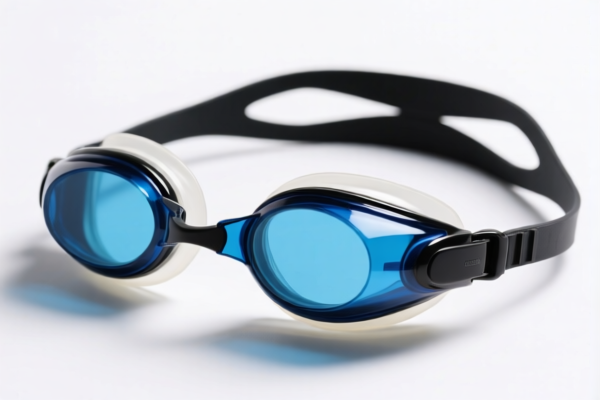
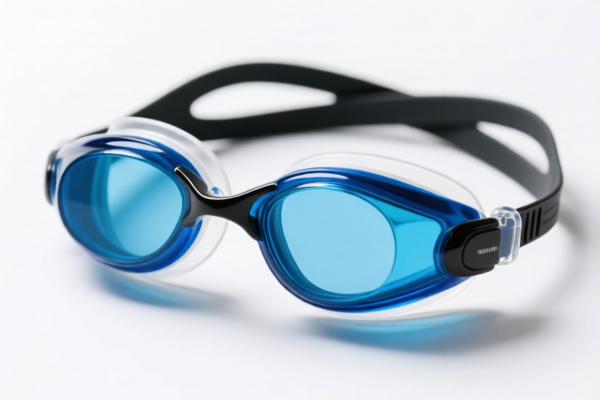

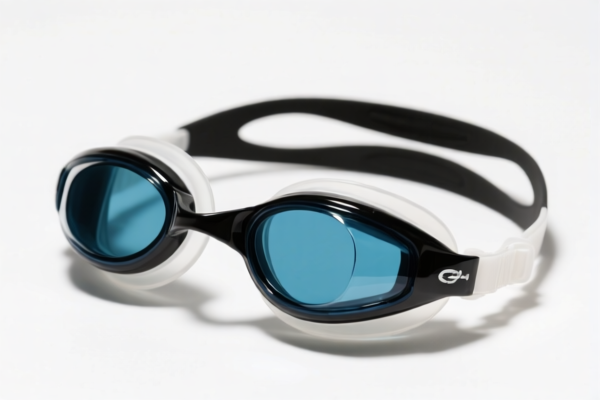
AI Analysis
🏊♂️ Swimming Goggles: The Ultimate HS Code & Tariff Classification Guide for US Customs
🌐 HS Code Reference & Customs Clearance Guide | 2026 Latest Tariff Analysis | Professional Strategy for Water Sports Gear
📌 Part 1: Product Definition & Classification – Do You Really Understand “Swimming Goggles”?
Swimming goggles are essential eye protection equipment for swimmers, designed to create a watertight seal around the eyes. In international trade, they are NOT just one single HS code. Their classification depends heavily on material composition, intended use, and structural integration with other swimming accessories.
Key Distinction Logic: - If they are standalone goggles (just lenses, straps, seals) → They fall under Chapter 90 (Optical/Medical Appliances). - If they are part of a broader "swimming equipment" kit (e.g., goggles + nose clip + earplugs + swim cap sold together as a "swimming set") → They may fall under Chapter 95 (Toys/Sports Equipment) or Chapter 39 (Plastics).
⚠️ Critical Compliance Point:
- If the primary function is vision correction/protection via optical lenses → Chapter 90 is preferred.
- If the primary function is sports recreation/equipment and often bundled with non-optical items → Chapter 95 or 39 may apply.
- Material matters: Plastic/silicone seals vs. rubber frames can shift classification.
📦 Part 2: HS Code Classification Matrix (Based on Provided Data)
Below are the exact HS Codes from your dataset, sorted by Tax Efficiency and Logical Fit.
| HS Code | Product Description & Logic | Total Tax Rate | Why This Code? |
|---|---|---|---|
| 9004.90.00.10 | Best Fit for Standalone Goggles Mirrors/Eyewear for swimming, plastic/silicone material. |
20.0% | ✅ Lowest Tax. Matches "goggles" directly. No material conflict. Primary function: eye protection. |
| 9004.90.00.90 | Alternative for Goggles Other eyewear/goggles, rubber/plastic/silicone. |
20.0% | ✅ Same tax as above. Used if specific subheading .10 is deemed too narrow by customs. Still optimal for goggles. |
| 3926.90.35.00 | Fallback for Plastic Components Other plastic articles (frames, seals). |
16.5% | ⚠️ Lowest Tax, but High Risk. This is a "catch-all" for plastics. Customs may reject this for "goggles" if they deem it an optical appliance (Ch 90). Only use if sold as loose plastic parts or unassembled components. |
| 9506.99.60.80 | Sports Equipment Classification Swimming-related equipment, plastic/silicone. |
21.5% | ✅ Valid if goggles are part of a sporting goods kit or if customs insists on Ch 95 for "sports gear." Higher tax than Ch 90. |
| 9506.99.55.00 | Other Swimming Accessories Pool/playpool related equipment. |
22.8% | ❌ Highest Tax. Only use if goggles are bundled with other non-optical pool accessories and declared as a set under "pool equipment." |
🔍 Key Insight:
- 9004.xx.xx is the most accurate for "Swimming Goggles" because goggles are fundamentally optical appliances (eye protection).
- 3926.90.35.00 has the lowest tariff (16.5%) but carries the highest risk of reclassification by CBP (Customs and Border Protection), potentially leading to penalties if deemed incorrect.
- 9506.xx.xx is for sports equipment. Use this only if the goggles are part of a larger sporting good kit.
💰 Part 3: 2026 Tariff Breakdown (US Imports from China)
✅ Applicable Country: United States (US)
✅ Origin: China (CN)
✅ Effective Date: Current tariffs apply (Section 301, IEEPA, etc.)
🎯 1. 9004.90.00.10 / 9004.90.00.90 (Recommended for Goggles)
| Item | Details |
|---|---|
| Base Duty | 2.5% |
| Section 301 / Add'l Tariff | 7.5% |
| 122 Clause (Section 301) | 10% |
| Total Effective Rate | 20.0% |
| Calculation | CIF Value × 20% |
| De Minimis Exemption | ❌ Not Eligible for Section 301 goods over $800 (unless specific exemptions apply). |
📌 Explanation:
- These codes fall under Chapter 90 (Optical Instruments).
- They are subject to standard Section 301 tariffs (7.5% + 10% = 17.5% add-on + 2.5% base = 20%).
- No special "Steel/Aluminum" tariffs apply here (those are for 9506.99.60.80).
🎯 2. 3926.90.35.00 (Lowest Tax, Highest Risk)
| Item | Details |
|---|---|
| Base Duty | 6.5% |
| Section 301 / Add'l Tariff | 0.0% |
| 122 Clause | 10% |
| Total Effective Rate | 16.5% |
| Calculation | CIF Value × 16.5% |
| De Minimis Exemption | ❌ Not Eligible for Section 301 goods. |
📌 Explanation:
- This code has 0% Section 301 add-on, hence the lower total.
- Risk: CBP may argue that goggles are not "general plastic articles" but "optical appliances," leading to a reclassification to 9004 + back taxes + penalties.
🎯 3. 9506.99.60.80 / 9506.99.55.00 (Sports Equipment)
| Item | Details |
|---|---|
| Base Duty | 4.0% – 5.3% |
| Section 301 / Add'l Tariff | 7.5% |
| 122 Clause | 10% |
| Steel/Aluminum/Copper Tariff | 50% (if applicable) |
| Total Effective Rate | 21.5% – 22.8% |
| Special Note | ⚠️ High Risk of Steel/Aluminum Tariff. If any metal parts (e.g., metal nose bridge, metal screws) are present, the 50% tariff may apply on the entire value or the metal component, drastically increasing costs. |
📌 Explanation:
- These codes fall under Chapter 95 (Toys/Sports).
- Critical Warning: If your goggles contain any steel, aluminum, or copper (even tiny springs or screws), you may be hit with the 50% additional tariff under the "Steel/Aluminum/Copper" provision. This is a major cost driver.
🛠️ Part 4: Customs Clearance Strategy & Best Practices
✅ 1. Documentation Checklist (Must-Haves)
| Document | Required? | Notes |
|---|---|---|
| Product Spec Sheet | ✔️ | Detail materials (e.g., "100% Polycarbonate Lens, Silicone Seal"). |
| Photographs | ✔️ | Clear images of front, back, strap, and lens. Show if metal parts exist. |
| Commercial Invoice | ✔️ | Describe as "Swimming Goggles, Plastic/Silicone, No Metal Parts." |
| Packing List | ✔️ | Ensure consistency with invoice. |
| Material Declaration | ✔️ | Explicitly state: "Contains NO steel, aluminum, or copper components." |
| Country of Origin | ✔️ | Required for tariff calculation. |
✅ 2. Strategic Recommendations
🥇 Option A: Go with 9004.90.00.10 (Recommended)
- Pros: Most accurate for "goggles." No risk of metal tariffs. Clear legal basis.
- Cons: 20% tax.
- Who should use: Importers who want compliance safety and predictable costs.
🥈 Option B: Try 3926.90.35.00 (Aggressive)
- Pros: Lowest tax (16.5%).
- Cons: High audit risk. Must prove goggles are "general plastic articles" not "optical appliances."
- Who should use: Importers with low-value, high-volume shipments willing to accept audit risk.
🚫 Option C: Avoid 9506.xx.xx (Unless Safe)
- Cons: Higher tax (21.5%–22.8%). Extreme risk of 50% steel/aluminum tariff if any metal is present.
- Who should use: Only if goggles are part of a larger sporting kit and strictly metal-free.
✅ 3. Critical Warning: The "Metal Part" Trap
⚠️ If your swimming goggles contain ANY metal component (e.g., adjustable metal nose bridge, metal screw in the strap, metal spring in the headband):
- DO NOT use 9506.99.60.80 or 9506.99.55.00.
- The 50% tariff on steel/aluminum/copper will apply, making your total tax exorbitant.
- Solution:
1. Switch to plastic/metal-free designs (common in swim goggles anyway).
2. Use 9004.90.00.10 (20% tax) – no metal tariff applies.
3. Use 3926.90.35.00 (16.5% tax) – if you can argue it’s a plastic article (but still risky).
✅ 4. Clearance Tips
- Labeling: Clearly mark packages as "Swimming Goggles – Plastic/Silicone – No Metal."
- Pre-Ruling: For large volumes, apply for a CBP Binding Ruling to confirm HS Code.
- Section 301 Exemptions: Check if your specific HS Code is eligible for any Section 301 exclusions (though most sporting goods are not).
🌍 Part 5: Global Market Comparison (2026)
| Country | Best HS Code | Est. Tax | Notes |
|---|---|---|---|
| 🇺🇸 USA | 9004.90.00.10 |
20.0% | Safe, accurate. Avoid metal parts in Ch 95. |
| 🇨🇳 China (Import) | 9004.10.00.00 |
~20-25% | Varies by type. |
| 🇪🇺 EU | 9004.90.00 |
~0-4% | No Section 301. VAT applies. |
| 🇬🇧 UK | 9004.90.00 |
~0-5% | Post-Brexit tariffs may vary. |
📌 Conclusion:
- The US market is the most complex due to Section 301 and metal tariffs.
- Optical classification (Ch 90) is safest for goggles.
- Plastic classification (Ch 39) is cheapest but risky.
- Sports classification (Ch 95) is expensive and dangerous if metal is present.
📌 Part 6: Common Mistakes & Pitfalls
❌ Mistake 1: Using 9506.99.60.80 for goggles with metal nose bridges.
👉 Result: 50% tariff on steel → Total tax > 70%.
❌ Mistake 2: Declaring goggles as "plastic toys" under Ch 95.
👉 Result: CBP reclassifies to Ch 90 → Back taxes + penalties.
❌ Mistake 3: Ignoring material composition.
👉 Result: Misclassification leads to delayed shipment or seizure.
✅ Best Practice:
“Know Your Materials. Declare Your Function. Choose the Safest Code.”
🎯 Final Recommendation
- For most importers: Use
9004.90.00.10(20% tax). It’s accurate, compliant, and avoids the 50% metal tariff trap. - For advanced importers with low-risk, all-plastic goggles: Consider
3926.90.35.00(16.5% tax) but be prepared for audits. - Avoid:
9506codes unless you are 100% sure there are no metal parts and you are importing as part of a sporting kit.
📣 Act Now:
🔍 Audit your current supply chain: Are there hidden metal parts?
📄 Request material declarations from suppliers.
🚀 Consult a customs broker for a pre-filing ruling if your volume is high.
✨ Pro Tip:
"In swimming goggles, plastic is your friend, metal is your enemy (in the US)."
Opt for all-plastic/silicone designs to maximize clearance efficiency and minimize tax risk.
💼 Professional Customs Clearance Starts with Precise Classification!
💡 Save Money, Stay Compliant, Swim Through Customs!
Customer Reviews
About HS Code Classification
The Harmonized System (HS) is an internationally standardized nomenclature developed by the World Customs Organization (WCO) to classify traded products. Over 200 countries use the HS system as the basis for customs tariffs, trade statistics, and import/export regulations.
Each HS code follows a hierarchical structure:
- Chapter (2 digits) — Broad category of goods (e.g., Chapter 84: Machinery and Mechanical Appliances)
- Heading (4 digits) — More specific grouping within the chapter
- Subheading (6 digits) — Internationally standardized breakdown, used by all WCO member countries
- National subdivisions (8-10 digits) — Country-specific extensions for further classification, such as US HTSUS 10-digit codes
Correct HS code classification is essential for smooth customs clearance, accurate duty payment, and compliance with trade regulations. Misclassification can lead to customs delays, overpayment of duties, or penalties.
When importing from CN to US, the applicable tariff rates may include:
- Most-Favored-Nation (MFN) rate — The standard duty rate applied to WTO members
- General rate — Applied to countries without trade agreements
- Trade remedy duties — Additional tariffs such as Section 301 (anti-dumping), Section 232 (national security), or countervailing duties
The information provided on this page is for reference purposes only. For official classification, please consult with your local customs authority or a licensed customs broker.