Swimsuit
CN → US| HS Code | Tariff Rate | Origin | Destination | Doc |
|---|---|---|---|---|
| 6112410030 | 34.9% | CN | US | Official Doc |
| 6112410010 | 42.4% | CN | US | Official Doc |
| 6211121010 | 21.8% | CN | US | Official Doc |
| 6112310010 | 35.9% | CN | US | Official Doc |
| 6112390010 | 30.7% | CN | US | Official Doc |
Product Images
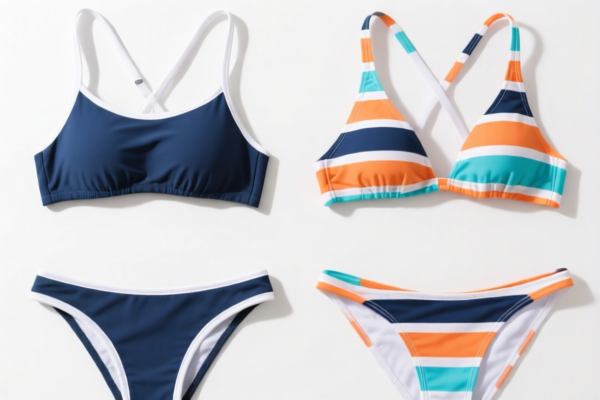
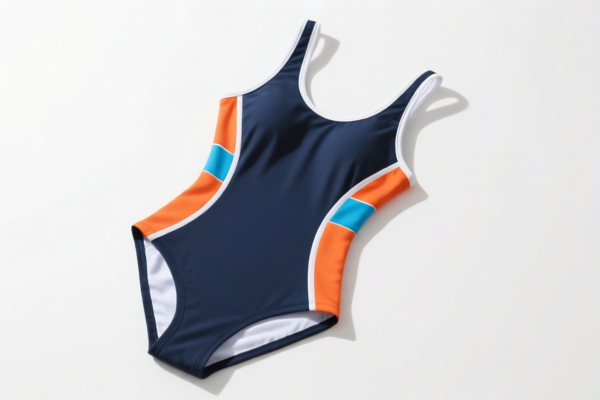
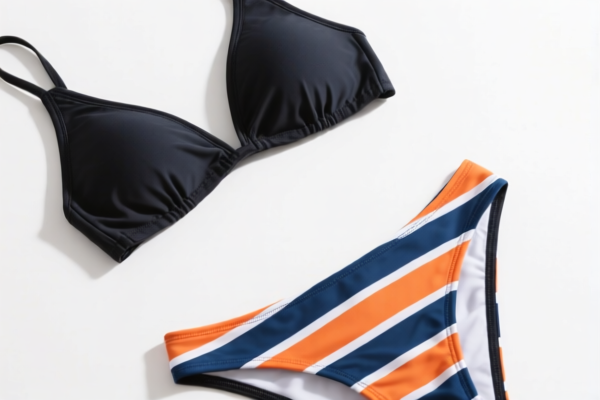

AI Analysis
🩱 Swimsuits (Swimwear & Bathing Suits)
🌐 HS Code Reference & Clearance Guide | 2026 Updated Tariff Analysis | Strategic Customs Strategy
📌 Part 1: Product Definition & Classification: Do You Really Know "Swimsuits"?
Swimsuits are essential apparel designed for swimming, water sports, and beach activities. In international trade, they are categorized based on material composition, knitting vs. weaving, and specific form (full suit vs. shorts).
The key distinction lies in the manufacturing method: * Knitted or Crocheted (61xx series): Made from stretchy, flexible fabrics (common for sporty suits). * Woven (62xx series): Made from structured, non-stretch fabrics (often for fashion or specific functional swim shorts).
⚠️ Key Differentiator:
- If the fabric is synthetic fiber (nylon/polyester) and knitted: Often falls under 6112.41.00.
- If the fabric is man-made fiber and woven: Often falls under 6211.12.10.
- If the item is specifically swim shorts (men's or unisex): Falls under 6112.31.00 (knitted) or 6112.39.00 (other).
📦 Part 2: HS Code Breakdown & Tax Analysis (2026 Latest Tariffs)
Based on the provided data, here are the five specific classifications for Swimsuits with their corresponding tax structures.
✅ Applicable Country: China (CN) to US (US)
✅ Effective Date: Current & Future (2026)
✅ Product: Swimsuits (All types)
| HS Code | Product Summary | Material Inference | Total Tax Rate | Tax Breakdown |
|---|---|---|---|---|
6112.41.00.30 |
Swimsuits (Knitted/Crocheted, Synthetic) | Synthetic Fibers (Matched use/form) | 34.9% | Base: 24.9% + 122 Sec: 10% |
6112.41.00.10 |
Swimsuits (Knitted/Crocheted, Synthetic) | Synthetic Fibers (General Use) | 42.4% | Base: 24.9% + Sec 301: 7.5% + 122 Sec: 10% |
6211.12.10.10 |
Swimsuits (Woven) | Man-made Fibers (Fully Matched) | 21.8% | Base: 11.8% + 122 Sec: 10% |
6112.31.00.10 |
Swim Shorts (Knitted, Synthetic) | Synthetic Fibers | 35.9% | Base: 25.9% + 122 Sec: 10% |
6112.39.00.10 |
Swim Shorts (Other, Knitted/Crocheted) | Cotton/Poly/Nylon Mix | 30.7% | Base: 13.2% + Sec 301: 7.5% + 122 Sec: 10% |
🔍 Critical Observation:
- Section 122 (10%): Applies to ALL swimsuit categories listed above. This is a mandatory add-on.
- Section 301 (7.5%): Applies ONLY to6112.41.00.10and6112.39.00.10.
- Base Rate Variance: Woven swimsuits (6211.12.10.10) enjoy the lowest base rate (11.8%), making them the most tax-efficient option if the fabric allows.
💰 Part 3: Detailed Tax Clause Explanation
🎯 1. The "Base Tariff" (Most Favored Nation Rate)
- Definition: The standard import duty applied to goods from China under normal trade relations.
- Range: 11.8% to 25.9% depending on the specific HS Code.
- Why it varies: Knitted synthetic suits (
6112.41) generally face higher base duties (24.9% or 25.9%) compared to woven man-made suits (6211.12at 11.8%).
🎯 2. The "Section 301 Additional Tariff" (7.5%)
- Definition: A punitive tariff imposed by the US under Section 301 of the Trade Act of 1974, targeting specific Chinese goods.
- Applicable Codes:
6112.41.00.10(General Synthetic Swimsuits)6112.39.00.10(Other Swim Shorts)
- Impact: This 7.5% is added on top of the base tariff, pushing the total to 42.4% or 30.7%.
- Note: It does NOT apply to
6112.41.00.30,6211.12.10.10, or6112.31.00.10.
🎯 3. The "Section 122 Tariff" (10%)
- Definition: A specific punitive tariff often associated with retaliation or specific trade dispute measures (Section 122).
- Applicability: Applies to EVERY swimsuit HS code in this dataset.
- Calculation: It is an additional 10% added to the base rate (and the 7.5% if applicable).
- Total Effect: A swimsuit with a 20% base rate becomes 30% immediately due to this clause.
🛠️ Part 4: Practical Clearance & Optimization Strategy
✅ 1. Material Classification Strategy (The "Woven vs. Knitted" Trick)
- Problem: Knitted synthetic swimsuits (
6112.41) attract higher base taxes (24.9%) and sometimes Section 301. - Solution: If your product can be legally classified as Woven (e.g., specific athletic shorts or structured suits), aim for
6211.12.10.10.- Tax Savings: Base rate drops from ~25% to 11.8%.
- Total Rate: Only 21.8% (vs. 34.9% or 42.4%).
- Requirement: Fabric must be "man-made fiber" and "woven," not knitted.
✅ 2. HS Code Precision
- Do Not Generalize: "Swimsuit" is too vague. You must specify:
- Is it knitted or woven?
- Is it a full suit or shorts?
- Is it synthetic (Polyester/Nylon) or other fibers (Cotton blend)?
- Example: A "Men's Nylon Knitted Swim Shorts" is
6112.31.00.10(35.9%). A "Women's Polyester Woven Swimsuit" is6211.12.10.10(21.8%).
✅ 3. Documentation Checklist
| Document | Requirement | Why? |
|---|---|---|
| Fabric Content Label | Critical | Must clearly state % of Synthetic vs. Cotton to justify 6112.41 vs 6112.39 vs 6211.12. |
| Manufacturing Process | Knitted vs. Woven | Determines the 61xx (Knitted) vs 62xx (Woven) chapter. |
| Product Photos | Must show seams/texture | Customs officers verify "Knitted" vs "Woven" visually. |
| Commercial Invoice | State "Swimsuit" clearly | Avoid generic terms like "Apparel" to prevent audits. |
✅ 4. Avoiding Common Pitfalls
- ❌ Pitfall 1: Assuming all "Swim Shorts" are the same.
- Correction:
6112.31(Synthetic) is 35.9%;6112.39(Cotton/Nylon mix) is 30.7%. Check your fabric blend!
- Correction:
- ❌ Pitfall 2: Missing the "Section 122" 10% in cost calculations.
- Correction: Always add 10% to your base estimate. It is mandatory for all 5 codes.
- ❌ Pitfall 3: Mixing Woven and Knitted in one shipment.
- Correction: Split the invoice. Woven (
6211) is significantly cheaper to import.
- Correction: Split the invoice. Woven (
📌 Part 5: Quick Summary & Action Plan
| Goal | Recommended HS Code | Expected Total Tax | Strategy |
|---|---|---|---|
| Lowest Tax | 6211.12.10.10 |
21.8% | Use Woven Man-made Fiber suits. |
| High Volume Knitted | 6112.41.00.30 |
34.9% | Synthetic, Knitted, avoid Section 301 item. |
| Standard Knitted | 6112.41.00.10 |
42.4% | Highest tax bracket (Synthetic + Sec 301). |
| Swim Shorts (Synthetic) | 6112.31.00.10 |
35.9% | Strictly Synthetic Knitted Shorts. |
| Swim Shorts (Cotton/Nylon) | 6112.39.00.10 |
30.7% | Mix of fibers, slightly lower than pure synthetic. |
🚀 Final Advice:
To minimize customs costs, prioritize Woven Man-Made Fiber Swimsuits (6211.12.10.10). If you must use Knitted fabric, ensure the classification falls under6112.41.00.30to avoid the 7.5% Section 301 tariff. Always verify the knitted vs. woven status of your fabric samples before shipping!
✨ Professional Clearance Starts with Precise Classification!
💼 Your Cost Efficiency Depends on the 0.01% Detail in HS Codes!
Customer Reviews
About HS Code Classification
The Harmonized System (HS) is an internationally standardized nomenclature developed by the World Customs Organization (WCO) to classify traded products. Over 200 countries use the HS system as the basis for customs tariffs, trade statistics, and import/export regulations.
Each HS code follows a hierarchical structure:
- Chapter (2 digits) — Broad category of goods (e.g., Chapter 84: Machinery and Mechanical Appliances)
- Heading (4 digits) — More specific grouping within the chapter
- Subheading (6 digits) — Internationally standardized breakdown, used by all WCO member countries
- National subdivisions (8-10 digits) — Country-specific extensions for further classification, such as US HTSUS 10-digit codes
Correct HS code classification is essential for smooth customs clearance, accurate duty payment, and compliance with trade regulations. Misclassification can lead to customs delays, overpayment of duties, or penalties.
When importing from CN to US, the applicable tariff rates may include:
- Most-Favored-Nation (MFN) rate — The standard duty rate applied to WTO members
- General rate — Applied to countries without trade agreements
- Trade remedy duties — Additional tariffs such as Section 301 (anti-dumping), Section 232 (national security), or countervailing duties
The information provided on this page is for reference purposes only. For official classification, please consult with your local customs authority or a licensed customs broker.