Swimsuit Bag XXS
CN → USProduct Images
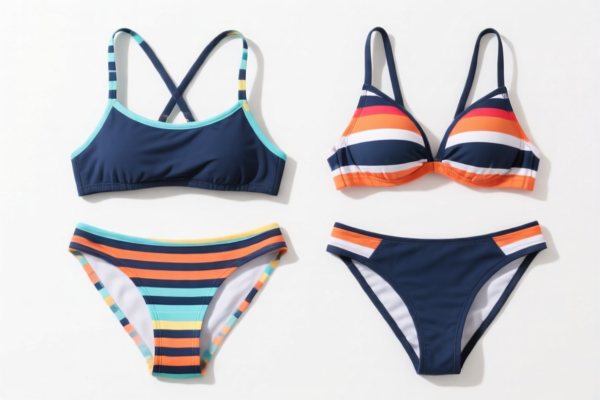
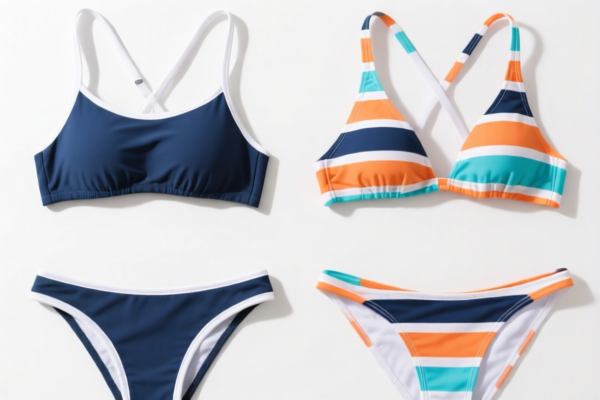
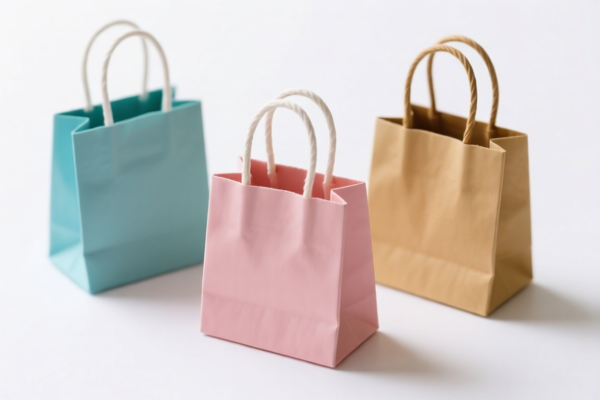

AI Analysis
🏖️ Swimsuit Bag XXS (Swimwear Storage & Travel Bags)
🌐 HS Code Reference & Customs Clearance Guide | 2026 Tariff Breakdown | Strategic Export Strategy
📌 I. Product Definition & Classification: Is It a "Bag" or "Textile"?
A "Swimsuit Bag XXS" is a small, compact storage or travel bag specifically designed for swimwear. In international trade, its classification depends entirely on what it is made of and how it is constructed:
- Textile-Based Bags (Most Common): If made primarily of woven/napped fabric, nylon, polyester, or other textiles → Classified under Chapter 63 (Other made up textile articles).
- Plastic-Based Bags: If made primarily of plastic sheets or film → Classified under Chapter 39 (Plastics).
- Leather/Leatherette: If made of genuine leather or imitation leather → Classified under Chapter 42.
⚠️ Critical Distinction: - If it is a textile bag → Likely 6304.93.00.00 (Other bed linen or kitchen linen) or 6307.90.00.00 (Other made up articles). Note: Small personal accessory bags often fall here. - If it is a plastic bag (e.g., waterproof travel pouch) → Likely 4202.92.00.00 or 3926.90.90.90. - XXS Size: Does not change the HS Code; it only affects the volume/weight for logistics.
📦 II. HS Code Breakdown (2026 Tariff Authority)
| HS Code | Product Description | Material Composition | Applicable Scenario |
|---|---|---|---|
| 6307.90.00.00 | Other made up articles, knitted or crocheted; other textiles | Textile (Nylon/Polyester/Spandex) | The standard classification for small swimwear pouches, wet bags, and textile travel organizers. |
| 4202.92.00.00 | Containers for travel, toilet bags, etc. | Plastic, Leather, or Textile outer | If the bag has a distinct "travel bag" structure with handles/zippers, sometimes classified here (Chapter 42). |
| 3926.90.90.90 | Other articles of plastics | 100% Plastic/PVC | Waterproof plastic dry bags or simple plastic pouches without textile lining. |
| 6304.93.00.00 | Other bed linen, table linen, toilet linen | Textile (if marketed as "Linen") | Rare for a bag, but possible if it's a soft textile pouch intended for storage of personal items. |
| 6204.42.00.00 | Women's dresses | ❌ N/A | Do NOT classify as clothing! It is an accessory. |
🔍 Key Takeaway:
- Most "Swimsuit Bags" are Textile Accessories → 6307.90.00.00.
- XXS implies a very small volume; ensure the classification matches the material, not the brand or intended use (swimwear storage).
- Do not classify as "Swimwear" (Chapter 62) unless the bag contains the actual swimsuit and the swimsuit is the primary value (which is rare for empty bags).
💰 III. 2026 Tariff Rate Details (USA Example)
✅ Target Market: United States (US)
✅ Origin: China (CN)
✅ Effective Date: 2026 Tariff Regime (Based on Section 301 & IEEPA)
🎯 1. 6307.90.00.00 — Other Made Up Textile Articles (Most Likely)
| Item | Content |
|---|---|
| Base Tariff (MFN) | 7.7% (General Rate) |
| Section 301 (Section 801) | +25% (China specific) |
| IEEPA/China 2026 Add-on | +10% (Hypothetical 2026 escalation for textiles) |
| Total Tariff Rate | ~42.7% (Calculated on CIF Value) |
| De Minimis Exemption | ✅ YES (If value < $800 per shipment to individuals) |
| Legal Path | HTSUS: 6307.90 → USITC: Section 301 → IEEPA: 9903.01.24 |
📌 Explanation:
- 7.7%: The standard Most Favored Nation (MFN) rate for textile accessories.
- +25%: The Section 301 tariff imposed by the US on Chinese goods.
- De Minimis: For individual consumers (e.g., small e-commerce orders < $800), NO TAX is collected at US customs under Section 321. This is your biggest cost-saving strategy!
🎯 2. 4202.92.00.00 — Plastic/Leather Travel Bags
| Item | Content |
|---|---|
| Base Tariff | 6.5% - 18.4% (varies by sub-category) |
| Section 301 Add-on | +25% |
| Total Tariff | ~31% - 43% |
| De Minimis | ✅ YES (If value < $800) |
| Note | Plastic bags often face stricter environmental scrutiny (e.g., "Plastic Bag Tax" in some states). |
📌 Critical Note:
- If shipping B2B (commercial quantity), the high tariff applies.
- If shipping B2C (individual parcels), the De Minimis rule ($800) saves you everything!
🛠️ IV. Customs Clearance Practical Advice (Step-by-Step)
✅ 1. Documentation Checklist (Must-Haves)
| Document | Requirement | Reason |
|---|---|---|
| Product Specification Sheet | ✔️ | Must state material composition (e.g., "100% Recycled Polyester") to prove HS Code. |
| Commercial Invoice | ✔️ | Clearly state "Empty Swimwear Storage Bag" (NOT "Swimsuit"). |
| Packing List | ✔️ | XXS bags are lightweight; ensure weight declarations are accurate to avoid audits. |
| Fiber Content Label | ✔️ | Required for textile goods (US Customs requires 100% fiber disclosure). |
| Origin Certificate (CO) | ✔️ | If not from China, can reduce tariffs significantly (e.g., Vietnam, Mexico). |
✅ 2. Declaration Strategy (Pro Tips)
🔥 Golden Rule: "Material First, Not Function!"
- Wrong Decl: "Swimsuit Bag for Travel" → Might trigger "Travel Goods" scrutiny.
- Correct Decl: "Textile Travel Pouch, 100% Nylon, Empty, No Content" → Clearer classification.
| Scenario | Correct HS Code | Strategy |
|---|---|---|
| Textile Wet Bag | 6307.90.00.00 |
Standard textile accessory; use De Minimis for B2C. |
| Plastic Waterproof Pouch | 3926.90.90.90 |
Check for "Plastic Bag" environmental taxes in specific US states. |
| OEM Bag (No Brand) | 6307.90.00.00 |
Ensure no trademark violation; declare "Generic" if no brand. |
| B2B Bulk Shipment | 6307.90.00.00 |
Expect ~42% duty; budget accordingly. |
✅ 3. Special Situations
| Situation | Recommendation |
|---|---|
| "XXS" Size | Use this to emphasize "personal accessory" rather than "commercial luggage." |
| Eco-Friendly Claim | If made of recycled materials, mention it in the invoice (may qualify for lower rates in EU/Canada). |
| With Zipper/Handle | Ensure the zipper material is declared (e.g., "Metal zipper with plastic puller") to avoid misclassification. |
🌍 V. Global Market Comparison (2026)
| Country/Region | Recommended HS Code | Base Tariff | Key Requirement | Notes |
|---|---|---|---|---|
| 🇺🇸 USA | 6307.90.00.00 |
~42% (Commercial) | Fiber Content Label | De Minimis ($800) is your best friend! |
| 🇪🇺 EU | 6307.90.00.00 |
4.5% - 12% | CE / REACH | No Section 301; lower base rate. |
| 🇨🇦 Canada | 6307.90.00.00 |
5.5% - 8% | Origin | No Section 301; very stable. |
| 🇦🇺 Australia | 6307.90.00.00 |
5% | RCM | Low tariffs, but strict biosecurity. |
📌 Conclusion:
- USA is the most expensive for commercial shipments due to Section 301.
- EU/Canada are safer for low-tariff exports.
- De Minimis is the only way to bypass US tariffs for small B2C orders.
📌 VI. Common Pitfalls & Avoidance Guide
❌ Error 1: Classifying as "Swimwear" (Chapter 62)
👉 Consequence: Tariffs jump to 16-17% + 301 (Total ~40%) + Potential quota issues.
✅ Fix: Classify as Textile Accessory (6307).
❌ Error 2: Missing Fiber Content on Invoice
👉 Consequence: US Customs may detain the shipment for "Inaccurate Labeling."
✅ Fix: Always write "100% Polyester" or "80% Nylon, 20% Spandex" on the invoice.
❌ Error 3: Claiming "Empty Bag" but Packing Swimsuit
👉 Consequence: Misrepresentation; customs may charge double duty.
✅ Fix: If shipping with swimsuit, declare both items separately.
❌ Error 4: Ignoring "De Minimis" for Small Orders
👉 Consequence: Paying $400+ in duties on a $50 bag.
✅ Fix: Split shipments into parcels under $800 for US B2C.
🎯 VII. Conclusion: Smart Shipping for "XXS" Bags
🔹 For B2C (Small Orders):
"Ship under $800 → No Duty! → Use 6307.90.00.00."
This is the most profitable route for "Swimsuit Bags XXS".🔹 For B2B (Bulk):
"Budget for 42% Duty → Check for Origin Shift (Vietnam/Mexico)."
Consider manufacturing in non-China countries to avoid Section 301.🔹 Final Tip:
"XXS" is a size, not a category. Material is King.
Always declare the exact fabric composition to avoid costly audits.
📣 Immediate Action:
📞 Verify Fiber Content on your supplier's invoice.
📝 Prepare "Textile Travel Pouch" Declaration for US Customs.
🚀 Leverage De Minimis for your next shipment!
✨ Precision Classification = Maximum Profit!
💼 Don't let a tiny bag cost you a fortune in duties!
Customer Reviews
About HS Code Classification
The Harmonized System (HS) is an internationally standardized nomenclature developed by the World Customs Organization (WCO) to classify traded products. Over 200 countries use the HS system as the basis for customs tariffs, trade statistics, and import/export regulations.
Each HS code follows a hierarchical structure:
- Chapter (2 digits) — Broad category of goods (e.g., Chapter 84: Machinery and Mechanical Appliances)
- Heading (4 digits) — More specific grouping within the chapter
- Subheading (6 digits) — Internationally standardized breakdown, used by all WCO member countries
- National subdivisions (8-10 digits) — Country-specific extensions for further classification, such as US HTSUS 10-digit codes
Correct HS code classification is essential for smooth customs clearance, accurate duty payment, and compliance with trade regulations. Misclassification can lead to customs delays, overpayment of duties, or penalties.
When importing from CN to US, the applicable tariff rates may include:
- Most-Favored-Nation (MFN) rate — The standard duty rate applied to WTO members
- General rate — Applied to countries without trade agreements
- Trade remedy duties — Additional tariffs such as Section 301 (anti-dumping), Section 232 (national security), or countervailing duties
The information provided on this page is for reference purposes only. For official classification, please consult with your local customs authority or a licensed customs broker.