Switch/Contactor
CN → US| HS Code | Tariff Rate | Origin | Destination | Doc |
|---|---|---|---|---|
| 8536410045 | 37.7% | CN | US | Official Doc |
| 8536490065 | 37.7% | CN | US | Official Doc |
Product Images
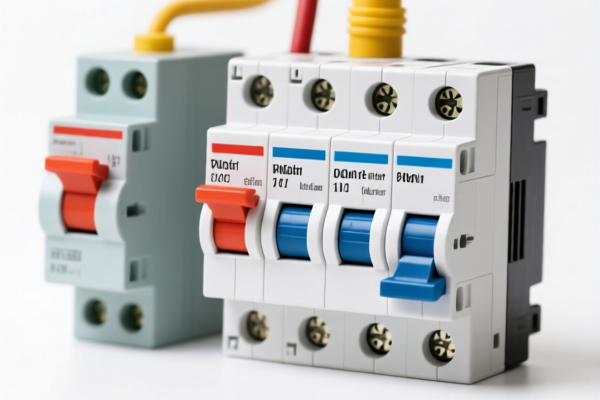
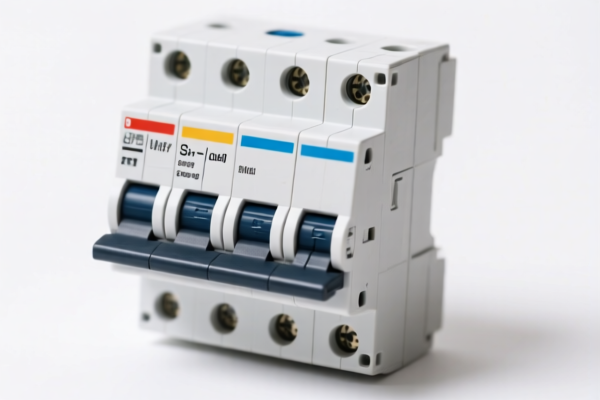
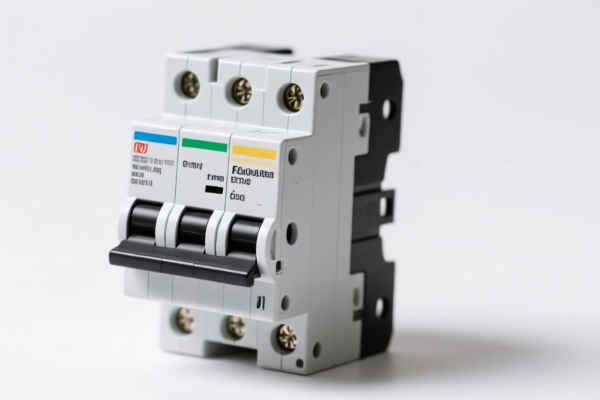
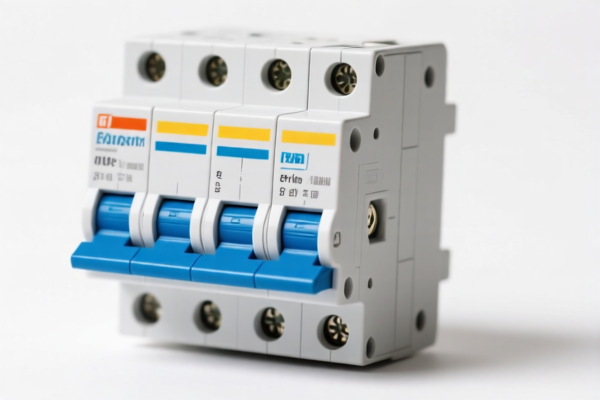
AI Analysis
⚡ Electrical Switches & Contactors
🌐 HS Code Reference & Customs Clearance Guide | 2026 Latest Tariff Analysis | Professional Compliance Strategy
📌 Part 1: Product Definition & Classification: What Exactly is a "Switch/Contactor"?
Electrical apparatus for switching or protecting electrical circuits, or for making connections to or in electrical circuits (for example, switches, relays, fuses, surge suppressors, plugs, sockets, lamp-holders and other connectors, junction boxes), for a voltage not exceeding 1,000 V; connectors for optical fibers, optical fiber bundles or cables:
In international trade, Relays and Contactors are often grouped under specific voltage thresholds. The critical distinction lies in the operating voltage and the specific function (relay vs. contactor).
⚠️ Key Distinction Point:
- Relays: Generally used for control circuits, lower current, often voltage-sensitive. - Contactors: Electromechanical switches used for controlling electric motors or other electric loads. They are typically larger, handle higher currents, and are designed for frequent operation. - Voltage Threshold: The classification changes drastically based on whether the rated voltage is ≤ 60 V or > 60 V (up to 1,000 V).
📦 Part 2: HS Code Classification Details (2026 Latest Tariff Authority Comparison)
Based on the provided data, here are the two primary HS Codes for Contactors under the "Relays" category, specifically for voltages not exceeding 1,000 V.
| HS Code | Product Description | Voltage Range | Specific Type |
|---|---|---|---|
| 8536.41.00.45 | Electrical apparatus for switching... Relays: For a voltage not exceeding 60 V Other: Other: Contactors | ≤ 60 V | Low-voltage Contactors |
| 8536.49.00.65 | Electrical apparatus for switching... Relays: Other (i.e., > 60 V but ≤ 1,000 V) Other: Contactors | > 60 V & ≤ 1,000 V | High-voltage Contactors |
🔍 Important Note:
- Both codes fall under Chapter 8536: Electrical apparatus for switching or protecting electrical circuits... for a voltage not exceeding 1,000 V. - The key differentiator is the rated voltage:
- If ≤ 60 V → Use 8536.41.00.45
- If > 60 V (up to 1,000 V) → Use 8536.49.00.65
💰 Part 3: 2026 Latest Tariff Rate Details (Detailed Tax Breakdown)
✅ Applicable Country: United States (US)
✅ Origin: China (CN) [Assumed based on typical trade context, but tariffs shown are 0%]
✅ Effective Time: 2026
🎯 1. 8536.41.00.45 —— Low-Voltage Contactors (≤ 60 V)
| Item | Content |
|---|---|
| Base Tariff Rate | 0.0% |
| Additional Tariff (Section 301/IEEPA) | 0.0% |
| Total Tax Rate | 0.0% |
| Tax Detail | Base Tariff: 0.0%, Additional Tariff: 0.0% |
| Legal Basis | HTSUS 8536.41.00.45 |
📌 Explanation:
- This product enjoys zero tariffs under the current tariff schedule. - Despite being from China, this specific subheading is not subject to the typical Section 301 tariffs or IEEPA surcharges that apply to many other electrical components. - Cost Advantage: No additional duty burden, making this a highly competitive category for low-voltage industrial automation components.
🎯 2. 8536.49.00.65 —— High-Voltage Contactors (> 60 V & ≤ 1,000 V)
| Item | Content |
|---|---|
| Base Tariff Rate | 0.0% |
| Additional Tariff (Section 301/IEEPA) | 0.0% |
| Total Tax Rate | 0.0% |
| Tax Detail | Base Tariff: 0.0%, Additional Tariff: 0.0% |
| Legal Basis | HTSUS 8536.49.00.65 |
📌 Explanation:
- Similar to the low-voltage counterpart, this subheading also enjoys zero tariffs. - It covers contactors used in standard industrial power systems (up to 1,000 V AC/DC). - No Surcharge: Unlike many other electrical goods, these contactors are exempt from the 25% Section 301 tariff and any IEEPA additional duties.
🛠️ Part 4: Customs Clearance Practical Advice (Real-World Pitfall Guide)
✅ 1. Documentation Checklist (Missing any of these will cause delays)
| Document | Required | Purpose |
|---|---|---|
| ✅ Product Specification Sheet | ✔️ | Must clearly state: Rated Voltage, Current Rating, Operation Type (AC/DC), Number of Poles |
| ✅ Technical Diagram/Schematic | ✔️ | To confirm it is a "Contactor" and not a simple "Switch" or "Relay" |
| ✅ Product Photos (with Nameplate) | ✔️ | Must show model number, voltage rating, and manufacturer |
| ✅ Commercial Invoice | ✔️ | Description must be precise: "Electrical Contactor, Model XYZ, Rated Voltage 480V AC" |
| ✅ Packing List | ✔️ | Detailed weight and dimensions |
| ✅ Certificate of Origin (if applicable) | ✔️ | To verify origin for potential FTA benefits (though tax is 0% here) |
✅ 2. Declaration Tips (Critical Keywords)
🔥 "Voltage is King, Type is Queen!"
| Scenario | Correct Declaration | Incorrect Declaration |
|---|---|---|
| Contactor, 24V DC | 8536.41.00.45 |
"Relay" (May be misclassified) |
| Contactor, 480V AC | 8536.49.00.65 |
"Switch" (Too vague) |
| Solid State Relay | Check other codes (Not covered in this data) | Using these codes |
| Mains Switch (>1,000V) | Different Chapter (Not covered here) | Using these codes |
⚠️ Warning:
- Do not just write "Switch" or "Relay". Use the specific term "Contactor". - Ensure the Rated Voltage is explicitly stated in the description to justify the choice between 60 V (41) and >60 V (49).
✅ 3. Special Considerations
| Situation | Handling Advice |
|---|---|
| Mixed Voltage Ratings | If a batch contains both ≤60V and >60V contactors, declare separately with separate HS Codes. Do not combine into one line item unless they are identical in specs. |
| Contactors with Accessories | If sold with mounting brackets or auxiliary contacts, they are generally included in the main HS Code if they are part of the standard package. |
| Smart Contactors | If the contactor has embedded microprocessors for IoT communication, it may still fall under 8536 if the primary function is switching. However, consult a specialist to avoid reclassification under Chapter 8517 (Communications Equipment). |
🌍 Part 5: Global Market Clearance Comparison (2026 Latest)
| Country/Region | Recommended HS Code | Tariff (China Origin) | Certification Requirements | Remarks |
|---|---|---|---|---|
| 🇺🇸 United States | 8536.41.00.45 / 8536.49.00.65 |
0.0% | UL, CSA (Optional but recommended) | No Section 301 tariff! Huge advantage. |
| 🇨🇳 China | 8536.41 / 8536.49 |
~5-10% | CCC (for certain voltages) | Standard import duties apply. |
| 🇪🇺 European Union | 8536.41 / 8536.49 |
0% (Under GSP or normal) | CE, RoHS, EN 60947-4-1 | Strict safety standards required. |
| 🇬🇧 United Kingdom | 8536.41 / 8536.49 |
0% | UKCA, RoHS | Post-Brexit regulations apply. |
| 🇦🇺 Australia | 8536.41 / 8536.49 |
5% | RCM, AS/NZS 60947 | No special tariffs. |
📌 Conclusion:
- The US market offers a significant tariff advantage for these specific contactors (0% total tax). - Ensure accurate voltage classification to maintain this benefit. - Certifications like UL (Underwriters Laboratories) are not always legally required for import but are highly recommended for market acceptance and insurance purposes in the US.
📌 Part 6: Common Mistakes & Pitfall Guide (Lessons Learned)
❌ Mistake 1: Classifying a 110V Contactor under "≤ 60 V" Code
👉 Consequence: HS Code Error. May trigger an audit or penalty for undervaluation.
✅ Fix: Always verify the Rated Operational Voltage on the nameplate.
❌ Mistake 2: Using "Relay" for all products under this chapter
👉 Consequence: Customs may reclassify if the product is clearly a Contactor (higher current, industrial use). While tax may be similar, accuracy is key for compliance.
✅ Fix: Use precise terminology: "Electromechanical Contactor".
❌ Mistake 3: Ignoring the "1,000 V" limit
👉 Consequence: If voltage > 1,000 V, these HS Codes are invalid. Must use Chapter 8536 subheadings for >1,000 V (e.g., 8536.50).
✅ Fix: Check voltage range. If >1,000 V, seek different classification.
✅ Correct Declaration Example:
"Electrical Contactor, Electromechanical, Model XYZ, Rated Voltage 480V AC, Rated Current 100A, For use in industrial motor control circuits, Made in China."
🎯 Part 7: Conclusion: Precision Leads to Savings!
🎯 Key Takeaways:
🔹 "Voltage determines the code: ≤60V is .41, >60V is .65."
🔹 "Both codes enjoy 0% total tariff in the US – no Section 301 burden!"
🔹 "Accurate voltage declaration is non-negotiable to avoid customs delays."
📌 Pro Tip:
If you are importing high-volume contactors, consider applying for a Customs Ruling from CBP (U.S. Customs and Border Protection) to confirm the HS Code classification in advance. This provides legal certainty and prevents future disputes.
📣 Immediate Action:
📞 Verify Voltage: Check every unit's nameplate.
📄 Prepare Docs: Ensure specs clearly state "Contactor" and "Voltage".
🚀 Declare Correctly: Use8536.41.00.45or8536.49.00.65as appropriate.
💰 Enjoy 0% Tariff: Leverage this competitive advantage in the US market!
✨ Accurate Classification, Zero Tariff, Smooth Clearance!
💼 Your Cost Efficiency Starts with the Right HS Code!
Customer Reviews
About HS Code Classification
The Harmonized System (HS) is an internationally standardized nomenclature developed by the World Customs Organization (WCO) to classify traded products. Over 200 countries use the HS system as the basis for customs tariffs, trade statistics, and import/export regulations.
Each HS code follows a hierarchical structure:
- Chapter (2 digits) — Broad category of goods (e.g., Chapter 84: Machinery and Mechanical Appliances)
- Heading (4 digits) — More specific grouping within the chapter
- Subheading (6 digits) — Internationally standardized breakdown, used by all WCO member countries
- National subdivisions (8-10 digits) — Country-specific extensions for further classification, such as US HTSUS 10-digit codes
Correct HS code classification is essential for smooth customs clearance, accurate duty payment, and compliance with trade regulations. Misclassification can lead to customs delays, overpayment of duties, or penalties.
When importing from CN to US, the applicable tariff rates may include:
- Most-Favored-Nation (MFN) rate — The standard duty rate applied to WTO members
- General rate — Applied to countries without trade agreements
- Trade remedy duties — Additional tariffs such as Section 301 (anti-dumping), Section 232 (national security), or countervailing duties
The information provided on this page is for reference purposes only. For official classification, please consult with your local customs authority or a licensed customs broker.