Switching Power Supply
CN → US| HS Code | Tariff Rate | Origin | Destination | Doc |
|---|---|---|---|---|
| 8536509065 | 35.0% | CN | US | Official Doc |
| 9032896085 | 36.7% | CN | US | Official Doc |
| 8536509050 | 35.0% | CN | US | Official Doc |
| 8536509031 | 35.0% | CN | US | Official Doc |
| 8535300080 | 37.7% | CN | US | Official Doc |
Product Images
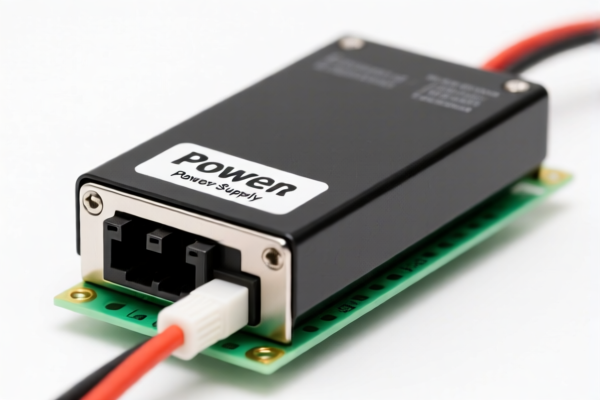
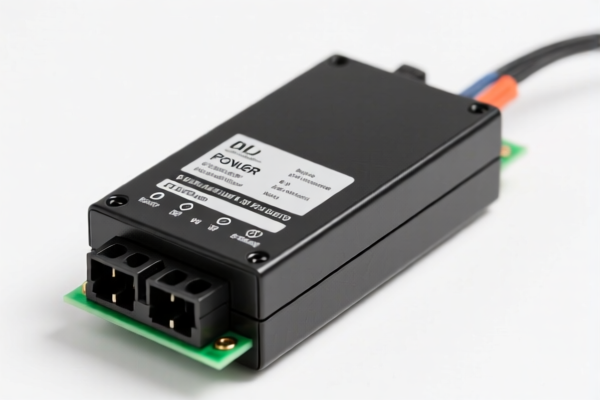


AI Analysis
⚡ Switching Power Supply (SPS)
🌐 HS Code Reference & Customs Clearance Guide | 2026 Latest Tariff Analysis | Professional Clearance Strategy
📌 I. Product Definition & Classification: Do You Really Understand a "Switching Power Supply"?
A Switching Power Supply (SPS) is a device that converts electrical power efficiently using a switching regulator. Unlike linear power supplies, SPSs use transistors operating as switches on and off to adjust voltage and current. In international trade, the classification of an SPS depends heavily on its primary function, voltage level, and application context.
Two Main Categories:
- Standalone Power Supplies (AC/DC or DC/DC):
Used to provide power to electronic equipment. These are typically classified under Chapter 85 (Electrical Machinery and Equipment). - Control Components/Integrations:
If the power supply is an integral part of a larger control system, instrument, or specific machinery, it may be classified under the machine/instrument’s code (e.g., Chapter 90 for instruments).
⚠️ Key Distinction:
- If it is a standalone unit providing power to loads < 1,000V → Generally HS 8536 or 8504 (though 8504 is for transformers/static converters, 8536 covers switches/protection, and specific "switches" might fall here if defined as control devices). Note: The provided data specifically lists codes under 8536 and 9032, indicating a focus on "switches" or "control components" rather than generic power supplies. We will strictly follow the provided DATA. - If it is part of an automatic control device → HS 9032.
📦 II. HS Code Classification Details (Based on Provided DATA)
| HS Code | Product Description (From DATA) | Application Context | Key Classification Logic |
|---|---|---|---|
8536.50.90.65 |
Switches (Electrical), for voltage ≤ 1,000V | General electrical switching applications | Fits the description of electrical switches for circuits under 1kV. |
9032.89.60.85 |
Component of Automatic Regulating/Control Devices | Integrated into control systems/instruments | Classified as a part/component of other instruments/devices for control functions. |
8536.50.90.50 |
Switches (Electrical), Sliding Switches | Specific type of electrical switch (Sliding) | Tilted towards sliding switches within the electrical switch category. |
8536.50.90.31 |
Switches (Electrical), Preliminary Match | General electrical switch usage | Initial judgment matches the purpose of electrical switches. |
8535.30.00.80 |
Switches (Other), Circuit Protection/Switching | Other electrical apparatus for switching/protecting circuits | Fits "other" apparatus for switching or protecting electrical circuits. |
🔍 Critical Note:
The provided data classifies "Switching Power Supply" inputs primarily as "Switches" or "Control Components" rather than generic power converters (like 8504.40). This suggests that for customs purposes, if the device acts as a switching element or control part, it falls under 8536 or 9032.
- 8536 Codes: Focus on voltage ≤ 1,000V and switching/protection functions.
- 9032 Code: Focus on automatic regulation/control integration.
💰 III. 2026 Latest Tariff Rate Breakdown (Including Surcharges & Policies)
✅ Applicable Country: United States (US)
✅ Origin: China (CN)
✅ Effective Time: Post-November 10, 2025 (Includes subsequent imports)
🎯 1. 8536.50.90.65 / 8536.50.90.50 / 8536.50.90.31
— Electrical Switches (Voltage ≤ 1,000V)
| Item | Details |
|---|---|
| Base Tariff | 0.0% (Ad Valorem) |
| Section 301 Surcharge | +25.0% (USITC Footnote) |
| IEEPA Surcharge (122 Clause) | +10.0% (Targeted at Chinese products) |
| Total Tax Rate | 35.0% |
| Tax Calculation | CIF Value × 35% |
| De Minimis Exemption? | ❌ NO (High-risk category, deny_de_minimis likely) |
| Legal Basis Path | Base: 0% → 301: +25% → IEEPA: +10% → Total: 35% |
📌 Explanation:
- These codes fall under HS 8536 (Electrical apparatus for switching or protecting electrical circuits).
- The base duty is 0%, but the Section 301 (25%) and IEEPA (10%) surcharges make the total 35%.
- This is a high-cost classification for Chinese-origin switches/SPS components.
🎯 2. 8535.30.00.80
— Other Electrical Switching/Protection Apparatus
| Item | Details |
|---|---|
| Base Tariff | 2.7% (Ad Valorem) |
| Section 301 Surcharge | +25.0% |
| IEEPA Surcharge (122 Clause) | +10.0% |
| Total Tax Rate | 37.7% |
| Tax Calculation | CIF Value × 37.7% |
| De Minimis Exemption? | ❌ NO |
| Legal Basis Path | Base: 2.7% → 301: +25% → IEEPA: +10% → Total: 37.7% |
📌 Explanation:
- HS 8535 covers "Electric apparatus for switching or protecting electrical circuits... other than those of heading 8536."
- Higher base duty (2.7%) results in a higher total rate (37.7%).
- Use this code only if the product does not fit the ≤1,000V criteria of 8536 or is categorized as "other" apparatus.
🎯 3. 9032.89.60.85
— Parts/Components of Automatic Regulating/Control Devices
| Item | Details |
|---|---|
| Base Tariff | 1.7% (Ad Valorem) |
| Section 301 Surcharge | +25.0% |
| IEEPA Surcharge (122 Clause) | +10.0% |
| Total Tax Rate | 36.7% |
| Tax Calculation | CIF Value × 36.7% |
| De Minimis Exemption? | ❌ NO |
| Legal Basis Path | Base: 1.7% → 301: +25% → IEEPA: +10% → Total: 36.7% |
📌 Explanation:
- HS 9032 covers "Automatic regulating or controlling instruments and apparatus."
- If the switching power supply is integral to a control system (e.g., in an industrial PLC, automated machinery), it may be classified here as a part/component.
- Rate is 36.7%, slightly higher than the 35% for standard switches but lower than the 37.7% for "other" apparatus.
🛠️ IV. Customs Clearance Practical Advice (Avoid Pitfalls)
✅ 1. Documentation Checklist (Mandatory)
| Document | Required | Notes |
|---|---|---|
| ✅ Product Specification Sheet | ✔️ | Must include voltage (≤1,000V?), current, input/output type, and switching vs. linear designation. |
| ✅ Circuit Diagram/Schematic | ✔️ | Crucial to prove if it is a "switch" (8536) or a "control component" (9032). |
| ✅ Product Photos (Label & Internal) | ✔️ | Show model number, voltage rating, and brand. |
| ✅ Certificate of Origin (CO) | ✔️ | Essential for calculating 301 & IEEPA surcharges. |
| ✅ Commercial Invoice | ✔️ | Describe as "Electrical Switch" or "Control Component Part," NOT generic "Power Supply" if avoiding 8504. |
| ✅ Declaration of Non-Control Function | ⚠️ | If claiming 8536, declare it is NOT an automatic regulating device (to avoid 9032). |
✅ 2. Declaration Strategy (Key Mantras)
🔥 “Switch ≤1kV is 8536, Control Part is 9032, Other is 8535!”
| Scenario | Correct HS Code | Wrong Code | Consequence |
|---|---|---|---|
| Standard SPS for <1,000V circuits | 8536.50.90.65 (35%) |
9032.89.60.85 (36.7%) |
Overpayment of 1.7% base tax. |
| SPS integrated into Auto-Control System | 9032.89.60.85 (36.7%) |
8536.50.90.65 (35%) |
Under-declaration risk if deemed a control part; may face penalties. |
| SPS for >1,000V or "Other" Apparatus | 8535.30.00.80 (37.7%) |
8536... |
Misclassification → 35% vs 37.7% difference + penalty. |
| Generic "Power Adapter" | 8536.50.90.65 |
8504.40.95.00 (45%+) |
CRITICAL: If classified as 8504 (Static Converter), rate is much higher! Use 8536 if defined as Switch. |
📌 Warning:
- Do NOT use generic "Power Supply" descriptions.
- Use "Electrical Switch for Circuit Protection" or "Component of Automatic Control Device" based on function.
- If the device is a standalone AC/DC converter not acting as a switch, you might face 8504 (45%+). Check if it qualifies as a "Switch" under 8536.
✅ 3. Special Cases
| Situation | Recommendation |
|---|---|
| OEM Custom SPS | Provide design drawings to prove it is a "switching component" (8536) rather than a "converter" (8504). |
| SPS for Medical Devices | If part of a control system, use 9032.89.60.85. |
| SPS for Industrial Automation | Likely 9032.89.60.85 if integral to the controller. |
| Low-Power USB Chargers | Check if they qualify as "Switches" under 8536; if not, they may fall under 8504 (higher tax). |
🌍 V. Global Market Comparison (2026)
| Country/Region | Recommended HS Code | Tariff (China Origin) | Notes |
|---|---|---|---|
| 🇺🇸 USA | 8536.50.90.65 |
35.0% | High due to 301 + IEEPA. |
| 🇨🇳 China | 8536.50.90.65 |
0% | No additional surcharges. |
| 🇪🇺 EU | 8536.50.90.65 |
0% | No Section 301/IEEPA. |
| 🇯🇵 Japan | 8536.50.90.65 |
0% | No additional surcharges. |
| 🇲🇽 Mexico | 8536.50.90.65 |
0% | Under USMCA (if rules of origin met). |
📌 Conclusion:
- USA is the only major market with high surcharges (35-37.7%).
- For USA imports, accurate classification between 8536 (35%) and 9032 (36.7%) is critical.
- Avoid 8504 (Static Converters) which can have 45%+ rates if the product is misclassified.
📌 VI. Common Mistakes & Pitfalls (Lessons Learned)
❌ Mistake 1: Using "Power Supply" as the declaration name without specifying "Switch"
👉 Result: Customs may default to 8504.40 (Static Converters) → 45%+ tax!
❌ Mistake 2: Classifying integrated control SPS as standalone switches (8536)
👉 Result: Under-declaration if deemed a control component (9032). Minor rate difference, but audit risk.
❌ Mistake 3: Ignoring IEEPA 10% Surcharge
👉 Result: Underpayment by 10% → Penalties + Interest.
❌ Mistake 4: Claiming De Minimis for SPS components
👉 Result: Rejected. High-risk items (electronics/switches) are often excluded from de minimis.
✅ Correct Practice:
"Electrical Switch, Voltage ≤1,000V, for Circuit Protection, Model XYZ, Chinese Origin"
OR
"Part of Automatic Control Device, Voltage ≤1,000V, Model XYZ, Chinese Origin"
🎯 VII. Conclusion: Professional Declaration, Cost Optimization
🎯 Key Takeaways:
🔹 "Switch ≤1kV = 35% | Control Part = 36.7% | Other = 37.7%"
🔹 "Don't say 'Power Supply' if you can say 'Switch'!"
🔹 "IEEPA 10% is mandatory for China-origin electronics."📌 Tips:
- If your SPS is not a switch but a converter, 8504 is the correct code, but tax is 45%+.
- Negotiate with suppliers to reclassify or redesign if possible to qualify for 8536 (35%).
- Apply for Advance Rulings if the product function is ambiguous.
📣 Immediate Action:
📞 Consult a licensed customs broker.
📤 Provide circuit diagrams to prove "switching" function.
🚀 Optimize your HS Code to save 10-12% in tariffs!
✨ Professional Clearance Starts with Precise Classification!
💼 Every Percent Counts in Cross-Border Trade!
Customer Reviews
About HS Code Classification
The Harmonized System (HS) is an internationally standardized nomenclature developed by the World Customs Organization (WCO) to classify traded products. Over 200 countries use the HS system as the basis for customs tariffs, trade statistics, and import/export regulations.
Each HS code follows a hierarchical structure:
- Chapter (2 digits) — Broad category of goods (e.g., Chapter 84: Machinery and Mechanical Appliances)
- Heading (4 digits) — More specific grouping within the chapter
- Subheading (6 digits) — Internationally standardized breakdown, used by all WCO member countries
- National subdivisions (8-10 digits) — Country-specific extensions for further classification, such as US HTSUS 10-digit codes
Correct HS code classification is essential for smooth customs clearance, accurate duty payment, and compliance with trade regulations. Misclassification can lead to customs delays, overpayment of duties, or penalties.
When importing from CN to US, the applicable tariff rates may include:
- Most-Favored-Nation (MFN) rate — The standard duty rate applied to WTO members
- General rate — Applied to countries without trade agreements
- Trade remedy duties — Additional tariffs such as Section 301 (anti-dumping), Section 232 (national security), or countervailing duties
The information provided on this page is for reference purposes only. For official classification, please consult with your local customs authority or a licensed customs broker.