Synthetic Corundum Abrasive
CN → US| HS Code | Tariff Rate | Origin | Destination | Doc |
|---|---|---|---|---|
| 2818102010 | 11.3% | CN | US | Official Doc |
| 2818102090 | 11.3% | CN | US | Official Doc |
| 6804226000 | 35.0% | CN | US | Official Doc |
| 6804221000 | 0.0% | CN | US | Official Doc |
Product Images
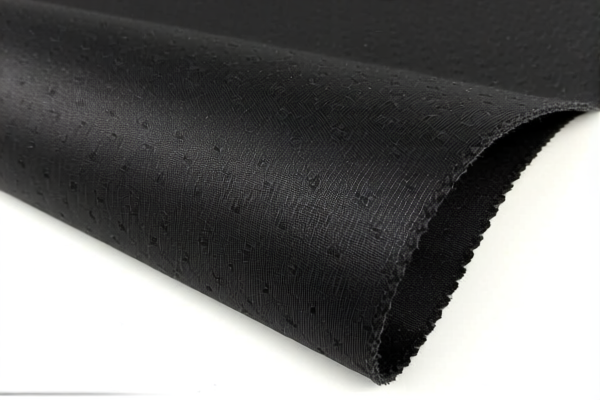
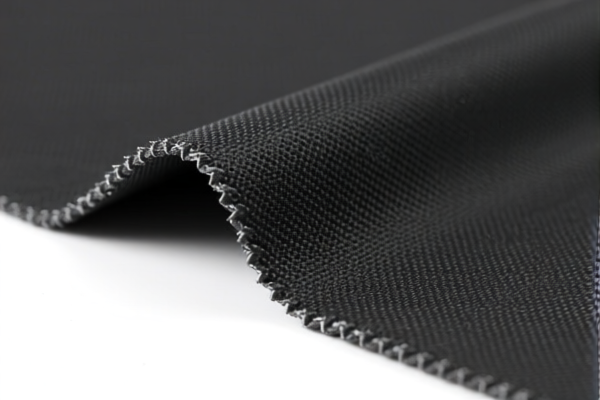
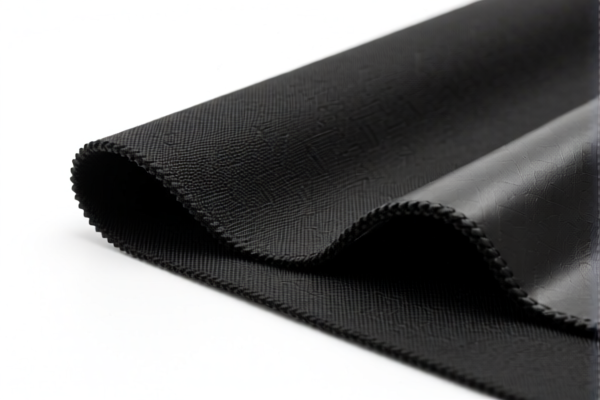
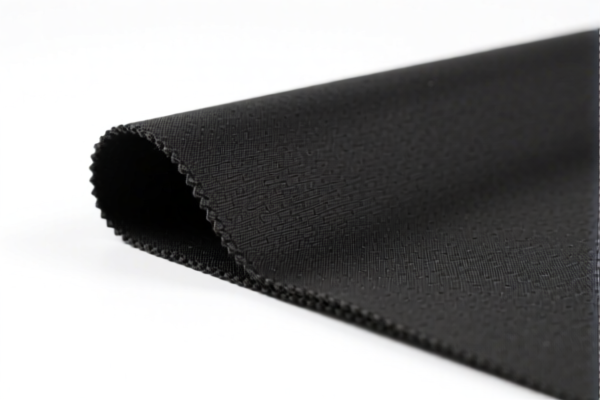
AI Analysis
🛠️ Synthetic Corundum Abrasive: The Ultimate Guide to HS Codes & US Customs Clearance (2026)
🌐 HS Code Reference & Customs Clearance Guide | 2026 Latest Tariff Analysis | Professional Clearance Strategy
📌 I. Product Definition & Classification: Do You Really Understand "Synthetic Corundum"?
Synthetic Corundum Abrasive is the heart of industrial grinding and polishing. It is artificially created aluminum oxide ($Al_2O_3$) designed for high-performance applications. In international trade, it is categorized based on its state (powder vs. finished tool) and specific use.
The confusion often arises because these materials span two completely different chapters: 1. Chemical/Mineral Stage: Raw abrasives (powder, grains) → Chapter 28 2. Industrial Tool Stage: Used for grinding/sharpening → Chapter 68
⚠️ Critical Distinction:
- If the product is raw powder, grains, or unbound abrasive material → It is a chemical/mineral product.
- If the product is a millstone, grindstone, or grinding wheel (bound into a shape) → It is an industrial tool.
- Do not mix them! The tax rates and regulatory requirements differ significantly.
📦 II. HS Code Classification Details (2026 Latest Tariff Authority Match)
Based on the provided data, here are the precise classifications for Synthetic Corundum Abrasives and their related tools.
| HS Code | Product Description | Application Scenario | State of Matter |
|---|---|---|---|
2818.10.20.10 |
Artificial Corundum (White/Pink/Ruby), >97.5% $Al_2O_3$, in grains/powder | High-purity polishing, specialized lab abrasives, premium grinding media | ✅ Raw/Powder/Grains |
2818.10.20.90 |
Artificial Corundum (Other), in grains/powder | General industrial grinding, standard sandpaper backing, blasting media | ✅ Raw/Powder/Grains |
6804.22.10.00 |
Millstones/Grinding Wheels: Bonded with Synthetic Resins | Industrial grinding wheels, sharpening stones, polishing pads | ✅ Bound/Tool Form |
6804.22.60.00 |
Millstones/Grinding Wheels: Of other agglomerated abrasives/ceramics (Other) | Ceramic-based grinding wheels, other bonded abrasives not resin-bonded | ✅ Bound/Tool Form |
🔍 Key Insight:
-2818.xxxxitems are raw materials. They are often subject to fewer restrictions but have different tariff structures. -6804.xxxxitems are finished tools. They are designed for immediate use (grinding/sharpening).
💰 III. 2026 Latest Tariff Rate Breakdown (Detailed Tax Clauses)
✅ Applicable Country: United States (US)
✅ Origin: China (CN)
✅ Effective Time: Current rates apply (Note: Section 301 tariffs often apply to China-origin goods)
🎯 1. 2818.10.20.10 & 2818.10.20.90 —— Raw Synthetic Corundum
| Item | Content |
|---|---|
| Base Tariff | 0.0% (Ad Valorem) |
| Additional Tariff (Section 301) | 0.0% |
| Total Tax Rate | 0.0% |
| Tax Detail | Base: 0.0%, Additional: 0.0% |
| Legal Basis | HTSUS Chapter 28 (Inorganic Chemicals) |
📌 Explanation:
- Raw synthetic corundum (aluminum oxide) is classified under Heading 2818.
- Currently, both high-purity (...20.10) and other (...20.90) synthetic corundums in grain/powder form have a total tariff of 0.0% for US imports from China.
- Advantage: No additional duties, making raw material import highly cost-effective.
🎯 2. 6804.22.10.00 —— Resin-Bonded Grinding Wheels
| Item | Content |
|---|---|
| Base Tariff | 0.0% (Ad Valorem) |
| Additional Tariff (Section 301) | 0.0% |
| Total Tax Rate | 0.0% |
| Tax Detail | Base: 0.0%, Additional: 0.0% |
| Legal Basis | HTSUS Chapter 68 (Articles of Stone, Plaster, Cement) |
📌 Explanation:
- Grinding wheels bonded with synthetic resins fall under 6804.22.10.
- These also enjoy 0.0% total duty. This is a critical advantage for manufacturers importing finished abrasive tools.
🎯 3. 6804.22.60.00 —— Other Millstones/Grinding Wheels (Non-Resin)
| Item | Content |
|---|---|
| Base Tariff | 0.0% (Ad Valorem) |
| Additional Tariff (Section 301) | 25.0% |
| Total Tax Rate | 25.0% |
| Tax Detail | Base: 0.0%, Additional: 25.0% |
| Legal Basis | HTSUS Chapter 68; Section 301 Footnotes |
📌 Explanation:
- This code covers grinding wheels NOT bonded with synthetic resins (e.g., ceramic-bonded, vitrified, or other agglomerated abrasives).
- ⚠️ High Cost Alert: These items are subject to a 25% additional tariff under Section 301.
- Impact: If you import ceramic grinding wheels from China, you must budget for an extra 25% on top of the 0% base rate.
🛠️ IV. Customs Clearance Practical Advice (Pitfall Avoidance Guide)
✅ 1. Documentation Checklist (Non-Negotiable)
| Document | Required? | Purpose |
|---|---|---|
| ✅ Certificate of Analysis (CoA) | ✔️ Yes | For 2818 codes, proves $Al_2O_3$ content (>97.5% for ...20.10). Without this, customs may misclassify. |
| ✅ Product Photos | ✔️ Yes | Clearly show if the item is powder/grains (2818) or a solid wheel/stone (6804). |
| ✅ Commercial Invoice | ✔️ Yes | Must specify: "Synthetic Corundum" vs. "Grinding Wheel". Ambiguity leads to delays. |
| ✅ Binding Type Declaration | ✔️ Yes | For 6804: Explicitly state "Bonded with Synthetic Resin" or "Ceramic-Bonded". This determines if you pay 0% or 25%. |
| ✅ Material Safety Data Sheet (MSDS) | ✔️ Yes | Required for chemical classification (2818) and safety compliance. |
✅ 2. Declaration Strategy (Key Mnemonic)
🔥 “Powder is Free, Resin is Free, Ceramic is 25%!”
| Scenario | Correct HS Code | Tax Rate | Why? |
|---|---|---|---|
| Raw White/Pink Powder (>97.5% $Al_2O_3$) | 2818.10.20.10 |
0% | Classified as chemical/mineral raw material. |
| Raw Gray/Brown Powder (Other) | 2818.10.20.90 |
0% | Classified as chemical/mineral raw material. |
| Solid Grinding Wheel (Resin-Bonded) | 6804.22.10.00 |
0% | Specific exception for resin-bonded tools. |
| Solid Grinding Wheel (Ceramic/Other) | 6804.22.60.00 |
25% | Subject to Section 301 additional duties. |
📌 Warning:
- Do not declare a ceramic grinding wheel as "Resin-Bonded" to save tax. CBP (Customs and Border Protection) uses X-ray and physical inspection to verify binding agents. Misclassification leads to penalties + back taxes. - Do not declare raw powder as "Grinding Wheel". If it’s not bound into a shape, it’s not a6804article.
✅ 3. Special Circumstances Handling
| Situation | Handling Advice |
|---|---|
| Mixed Shipment (Powder + Wheels) | Declare separately. Do not combine. Each item needs its own HS Code and line item. |
| OEM Branded Wheels | Provide brand authorization letter if required. Ensure the description matches the technical spec (e.g., "Aluminum Oxide Grinding Wheel"). |
| High-Purity Corundum for Semiconductors | Ensure $Al_2O_3$ content is certified >97.5% to qualify for ...20.10. If it’s 95%, it falls under ...20.90 (still 0% but different classification). |
| Samples for Testing | Still declare correctly. Even samples are subject to tariffs unless under a specific de minimis exemption (unlikely for industrial abrasives from China). |
🌍 V. Global Market Comparison (2026)
| Country/Region | Recommended HS Code | Tariff (China Origin) | Notes |
|---|---|---|---|
| 🇺🇸 USA | 2818.xxxx / 6804.22.10 |
0% | 6804.22.60 is 25% |
| 🇨🇳 China (Export) | 2818.10 / 6804.22 |
0-10% (Export Duty) | Check Chinese export tax rebate policies |
| 🇪🇺 EU | 2818.10 / 6804.22 |
0% (MFN) | Usually no anti-dumping on corundum |
| 🇬🇧 UK | 2818.10 / 6804.22 |
0% (MFN) | Post-Brexit tariffs aligned with global standards |
📌 Conclusion:
- The USA offers 0% duty for both raw corundum and resin-bonded grinding wheels from China.
- Ceramic-bonded wheels face a 25% penalty.
- For cost optimization, consider shifting to resin-bonded abrasives if technically feasible, or source ceramic wheels from non-China origins to avoid Section 301.
📌 VI. Common Mistakes & Pitfalls (Lessons Learned)
❌ Mistake 1: Calling a ceramic grinding wheel "Grinding Stone" without specifying bonding agent
👉 Consequence: Customs assumes worst-case scenario (6804.22.60) → 25% tax hit.
❌ Mistake 2: Mixing raw powder and finished wheels in one HS Code
👉 Consequence: Customs inspection delay, potential rejection, and need for redeclaration.
❌ Mistake 3: Ignoring $Al_2O_3$ purity in documentation for 2818.10.20.10
👉 Consequence: If purity is <97.5%, you owe 0% but under different code (...20.90). While tax is same, classification error can lead to audits.
❌ Mistake 4: Assuming all "Abrasive" products are 0%
👉 Consequence: Missing the 25% differential between resin-bonded and other bonded abrasives.
✅ Correct Practice:
"State the form: Powder, Grain, or Wheel. State the binder: Resin or Ceramic. Certify purity for chemicals."
🎯 VII. Conclusion: Professional Declaration Saves Money!
🎯 Remember the Mantra:
🔹 "Powder is Free, Resin is Free, Ceramic is 25%!"
🔹 "Check Purity for 2818, Check Binder for 6804!"
🔹 "Clear Description = Fast Clearance = Lower Cost!"
📌 Pro Tip:
If your application allows, switch from Ceramic-Bonded (6804.22.60) to Resin-Bonded (6804.22.10) grinding wheels. This simple change saves 25% in duties without compromising performance in many general-purpose grinding applications.
📣 Immediate Action:
📞 Verify your product's binding agent and chemical composition.
📄 Prepare Certificates of Analysis for raw materials.
🚀 Declare accurately to avoid 25% penalties and customs delays.
✨ Professional clearance starts with precise classification!
💼 Every 1% of duty saved is pure profit!
Customer Reviews
About HS Code Classification
The Harmonized System (HS) is an internationally standardized nomenclature developed by the World Customs Organization (WCO) to classify traded products. Over 200 countries use the HS system as the basis for customs tariffs, trade statistics, and import/export regulations.
Each HS code follows a hierarchical structure:
- Chapter (2 digits) — Broad category of goods (e.g., Chapter 84: Machinery and Mechanical Appliances)
- Heading (4 digits) — More specific grouping within the chapter
- Subheading (6 digits) — Internationally standardized breakdown, used by all WCO member countries
- National subdivisions (8-10 digits) — Country-specific extensions for further classification, such as US HTSUS 10-digit codes
Correct HS code classification is essential for smooth customs clearance, accurate duty payment, and compliance with trade regulations. Misclassification can lead to customs delays, overpayment of duties, or penalties.
When importing from CN to US, the applicable tariff rates may include:
- Most-Favored-Nation (MFN) rate — The standard duty rate applied to WTO members
- General rate — Applied to countries without trade agreements
- Trade remedy duties — Additional tariffs such as Section 301 (anti-dumping), Section 232 (national security), or countervailing duties
The information provided on this page is for reference purposes only. For official classification, please consult with your local customs authority or a licensed customs broker.