Synthetic Fiber Blended Fabric
CN → US| HS Code | Tariff Rate | Origin | Destination | Doc |
|---|---|---|---|---|
| 6005360080 | 45.0% | CN | US | Official Doc |
| 6005360020 | 45.0% | CN | US | Official Doc |
| 6006320080 | 45.0% | CN | US | Official Doc |
| 6001220000 | 27.2% | CN | US | Official Doc |
| 6006310080 | 45.0% | CN | US | Official Doc |
Product Images
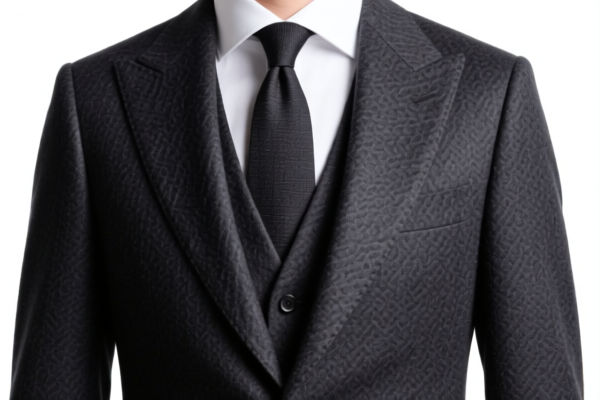
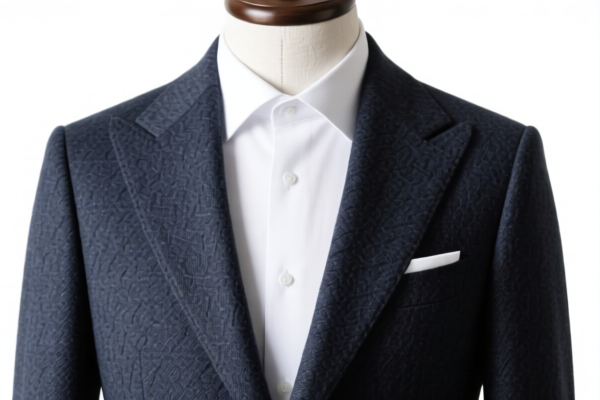
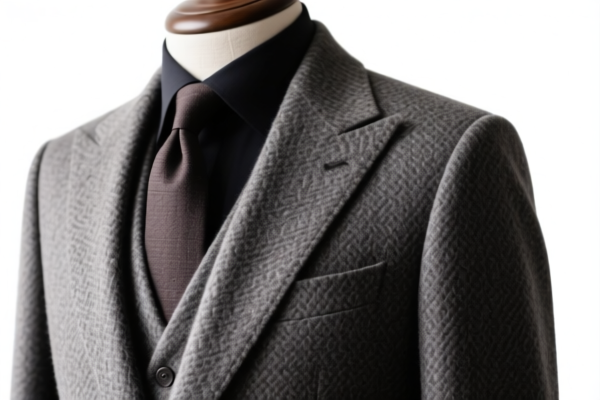
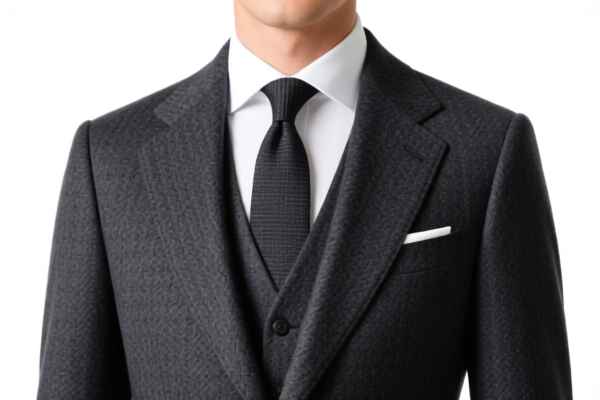
AI Analysis
🧵 Synthetic Fiber Blended Fabric (Knitted & Warp-Knitted)
🌐 HS Code Reference & Clearance Guide | 2026 Latest Tariff Analysis | Professional Entry Strategy
📌 I. Product Definition: What is "Synthetic Fiber Blended Fabric"?
In international trade, "Synthetic Fiber Blended Fabric" is a broad category. However, for US Customs (CBP) classification and tariff purposes, the structure (Knitted vs. Warp-Knitted) and process (Dyed, Printed, etc.) are critical. The data provided focuses specifically on Chapter 60 (Knitted or Crocheted Fabrics) of the Harmonized Tariff Schedule.
⚠️ Key Distinction:
- Knitted/Crocheted (Chapter 60): Includes Jersey, Rib, Interlock, etc. (Soft, stretchy).
- Woven (Chapter 50-55): Not covered in this specific dataset.
- Artificial vs. Synthetic: "Synthetic" usually refers to Polyester, Nylon, Acrylic. "Artificial" refers to Rayon/Viscose. The dataset distinguishes between these in HS 6001.22 vs. others.
📦 II. HS Code Classification Details (2026 Authoritative Data)
Based on the provided <DATA>, here are the specific HS Codes, their definitions, and why they apply.
| HS Code | Product Description (English Summary) | Key Characteristics | Total Tax Rate |
|---|---|---|---|
6005.36.00.80 |
Synthetic fiber knitted fabric, non-lace, non-crocheted, other | Broad category for synthetic knits; not lace/crochet | 45.0% |
6005.36.00.20 |
Synthetic fiber warp-knitted fabric, conforms to knit/crochet morphology | Note: HS 6005 is technically "Warp-knitted", but the summary implies specific structural conformity | 45.0% |
6006.32.00.80 |
Dyed synthetic fiber knitted fabric, non-double/interlock structure | Specific to Dyed goods; excludes complex double-knit structures | 45.0% |
6001.22.00.00 |
Synthetic fiber knitted fabric, corresponding to Artificial Fiber material | Crucial Distinction: Despite the name "Synthetic" in the user query, this code often captures blends or specific classifications where "Artificial" (e.g., Rayon) is the dominant fiber in the blend | 27.2% |
6006.31.00.80 |
Synthetic fiber knitted fabric, conforms to classification definition | General category for synthetic knits under Heading 6006 | 45.0% |
🔍 Classification Logic:
1. Why 6005/6006? These headings cover Warp-Knitted and Other Knitted/Crocheted fabrics. If your fabric is stretchy and looped, it goes here. If it is woven (like denim or poplin), these codes are incorrect.
2. Why 45% vs 27.2%? The majority of synthetic/viscose blends in Chapter 60 are subject to Section 301 (Trade War Tariffs) and Section 122 tariffs. However,6001.22.00.00has a lower base rate (17.2%) because it may be classified under different material parameters or specific blend rules that attract fewer additive tariffs.
💰 III. 2026 Tariff Rate Breakdown (Detailed Policy Analysis)
✅ Applicable Country: United States (US)
✅ Origin: China (CN) (Implied by the "122 Clause" and "Section 301" references in the tax details)
✅ Effective Date: Current (2025-2026 Period)
🎯 1. High-Tariff Codes (45.0% Total)
Applies to: 6005.36.00.80, 6005.36.00.20, 6006.32.00.80, 6006.31.00.80
| Component | Rate | Legal Basis | Explanation |
|---|---|---|---|
| Basic Customs Duty | 10.0% | HTSUS General Rate | The standard base duty for knitted synthetic fabrics. |
| Section 301 Tariff | 25.0% | USTR List 3/4 | Added due to US-China trade tensions. Applies to most Chinese-origin textiles. |
| Section 122 Tariff | 10.0% | Section 122 (U.S.C. 2252) | A retaliatory or trade policy tariff often applied to specific Chinese textile imports. |
| TOTAL RATE | 45.0% | High Barrier | De Minimis (Section 321) is NOT available. |
📌 Why is the tax so high?
- The 25% is the core "Trade War" tariff.
- The 10% (Section 122) is an additional layer on top.
- No De Minimis: Packages under $800 cannot bypass these tariffs. All imports are subject to the full 45%.
🎯 2. Lower-Tariff Code (27.2% Total)
Applies to: 6001.22.00.00
| Component | Rate | Legal Basis | Explanation |
|---|---|---|---|
| Basic Customs Duty | 17.2% | HTSUS General Rate | Higher base duty than typical synthetics, but... |
| Section 301 Tariff | 0.0% | Exemption or Non-Applicable | This specific subheading may be excluded from the 25% list or classified differently. |
| Section 122 Tariff | 10.0% | Section 122 | Still applies, but the base is lower. |
| TOTAL RATE | 27.2% | Moderate Barrier | De Minimis (Section 321) is NOT available. |
📌 Strategy:
If your fabric blend is primarily Artificial Fiber (e.g., Viscose/Rayon) rather than pure Synthetic (Polyester/Nylon), try to classify under6001.22.00.00to save 17.8% in duties. However, you must prove the fiber composition matches the HTSUS definition for 6001.22.
🛠️ IV. Customs Clearance Practical Advice (Pitfall Avoidance Guide)
✅ 1. Documentation Checklist (Non-Negotiable)
| Document | Required? | Reason |
|---|---|---|
| ✅ Commercial Invoice | ✔️ | Must state "Synthetic Fiber Knitted Fabric", HS Code, Country of Origin (China). |
| ✅ Packing List | ✔️ | Weight, dimensions, number of rolls. |
| ✅ Certificate of Origin | ✔️ | Essential to confirm China origin (triggers Section 301/122). |
| ✅ Fiber Composition Statement | ✔️ | Critical! Must list % of Polyester, Nylon, Viscose, Cotton, etc. Mislabeling leads to reclassification & penalties. |
| ✅ Product Photos | ✔️ | Show texture, edges, and any labels to prove it is Knitted, not Woven. |
✅ 2. Classification & Declaration Tips
🔥 "Fiber Blend is King, Structure is Queen!"
| Scenario | Correct Approach | Wrong Approach | Consequence |
|---|---|---|---|
| Polyester/Cotton Blend | Classify under Synthetic headings (6005/6006) if Synthetic > 50%. | Classify as Cotton (6001). | Penalty! Rejected by CBP. |
| Viscose/Rayon Blend | Check if it fits 6001.22 (Artificial). | Always assume 45% tax. | Missed Savings! Could save 17.8%. |
| Woven vs. Knitted | Confirm it is Knitted (loops) not Woven (interlaced). | Declare Woven Fabric. | Wrong Chapter! Chapter 55 vs 60. Major delay. |
| De Minimis Shipment | Do NOT use Section 321. | Ship via postal to avoid tariff. | Seizure! Section 321 is blocked for China-origin textiles subject to Section 301/122. |
✅ 3. Special Notes on "Section 122"
- Section 122 is a specific US law allowing the President to restrict imports if they threaten to "impair national security." It has been applied to certain Chinese goods.
- Impact: Even if you negotiate the 301 tariff, the 10% Section 122 may still apply. This is why the tax detail explicitly lists "122 Clause Tariff 10%".
- Action: Ensure your HS Code is precise. If
6001.22.00.00is valid for your blend, it reduces the burden significantly.
🌍 V. Global Market Comparison (Contextual)
| Market | HS Code (Typical) | Base Duty | Additional Tariffs (China) | Total Est. |
|---|---|---|---|---|
| 🇺🇸 USA | 6005.36.00.80 |
10% | +25% (301) +10% (122) | 45% |
| 🇨🇳 China (Export) | N/A | N/A | N/A | N/A |
| 🇪🇺 EU | 6005.36.00 |
8-12% | No additional sanctions | ~10-12% |
| 🇬🇧 UK | 6005.36.00 |
8-12% | No additional sanctions | ~10-12% |
| 🇨🇦 Canada | 6005.36.00 |
8-15% | No additional sanctions | ~10% |
📌 Conclusion:
- The US market is significantly more expensive for Chinese synthetic fabrics due to the 45% total tariff.
- EU/UK/Canada do not apply Section 301 or 122.
- Strategy: If you are shipping to the US, consider third-country consolidation (e.g., shipping to Mexico/Vietnam first, provided rules of origin are met) or negotiate FOB pricing to share the tariff burden with the buyer.
📌 VI. Common Errors & Pitfalls (Blood & Tears Lessons)
❌ Error 1: Classifying Woven fabric under Chapter 60 (Knitted).
👉 Result: CBP rejects, reclassifies to Chapter 55, applies different tariffs, and fines you.
👉 Fix: Always check weave/knit structure. Knitted = loops (stretchy). Woven = grid (stable).
❌ Error 2: Ignoring the Section 122 tariff.
👉 Result: Underestimating landing cost by 10%.
👉 Fix: Include the 10% 122 clause in your cost model.
❌ Error 3: Using De Minimis (Section 321) for China-origin textiles.
👉 Result: Package seized, destroyed, or returned. The US has explicitly blocked this for many Chinese textile items.
👉 Fix: Use full commercial entry (Form 7501) and pay the 45%.
✅ Correct Declaration Example:
"100% Polyester Synthetic Fiber Knitted Fabric, Dyed, Jersey Structure, Width 60 inches. HS Code: 6005.36.00.80. Country of Origin: China."
🎯 VII. Conclusion: Professional Clearance for High-Tariff Textiles
🎯 Key Takeaway:
🔹 "Synthetic Knit from China = 45% Tax."
🔹 "Artificial Blend (6001.22) = 27.2% Tax."
🔹 "No De Minimis. No Loopholes."
📌 Strategic Advice:
1. Verify Fiber Content: Can your blend be classified as Artificial (Viscose/Rayon) to utilize 6001.22.00.00? This saves 17.8%.
2. Confirm Structure: Is it truly Knitted? If it’s a lightweight woven mesh, it might fall under Chapter 55, which may have different tariff rates (though likely still high).
3. Budget Accurately: Include 45% of the CIF value in your landed cost calculation for most codes.
4. Pre-Apply for Ruling: If unsure about 6001.22 vs 6006.32, apply for a CBP Binding Ruling before shipping to avoid surprise penalties.
📣 Immediate Action:
📞 Contact a US Customs Broker: Provide your fabric swatch and fiber analysis.
📄 Request a Binding Ruling: Specifically ask if your blend qualifies for6001.22.00.00(27.2%).
🚀 Plan for 45%: If not, budget accordingly. Do not assume De Minimis applies.
✨ Precision in Classification = Profit in Your Pocket!
💼 Don't let 45% tariffs eat your margin. Classify smart.
Customer Reviews
About HS Code Classification
The Harmonized System (HS) is an internationally standardized nomenclature developed by the World Customs Organization (WCO) to classify traded products. Over 200 countries use the HS system as the basis for customs tariffs, trade statistics, and import/export regulations.
Each HS code follows a hierarchical structure:
- Chapter (2 digits) — Broad category of goods (e.g., Chapter 84: Machinery and Mechanical Appliances)
- Heading (4 digits) — More specific grouping within the chapter
- Subheading (6 digits) — Internationally standardized breakdown, used by all WCO member countries
- National subdivisions (8-10 digits) — Country-specific extensions for further classification, such as US HTSUS 10-digit codes
Correct HS code classification is essential for smooth customs clearance, accurate duty payment, and compliance with trade regulations. Misclassification can lead to customs delays, overpayment of duties, or penalties.
When importing from CN to US, the applicable tariff rates may include:
- Most-Favored-Nation (MFN) rate — The standard duty rate applied to WTO members
- General rate — Applied to countries without trade agreements
- Trade remedy duties — Additional tariffs such as Section 301 (anti-dumping), Section 232 (national security), or countervailing duties
The information provided on this page is for reference purposes only. For official classification, please consult with your local customs authority or a licensed customs broker.