Synthetic Fiber Reinforced Conveyor Belt
CN → US| HS Code | Tariff Rate | Origin | Destination | Doc |
|---|---|---|---|---|
| 5910009000 | 37.6% | CN | US | Official Doc |
| 5910001070 | 39.0% | CN | US | Official Doc |
| 8431390010 | 35.0% | CN | US | Official Doc |
| 5910001090 | 39.0% | CN | US | Official Doc |
| 5910009000 | 37.6% | CN | US | Official Doc |
Product Images
AI Analysis
🏭 Synthetic Fiber Reinforced Conveyor Belt (输送带)
🌐 HS Code Reference & Customs Clearance Guide | 2026 Latest Tariff Analysis | Professional Clearance Strategy
📌 1. Product Definition and Classification: Do You Truly Understand "Conveyor Belts"?
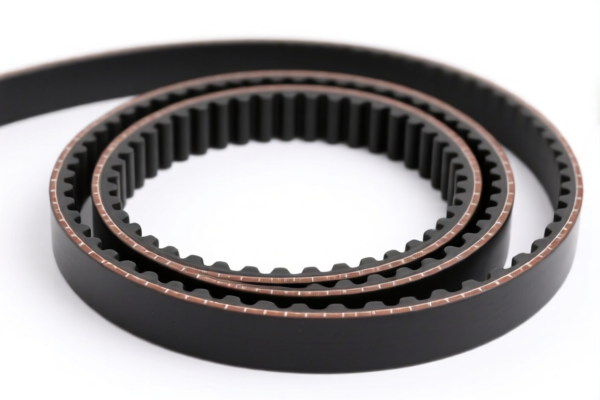
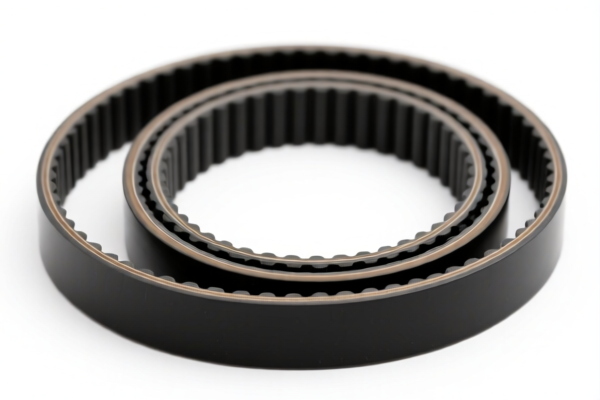
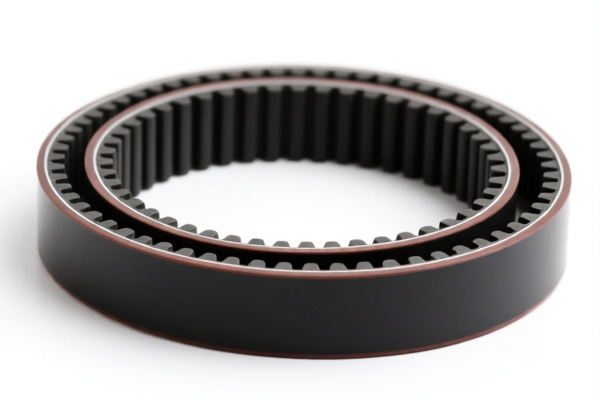
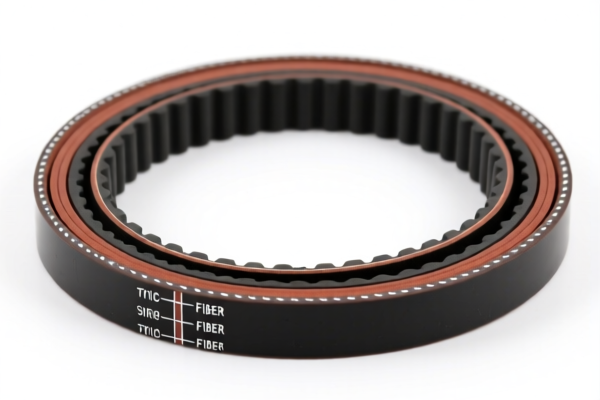
Synthetic fiber reinforced conveyor belts are essential components in modern logistics, mining, and manufacturing industries. In international trade, they are categorized based on two key factors: * Material: Synthetic fibers (classified under textile materials). * Function: Transmission/Conveying of goods.
⚠️ Key Distinction: * As a Finished Conveyor Belt (Primary Function): If the belt is primarily used for conveying materials, it falls under Chapter 59 (Impregnated, Coated, Covered or Layered Textile Fabrics). Specifically, codes starting with 5910. * As a Spare Part (Secondary Function): If the belt is imported specifically as a spare part for machinery, some might incorrectly classify it under Chapter 84 (Machinery). However, customs authorities generally require the primary function (conveying) to dictate the classification, making 5910 the standard choice.
📦 2. HS Code Classification Details (2026 Latest Tariff Authority Comparison)
Based on the provided data, there are two main classification paths: Chapter 59 (Textile-based) and Chapter 84 (Machinery Parts).
| HS Code | Product Description | Applicable Logic | Total Tax Rate |
|---|---|---|---|
5910.00.90.00 |
Conveyor Belts, Reinforced with Other Textile Materials (Synthetic Fibers) | Primary Classification: The belt is made of synthetic fibers (textile material) and used for conveying. This is the most common and accurate classification for finished belts. | 37.6% |
5910.00.10.70 |
Other Conveyor Belts (Specific Sub-category) | Alternative Textile Class: Fits the description of "Other" items within the conveyor belt textile category. | 39.0% |
5910.00.10.90 |
Other Conveyor Belts (Artificial Fiber Category) | Alternative Textile Class: Classified under artificial fiber范畴, assuming specific sub-category nuances for "Other" belts. | 39.0% |
8431.39.00.10 |
Parts and Accessories of Machinery (Specifically for Lifts/Conveyors) | Secondary/Part Classification: Classified as a "part" of a conveyor machine. Risk: Customs may reject this if the item is clearly a finished belt intended for sale/use as a belt, not just a spare part. | 35.0% |
🔍 Critical Reminder: * Most Accurate Choice:
5910.00.90.00is generally preferred for finished synthetic fiber conveyor belts because it directly addresses the "textile material" and "conveying function." * Part vs. Product: Classifying as8431.39.00.10(Parts) is risky unless you are importing strictly as replacement parts for existing machinery. If imported as general stock, customs will likely reclassify to 5910. * Rate Difference: The part classification (8431) has a lower base tax (0%) but the same high supplementary taxes, resulting in a slightly lower total (35.0%) compared to textile classifications (37.6%-39.0%).
💰 3. 2026 Latest Tariff Rate Breakdown (Including Surcharges & Policy Add-ons)
✅ Applicable Country: United States (US)
✅ Origin: China (CN)
✅ Effective Date: November 10, 2025 (and subsequent imports)
🎯 1. Classification Path A: 5910.00.90.00 (Synthetic Fiber Conveyor Belt)
| Item | Content |
|---|---|
| Base Tariff Rate | 2.6% (Ad Valorem) |
| Section 301 Surcharge (25%) | +25.0% (USITC Footnote regarding Chinese imports) |
| Section 122 Tariff (10%) | +10.0% (Specific Section 122 duty for certain Chinese goods) |
| Total Tax Rate | 37.6% |
| Tax Calculation | CIF Value × 37.6% |
| De Minimis Exemption? | ❌ No (Not eligible for Section 321/De Minimis relief) |
| Legal Basis Path | Base Tariff: 2.6% → Add-on: 25.0% → Section 122: 10% |
📌 Explanation: * This is the standard classification for textile-based conveyor belts. * The 25% Section 301 tariff is the most significant cost driver. * The 10% Section 122 tariff is an additional layer of duty for specific Chinese-origin goods. * Total Impact: You pay nearly 40% on the value of the goods.
🎯 2. Classification Path B: 5910.00.10.70 / 5910.00.10.90 (Other Conveyor Belts)
| Item | Content |
|---|---|
| Base Tariff Rate | 4.0% (Ad Valorem) |
| Section 301 Surcharge (25%) | +25.0% |
| Section 122 Tariff (10%) | +10.0% |
| Total Tax Rate | 39.0% |
| Tax Calculation | CIF Value × 39.0% |
| De Minimis Exemption? | ❌ No |
| Legal Basis Path | Base Tariff: 4.0% → Add-on: 25.0% → Section 122: 10% |
📌 Note: * Slightly higher than
5910.00.90.00due to a higher base rate (4.0% vs 2.6%). * The supplementary taxes remain identical.
🎯 3. Classification Path C: 8431.39.00.10 (Conveyor Machine Parts)
| Item | Content |
|---|---|
| Base Tariff Rate | 0.0% (Ad Valorem) |
| Section 301 Surcharge (25%) | +25.0% |
| Section 122 Tariff (10%) | +10.0% |
| Total Tax Rate | 35.0% |
| Tax Calculation | CIF Value × 35.0% |
| De Minimis Exemption? | ❌ No |
| Legal Basis Path | Base Tariff: 0.0% → Add-on: 25.0% → Section 122: 10% |
📌 Caution: * While the rate (35.0%) is the lowest, this classification is highly scrutinized. * Customs may argue that a "reinforced conveyor belt" is a product in itself (Chapter 59), not merely a part. * Using this code risks reclassification audits and potential penalties if the belt is sold as a general product rather than a specific spare part.
🛠️ 4. Customs Clearance Practical Advice (Avoid Pitfalls)
✅ 1. Required Documentation Checklist (Essential)
| Document | Must Provide | Description |
|---|---|---|
| ✅ Product Specification Sheet | ✔️ | Must clearly state: Material (Synthetic Fiber), Width, Length, Reinforcement Type, and Intended Use (Conveying). |
| ✅ Technical Drawing/Structure Diagram | ✔️ | Show layers to prove it is a "reinforced belt" and not a simple textile fabric. |
| ✅ Product Photos (With Nameplate) | ✔️ | Clear images showing the belt's surface, edges, and any markings. |
| ✅ Commercial Invoice | ✔️ | Describe as "Synthetic Fiber Reinforced Conveyor Belt", NOT "Textile Fabric" or "Machinery Part" unless intentionally classifying as part. |
| ✅ Packing List | ✔️ | Detail dimensions and weight to prevent disputes on valuation. |
| ✅ Origin Certificate (CO) | ✔️ | Required to prove Chinese origin (triggering the 35-39% tariffs). |
✅ 2. Declaration Tips (Key Mantras)
🔥 "Material First, Function Second, Name Precise, Rate Predictable!"
| Scenario | Correct Declaration | Wrong Practice |
|---|---|---|
| Finished Belt (General Use) | 5910.00.90.00 |
Misclassifying as 8431 to save 2.6% → High Audit Risk |
| Belt as Spare Part for Specific Machine | 8431.39.00.10 (With proof of machine link) |
Using this for general stock → Rejection/Retclassification |
| Vague Description "Conveyor Belt" | Specific: "Polyester Reinforced PVC Conveyor Belt" | Vague: "Textile Belt" → Delays/Questions |
| Misclassified as "Fabric" | Never classify as plain fabric if reinforced | Declaring as 5906/5909 → Incorrect Duty Base |
✅ 3. Special Handling Cases
| Situation | Handling Advice |
|---|---|
| OEM Custom Belts | Provide customer purchase order + design specs to prove specific use, but still classify under 5910. |
| Belt + Roller Kit Package | Declare the belt separately (5910) and rollers separately (8483 or 8431). Do not lump them into one code unless they are sold as a single unit with a unified HS. |
| Reinforcement Material Varies | If reinforced with steel cord, classify under 5910.90 or potentially 8431 (depending on design). If synthetic fiber, stick to 5910.00. |
| Used/Reclaimed Belts | Generally prohibited or restricted. Ensure "New" status is declared. |
🌍 5. Global Market Clearance Comparison (2026 Latest)
| Country/Region | Recommended HS Code | Tariff (China Origin) | Certification Requirements | Notes |
|---|---|---|---|---|
| 🇺🇸 USA | 5910.00.90.00 |
37.6% (See breakdown) | None specific (FCC not applicable) | High tariffs due to Section 301 & 122. |
| 🇨🇳 China | 5910.00.90.00 |
~5-7% (Import Duty) | CCC (if for specific industrial use) | No Section 301/122 surcharges. |
| 🇪🇺 EU | 5910.00 |
0-4% (Depending on subhead) | CE (if for machinery safety) | No additional US-style surcharges. |
| 🇦🇺 Australia | 5910.00 |
5% | RCM (if electrical parts included) | Standard MFN rates. |
| 🇯🇵 Japan | 5910.00 |
0-4% | PSE (if electrical components) | Favorable trade terms. |
📌 Conclusion: * USA is the most challenging market due to the 35-39% effective duty rate. * Costs are driven by Section 301 (25%) and Section 122 (10%), not the base tariff. * Supply chain diversification (e.g., manufacturing in Vietnam/Mexico) is the only way to avoid these surcharges in the US.
📌 6. Common Mistakes & Pitfall Guide (Lessons Learned)
❌ Mistake 1: Classifying the belt as 8431.39.00.10 to save 2.6% base tax.
👉 Consequence: Customs may reject it as a "finished article" and reclassify to 5910, causing delays, storage fees, and potential penalties.
❌ Mistake 2: Describing the product simply as "Rubber Belt" or "Textile Belt". 👉 Consequence: Ambiguity leads to manual examination, delaying clearance by weeks.
❌ Mistake 3: Ignoring the "Synthetic Fiber" component.
👉 Consequence: If the belt is steel-cord reinforced, 5910 might be wrong. Misclassification leads to incorrect duty payment and audits.
✅ Correct Approach:
"Synthetic Fiber Reinforced PVC Conveyor Belt, Width: 1000mm, Length: 50m, For Bulk Material Handling, New, Model XYZ"
🎯 7. Conclusion: Professional Declaration, Cost Control, Efficient Clearance!
🎯 Remember the Mantra:
🔹 "Function is Key: Conveying = 5910. Parts = 8431. Be Precise!"
🔹 "Tariff Trap: 25% (301) + 10% (122) = High Cost. Plan Ahead!"
📌 Pro Tip: If your conveyor belts are originating from Vietnam, Malaysia, or Mexico, you may qualify for IEEPA Exemptions or lower MFN rates, significantly reducing costs. Recommend Applying for a Binding Ruling (Pre-classification) with US Customs and Border Protection (CBP) before shipping high-value batches.
📣 Take Action Now:
📞 Contact a Professional Customs Broker + Provide Product Specs + Apply for HS Code Pre-ruling 🚀 Let your conveyor belts clear smoothly, reduce costs, and maximize profit!
✨ Professional clearance starts with accurate classification! 💼 Every cent of your cost deserves precise calculation!
Customer Reviews
About HS Code Classification
The Harmonized System (HS) is an internationally standardized nomenclature developed by the World Customs Organization (WCO) to classify traded products. Over 200 countries use the HS system as the basis for customs tariffs, trade statistics, and import/export regulations.
Each HS code follows a hierarchical structure:
- Chapter (2 digits) — Broad category of goods (e.g., Chapter 84: Machinery and Mechanical Appliances)
- Heading (4 digits) — More specific grouping within the chapter
- Subheading (6 digits) — Internationally standardized breakdown, used by all WCO member countries
- National subdivisions (8-10 digits) — Country-specific extensions for further classification, such as US HTSUS 10-digit codes
Correct HS code classification is essential for smooth customs clearance, accurate duty payment, and compliance with trade regulations. Misclassification can lead to customs delays, overpayment of duties, or penalties.
When importing from CN to US, the applicable tariff rates may include:
- Most-Favored-Nation (MFN) rate — The standard duty rate applied to WTO members
- General rate — Applied to countries without trade agreements
- Trade remedy duties — Additional tariffs such as Section 301 (anti-dumping), Section 232 (national security), or countervailing duties
The information provided on this page is for reference purposes only. For official classification, please consult with your local customs authority or a licensed customs broker.