Synthetic Fiber Reinforced Industrial Belt
CN → USProduct Images
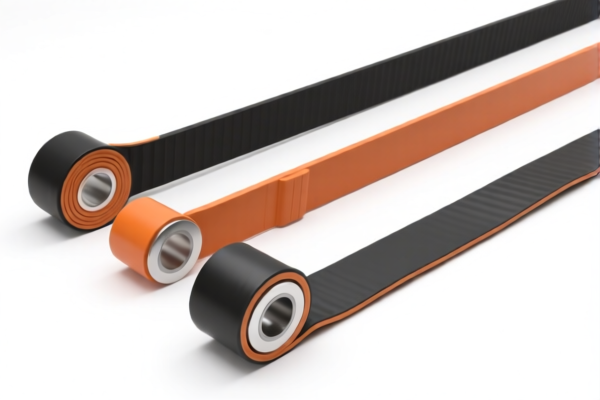
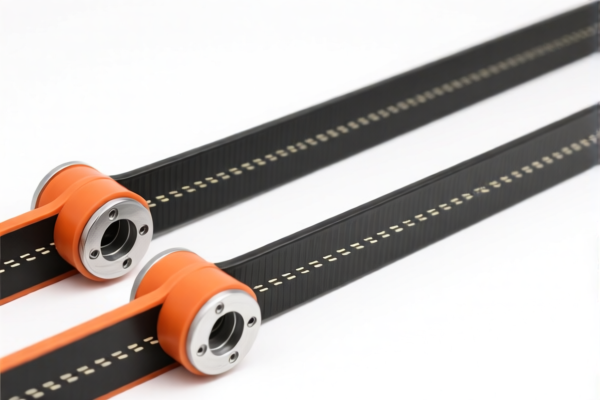
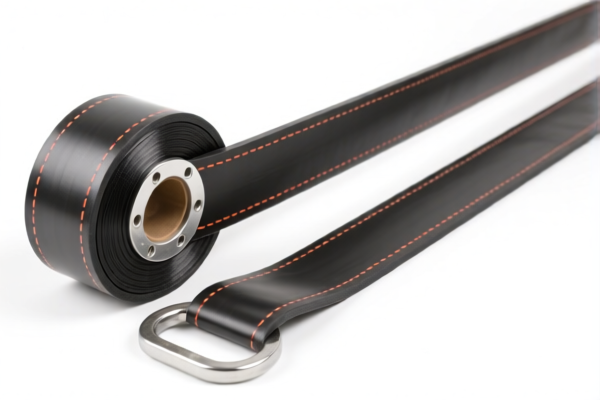
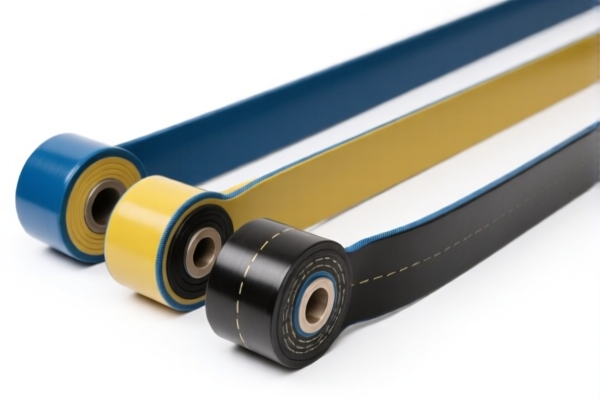
AI Analysis
⚙️ Synthetic Fiber Reinforced Industrial Belt (Belting)
🌐 HS Code Reference & Customs Clearance Guide | 2026 Latest Tariff Analysis | Professional-Level Clearance Strategy
📌 1. Product Definition & Classification: Do You Really Understand "Industrial Belting"?
Synthetic fiber reinforced industrial belts are critical transmission components in modern manufacturing, logistics, and agriculture. They consist of a rubber or polymeric carrier reinforced with high-strength synthetic fibers (such as polyester, nylon, aramid, or polyester-aramid blends) to handle tension and torque.
In international trade, the classification depends heavily on the end-use and the structure of the belt:
- Conveyor Belting (
4010): Belts used for transporting materials (bulk goods, packages) continuously. Often multi-ply or solid woven. - Transmission Belting (
4010or8483): Belts used to transmit power from one rotating shaft to another (V-belts, timing belts, flat belts).
⚠️ Key Distinction Point:
- If the belt is primarily used for moving goods (logistics, mining, food processing) → Classified under 4010.
- If the belt is primarily used for transmitting power (motors, engines, machinery) → Often classified under 8483 (Gears/Transmission Shafts) if it's a specific mechanical component, but many generic industrial drive belts still fall under 4010 depending on US Customs interpretation and specific design (e.g., synchronous belts may go to 4010 or 8483.99).
- Note: Rubber vs. Plastic carrier also matters, but "Synthetic Fiber Reinforced" usually implies a rubber carrier with fabric plies or a polyurethane carrier with textile cords.
📦 2. HS Code Classification Details (2026 Latest Tariff Authority Comparison)
| HS Code | Product Description | Application Scenario | Reinforcement Material |
|---|---|---|---|
4010.31.00.00 |
Conveyor belting, of rubber, smooth surface | Standard logistics conveyors, mining, food grade | Steel/Fabric (Polyester/Nylon) |
4010.32.00.00 |
Conveyor belting, of rubber, with pulleys/cleaners | Industrial heavy-duty conveyors | Steel/Fabric |
4010.33.00.00 |
Conveyor belting, of rubber, other (textile reinforced) | Synthetic Fiber Reinforced belts for general industry | Polyester, Nylon, Aramid |
4010.34.00.00 |
Conveyor belting, of plastic (e.g., PU/PVC) | Light-duty, food-grade, cleanroom | Synthetic Fabrics |
4010.36.00.00 |
Conveyor belting, of rubber, of a kind used in agriculture | Harvesters, seeders | Steel/Fabric |
8483.50.00.00 |
Transmission belts and belts (including V-belts) | Power transmission (motors, pumps) | Rubber + Fibers |
8483.90.00.00 |
Parts of transmission equipment | Specific timing belt teeth/grooves (less common for whole belts) | N/A |
🔍 Critical Reminder:
- For Synthetic Fiber Reinforced belts, if it is a conveyor belt (moving materials), the most likely code is4010.33.00.00(Rubber) or4010.34.00.00(Plastic/PU).
- If it is a drive belt (transmitting power), such as a V-belt or synchronous belt, US Customs often classifies it under8483.50.00.00.
- Do NOT confuse "Industrial Belt" with "Textile Belt" (which might fall under Chapter 59 or 60). The key is the rubber/plastic carrier.
💰 3. 2026 Latest Tariff Rate Details (Including Additional Duties & Policy Add-ons)
✅ Applicable Country: United States (US)
✅ Country of Origin: China (CN)
✅ Effective Date: November 10, 2025 (including subsequent imports)
🎯 1. 4010.33.00.00 — Conveyor Belting, Rubber, Other (Synthetic Fiber Reinforced)
| Item | Content |
|---|---|
| Base Duty Rate | 5.3% (Ad Valorem) |
| USITC Additional Duty | 25% (Under USITC Footnote 8, Section 301) |
| IEEPA Additional Duty | 10% (Against Chinese/HK products, effective Nov 10, 2025) |
| Total Duty Rate | 40.3% |
| Tax Calculation | CIF Value × 40.3% |
| De Minimis Eligibility | ❌ No (deny_de_minimis) |
| Legal Basis Path | IEEPA:9903.01.24 → USITC:4010.33.00.00 → FOOTNOTE:301.8 |
📌 Explanation:
- The base rate is low, but the Section 301 tariff (25%) and IEEPA surcharge (10%) significantly increase the cost.
- Total of 40.3% is a substantial cost driver for rubber/plastic industrial belts from China.
🎯 2. 8483.50.00.00 — Transmission Belts (Drive Belts)
| Item | Content |
|---|---|
| Base Duty Rate | 4.7% (Ad Valorem) |
| USITC Additional Duty | 25% (Under USITC Footnote 8, Section 301) |
| IEEPA Additional Duty | 10% (Against Chinese/HK products, effective Nov 10, 2025) |
| Total Duty Rate | 39.7% |
| Tax Calculation | CIF Value × 39.7% |
| De Minimis Eligibility | ❌ No (deny_de_minimis) |
| Legal Basis Path | IEEPA:9903.01.24 → USITC:8483.50.00.00 → FOOTNOTE:301.8 |
📌 Note:
- Even if classified as a "drive belt," the additional tariffs apply similarly.
- Some specific high-performance belts (e.g., carbon fiber reinforced) might be classified differently, but standard synthetic fiber belts follow this path.
🛠️ 4. Customs Clearance Practical Advice (Real-World Pitfall Avoidance Guide)
✅ 1. Preparation Checklist (No Exceptions)
| Document | Must Provide | Description |
|---|---|---|
| ✅ Product Specification Sheet | ✔️ | Include belt length, width, thickness, material (Rubber/PU), reinforcement type (Polyester/Nylon), load capacity. |
| ✅ Technical Drawing/Structure Diagram | ✔️ | Show the cross-section: carrier material, reinforcement layers, cover type. |
| ✅ Product Photos (Labeled) | ✔️ | Clear shots of the belt, side view showing plies, and any branding/tech markings. |
| ✅ Third-Party Test Report | ✔️ | Tensile strength, wear resistance, fire retardancy (if applicable). |
| ✅ Commercial Invoice | ✔️ | Must clearly state: "Conveyor Belt/Drive Belt, Synthetic Fiber Reinforced, [Material]" |
| ✅ Certificate of Origin (CO) | ✔️ | If not from China, can reduce or eliminate additional duties. |
| ✅ Packing List | ✔️ | Indicate if rolled or cut, and total gross/net weight. |
✅ 2. Declaration Skills (Key Mnemonic)
🔥 "Conveyor vs. Drive, Material Matters, Section 301 Hits Hard!"
| Scenario | Correct Declaration | Wrong Practice |
|---|---|---|
| Belt for moving boxes/materials | 4010.33.00.00 |
Misdeclare as 8483 (Drive Belt) → Risk of audit |
| Belt for motor power transmission | 8483.50.00.00 |
Misdeclare as 4010 → Potential duty difference + compliance risk |
| PU Belt with Textile Cord | 4010.34.00.00 |
Declare as "Plastic Sheet" → Wrong Chapter |
| Steel Cord Belt | 4010.31.00.00 or 4010.32.00.00 |
Declare as "Synthetic" → Misclassification |
✅ 3. Special Cases Handling
| Situation | Handling Advice |
|---|---|
| OEM Custom Belts | Provide customer PO and design specs to prove specific use (Conveyor vs. Drive). |
| Belt with Metal Clamping | Still classified under 4010 or 8483 depending on function; do not split unless the metal part is sold separately. |
| Used/Refurbished Belts | Import restrictions may apply; usually prohibited or heavily regulated. Declare as new. |
| Belts for Food Industry | Must provide FDA compliance or LFGB certification; does not change HS code but affects clearance speed. |
🌍 5. Global Market Clearance Comparison (2026 Latest)
| Country/Region | Recommended HS Code | Duty Rate (China Origin) | Certification Requirements | Notes |
|---|---|---|---|---|
| 🇺🇸 USA | 4010.33.00.00 / 8483.50.00.00 |
~40% (incl. S301 + IEEPA) | None specific | High tariffs make cost control critical. |
| 🇨🇳 China | 4010.33.00.00 / 8483.50.00.00 |
5% - 7% | CCC (if applicable) | Low import duty. |
| 🇪🇺 EU | 4010.33 / 8483.50 |
0% - 4% | REACH (Chemicals) | No Section 301 equivalent. |
| 🇦🇺 Australia | 4010.33 / 8483.50 |
5% | RCM (if electrical component) | Moderate duty. |
| 🇯🇵 Japan | 4010.33 / 8483.50 |
0% - 5% | PSE (if electrical) | FTA benefits with ASEAN. |
📌 Conclusion:
- USA has the highest effective duty rate (~40%) due to Section 301 and IEEPA measures.
- EU and Asia-Pacific markets are much more competitive. Consider supply chain diversification to Vietnam, Mexico, or Thailand to avoid US tariffs.
📌 6. Common Errors & Pitfall Avoidance Guide (Lessons Learned)
❌ Error 1: Classifying a Conveyor Belt as a Textile Product (Chapter 59 or 60)
👉 Consequence: Misclassification, penalty, and potential rejection. Industrial belts are Rubber/Plastic articles (Chapter 40).
❌ Error 2: Ignoring the Reinforcement Material
👉 Consequence: If you say "Fabric Reinforced" but it's actually Steel Cord, the HS code changes (4010.31 vs 4010.33). This affects duty and compliance.
❌ Error 3: Not declaring Material Composition accurately
👉 Consequence: Customs may reclassify the product based on the dominant material (e.g., if rubber content is low, it might go to plastic chapter). Be precise: "Rubber Carrier, Polyester Cord".
✅ Correct Declaration Example:
"Industrial Conveyor Belt, Rubber Carrier, Reinforced with High-Tenacity Polyester Cords, Smooth Surface, Length 10m, Width 500mm, Model XYZ, Made in China."
🎯 7. Conclusion: Professional Declaration, Save Time, Reduce Costs!
🎯 Remember the Key Points:
🔹 "Conveyor vs. Drive: Choose the Right Chapter!"
🔹 "Synthetic Fiber: Still hits Section 301 and IEEPA in the US!"
🔹 "Rubber or Plastic? Be Specific!"
📌 Pro Tip:
If your belts are originating from Vietnam, Malaysia, or Mexico, you may be eligible for lower or zero additional duties under IEEPA and Section 301 exclusions.
Strongly recommend applying for an Advance Ruling with US Customs (CBP) for new product lines to ensure accurate classification.
📣 Immediate Action:
📞 Contact a licensed customs broker + Provide detailed product specs + Request HS Code Pre-Ruling
🚀 Ensure your industrial belts clear customs smoothly, avoid surprise tariffs, and maximize profit margins!
✨ Professional Clearance Starts with Precise Classification!
💼 Every cent of duty cost should be accurately calculated!
Customer Reviews
About HS Code Classification
The Harmonized System (HS) is an internationally standardized nomenclature developed by the World Customs Organization (WCO) to classify traded products. Over 200 countries use the HS system as the basis for customs tariffs, trade statistics, and import/export regulations.
Each HS code follows a hierarchical structure:
- Chapter (2 digits) — Broad category of goods (e.g., Chapter 84: Machinery and Mechanical Appliances)
- Heading (4 digits) — More specific grouping within the chapter
- Subheading (6 digits) — Internationally standardized breakdown, used by all WCO member countries
- National subdivisions (8-10 digits) — Country-specific extensions for further classification, such as US HTSUS 10-digit codes
Correct HS code classification is essential for smooth customs clearance, accurate duty payment, and compliance with trade regulations. Misclassification can lead to customs delays, overpayment of duties, or penalties.
When importing from CN to US, the applicable tariff rates may include:
- Most-Favored-Nation (MFN) rate — The standard duty rate applied to WTO members
- General rate — Applied to countries without trade agreements
- Trade remedy duties — Additional tariffs such as Section 301 (anti-dumping), Section 232 (national security), or countervailing duties
The information provided on this page is for reference purposes only. For official classification, please consult with your local customs authority or a licensed customs broker.