Synthetic Leather Conveyor Belt
CN → US| HS Code | Tariff Rate | Origin | Destination | Doc |
|---|---|---|---|---|
| 3926906090 | 39.2% | CN | US | Official Doc |
| 5910009000 | 37.6% | CN | US | Official Doc |
| 5910001090 | 39.0% | CN | US | Official Doc |
| 3926905900 | 37.4% | CN | US | Official Doc |
Product Images
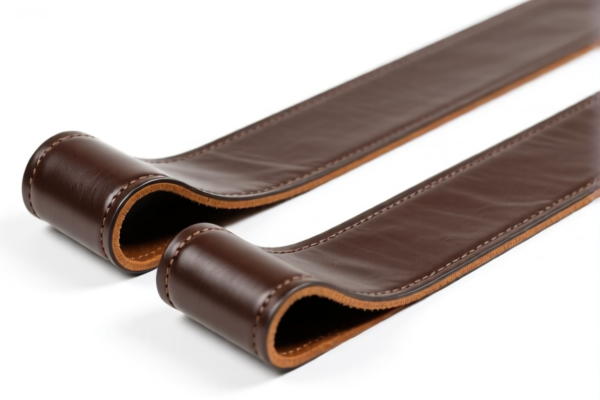
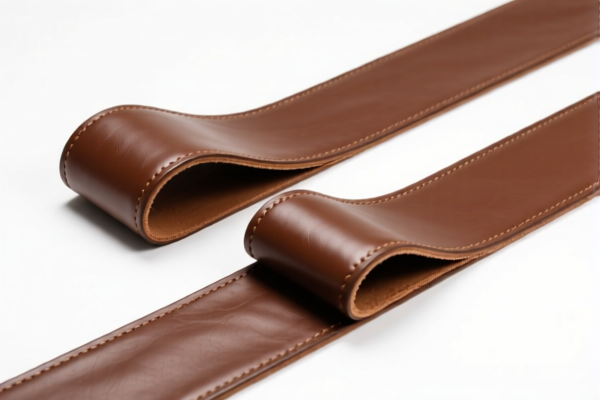
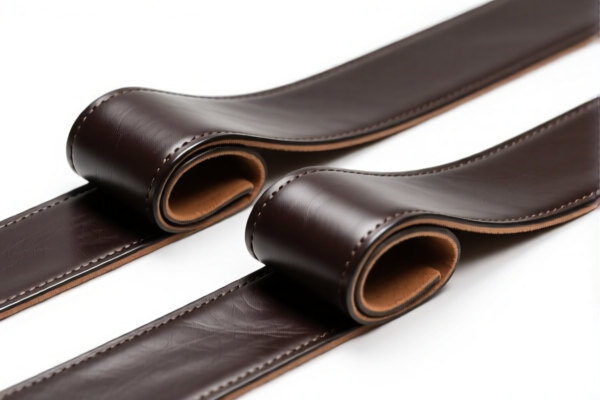
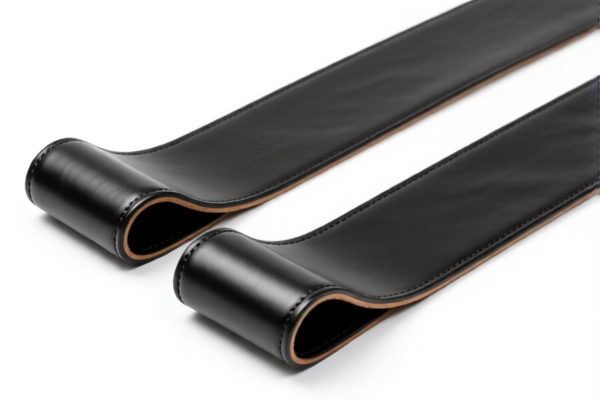
AI Analysis
🏭 Synthetic Leather Conveyor Belt
🌐 HS Code Reference & Customs Clearance Guide | 2026 Latest Tariff Analysis | Professional Clearance Strategy
📌 Part 1: Product Definition & Classification Logic
What is a "Synthetic Leather Conveyor Belt"?
In international trade, a Synthetic Leather Conveyor Belt is a flexible transport medium used in industrial machinery. It consists of layers of fabric or synthetic material coated or laminated with synthetic leather (PVC, PU, etc.) to provide durability, friction, and resistance to wear/tears.
⚠️ Critical Classification Dilemma: The classification depends heavily on the primary material and the structural composition: 1. Textile-based: If the core is fabric/textile with a synthetic leather cover → Often falls under Chapter 59 (Impregnated/Covered Textiles). 2. Plastic-based: If the core is synthetic/polymeric and the belt is primarily defined by its plastic/synthetic nature → Often falls under Chapter 39 (Plastics and Articles Thereof).
📌 Key Distinction Point: - If it is essentially a textile belt covered with synthetic material → HS 5910. - If it is essentially a plastic/synthetic article (where the "leather" is just a plastic coating) → HS 3926.
📦 Part 2: HS Code Classification Details (Based on Provided Data)
Below are the 4 possible HS Codes derived from the provided dataset. Note that all these categories attract significant additional tariffs (Section 301 + Section 122) if imported into the US from China.
Option A: Textile-Based Classification (Chapter 59)
| HS Code | Product Description | Material/Structure | Tariff Summary |
|---|---|---|---|
| 5910.00.90.00 | Synthetic Leather Conveyor Belt | Textile/Non-metal category. Core likely textile/fabric, covered with synthetic leather. | 37.6% Total Tax |
| 5910.00.10.90 | Synthetic Leather Conveyor Belt | Man-made fiber category. Material defined as artificial fiber/synthetic leather. | 39.0% Total Tax |
Option B: Plastic/Polymer-Based Classification (Chapter 39)
| HS Code | Product Description | Material/Structure | Tariff Summary |
|---|---|---|---|
| 3926.90.59.00 | Synthetic Leather Conveyor Belt | Plastic/Synthetic category. Defined as a drive belt/strap made of plastic/synthetic material. | 37.4% Total Tax |
| 3926.90.60.90 | Synthetic Leather Conveyor Belt | Other plastic articles. "Other articles" under plastic heading. Material is synthetic leather (plastic range). | 39.2% Total Tax |
🔍 Focus Reminder: - HS 5910.00.90.00 is typically used when the belt has a textile carcass (fabric plies) with a synthetic cover. - HS 3926.90.59.00 is often used for solid synthetic belts (no textile reinforcement) or where the plastic component dominates. - Misclassification Risk: Declaring a textile-based belt as "Plastic" (3926) to save 0.2% may trigger customs audits if the textile content is significant.
💰 Part 3: 2026 Latest Tariff Rate Breakdown (US Import from China)
✅ Applicable Country: United States (US)
✅ Origin: China (CN)
✅ Effective Date: Current rates apply (Section 301 + Section 122)
🎯 1. 5910.00.90.00 & 3926.90.59.00 (Lower Rate Band: ~37.4-37.6%)
| Item | Detail |
|---|---|
| Base Duty Rate | 2.6% (for 5910.00.90.00) 2.4% (for 3926.90.59.00) |
| Section 301 Tariff | +25.0% (Additional duty on Chinese goods) |
| Section 122 Tariff | +10.0% (Additional duty under 122 clause) |
| Total Effective Rate | 37.6% (for 5910.00.90.00) 37.4% (for 3926.90.59.00) |
| Tax Calculation | CIF Value × Total Rate |
| De Minimis Exemption | ❌ Not Eligible (Section 301/122 goods are generally excluded from $800 de minimis) |
📌 Explanation: - The 25% is the standard Section 301 tariff on most Chinese industrial goods. - The 10% is a specific additional duty (often related to Section 122 or specific trade remedy actions). - Total Impact: You pay roughly 37.5% on top of the product cost. This is extremely high and significantly impacts profitability.
🎯 2. 5910.00.10.90 & 3926.90.60.90 (Higher Rate Band: ~39.0-39.2%)
| Item | Detail |
|---|---|
| Base Duty Rate | 4.0% (for 5910.00.10.90) 4.2% (for 3926.90.60.90) |
| Section 301 Tariff | +25.0% |
| Section 122 Tariff | +10.0% |
| Total Effective Rate | 39.0% (for 5910.00.10.90) 39.2% (for 3926.90.60.90) |
| Tax Calculation | CIF Value × Total Rate |
| De Minimis Exemption | ❌ Not Eligible |
📌 Note: - These codes have higher base duties due to their specific sub-category definitions (e.g., "Other" articles). - The additional taxes remain the same (35% total additional). - Recommendation: Avoid these codes if possible, as they are 1.6-1.8% more expensive than the lower-band codes.
🛠️ Part 4: Customs Clearance Practical Advice
✅ 1. Required Documentation Checklist
| Document | Required | Notes |
|---|---|---|
| Commercial Invoice | ✅ Yes | Must clearly state "Synthetic Leather Conveyor Belt" and HS Code. |
| Packing List | ✅ Yes | Detail weight, dimensions, and quantity. |
| Product Specification Sheet | ✅ Yes | Critical: Must describe the core material (textile vs. plastic) and cover material. |
| Material Composition Statement | ✅ Yes | Explicitly state: "Core: [Polyester/Cotton Fabric]" or "Core: Solid Synthetic PVC". |
| Bill of Lading/Air Waybill | ✅ Yes | Standard shipping documents. |
| Certificate of Origin | ✅ Yes | Required to prove origin (China) for tariff application. |
| Section 301 Exclusion (if applicable) | ❌ Unlikely | Most conveyor belts are not excluded from Section 301. Do not assume exemption. |
✅ 2. Clearance Strategy & Tips
🔥 Golden Rule: "Define the Core, Not Just the Cover!"
| Scenario | Correct HS Code | Why? | Risk if Wrong |
|---|---|---|---|
| Textile Core + Synthetic Cover | 5910.00.90.00 |
Classified as "Textile article impregnated/covered". | If declared as Plastic (3926), Customs may reclassify and charge higher base duty + penalties. |
| Plastic/Synthetic Solid Belt | 3926.90.59.00 |
Classified as "Plastic article". | If declared as Textile, Customs may reject due to lack of textile content. |
| OEM Custom Belt | 5910.00.90.00 or 3926.90.59.00 |
Depends on material. | Ensure spec sheet matches the declared HS code exactly. |
| Belt with Metal Parts | Still 5910/3926 | If textile/plastic is the essential character. | Do NOT try to classify under Chapter 73 (Iron/Steel) unless it's a metal wire rope belt. |
✅ 3. Special Considerations for "Synthetic Leather"
- "Synthetic Leather" is not a separate HS chapter: It is usually PVC, PU, or TPU. These fall under Plastics (Chapter 39) or Textiles (Chapter 59/60) depending on the backing.
- Avoid Ambiguity: Do not simply write "Leather Belt". Use "Synthetic Leather Conveyor Belt, PVC/PU Coated, Textile Core".
- Section 122 Impact: The 10% additional tariff is non-negotiable for most Chinese-origin goods. Factor this into your pricing model.
🌍 Part 5: Global Market Comparison (2026)
| Market | Recommended HS Code | Base Duty | Additional Tariffs | Total Est. Duty | Notes |
|---|---|---|---|---|---|
| 🇺🇸 USA | 5910.00.90.00 or 3926.90.59.00 |
2.4-2.6% | +35% (Sec 301/122) | 37.4-37.6% | Highest cost due to trade wars. |
| 🇨🇳 China | 5910.00.90.00 |
~5-10% | None | ~5-10% | Lower duty, but import restrictions may apply. |
| 🇪🇺 EU | 5910.00.90 / 3926.90 |
2-5% | None | ~2-5% | Most favorable for Chinese exports. |
| 🇦🇺 Australia | 5910.00.90 |
5% | None | 5% | No additional tariffs. |
| 🇯🇵 Japan | 5910.00.90 |
5-10% | None | 5-10% | Stable, low tariff environment. |
📌 Conclusion: - USA is the most expensive market for Synthetic Leather Conveyor Belts due to Section 301 + Section 122 tariffs. - EU, Australia, and Japan are significantly more cost-effective. - If you are importing into the US, consider supply chain diversification (e.g., sourcing from Vietnam or Thailand) to avoid the 35% additional tariffs.
📌 Part 6: Common Mistakes & Pitfalls (Lessons Learned)
❌ Mistake 1: Declaring "Synthetic Leather Belt" under Chapter 41 (Real Leather). 👉 Consequence: Rejection by Customs. Synthetic leather is NOT animal hide.
❌ Mistake 2: Ignoring the Core Material. 👉 Consequence: Misclassification between 5910 and 3926. If you declare a textile-core belt as Plastic (3926), you risk a penalty for undervaluation if the base duty difference is deemed significant, or simply a delay while Customs investigates.
❌ Mistake 3: Assuming De Minimis ($800) applies. 👉 Consequence: The 301/122 tariffs explicitly exclude de minimis entry. Even a $100 belt will be taxed at 37.5% at the border. Never rely on $800 exemption for these items.
❌ Mistake 4: Using "Conveyor Belt" without specifying "Synthetic Leather". 👉 Consequence: Customs may classify under Rubber (4016) or Textile (6307), leading to incorrect duty rates and potential fines.
✅ Correct Approach:
"Synthetic Leather Conveyor Belt, PVC Coated, Polyester Core, Model XYZ, Made in China"
🎯 Part 7: Conclusion & Strategic Advice
🎯 Remember the Formula:
🔹 "Base Duty + 25% (Sec 301) + 10% (Sec 122) = ~37.5% Total"
🔹 "Textile Core = 5910, Plastic Core = 3926"
🔹 "De Minimis Does NOT Apply!"
📌 Pro Tip: If you are importing large volumes into the US: 1. Apply for an Advance Ruling: Submit your product samples and specs to US Customs (CBP) to get a binding HS Code decision. 2. Evaluate Sourcing: If tariffs exceed 35%, consider sourcing from Vietnam or Thailand where Section 301 tariffs may not apply (verify specific rules of origin). 3. Cost Calculation: Include 37.5% in your landed cost, not just the product price.
📣 Immediate Action:
📞 Consult a licensed customs broker to verify the core material of your specific conveyor belt. 🚀 Accurate Classification = Cost Savings & Smooth Clearance!
✨ Professional Clearance Starts with Precise Classification!
💼 Every Percent of Duty Counts!
Customer Reviews
About HS Code Classification
The Harmonized System (HS) is an internationally standardized nomenclature developed by the World Customs Organization (WCO) to classify traded products. Over 200 countries use the HS system as the basis for customs tariffs, trade statistics, and import/export regulations.
Each HS code follows a hierarchical structure:
- Chapter (2 digits) — Broad category of goods (e.g., Chapter 84: Machinery and Mechanical Appliances)
- Heading (4 digits) — More specific grouping within the chapter
- Subheading (6 digits) — Internationally standardized breakdown, used by all WCO member countries
- National subdivisions (8-10 digits) — Country-specific extensions for further classification, such as US HTSUS 10-digit codes
Correct HS code classification is essential for smooth customs clearance, accurate duty payment, and compliance with trade regulations. Misclassification can lead to customs delays, overpayment of duties, or penalties.
When importing from CN to US, the applicable tariff rates may include:
- Most-Favored-Nation (MFN) rate — The standard duty rate applied to WTO members
- General rate — Applied to countries without trade agreements
- Trade remedy duties — Additional tariffs such as Section 301 (anti-dumping), Section 232 (national security), or countervailing duties
The information provided on this page is for reference purposes only. For official classification, please consult with your local customs authority or a licensed customs broker.