Synthetic Leather Handbag
CN → US| HS Code | Tariff Rate | Origin | Destination | Doc |
|---|---|---|---|---|
| 4202219000 | 44.0% | CN | US | Official Doc |
| 4202216000 | 45.0% | CN | US | Official Doc |
| 4114207000 | 36.6% | CN | US | Official Doc |
| 4114204000 | 38.6% | CN | US | Official Doc |
Product Images
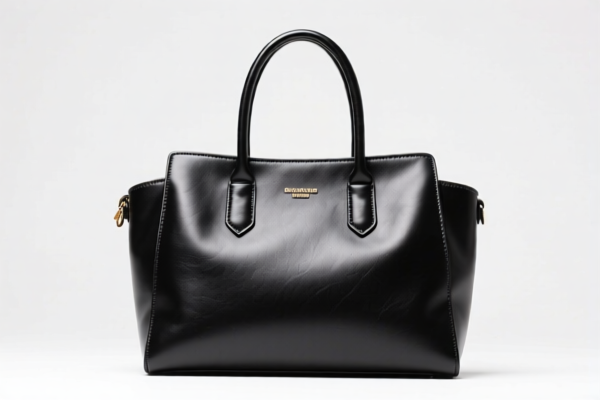
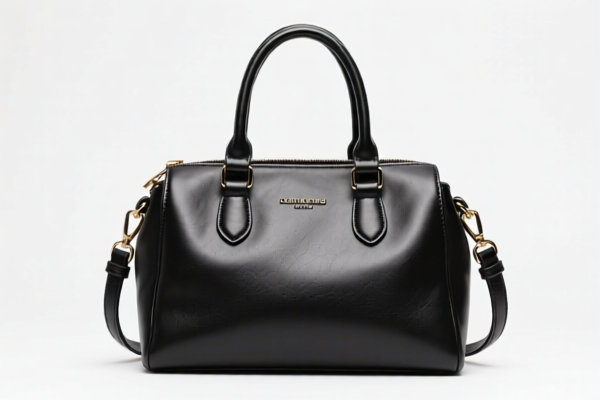
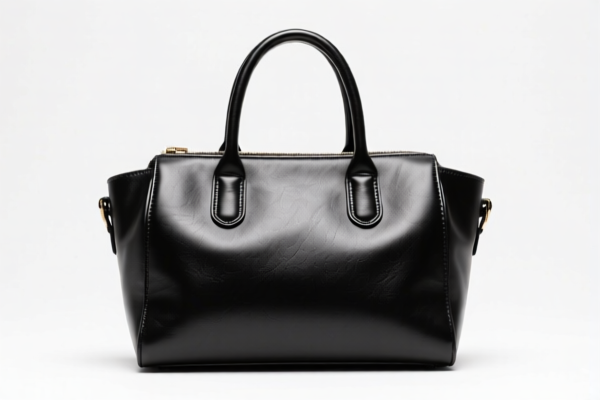
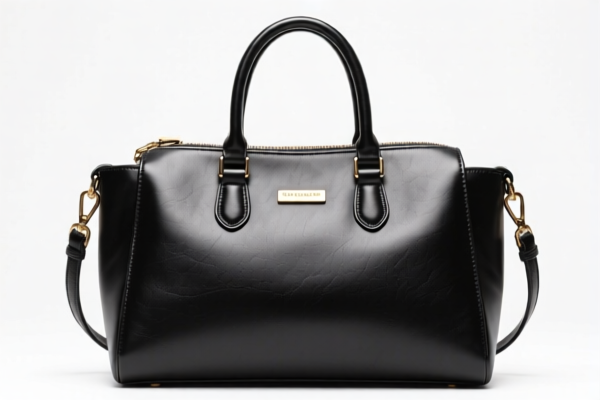
AI Analysis
👜 Synthetic Leather Handbag (Metalized Finish)
🌐 HS Code Reference & Customs Clearance Guide | 2026 Latest Tariff Analysis | Professional Strategy for US Market
📌 I. Product Definition & Classification: What is a "Metalized Synthetic Leather Handbag"?
A Synthetic Leather Handbag with a metalized finish is an artificial leather accessory where the surface has been treated or coated to resemble metallic materials (such as gold, silver, or chrome plating). In international trade, the classification hinges on whether the item is classified as a finished article of travel/goods (Chapter 42) or as a specific material of metalized leather (Chapter 41).
Key Distinction Points:
- Finished Goods (Chapter 42): If the bag is fully assembled with straps, handles, zippers, linings, and hardware, it is generally classified as a handbag. The primary factor is the form (a bag), not just the material.
- Relevant HS Codes: 4202.21.90.00 / 4202.21.60.00
- Material/Component (Chapter 41): If the customs authority determines the dominant characteristic is the specialized metalized leather material itself, or if the item is considered a semi-finished leather good rather than a typical handbag, it may fall under Chapter 41.
- Relevant HS Codes: 4114.20.70.00 / 4114.20.40.00
⚠️ Critical Insight:
- Standard Interpretation: Most complete handbags, even with metalized synthetic leather, are classified under Chapter 42 (Articles of Leather) because they are recognizable as bags. - Aggressive/Risk Interpretation: Some classifiers may argue that the unique "metalized" property makes it a specific type of processed leather, pushing it to Chapter 41. This often results in different tariff outcomes.
📦 II. HS Code Classification Matrix (2026 Latest Tariff Data)
| HS Code | Product Description | Classification Logic | Total Tax Rate |
|---|---|---|---|
4202.21.90.00 |
Handbags with outer surface of leather or composition leather. "Metalized synthetic leather handbags" fit this category. | Finished Bag: Classified as a general handbag under Chapter 42. | 44.0% |
4202.21.60.00 |
Handbags with outer surface of leather or composition leather. "Metalized synthetic leather handbags" fit this category. | Finished Bag: Similar to above, possibly varying by specific sub-subcategory details in older/alternate datasets. | 45.0% |
4114.20.70.00 |
Metalized leather products. Although it is a finished bag, the core material attribute meets the requirement for metalized leather. | Material Focus: Classified under Chapter 41 (Prepared Leather) based on material specificity. | 36.6% |
4114.20.40.00 |
Metalized leather products. Handbags belong to the category of leather products, and the material fully meets the requirements. | Material Focus: Another variant for metalized leather, potentially differing by specific leather processing method. | 38.6% |
🔍 Key Observation:
- Classifying under Chapter 42 (Handbags) results in higher tariffs (44-45%). - Classifying under Chapter 41 (Metalized Leather) results in lower tariffs (36.6-38.6%). - Why the difference? Chapter 41 often has lower base duties for specific processed leathers, whereas Chapter 42 applies higher duties to finished consumer goods.
💰 III. 2026 Latest Tariff Rate Breakdown (Including Additional Duties)
✅ Applicable Country: United States (US)
✅ Origin: China (CN)
✅ Effective Time: 2025/2026 (Current Trade War Policies)
🎯 1. 4202.21.90.00 & 4202.21.60.00 — Finished Handbags (Higher Tax Risk)
| Item | Content |
|---|---|
| Base Duty | 9.0% (4202.21.90.00) / 10.0% (4202.21.60.00) |
| Section 301 Duty | +25.0% |
| Section 122 Duty | +10.0% (Specific trade measure) |
| Total Tax Rate | 44.0% (9+25+10) / 45.0% (10+25+10) |
| Tax Calculation | CIF Value × Total Rate |
| De Minimis Exemption | ❌ Not Eligible (High risk of seizure) |
| Legal Basis Path | USITC:4202.21.90.00 → FOOTNOTE:301 → Section 122 |
📌 Explanation:
- The base duty for synthetic leather bags is relatively high (9-10%) because China is a major exporter of finished leather goods. - The 25% Section 301 tariff is mandatory for most Chinese-made consumer goods. - The 10% Section 122 tariff adds further pressure. - Result: A $100 bag faces $44-$45 in duties alone.
🎯 2. 4114.20.70.00 & 4114.20.40.00 — Metalized Leather (Lower Tax Strategy)
| Item | Content |
|---|---|
| Base Duty | 1.6% (4114.20.70.00) / 3.6% (4114.20.40.00) |
| Section 301 Duty | +25.0% |
| Section 122 Duty | +10.0% |
| Total Tax Rate | 36.6% (1.6+25+10) / 38.6% (3.6+25+10) |
| Tax Calculation | CIF Value × Total Rate |
| De Minimis Exemption | ❌ Not Eligible (Same as above) |
| Legal Basis Path | USITC:4114.20.70.00 → FOOTNOTE:301 → Section 122 |
📌 Explanation:
- By arguing the product is "Metalized Leather" (a material) rather than a "Handbag" (a finished good), you can save 2.4% - 7.4% in total duties. - Risk: This classification is more aggressive. Customs may challenge it, requiring strong evidence that the "metalized leather" is the defining characteristic.
🛠️ IV. Customs Clearance Practical Advice (Real-World Pitfall Guide)
✅ 1. Documentation Checklist (Mandatory)
| Document | Required? | Notes |
|---|---|---|
| Product Specifications | ✔️ | Must clearly state "Synthetic Leather" and "Metalized Finish". |
| Material Composition | ✔️ | Detailed % of polyurethane (PU), PVC, or other synthetics. |
| Product Photos | ✔️ | Show the bag, the metalized surface close-up, and all hardware. |
| Commercial Invoice | ✔️ | Description must match the chosen HS Code logic (e.g., "Metalized Leather Sheet" vs. "Handbag"). |
| Certificate of Origin | ✔️ | Essential for proving Chinese origin (triggering tariffs). |
| Structure Diagram | ✔️ | If claiming Chapter 41, show how the leather is the primary component. |
✅ 2. Declaration Strategy (Key Mnemonics)
🔥 "Shape Defines Chapter, Material Defies Tax!"
| Scenario | Recommended HS Code | Why? | Risk Level |
|---|---|---|---|
| Standard Bag with Metalized PU | 4202.21.90.00 |
Safe, standard classification for bags. | 🟢 Low (But High Tax) |
| Artistic/Sculptural "Bag" | 4114.20.70.00 |
Argue it's a leather article, not a functional bag. | 🟡 Medium (Requires Proof) |
| Bulk Metalized Synthetic Leather Rolls | 4114.20.40.00 |
If not sewn into a bag yet. | 🟢 Low (Low Tax) |
| Mixed Materials (Metal + Leather) | 4202.21.60.00 |
If metal hardware dominates the aesthetic. | 🟡 Medium |
✅ 3. Special Cases Handling
| Case | Handling Advice |
|---|---|
| OEM Custom Bags | Provide design sketches showing the leather pattern as the primary feature to support Chapter 41 argument. |
| High-Value Designer Bags | Customs scrutinizes these more. Ensure all labels, tags, and packaging are consistent with the declared description. |
| Partially Assembled | If sold with straps not attached, argue it's a "leather component" (Chapter 41) rather than a "bag" (Chapter 42). |
| Gift Sets | If bundled with other items, ensure the handbag's value is clearly separated in the invoice. |
🌍 V. Global Market Comparison (2026 Latest)
| Country/Region | Recommended HS Code | Base Duty | Notes |
|---|---|---|---|
| 🇺🇸 USA | 4202.21.90.00 |
44.0% | Highest duty burden due to 301 + 122 tariffs. |
| 🇨🇳 China | 4202.21.90.00 |
10-12% | No Section 301/122. Export duties may apply. |
| 🇪🇺 EU | 4202.21.00 |
4-12% | Varies by country. No Section 122 equivalent. |
| 🇬🇧 UK | 4202.22.00 |
12% | Post-Brexit rules apply. |
| 🇯🇵 Japan | 4202.22.00 |
10% | Stable tariff structure. |
📌 Conclusion:
- The USA market is the most challenging due to the combination of base duties and political tariffs. - Cost Saving Tip: If possible, consult with a customs broker to see if Chapter 41 classification is defensible for your specific design. A 2.4%-7.4% savings can significantly boost margins on high-volume items.
📌 VI. Common Mistakes & Pitfalls (Lessons Learned)
❌ Mistake 1: Declaring as "Leather Handbag" when it's Synthetic.
👉 Consequence: Misdeclaration. Fines + Retroactive Duties. Always specify "Synthetic" or "PU/PVC".
❌ Mistake 2: Using the same HS Code for all bags regardless of material.
👉 Consequence: Overpaying duties. If you can prove it's "Metalized Leather" (Chapter 41), you save money.
❌ Mistake 3: Ignoring the "122 Tariff".
👉 Consequence: Unexpected costs. The 10% Section 122 tariff applies to many leather goods. Factor this into your pricing.
❌ Mistake 4: Vague Description on Invoice.
👉 Consequence: Customs Holds. Use precise terms: "Synthetic Leather Handbag, Metalized Finish, PU Material."
✅ Best Practice:
"Describe the Material, Then the Function."
Example: "Metalized Synthetic Leather Sheet, Cut to Pattern, for Handbag Manufacture" (if semi-finished)
Example: "Synthetic Leather Handbag, Metalized Finish, Model XYZ" (if finished)
🎯 VII. Conclusion: Precision Classification for Profit Maximization
🎯 Remember the Formula:
🔹 "Finished Bag = Chapter 42 = High Tax"
🔹 "Metalized Leather = Chapter 41 = Lower Tax"
🔹 "Synthetic ≠ Leather = Lower Base Duty"
🔹 "China Origin = 301 + 122 Tariffs = Critical Cost Factor"
📌 Actionable Tip:
For high-volume imports into the US, consider: 1. Advance Ruling: Apply for a US CBP Binding Ruling to confirm if your specific bag can be classified under
4114.20to save taxes. 2. Supply Chain Adjustment: If possible, source metalized synthetic leather from non-China countries to avoid Section 301/122 tariffs (though base duties may still apply). 3. Detailed Invoicing: Ensure your commercial invoice explicitly mentions "Synthetic Leather" and "Metalized Finish" to support your classification choice.
📣 Immediate Action:
📞 Contact a Customs Broker to review your product samples.
📄 Prepare Technical Data Sheets highlighting the material composition.
💡 Evaluate the Cost-Benefit of pursuing Chapter 41 classification vs. the risk of audit.
✨ Professional Clearance Starts with Accurate Classification!
💼 Every Percentage Point Saved is Pure Profit!
Customer Reviews
About HS Code Classification
The Harmonized System (HS) is an internationally standardized nomenclature developed by the World Customs Organization (WCO) to classify traded products. Over 200 countries use the HS system as the basis for customs tariffs, trade statistics, and import/export regulations.
Each HS code follows a hierarchical structure:
- Chapter (2 digits) — Broad category of goods (e.g., Chapter 84: Machinery and Mechanical Appliances)
- Heading (4 digits) — More specific grouping within the chapter
- Subheading (6 digits) — Internationally standardized breakdown, used by all WCO member countries
- National subdivisions (8-10 digits) — Country-specific extensions for further classification, such as US HTSUS 10-digit codes
Correct HS code classification is essential for smooth customs clearance, accurate duty payment, and compliance with trade regulations. Misclassification can lead to customs delays, overpayment of duties, or penalties.
When importing from CN to US, the applicable tariff rates may include:
- Most-Favored-Nation (MFN) rate — The standard duty rate applied to WTO members
- General rate — Applied to countries without trade agreements
- Trade remedy duties — Additional tariffs such as Section 301 (anti-dumping), Section 232 (national security), or countervailing duties
The information provided on this page is for reference purposes only. For official classification, please consult with your local customs authority or a licensed customs broker.