Synthetic Leather Multi function Card Holder
CN → US| HS Code | Tariff Rate | Origin | Destination | Doc |
|---|---|---|---|---|
| 4205008000 | 35.0% | CN | US | Official Doc |
| 4205006000 | 39.9% | CN | US | Official Doc |
| 4202313000 | 38.7% | CN | US | Official Doc |
| 4202316000 | 43.0% | CN | US | Official Doc |
Product Images
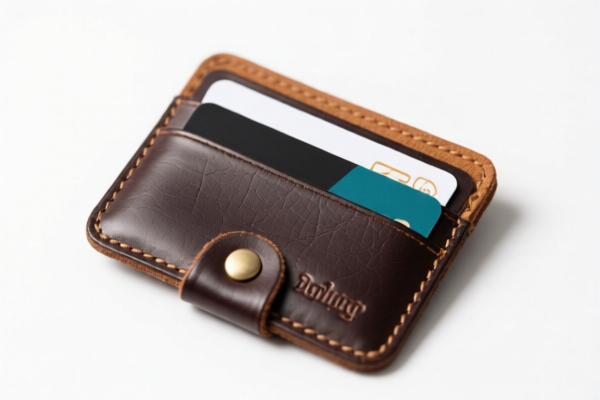
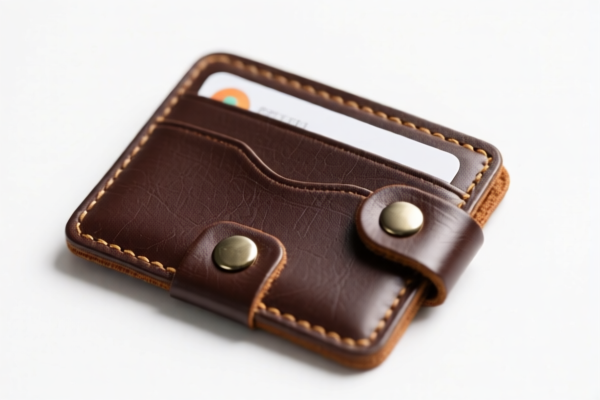
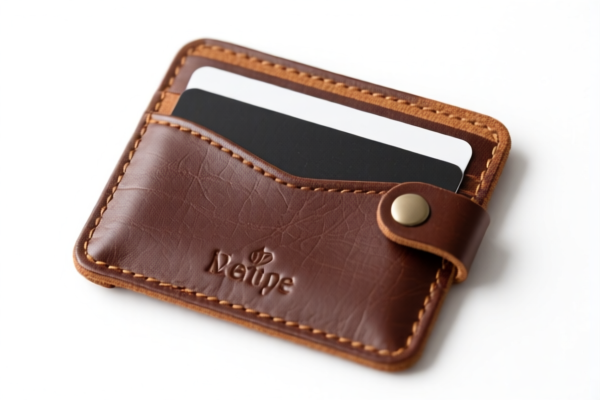
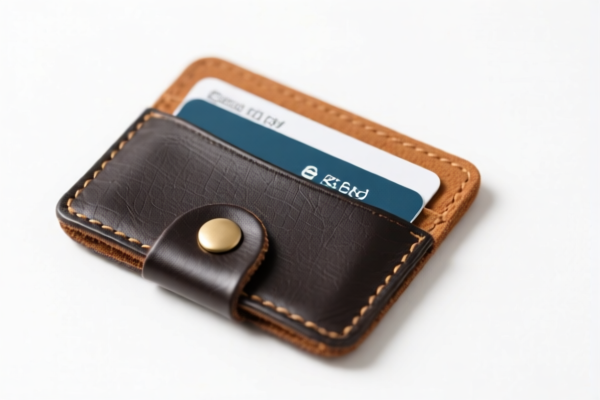
AI Analysis
🎫 Synthetic Leather Multi-Function Card Holder
🌐 HS Code Reference & Customs Clearance Guide | 2026 Latest Tariff Analysis | Professional Clearance Strategy
📌 I. Product Definition & Classification: Do You Really Understand "Card Holders"?
A Synthetic Leather Multi-Function Card Holder is a compact accessory used for organizing and carrying identification cards, credit cards, or business cards. In international trade, its classification depends heavily on:
- Material Composition: Is it truly "leather" (animal hide) or "synthetic leather" (polyurethane/PVC)?
- Form Factor: Does it resemble a handbag/pouch or a simple flat holder?
- Functionality: Is it a dedicated card holder or part of a larger bag system?
⚠️ Critical Distinction:
- If classified under Chapter 42 (Articles of Leather), duties are generally lower but subject to specific "Other Articles of Leather" rules.
- If classified under Chapter 42 (Handbags/Purses), it may incur higher base tariffs due to the "handbag/pouch" category.
- Synthetic vs. Natural: While "synthetic leather" often falls under similar headings as natural leather in Chapter 42, the specific subheading determines the base duty rate.
📦 II. HS Code Classification Details (2026 Latest Tariff Authority Comparison)
| HS Code | Product Description | Applicable Scenario | Tax Category |
|---|---|---|---|
4205.00.80.00 |
Other leather articles, including card holders, not elsewhere specified | General synthetic leather card holders, simple design | Other Leather Articles |
4205.00.60.00 |
Other articles of leather, including card holders | Synthetic leather card holders categorized under "other leather articles" | Other Leather Articles |
4202.31.30.00 |
Handbags, purses, wallets, card holders of leather or composition leather | Card holders treated as "pouches" or "personal carry items" | Handbags/Purses Category |
4202.31.60.00 |
Other handbags, purses, wallets, card holders of leather or composition leather | Card holders with specific container attributes or premium design | Handbags/Purses Category |
🔍 Key Reminder:
- Chapter 42 applies to all leather goods. "Synthetic leather" in this context usually refers to composition leather (Chapter 42 Note 3).
- Subheading 4205 is for "Other articles of leather" (not handbags/purses).
- Subheading 4202 is for "Trunks, suitcases, handbags, purses...". If the card holder is designed as a small pouch or personal accessory, it may fall here.
💰 III. 2026 Latest Tariff Rate Breakdown (Including Surcharges & Policy Additions)
✅ Applicable Country: United States (US)
✅ Country of Origin: China (CN)
✅ Effective Date: From November 10, 2025 (including subsequent imports)
🎯 1. 4205.00.80.00 —— Other Leather Articles (Card Holder)
| Item | Content |
|---|---|
| Base Tariff | 0.0% |
| Section 301 Surcharge | +25.0% |
| IEEPA Surcharge (Section 122) | +10.0% |
| Total Tariff Rate | 35.0% |
| Tax Calculation | CIF Value × 35.0% |
| De Minimis Eligibility | ❌ Not Eligible (deny_de_minimis) |
| Legal Basis Path | IEEPA:9903.01.25 → USITC:4205.00.80.00 → FOOTNOTE:9903.88.01 |
📌 Explanation:
- Base duty is 0%, but Section 301 (25%) and IEEPA (10%) apply due to Chinese origin.
- This is the lowest tariff option among the given codes, suitable for simple, non-pouch-style card holders.
🎯 2. 4205.00.60.00 —— Other Leather Articles (Card Holder)
| Item | Content |
|---|---|
| Base Tariff | 4.9% |
| Section 301 Surcharge | +25.0% |
| IEEPA Surcharge (Section 122) | +10.0% |
| Total Tariff Rate | 39.9% |
| Tax Calculation | CIF Value × 39.9% |
| De Minimis Eligibility | ❌ Not Eligible (deny_de_minimis) |
| Legal Basis Path | IEEPA:9903.01.25 → USITC:4205.00.60.00 → FOOTNOTE:9903.88.01 |
📌 Note:
- Base duty is 4.9%, leading to a higher total rate than4205.00.80.00.
- Choose this code only if customs authorities classify the specific design under this subheading.
🎯 3. 4202.31.30.00 —— Handbags/Purses Category (Card Holder)
| Item | Content |
|---|---|
| Base Tariff | 3.7% |
| Section 301 Surcharge | +25.0% |
| IEEPA Surcharge (Section 122) | +10.0% |
| Total Tariff Rate | 38.7% |
| Tax Calculation | CIF Value × 38.7% |
| De Minimis Eligibility | ❌ Not Eligible (deny_de_minimis) |
| Legal Basis Path | IEEPA:9903.01.25 → USITC:4202.31.30.00 → FOOTNOTE:9903.88.01 |
📌 Important:
- If the card holder is deemed a "pouch" or "personal carry item," it falls under 4202.
- Base duty is 3.7%, totaling 38.7%. Slightly higher than4205.00.80.00.
🎯 4. 4202.31.60.00 —— Other Handbags/Purses (Card Holder)
| Item | Content |
|---|---|
| Base Tariff | 8.0% |
| Section 301 Surcharge | +25.0% |
| IEEPA Surcharge (Section 122) | +10.0% |
| Total Tariff Rate | 43.0% |
| Tax Calculation | CIF Value × 43.0% |
| De Minimis Eligibility | ❌ Not Eligible (deny_de_minimis) |
| Legal Basis Path | IEEPA:9903.01.25 → USITC:4202.31.60.00 → FOOTNOTE:9903.88.01 |
📌 Warning:
- This is the highest tariff option (43.0%).
- Apply only if the product has complex container features or is marketed as a premium pouch.
🛠️ IV. Customs Clearance Practical Advice (Pitfall Avoidance Guide)
✅ 1. Required Documents Checklist (Non-Negotiable)
| Document | Mandatory | Description |
|---|---|---|
| ✅ Product Specification Sheet | ✔️ | Material (synthetic leather type), dimensions, features |
| ✅ Product Photos (Labeled) | ✔️ | Front/back view, interior, material close-up |
| ✅ Commercial Invoice | ✔️ | Clear description: "Synthetic Leather Card Holder" |
| ✅ Packing List | ✔️ | Quantity, weight, packaging details |
| ✅ Certificate of Origin (CO) | ✔️ | For origin verification (China) |
| ✅ Material Declaration | ✔️ | Confirm "Synthetic Leather" vs. "Genuine Leather" |
✅ 2. Declaration Tips (Key Rules)
🔥 "Declare Accurately, Avoid 'Handbag' Label if Simple!"
| Scenario | Correct Declaration | Incorrect Action |
|---|---|---|
| Simple flat card holder | 4205.00.80.00 (35%) |
Misdeclare as "handbag" → 38.7%-43% |
| Pouch-style with zipper | 4202.31.30.00 (38.7%) |
Misdeclare as "simple holder" → Risk of correction |
| Premium multi-compartment holder | 4202.31.60.00 (43%) |
Under-declare category → Penalties |
| Natural leather (not synthetic) | Same HS codes, but different base rate | Confusing material type |
✅ 3. Special Case Handling
| Situation | Handling Advice |
|---|---|
| Sample vs. Bulk | Clearly mark "Sample" if value < $800, but note: De Minimis does NOT apply for Chinese-origin goods under Section 122/301. |
| Set with Keys/Coins | If part of a larger kit, declare the primary function. If keyholder dominates, consider different HS code. |
| Custom Design/OEM | Provide design approval to avoid "generic" classification disputes. |
| Mixed Materials | If lining is fabric, still classified under leather if leather is the main material. |
🌍 V. Global Market Comparison (2026 Latest)
| Country/Region | Recommended HS Code | Tariff | Certification | Notes |
|---|---|---|---|---|
| 🇺🇸 USA | 4205.00.80.00 |
35.0% | None | Highest due to 301 + 122 |
| 🇨🇳 China | 4205.00.80.00 |
8.0% | None | Low import duty, no surcharges |
| 🇪🇺 EU | 4205.00.80.00 |
6.0% | REACH | No Section 301/122 |
| 🇬🇧 UK | 4205.00.80.00 |
6.0% | UKCA | Post-Brexit tariff applies |
| 🇯🇵 Japan | 4205.00.80.00 |
6.0% | PSE | No surcharges |
📌 Conclusion:
- USA is the most expensive market due to 35% total tariff.
- China, EU, UK, Japan have significantly lower tariffs (6-8%).
- Consider supply chain diversification if targeting the US market heavily.
📌 VI. Common Mistakes & Pitfall Guide (Lessons Learned)
❌ Mistake 1: Declaring "Synthetic Leather" as "Genuine Leather"
👉 Consequence: False declaration → Fines + Retrospective Tariffs
❌ Mistake 2: Using "Handbag" for a simple card holder
👉 Consequence: Higher tariff (38.7%-43%) instead of 35% → Profit Margin Squeeze
❌ Mistake 3: Assuming De Minimis applies
👉 Consequence: Goods held at border because Section 122/301 denies de minimis for Chinese goods.
❌ Mistake 4: Vague Description ("Leather Goods")
👉 Consequence: Customs inspection delay → Storage Fees + Delays
✅ Correct Action:
"Synthetic Leather Card Holder, Multi-Function, 4 Slots, Model XYZ, Not Handbag, Chinese Origin"
🎯 VII. Conclusion: Precision Classification Saves Money!
🎯 Remember the Rule:
🔹 "Simple Holder → 4205 (35%) | Pouch/Bag → 4202 (38.7%-43%) | Chinese Origin → Add 35%"
🔹 "HS Code Determines Cost, 5% Difference = Big Impact!"
📌 Tips:
- If your product is not from China, tariffs may be lower (e.g., Vietnam, Mexico).
- Consider Advance Ruling from US Customs to lock in the 35% rate.
- Optimize Design: Avoid pouch-like features to stay in 4205.00.80.00.
📣 Immediate Action:
📞 Contact a Customs Broker + Provide Product Images + Apply for HS Code Pre-Ruling
🚀 Clear Customs Smoothly, Maximize Profits, Minimize Risks!
✨ Professional Clearance Starts with Accurate Classification!
💼 Every Dollar Saved is Pure Profit!
Customer Reviews
About HS Code Classification
The Harmonized System (HS) is an internationally standardized nomenclature developed by the World Customs Organization (WCO) to classify traded products. Over 200 countries use the HS system as the basis for customs tariffs, trade statistics, and import/export regulations.
Each HS code follows a hierarchical structure:
- Chapter (2 digits) — Broad category of goods (e.g., Chapter 84: Machinery and Mechanical Appliances)
- Heading (4 digits) — More specific grouping within the chapter
- Subheading (6 digits) — Internationally standardized breakdown, used by all WCO member countries
- National subdivisions (8-10 digits) — Country-specific extensions for further classification, such as US HTSUS 10-digit codes
Correct HS code classification is essential for smooth customs clearance, accurate duty payment, and compliance with trade regulations. Misclassification can lead to customs delays, overpayment of duties, or penalties.
When importing from CN to US, the applicable tariff rates may include:
- Most-Favored-Nation (MFN) rate — The standard duty rate applied to WTO members
- General rate — Applied to countries without trade agreements
- Trade remedy duties — Additional tariffs such as Section 301 (anti-dumping), Section 232 (national security), or countervailing duties
The information provided on this page is for reference purposes only. For official classification, please consult with your local customs authority or a licensed customs broker.