Synthetic Leather Rubber Sole Sports Shoes
CN → US| HS Code | Tariff Rate | Origin | Destination | Doc |
|---|---|---|---|---|
| 3926909989 | 22.8% | CN | US | Official Doc |
| 6402993145 | 16.0% | CN | US | Official Doc |
| 6402993115 | 16.0% | CN | US | Official Doc |
Product Images
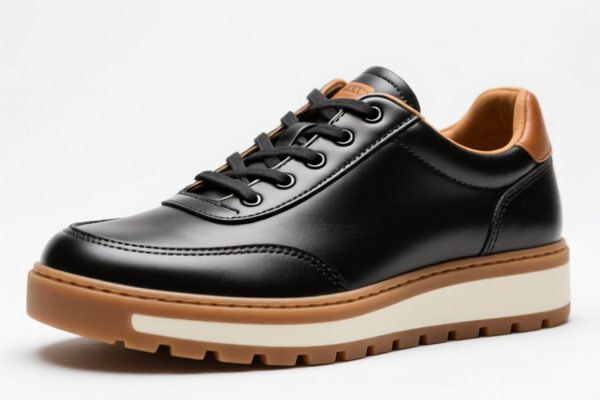
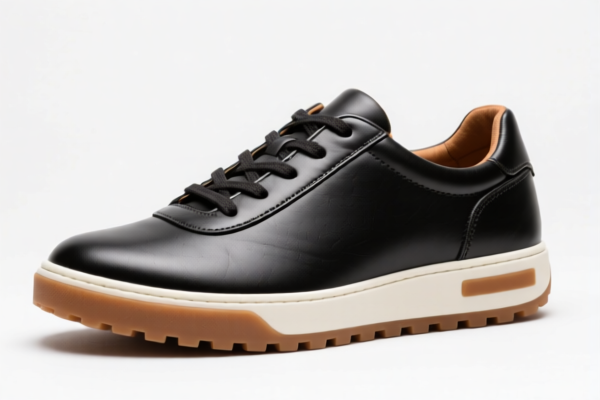
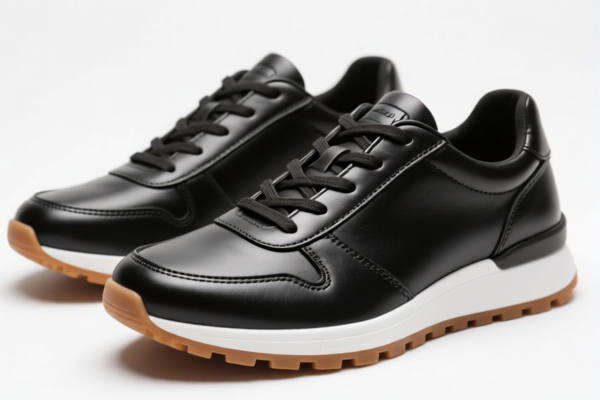
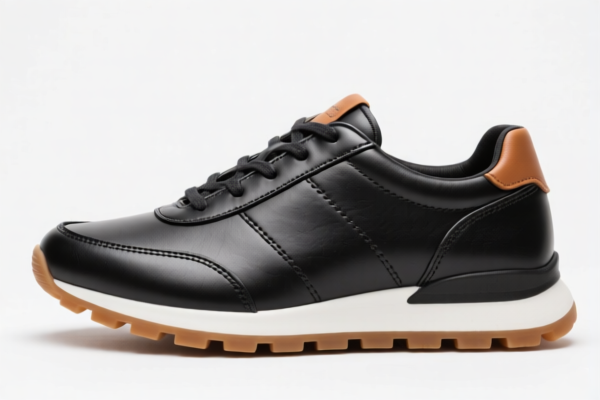
AI Analysis
👟 Synthetic Leather Rubber Sole Sports Shoes
🌐 HS Code Reference & Customs Clearance Guide | 2026 Latest Tariff Analysis | Professional Strategy for Footwear
📌 I. Product Definition & Classification: Do You Really Understand “Synthetic Leather Sports Shoes”?
Synthetic leather rubber sole sports shoes are a specific category of footwear characterized by the combination of materials: synthetic leather (PU/PVC) for the upper and rubber/plastic for the sole. In international trade, these shoes fall under Chapter 64 (Footwear, stockings, etc.) rather than Chapter 39 (Plastics), because the essential character is defined by the footwear function and the specific material combination.
⚠️ Key Distinction:
- Upper Material: Synthetic Leather (not genuine leather, not textile/canvas).
- Sole Material: Rubber or Plastic.
- Category: Sports Shoes / Athletic Footwear.
- Misclassification Risk: Do NOT classify under Chapter 39 (Plastic Articles) simply because the upper is synthetic. The functional definition as "footwear" takes precedence.
📦 II. HS Code Classification Details (2026 Latest Tariff Authority Comparison)
Based on the provided data, there are three potential HS Code classifications depending on the specific subtype (general vs. specific sports shoe definition) and the interpretation of "synthetic leather."
| HS Code | Product Description | Application Scenario | Tax Rate |
|---|---|---|---|
3926.90.99.89 |
Other Articles of Plastics / Synthetic Resins (Bottoming Category) | If customs view synthetic leather upper as a "plastic article" rather than footwear | 22.8% |
6402.99.31.45 |
Footwear with Upper of Rubber/Plastic (Non-athletic or General) | General footwear where synthetic leather is classified under rubber/plastic upper | 16.0% |
6402.99.31.15 |
Sports Shoes with Rubber/Plastic Upper & Sole | Recommended: Fits "Sports Shoes" definition with rubber/plastic (synthetic leather) materials | 16.0% |
🔍 Key Insight:
-3926.90.99.89is the highest tax (22.8%) and represents a misclassification risk if the product is clearly defined as "sports shoes." It treats the shoe as a plastic accessory.
-6402.99.31.15is the most accurate for "Sports Shoes" made of synthetic leather (classified as plastic/rubber upper) and rubber sole. It has a lower total tax (16.0%).
-6402.99.31.45is similar but may apply to non-specific athletic footwear or different sole construction. It also carries a 16.0% tax.
💰 III. 2026 Latest Tariff Rate Breakdown (Including Surcharges & Policy Add-ons)
✅ Applicable Country: United States (US)
✅ Origin: China (CN)
✅ Effective Date: From November 10, 2025 (for subsequent imports)
🎯 1. 3926.90.99.89 — Other Plastic Articles (Highest Risk)
| Item | Content |
|---|---|
| Base Tariff | 5.3% (Ad Valorem) |
| Section 301 Surcharge | 7.5% (Additional Tariff) |
| Section 122 Tariff | 10% (China-specific surcharge) |
| Total Rate | 22.8% |
| Tax Calculation | CIF Value × 22.8% |
| De Minimis Exemption | ❌ Not Applicable (High value threshold) |
| Legal Path | USITC:3926.90.99.89 → Section 301: 7.5% → Section 122: 10% |
📌 Explanation:
- This classification is dangerous because it ignores the footwear nature.
- The 10% Section 122 surcharge is significant and adds cost unnecessarily.
- Recommendation: Avoid this code unless the product is truly a plastic accessory (e.g., shoe horns, protective caps), not actual footwear.
🎯 2. 6402.99.31.15 — Sports Shoes (Recommended)
| Item | Content |
|---|---|
| Base Tariff | 6.0% (Ad Valorem) |
| Section 301 Surcharge | 0.0% (Note: Some sports shoes may be exempt or lower rate depending on specific subheading rules) |
| Section 122 Tariff | 10% (China-specific surcharge) |
| Total Rate | 16.0% |
| Tax Calculation | CIF Value × 16.0% |
| De Minimis Exemption | ❌ Not Applicable |
| Legal Path | USITC:6402.99.31.15 → Section 122: 10% |
📌 Explanation:
- This code correctly identifies the product as Sports Shoes.
- Base rate is 6.0%, which is lower than the 5.3% base of the plastic code, but the Section 301 surcharge is 0% (or significantly reduced) for certain athletic footwear compared to general plastics.
- Section 122 (10%) still applies.
- Total 16.0% is 6.8 percentage points lower than the plastic classification.
- Crucial: Ensure the product description explicitly states "Sports Shoes" and "Athletic Use."
🎯 3. 6402.99.31.45 — Other Footwear with Rubber/Plastic Upper
| Item | Content |
|---|---|
| Base Tariff | 6.0% |
| Section 301 Surcharge | 0.0% |
| Section 122 Tariff | 10% |
| Total Rate | 16.0% |
| Tax Calculation | CIF Value × 16.0% |
| De Minimis Exemption | ❌ Not Applicable |
| Legal Path | USITC:6402.99.31.45 → Section 122: 10% |
📌 Explanation:
- Similar to15, but may be used for non-specific athletic footwear.
- If the product is clearly "Sports Shoes," prefer15for clarity.
- Total tax remains 16.0%, offering significant savings over3926.90.99.89.
🛠️ IV. Customs Clearance Practical Advice (Avoid Pitfalls)
✅ 1. Required Documentation Checklist
| Document | Must Provide | Notes |
|---|---|---|
| ✅ Product Description | ✔️ | "Synthetic Leather Upper, Rubber Sole Sports Shoes" |
| ✅ Material Composition | ✔️ | Specify % of synthetic leather, rubber sole type |
| ✅ Product Photos | ✔️ | Show side profile, sole, upper material detail |
| ✅ HS Code Justification | ✔️ | Explain why it’s "Sports Shoes" not "Plastic Article" |
| ✅ Commercial Invoice | ✔️ | Accurate CIF value, origin: China |
| ✅ Packing List | ✔️ | Item count, weights, dimensions |
| ✅ Certifications | ✔️ | ASTM F2913 (Footwear Safety), CPSIA (if for kids) |
✅ 2. Declaration Strategy (Key Tips)
🔥 “Classify as Footwear, Not Plastic; Specify Sports, Not General; Save 6.8% Tax!”
| Scenario | Correct HS Code | Incorrect HS Code | Tax Difference |
|---|---|---|---|
| Synthetic Leather Sports Shoes | 6402.99.31.15 (16.0%) |
3926.90.99.89 (22.8%) |
6.8% Savings |
| General Synthetic Leather Shoes (Non-Sports) | 6402.99.31.45 (16.0%) |
3926.90.99.89 (22.8%) |
6.8% Savings |
| Plastic Shoe Accessories (e.g., Cleats, Heels) | 3926.90.99.89 (22.8%) |
N/A | N/A |
📌 Note:
- Do not use "Plastic Shoes" in the description if it’s actually "Synthetic Leather Sports Shoes."
- Do not use "Other Plastic Articles" for functional footwear.
- Ensure the Section 301 exemption (0% surcharge) applies to your specific subheading. For6402.99.31, the surcharge is 0%, which is a major advantage over3926.90.99.89(7.5% surcharge).
✅ 3. Special Cases
| Case | Handling Advice |
|---|---|
| OEM Sports Shoes | Provide design specs showing athletic features (cushioning, tread pattern) |
| Hybrid Footwear | If part textile, part synthetic leather, still classify under Chapter 64 |
| Children’s Sports Shoes | May require additional CPSIA compliance; HS code remains same |
| Footwear with Plastic Components | As long as upper is synthetic leather (plastic-based), it’s Chapter 64 |
🌍 V. Global Market Comparison (2026 Latest)
| Country/Region | Recommended HS Code | Tariff | Certification | Notes |
|---|---|---|---|---|
| 🇺🇸 USA | 6402.99.31.15 |
16.0% (China) | ASTM, CPSIA | Avoid 3926 (22.8%) |
| 🇨🇳 China | 6402.99.31.15 |
5-10% | CCC (if applicable) | No Section 301/122 |
| 🇪🇺 EU | 6402.99.31.15 |
6-12% | CE, REACH | No Section 122 |
| 🇬🇧 UK | 6402.99.31.15 |
6-12% | UKCA | Post-Brexit rules apply |
| 🇨🇦 Canada | 6402.99.31.15 |
6-12% | Health Canada | No Section 301 |
📌 Conclusion:
- USA has the highest complexity due to Section 301 and Section 122 tariffs.
- Correct classification as Chapter 64 is critical to save 6.8% in tariff rates.
- Other markets do not have the 10% Section 122 surcharge, but US clearance is the most challenging.
📌 VI. Common Errors & Pitfalls (Lessons Learned)
❌ Error 1: Classifying synthetic leather sports shoes as "Plastic Articles" (3926.90.99.89)
👉 Consequence: Higher tax (22.8% vs 16.0%), delays, potential penalties.
❌ Error 2: Using vague description like "Shoes" without specifying "Sports" or "Athletic"
👉 Consequence: Customs may assign default higher tax code or request additional documentation.
❌ Error 3: Ignoring Section 122 Tariff (10%)
👉 Consequence: Underpayment of duties, leading to back-taxes and interest.
❌ Error 4: Assuming all plastic-based uppers fall under Chapter 39
👉 Consequence: Misclassification. Chapter 64 (Footwear) takes precedence for functional footwear.
✅ Correct Approach:
"Synthetic Leather Upper, Rubber Sole, Athletic Sports Shoes, Model XYZ, ASTM F2913 Compliant, Made in China"
🎯 VII. Conclusion: Precise Classification Saves Money!
🎯 Remember This Mantra:
🔹 "Sports Shoes = Chapter 64, Not Chapter 39"
🔹 "Synthetic Leather is Still Footwear"
🔹 "16% Tax vs 22.8% = 6.8% Savings Per Dollar"
🔹 "Specify 'Sports' to Qualify for Lower Surcharge"
📌 Pro Tip:
If your sports shoes are made in Vietnam, Mexico, or Thailand, you may qualify for IEEPA Exemptions or lower tariffs under USMCA. Always check origin-based benefits.
📣 Immediate Action:
📞 Consult a licensed customs broker for Advance Ruling on HS Code
6402.99.31.15.
🚀 Ensure your product description clearly states "Sports Shoes" to avoid misclassification.
💰 Save 6.8% in taxes by choosing the right HS Code!
✨ Professional clearance starts with accurate classification!
💼 Every percentage point matters in global trade!
Customer Reviews
About HS Code Classification
The Harmonized System (HS) is an internationally standardized nomenclature developed by the World Customs Organization (WCO) to classify traded products. Over 200 countries use the HS system as the basis for customs tariffs, trade statistics, and import/export regulations.
Each HS code follows a hierarchical structure:
- Chapter (2 digits) — Broad category of goods (e.g., Chapter 84: Machinery and Mechanical Appliances)
- Heading (4 digits) — More specific grouping within the chapter
- Subheading (6 digits) — Internationally standardized breakdown, used by all WCO member countries
- National subdivisions (8-10 digits) — Country-specific extensions for further classification, such as US HTSUS 10-digit codes
Correct HS code classification is essential for smooth customs clearance, accurate duty payment, and compliance with trade regulations. Misclassification can lead to customs delays, overpayment of duties, or penalties.
When importing from CN to US, the applicable tariff rates may include:
- Most-Favored-Nation (MFN) rate — The standard duty rate applied to WTO members
- General rate — Applied to countries without trade agreements
- Trade remedy duties — Additional tariffs such as Section 301 (anti-dumping), Section 232 (national security), or countervailing duties
The information provided on this page is for reference purposes only. For official classification, please consult with your local customs authority or a licensed customs broker.