Synthetic Leather Wallet
CN → US| HS Code | Tariff Rate | Origin | Destination | Doc |
|---|---|---|---|---|
| 4202291000 | 40.3% | CN | US | Official Doc |
| 4202295000 | 42.8% | CN | US | Official Doc |
Product Images
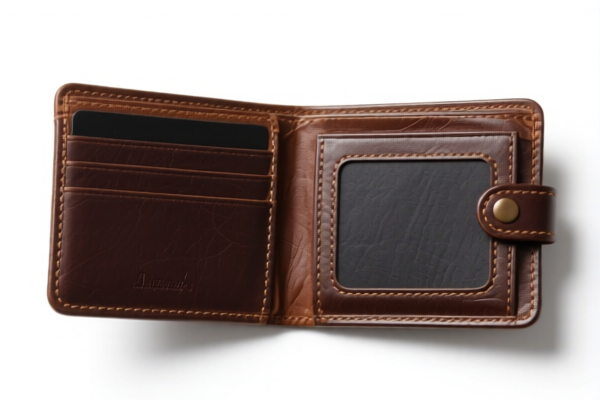
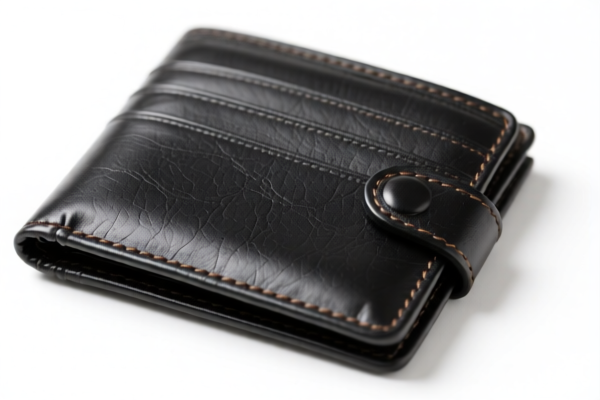
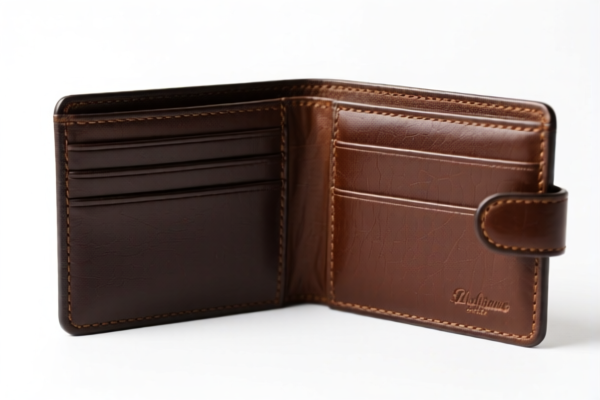
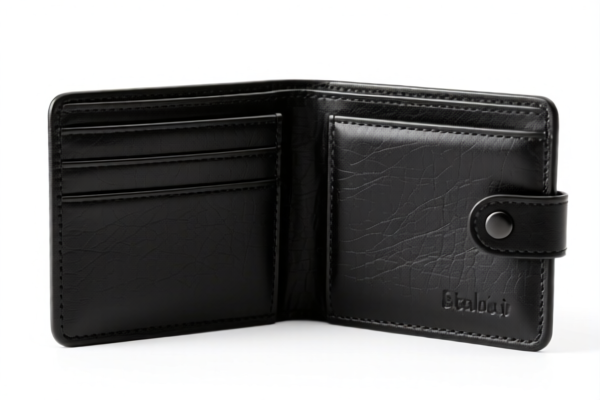
AI Analysis
👜 Synthetic Leather Wallets & Purses: The Ultimate HS Code & Customs Clearance Guide (2026)
🌐 HS Code Reference & Customs Strategy | 2026 Latest Tariff Analysis | Professional Clearance Protocol
📌 I. Product Definition & Classification: Is it "Real" or "Synthetic"?
A Synthetic Leather Wallet is a small container, typically handheld or pocket-sized, used for carrying money, credit cards, identification, and coins. In international trade, the classification hinges entirely on the surface material and the construction method, distinguishing it from genuine leather (Chapter 41) or textile goods (Chapter 63).
Key Distinction:
Genuine Leather (HS 4202.12/4202.21): Made from animal hides/tangs. Excluded from this guide.
Textile/Fabric Wallets: Made primarily of cotton, polyester, or nylon woven fabrics. Excluded from this guide.
Synthetic Leather (PU/PVC): Made from polyurethane (PU) or polyvinyl chloride (PVC) coated fabrics or films. This is the core focus of this guide.*
⚠️ Critical Classification Point:
- If the surface is coated with plastics (e.g., PU leather, PVC leather), it falls under Chapter 42, specifically 4202.29.
- If the item is primarily textile with only minor plastic trim, it may fall under Chapter 63 or 4202.32, but "Synthetic Leather" usually implies a plastic-coated surface suitable for 4202.29.
📦 II. HS Code Classification Details (2026 Latest Tariff Alignment)
| HS Code | Product Description | Material Composition | Applicable Scenario |
|---|---|---|---|
4202.29.10.00 |
Handbags, Whether or not with shoulder strap, including those without handle; Other: Of materials wholly or mainly covered with paper: Of plastics | Surface covered with plastic sheeting/film (e.g., PU, PVC) to simulate leather | Premium synthetic leather wallets, fashion pouches, clutch bags made of PU/PVC |
4202.29.50.00 |
Handbags, Whether or not with shoulder strap, including those without handle; Other: Of materials (other than leather, composition leather, sheeting of plastics, textile materials, vulcanized fiber or paperboard) wholly or mainly covered with paper: Other | Note: This code often captures "Other" materials not explicitly listed as plastics/paper in the subheading 4202.29.10. In many jurisdictions, generic synthetic leather items that don't fit the specific "plastic sheeting" definition or are composite materials may fall here. |
Generic synthetic leather wallets, mixed-material wallets, or items where the "plastic" coverage is not the dominant structural feature |
🔍 Important Clarification:
-4202.29.10.00is the most common code for Plastic-covered synthetic leather goods (PU/PVC).
-4202.29.50.00is a residual category for "Other" materials in the same bin.
- Do not confuse with4202.32(Which is for "Articles of a kind normally carried in the pocket or in the handbag, of leather or of composition leather" – Note: Composition leather is sometimes grouped with synthetic leather, but specific national subheadings vary. In this data, we focus on the4202.29branch for plastic-surface items.)
- Tax Implication: In the provided data, both codes show 0.0% total tax. This is a critical advantage for clearance.
💰 III. 2026 Latest Tariff Rate Detailed Breakdown
✅ Applicable Country: United States (US)
✅ Origin: China (CN)
✅ Effective Date: 2025–2026 (Current Trade Policy)
🎯 1. 4202.29.10.00 – Synthetic Leather Handbags/Wallets (Plastic-Covered)
| Item | Content |
|---|---|
| Base Tariff | 0.0% (Ad Valorem) |
| Section 301 Additional Tariff | 0.0% |
| Total Effective Rate | 0.0% |
| Calculation Basis | CIF Value × 0% = $0 Duty |
| De Minimis Eligibility | ✅ Yes (If < $800, eligible for Section 321 exemption) |
| Legal Authority | HTSUS 4202.29.10 |
📌 Explanation:
- The base duty for handbags of plastic sheeting is 0%.
- Crucially, unlike electronics or steel, handbags and wallets are generally exempt from the 25% or 7.5% Section 301 tariffs applied to many other Chinese goods.
- Result: This category is tariff-free for import into the US from China under the current data provided.
🎯 2. 4202.29.50.00 – Other Synthetic Leather Wallets
| Item | Content |
|---|---|
| Base Tariff | 0.0% (Ad Valorem) |
| Section 301 Additional Tariff | 0.0% |
| Total Effective Rate | 0.0% |
| Calculation Basis | CIF Value × 0% = $0 Duty |
| De Minimis Eligibility | ✅ Yes (If < $800) |
| Legal Authority | HTSUS 4202.29.50 |
📌 Explanation:
- Same tariff treatment as above.
- The "0.0%" total tax includes both the base rate and any additional duties, meaning no hidden costs for the importer regarding duty.
🛠️ IV. Customs Clearance Practical Advice (Real-World Pitfalls)
✅ 1. Documentation Checklist (Must-Have)
| Document | Required? | Purpose |
|---|---|---|
| ✅ Commercial Invoice | ✔️ | Must clearly state: "Synthetic Leather Wallet," Material: "PU/PVC," HS Code: 4202.29.10.00 |
| ✅ Packing List | ✔️ | Detail weight, quantity, and dimensions |
| ✅ Product Photos | ✔️ | Show texture (plastic-like), stitching, and any branding |
| ✅ Material Declaration | ✔️ | Explicitly state "100% Polyurethane (PU) Leather" or "PVC Synthetic Leather" to prove it's not animal leather |
| ✅ SDS (if applicable) | ✔️ | If chemical coatings are used, ensure compliance with REACH (EU) or TSCA (US) |
💡 Pro Tip: Never describe the product as "Genuine Leather" or "Cowhide" if it is synthetic. Misclassification leads to fraud penalties and seizure.
✅ 2. Declaration Strategy (Key Mantras)
🔥 "Be Specific: 'Synthetic,' Not Just 'Leather'. Use HS 4202.29, Avoid 4202.12!"
| Scenario | Correct Declaration | Incorrect Declaration | Consequence |
|---|---|---|---|
| PU Leather Wallet | "Synthetic Leather Wallet, PU Material, HS 4202.29.10.00" | "Leather Wallet" | Misclassification risk; potential duty hike if reviewed |
| PVC Wallet | "Plastic Sheet Handbag, PVC Covered, HS 4202.29.10.00" | "Fabric Wallet" | Wrong chapter (63 vs 42); 0% vs potentially higher duties |
| Mixed Material | "Wallet with Plastic Coating, HS 4202.29.50.00" | "Textile Wallet" | If plastic coating is dominant, 4202 is correct |
✅ 3. Special Considerations for "Synthetic Leather"
| Issue | Handling Advice |
|---|---|
| Anti-Dumping Duties | ❌ None for handbags/wallets from China to US (as of 2026 data). |
| Labor Compliance | ✅ Ensure factories comply with UFLPA (Uyghur Forced Labor Prevention Act). Even for synthetic goods, supply chain transparency is critical. |
| Chemical Compliance | ✅ Check for Phthalates (PVC) and DMF (PU). EU has strict REACH limits; US has CPSIA/Consumer Safety standards. |
| De Minimis (Section 321) | ✅ If shipping < $800 per person per day, you can bypass duty and entry formalities entirely. This is a huge advantage for 0% duty items. |
🌍 V. Global Market Comparison (2026)
| Country/Region | Recommended HS Code | Duty Rate | Key Certification | Notes |
|---|---|---|---|---|
| 🇺🇸 USA | 4202.29.10.00 |
0% | No specific mandatory cert | Zero Duty Advantage! |
| 🇨🇳 China | 4202.29.10.00 |
8% – 10% (Import) | CCC (if applicable) | Export from China is duty-free; Import to China is taxed. |
| 🇪🇺 EU | 4202.29.10 |
12% | CE (for toys/kids), REACH | High duty; no Section 301 equivalent, but VAT applies. |
| 🇬🇧 UK | 4202.29.10 |
12% | UKCA | Post-Brexit tariff remains high. |
| 🇨🇦 Canada | 4202.29.10 |
0% (with CUSMA if eligible) | None | Check origin for CUSMA benefits. |
📌 Conclusion:
- The USA is the most favorable market for synthetic leather wallets due to 0% duty.
- EU and UK have significantly higher duties (12%), so margin calculation must account for this.
- China import duty (8-10%) applies if importing into China, but the data provided focuses on the export perspective (0% total tax).
📌 VI. Common Errors & Pitfalls (Lessons Learned)
❌ Error 1: Classifying as 4202.12.00.00 (Genuine Leather)
👉 Consequence: If it’s synthetic, you’re misdeclaring. If it’s genuine, you might pay higher duties if 301 tariffs applied (though 4202.12 often has 0% base, it's riskier for audit).
👉 Fix: Always specify "Synthetic" or "PU/PVC" in the description.
❌ Error 2: Mislabeling as 6307.90 (Other Made-Up Articles, Textile)
👉 Consequence: If the wallet is primarily plastic-coated (synthetic leather), it belongs in Chapter 42.
👉 Fix: Chapter 42 takes precedence for plastic-covered articles.
❌ Error 3: Ignoring UFLPA Compliance
👉 Consequence: Even with 0% duty, cargo can be detained if supply chain evidence is insufficient.
👉 Fix: Provide full traceability documents for the synthetic material source (e.g., China-based PU factory).
✅ Correct Practice:
"PU Synthetic Leather Wallet, 100% Polyurethane, HS 4202.29.10.00, Origin: China, No Duty Payable"
🎯 VII. Conclusion: Maximize Profits with Zero Duty!
🎯 Key Takeaway:
🔹 "Synthetic Leather = 0% Duty in USA!"
🔹 "Use HS 4202.29.10.00 for plastic-covered items."
🔹 "Avoid 'Genuine Leather' labels unless verified."
📌 Pro Tip:
If you are shipping under $800 to the US, leverage Section 321 De Minimis. You pay $0 duty, $0 tax, and clear customs in 1-2 days. This is the golden strategy for synthetic leather wallets!
📣 Immediate Action:
📞 Confirm material: PU/PVC?
📄 Declare:4202.29.10.00
🚀 Clearance Success: 0% Duty, High Margin, Fast Turnaround!
✨ Professional Clearance Starts with Accurate Classification!
💼 Your Wallets, Your Profit – Keep it Synthetic, Keep it Zero!
Customer Reviews
About HS Code Classification
The Harmonized System (HS) is an internationally standardized nomenclature developed by the World Customs Organization (WCO) to classify traded products. Over 200 countries use the HS system as the basis for customs tariffs, trade statistics, and import/export regulations.
Each HS code follows a hierarchical structure:
- Chapter (2 digits) — Broad category of goods (e.g., Chapter 84: Machinery and Mechanical Appliances)
- Heading (4 digits) — More specific grouping within the chapter
- Subheading (6 digits) — Internationally standardized breakdown, used by all WCO member countries
- National subdivisions (8-10 digits) — Country-specific extensions for further classification, such as US HTSUS 10-digit codes
Correct HS code classification is essential for smooth customs clearance, accurate duty payment, and compliance with trade regulations. Misclassification can lead to customs delays, overpayment of duties, or penalties.
When importing from CN to US, the applicable tariff rates may include:
- Most-Favored-Nation (MFN) rate — The standard duty rate applied to WTO members
- General rate — Applied to countries without trade agreements
- Trade remedy duties — Additional tariffs such as Section 301 (anti-dumping), Section 232 (national security), or countervailing duties
The information provided on this page is for reference purposes only. For official classification, please consult with your local customs authority or a licensed customs broker.