Synthetic Lubricant Additive
CN → US| HS Code | Tariff Rate | Origin | Destination | Doc |
|---|---|---|---|---|
| 2942005000 | 38.7% | CN | US | Official Doc |
| 3811290000 | 41.5% | CN | US | Official Doc |
| 2942003500 | 41.5% | CN | US | Official Doc |
| 3403191000 | 35.2% | CN | US | Official Doc |
| 3811210000 | 41.5% | CN | US | Official Doc |
Product Images
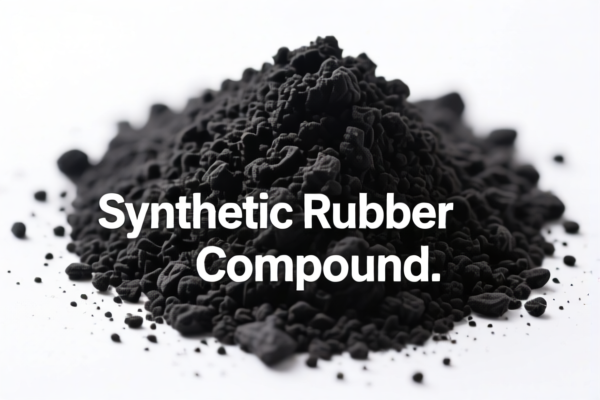
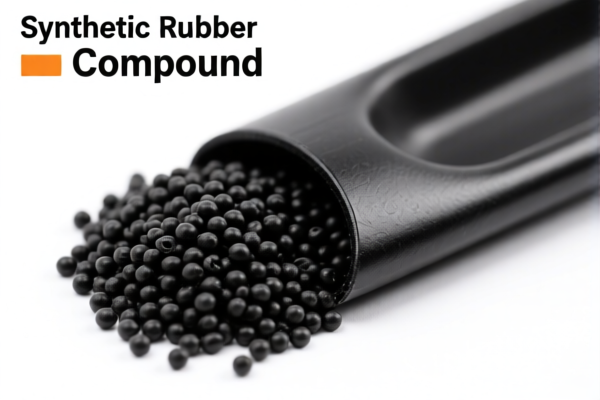
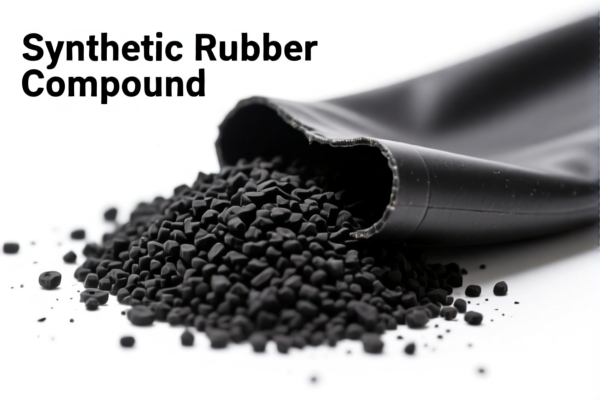
AI Analysis
🛢️ Synthetic Lubricant Additive (合成润滑油添加剂)
🌐 HS Code Reference & Customs Clearance Guide | 2026 Latest Tariff Analysis | Professional Clearance Strategy
📌 I. Product Definition & Classification: What is a "Synthetic Lubricant Additive"?
Synthetic Lubricant Additives are specialized chemical compounds added to base oils (mineral or synthetic) to enhance their performance properties. They are crucial in automotive, industrial, and marine applications to prevent wear, reduce friction, combat oxidation, and maintain viscosity.
In international trade, classification depends heavily on the chemical nature of the additive versus its functional use.
⚠️ Key Distinction Point:
- If classified by Function (Use): It falls under Chapter 38 (Miscellaneous Chemical Products), specifically as "Preparations for oils or bituminous materials" or "Lubricant additives."
- If classified by Chemical Composition: It falls under Chapter 29 (Organic Chemicals), specifically as specific organic compounds (e.g., sulfur compounds, aromatic compounds).
- ⚠️ Risk: Misclassification between Chapter 29 and 38 can lead to significant tariff differences and customs delays. The provided data suggests multiple potential classifications based on specific ingredient assumptions.
📦 II. HS Code Classification Details (2026 Latest Tariff Authority Reference)
| HS Code | Product Description | Matching Logic (from Data) | Total Tax Rate |
|---|---|---|---|
3403.19.10.00 |
Lubricant preparations containing petroleum oils or bituminous materials | Use-based: Matches "Lubricant preparations." Although petroleum content isn't explicitly stated, common sense implies these additives often fall under or align with petroleum/bitumen-based lubricant categories. No material conflict. | 35.2% |
3811.21.00.00 |
Lubricant additives, containing petroleum oils | Use-based: Explicitly "Lubricant additives." While not explicitly stated as petroleum-based, synthetic additives are often formulated with or belong to mineral/synthetic oil blends. Matches functional attributes. | 41.5% |
3811.29.00.00 |
Other lubricant additives (non-petroleum specific) | Use-based: Explicitly "Lubricant additives." Falls under the "Other" residual category for liquid additives. Logical fit for general synthetic additives. | 41.5% |
2942.00.50.00 |
Other organic compounds | Chemical-based: "Synthetic" implies chemical synthesis. Additives are chemical ingredients. Fits "Other organic compounds" without material conflict. | 38.7% |
2942.00.35.00 |
Aromatic or modified aromatic organic compounds | Chemical-based: Inferred that synthetic additives often contain modified aromatic components. Fits the "Other" residual category for organic chemicals. | 41.5% |
🔍 Critical Analysis:
- Chapter 38 (3811/3403) focuses on the preparation/mixture. This is often the more accurate classification for commercial "additive packages" which are mixtures. - Chapter 29 (2942) focuses on the pure chemical substance. If the additive is a single, identifiable organic compound, Chapter 29 may apply. However, most commercial additives are complex mixtures, favoring Chapter 38. - Tax Disparity: The difference between the lowest (35.2%) and highest (41.5%) rates is 6.3%, which significantly impacts cost.
💰 III. 2026 Latest Tariff Rate Breakdown (Including Surtaxes & Policy Surcharges)
✅ Applicable Country: United States (US)
✅ Origin: China (CN)
✅ Effective Date: Post-2025/2026 tariffs (Includes Section 301 and IEEPA surcharges)
🎯 1. 3403.19.10.00 —— Lubricant Preparations (Petroleum/Bitumen Based)
| Item | Content |
|---|---|
| Base Tariff | 0.2% (ad valorem) |
| Section 301 Surcharge | +25.0% (From USITC Footnote 9903.88.01 / Section 301 List 4) |
| IEEPA Surcharge | +10.0% (Against Chinese/HK products, effective Nov 10, 2025) |
| Total Rate | 35.2% |
| Calculation | CIF Value × 35.2% |
| De Minimis Exemption | ❌ Not Eligible (deny_de_minimis) |
| Legal Path | IEEPA:9903.01.25 → IEEPA:9903.01.24 → USITC:3403.19.10.00 → FOOTNOTE:9903.88.01 |
📌 Explanation:
- 0.2% is the standard MFN duty for lubricant preparations. - 25% is the Section 301 tariff for specific chemical preparations. - 10% is the IEEPA surcharge for Chinese origin. - Total 35.2% is a significant cost factor.
🎯 2. 3811.21.00.00 & 3811.29.00.00 —— Lubricant Additives
| Item | Content |
|---|---|
| Base Tariff | 6.5% (ad valorem) |
| Section 301 Surcharge | +25.0% |
| IEEPA Surcharge | +10.0% |
| Total Rate | 41.5% |
| Calculation | CIF Value × 41.5% |
| De Minimis Exemption | ❌ Not Eligible (deny_de_minimis) |
| Legal Path | IEEPA:9903.01.25 → IEEPA:9903.01.24 → USITC:3811.21.00.00 / 3811.29.00.00 |
📌 Note:
- Lubricant additives are explicitly targeted by Section 301. - The base duty (6.5%) is higher than lubricant preparations (0.2%), leading to a higher total rate (41.5% vs 35.2%). - Distinguishing between3811.21(petroleum-based) and3811.29(other) is less critical for tax purposes here as the surcharges are identical.
🎯 3. 2942.00.50.00 & 2942.00.35.00 —— Other Organic Compounds
| Item | Content |
|---|---|
| Base Tariff | 3.7% (2942.00.50.00) / 6.5% (2942.00.35.00) |
| Section 301 Surcharge | +25.0% |
| IEEPA Surcharge | +10.0% |
| Total Rate | 38.7% (2942.00.50.00) / 41.5% (2942.00.35.00) |
| Calculation | CIF Value × Rate |
| De Minimis Exemption | ❌ Not Eligible (deny_de_minimis) |
| Legal Path | IEEPA:9903.01.25 → IEEPA:9903.01.24 → USITC:2942.00.50.00 / 2942.00.35.00 |
📌 Explanation:
- 3.7% base for2942.00.50.00makes this the second-lowest total rate (38.7%). - 6.5% base for2942.00.35.00leads to 41.5%. - Classification here depends on proving the product is a specific organic compound rather than a prepared mixture.
🛠️ IV. Customs Clearance Practical Advice (Battle-Tested Pitfall Guide)
✅ 1. Required Documentation Checklist (Non-Negotiable)
| Document | Must Provide | Explanation |
|---|---|---|
| ✅ Technical Data Sheet (TDS) | ✔️ | Must detail chemical composition, function, and ingredients. |
| ✅ Formula/Composition Sheet | ✔️ | Critical to distinguish between "Mixture" (Ch 38) and "Pure Compound" (Ch 29). |
| ✅ Product Photos (Label & Bulk) | ✔️ | Show packaging, hazard labels, and product state (liquid/powder). |
| ✅ Third-Party Test Report | ✔️ | GC-MS or HPLC reports to prove chemical identity if claiming Chapter 29. |
| ✅ Commercial Invoice | ✔️ | Clear description: "Synthetic Lubricant Additive for [Application]." |
| ✅ Certificate of Origin (CO) | ✔️ | Required for IEEPA assessment. |
✅ 2. Declaration Strategy (Key Mantras)
🔥 “Mixture is 38, Pure is 29; Petroleum is 0.2, Additive is 6.5; Don’t Split, Don’t Guess!”
| Scenario | Correct Declaration | Wrong Practice |
|---|---|---|
| Commercial Additive Package (Mixture) | 3811.21.00.00 or 3811.29.00.00 |
Misdeclare as pure chemical (2942) → Risk of reclassification & penalties. |
| Lubricant Preparation with Petroleum | 3403.19.10.00 |
Claiming this for non-petroleum additives → Material Conflict. |
| Single Chemical Compound | 2942.00.50.00 |
Declaring as "Lubricant Additive" (Ch 38) → Overpayment or misclassification. |
| Additive in Small Retail Packets | Same HS Code | Assuming small quantity changes classification → False. |
⚠️ Warning:
- If the product is a preparation (mixture of chemicals), Chapter 38 is usually correct. - If the product is a single identified organic compound, Chapter 29 is correct. - Do not try to force2942.00.50.00(38.7%) if the product is a complex mixture, as Customs may reject it for lacking chemical specificity, leading to audits.
✅ 3. Special Case Handling
| Situation | Handling Suggestion |
|---|---|
| Conflicting Composition | If unsure, provide GC-MS report to prove if it’s a "preparation" or "compound." |
| OEM/Private Label | Ensure the supplier’s TDS matches your declared HS Code. Private labels don’t change chemical nature. |
| Hazardous Goods | If the additive is flammable/corrosive, declare DG status. This may affect shipping method but not HS Code. |
| Origin Tracing | Verify the origin of base chemicals. If partially produced in CN but finished elsewhere, origin rules may change. |
🌍 V. Global Market Comparison (2026 Latest)
| Country/Region | Recommended HS Code | Tariff Rate | Certification | Notes |
|---|---|---|---|---|
| 🇺🇸 USA | 3811.21.00.00 / 3403.19.10.00 |
35.2% - 41.5% | SDS, TDS | High surcharges due to Section 301/IEEPA. |
| 🇨🇳 China | 3811.21.00.00 / 3403.19.10.00 |
0% - 6.5% | N/A | No IEEPA surcharges domestically. |
| 🇪🇺 EU | 3811.10.00 / 3403.99.00 |
0% - 6.5% | REACH | No Section 301 equivalent, but REACH compliance is strict. |
| 🇬🇧 UK | 3811.10.00 / 3403.99.00 |
0% - 6.5% | UK REACH | Post-Brexit regulations apply. |
| 🇮🇳 India | 3811.10.00 / 3403.91.00 |
~10% - 15% | BIS | Check specific CBIC notifications. |
📌 Conclusion:
- USA is the most expensive market due to cumulative surcharges (301 + IEEPA). - EU/UK/India have lower or no political surcharges, but regulatory compliance (REACH) is rigorous. - Strategy: For US imports, optimize HS Code accuracy to avoid penalties. Consider Chapter 34 (3403.19.10.00) if the product contains petroleum oils, as it has the lowest total rate (35.2%).
📌 VI. Common Mistakes & Pitfalls (Lessons from the Field)
❌ Mistake 1: Classifying a complex mixture as a "Pure Organic Compound" (2942) to avoid higher base rates.
👉 Consequence: Customs rejects due to lack of chemical purity proof → Reclassification to 3811 + Penalties.
❌ Mistake 2: Ignoring the "Petroleum Oil" content in 3403.
👉 Consequence: If the additive is used in petroleum-based lubricants and contains such oils, classifying it as 3811 (6.5% base) instead of 3403 (0.2% base) is incorrect and may lead to audits. However, if it doesn’t contain petroleum, 3403 is wrong. Match the content!
❌ Mistake 3: Assuming "Additive" automatically means 3811.
👉 Consequence: If it’s a specific chemical ingredient for further manufacturing, 2942 might be more appropriate. Use function vs. composition test.
❌ Mistake 4: Neglecting IEEPA 10% in cost calculations.
👉 Consequence: Profit margins are wiped out by the 10% IEEPA surcharge on top of the 25% Section 301.
✅ Correct Approach:
"Synthetic Lubricant Additive (Mixture), for Engine Oil, Contains Modified Aromatic Hydrocarbons, SDS Available, Model XYZ, No Petroleum Base Oil"
Or
"Synthetic Lubricant Preparation, Contains Petroleum Oils, for Industrial Use, Model ABC"
🎯 VII. Conclusion: Precision in Classification, Savings in Tariffs
🎯 Remember the Mantras:
🔹 “Mixture is 38, Pure is 29; Check for Petroleum first!”
🔹 “Section 301 is 25%, IEEPA is 10%; Total is High, Be Precise!”
🔹 “If it contains Petroleum, try3403.19.10.00(35.2%); If not,3811(41.5%) or2942(38.7%)”
📌 Pro Tip:
If your synthetic additive is based on non-petroleum synthetic oils and is a mixture,
3811.29.00.00is likely the safest and most accurate functional classification (41.5%).
If it contains petroleum, push for3403.19.10.00(35.2%) with strong evidence.
If it is a single pure chemical, provide GC-MS reports to support2942.00.50.00(38.7%).
📣 Immediate Action:
📞 Contact a Customs Broker + Provide TDS & Formula + Apply for Advance Ruling (if possible)
🚀 Ensure your Synthetic Lubricant Additive clears smoothly, avoids audits, and maximizes profit!
✨ Professional Clearance Starts with Accurate Classification!
💼 Every percentage point counts in the age of high tariffs!
Customer Reviews
About HS Code Classification
The Harmonized System (HS) is an internationally standardized nomenclature developed by the World Customs Organization (WCO) to classify traded products. Over 200 countries use the HS system as the basis for customs tariffs, trade statistics, and import/export regulations.
Each HS code follows a hierarchical structure:
- Chapter (2 digits) — Broad category of goods (e.g., Chapter 84: Machinery and Mechanical Appliances)
- Heading (4 digits) — More specific grouping within the chapter
- Subheading (6 digits) — Internationally standardized breakdown, used by all WCO member countries
- National subdivisions (8-10 digits) — Country-specific extensions for further classification, such as US HTSUS 10-digit codes
Correct HS code classification is essential for smooth customs clearance, accurate duty payment, and compliance with trade regulations. Misclassification can lead to customs delays, overpayment of duties, or penalties.
When importing from CN to US, the applicable tariff rates may include:
- Most-Favored-Nation (MFN) rate — The standard duty rate applied to WTO members
- General rate — Applied to countries without trade agreements
- Trade remedy duties — Additional tariffs such as Section 301 (anti-dumping), Section 232 (national security), or countervailing duties
The information provided on this page is for reference purposes only. For official classification, please consult with your local customs authority or a licensed customs broker.