Synthetic Rattan Furniture
CN → US| HS Code | Tariff Rate | Origin | Destination | Doc |
|---|---|---|---|---|
| 9403830015 | 35.0% | CN | US | Official Doc |
| 9403830001 | 35.0% | CN | US | Official Doc |
Product Images
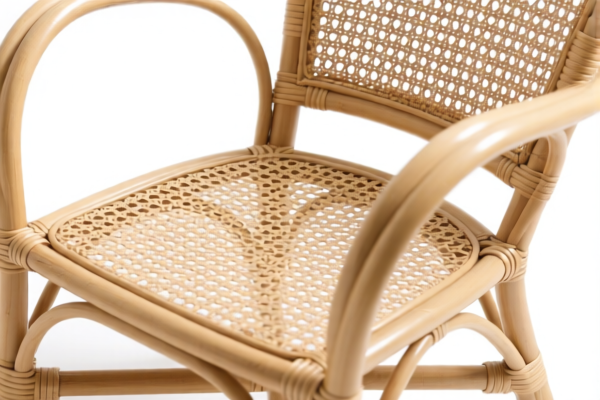
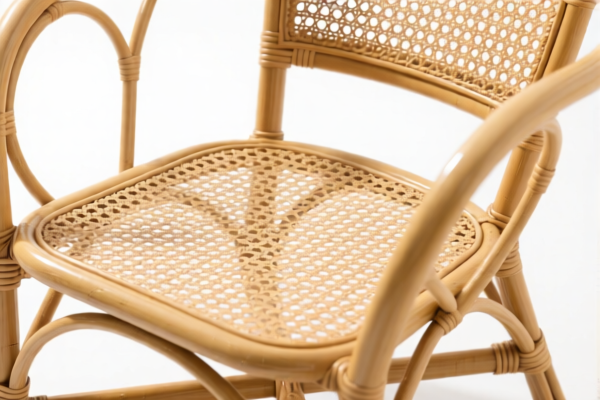
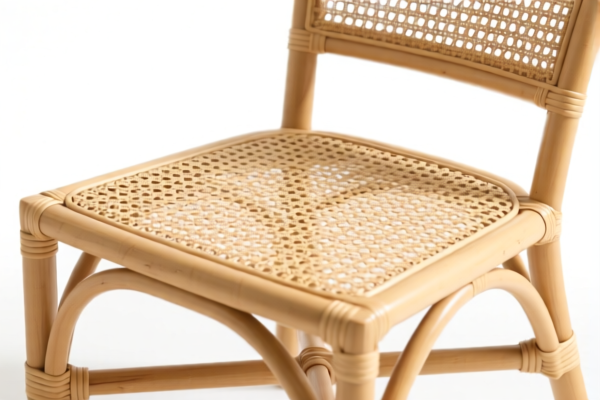
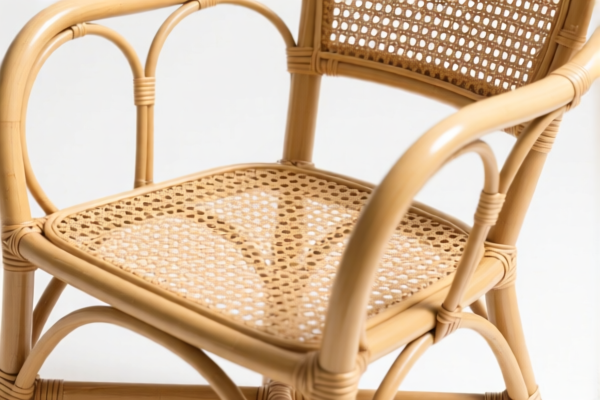
AI Analysis
🪑 Synthetic Rattan Furniture (Artificial Wicker/PE Rattan)
🌐 HS Code Reference & Customs Clearance Guide | 2026 Latest Tariff Analysis | Professional Compliance Strategy
📌 I. Product Definition & Classification: Do You Really Know "Synthetic Rattan"?
Synthetic rattan (often made from High-Density Polyethylene/HDPE, PVC, or PP) mimics the look of natural rattan but offers superior weather resistance. It is primarily used for outdoor patio sets, garden chairs, tables, and baby cribs.
In international trade, the key distinction is material composition and usage. Unlike natural rattan (which might fall under different chapters depending on processing), synthetic rattan is classified under Chapter 94 (Furniture) as "Other furniture of other materials."
⚠️ Critical Distinction:
- If the item is household furniture (chairs, tables, shelving) → It falls under 9403.83 ("Of rattan" covers synthetic/plastic rattan in this context).
- If the item is a baby crib specifically → It is still under 9403.83 but has a specific sub-heading due to its specialized nature.
- Do NOT confuse with "Rope" or "Plastic Articles" (Chapter 39); furniture items retain Chapter 94 classification even if made of plastic.
📦 II. HS Code Classification Details (2026 Latest Tariff Alignment)
Based on the provided data, here are the two specific HS codes for Synthetic Rattan products:
| HS Code | Product Description | Application Scenario | Key Identifier |
|--------|--------------------------|--------------------------|
| 9403.83.00.15 | Other Household Furniture of Rattan (Synthetic) | Patio chairs, dining tables, lounge sofas, garden benches made of synthetic rattan. | General Household Use |
| 9403.83.00.01 | Cribs of Rattan (Synthetic) | Baby cribs, bassinets, or toddler beds constructed with synthetic rattan materials. | Specialized Infant Furniture |
🔍 Key Note:
- The term "Of Rattan" in HS Code 9403.83 includes synthetic/plastic rattan (PE wicker).
- The distinction lies in the specific use:
-...15is for general household furniture.
-...01is strictly for cribs.
- Misclassification here can lead to significant discrepancies in customs valuation and origin verification.
💰 III. 2026 Latest Tariff Rate Breakdown (Detailed Tax Analysis)
✅ Applicable Region: United States (US)
✅ Origin: China (CN) (Assumed based on common trade context for this category; verify for your specific shipment)
✅ Effective Date: Current Trade Policy (Section 301 / IEEPA)
🎯 1. 9403.83.00.15 — Synthetic Rattan Household Furniture (e.g., Chairs, Tables)
| Item | Content |
|---|---|
| Base Duty Rate | 0.0% |
| Section 301 Additional Duty | +25.0% |
| Total Tax Rate | 25.0% |
| Tax Calculation | CIF Value × 25% |
| De Minimis Exemption | ❌ Not Eligible (If value > $800, duty applies; if < $800, it may be exempt under Section 321, but formal entry requires duty payment if imported by business). |
| Legal Basis Path | HTSUS:9403.83.00.15 → USITC Footnote: Section 301 |
📌 Explanation:
- Although the base MFN (Most Favored Nation) duty is 0%, the Section 301 tariff of 25% applies to goods from China.
- This is a high tariff bracket for furniture.
- No IEEMA/IEEPA extra 10% is listed in the provided data for this specific code, so the total remains 25%.
🎯 2. 9403.83.00.01 — Synthetic Rattan Cribs
| Item | Content |
|---|---|
| Base Duty Rate | 0.0% |
| Section 301 Additional Duty | +25.0% |
| Total Tax Rate | 25.0% |
| Tax Calculation | CIF Value × 25% |
| De Minimis Exemption | ❌ Not Eligible |
| Legal Basis Path | HTSUS:9403.83.00.01 → USITC Footnote: Section 301 |
📌 Note:
- Even though it is a specialized item (crib), the tariff rate is identical to general household rattan furniture.
- However, safety certifications (CPSC in the US) will be far stricter for cribs than for patio chairs.
🛠️ IV. Customs Clearance Practical Advice (Real-World Pitfall Guide)
✅ 1. Document Checklist (Non-Negotiable)
| Document | Required? | Explanation |
|---|---|---|
| ✅ Product Photos | ✔️ | Must clearly show the woven texture to prove it is "rattan-like" (not solid plastic molded). |
| ✅ Bill of Materials (BOM) | ✔️ | Confirm the weave is HDPE/PE synthetic, not natural rattan. |
| ✅ Commercial Invoice | ✔️ | Must state: "Synthetic Rattan Patio Chair" or "PE Rattan Crib". Avoid vague terms like "Plastic Furniture." |
| ✅ Country of Origin Certificate | ✔️ | Critical for proving origin to apply (or avoid) Section 301 duties. |
| ✅ CPSC Certification (For Cribs) | ✔️ | MANDATORY for HS 9403.83.00.01. Without CPSC approval, the shipment will be rejected at US customs. |
✅ 2. Declaration Tips (Key Mantras)
🔥 "Material Matters, Use Defines Code, 'Synthetic' is Key!"
| Scenario | Correct Declaration | Wrong Practice |
|---|---|---|
| Patio Chair Set | 9403.83.00.15 - "Synthetic Rattan Garden Chair" |
Described as "Wicker Chair" without specifying synthetic → May trigger inspection for natural materials. |
| Baby Crib | 9403.83.00.01 - "Synthetic Rattan Baby Crib" |
Described as "Wooden Crib" (if partially wooden) → Major Misclassification Risk. |
| Mixed Materials | If frame is metal + weave is synthetic rattan | Still generally 9403.83 if rattan is the principal material. If metal frame dominates, may fall under 9403.20. |
✅ 3. Special Considerations
| Issue | Handling Advice |
|---|---|
| "Rattan" vs. "Plastic" | Customs may inspect to ensure it’s not simply "Plastic Articles" (Chapter 39). Ensure the primary character is that of furniture woven with synthetic strands. |
| Wood Parts | If the furniture has significant wood components (e.g., solid wood legs + synthetic weave), it may NOT be classified under 9403.83 (Of Rattan). It may fall under 9403.30 (Of Wood). Check the principal material rule. |
| Safety Standards (Cribs) | For 9403.83.00.01, US CPSC regulations require ASTM F2194 compliance. Failure to provide test reports will result in detention. |
🌍 V. Global Market Comparison (2026)
| Country/Region | Recommended HS Code | Duty Rate | Certification | Note |
|---|---|---|---|---|
| 🇺🇸 USA | 9403.83.00.15 / .01 |
25% (Section 301) | FCC (if electronic), CPSC (for cribs) | High duty for China origin. |
| 🇨🇳 China | 9403.83 |
~10-15% | CCC (if applicable) | No Section 301. |
| 🇪🇺 EU | 9403.83 |
0-4% | CE (Safety) | No punitive tariffs. |
| 🇦🇺 Australia | 9403.83 |
5% | WELS/SR (if applicable) | Moderate duty. |
📌 Conclusion:
- The US is the most expensive market for Chinese synthetic rattan furniture due to the 25% Section 301 tariff.
- Cribs have additional non-tariff barriers (CPSC), making them harder to clear than patio furniture.
📌 VI. Common Errors & Pitfalls (Lessons Learned)
❌ Error 1: Declaring "Synthetic Rattan" as "Wooden Furniture"
👉 Consequence: Wrong HS code → Higher base duty (if misclassified as wood with high tariffs) or penalties for false declaration.
❌ Error 2: Omitting "Synthetic" in the description
👉 Consequence: Customs may suspect natural rattan (which might have different quotas or sustainability checks) → Delays.
❌ Error 3: Using HS 9403.83.00.15 for a Crib
👉 Consequence: While the tax rate is the same (25%), it is technically incorrect. Customs may flag it for not meeting the specific "Crib" criteria for safety tracking. Always use ...01 for cribs.
❌ Error 4: Ignoring CPSC for Cribs
👉 Consequence: Seizure and Destruction of goods. Tariff is irrelevant if safety docs are missing.
✅ Correct Declaration Example:
"Synthetic PE Rattan Outdoor Lounge Chair, Set of 2, Weather-Resistant, Model XYZ"
"Synthetic Rattan Baby Crib, ASTM Compliant, Model ABC"
🎯 VII. Conclusion: Professional Declaration for Cost Optimization
🎯 Remember the Mantra:
🔹 "Synthetic Rattan is 9403.83.15 (General) or .01 (Crib)."
🔹 "25% US Duty for China Origin."
🔹 "Cribs Need CPSC, Chairs Need Weather-Proof Claims."
📌 Pro Tip:
If you are exporting cribs, ensure your CPSC test reports are attached to the customs entry before arrival. For patio furniture, emphasize "Synthetic" and "PE/HDPE" to distinguish from natural materials and avoid unnecessary inspections.
📣 Immediate Action:
📞 Consult your customs broker with photos and BOM.
📋 Verify Section 301 exclusions (if any apply to your specific product category).
🚀 Accurate HS Code = Faster Clearance + Predictable Costs.
✨ Professional Customs Compliance Starts with Precise Classification!
💼 Every dollar of duty saved is profit earned!
Customer Reviews
About HS Code Classification
The Harmonized System (HS) is an internationally standardized nomenclature developed by the World Customs Organization (WCO) to classify traded products. Over 200 countries use the HS system as the basis for customs tariffs, trade statistics, and import/export regulations.
Each HS code follows a hierarchical structure:
- Chapter (2 digits) — Broad category of goods (e.g., Chapter 84: Machinery and Mechanical Appliances)
- Heading (4 digits) — More specific grouping within the chapter
- Subheading (6 digits) — Internationally standardized breakdown, used by all WCO member countries
- National subdivisions (8-10 digits) — Country-specific extensions for further classification, such as US HTSUS 10-digit codes
Correct HS code classification is essential for smooth customs clearance, accurate duty payment, and compliance with trade regulations. Misclassification can lead to customs delays, overpayment of duties, or penalties.
When importing from CN to US, the applicable tariff rates may include:
- Most-Favored-Nation (MFN) rate — The standard duty rate applied to WTO members
- General rate — Applied to countries without trade agreements
- Trade remedy duties — Additional tariffs such as Section 301 (anti-dumping), Section 232 (national security), or countervailing duties
The information provided on this page is for reference purposes only. For official classification, please consult with your local customs authority or a licensed customs broker.