Synthetic Rubber Coating
CN → US| HS Code | Tariff Rate | Origin | Destination | Doc |
|---|---|---|---|---|
| 3901901000 | 35.0% | CN | US | Official Doc |
| 4002190019 | 35.0% | CN | US | Official Doc |
| 4002190014 | 35.0% | CN | US | Official Doc |
| 3901909000 | 41.5% | CN | US | Official Doc |
| 3907995050 | 41.5% | CN | US | Official Doc |
Product Images
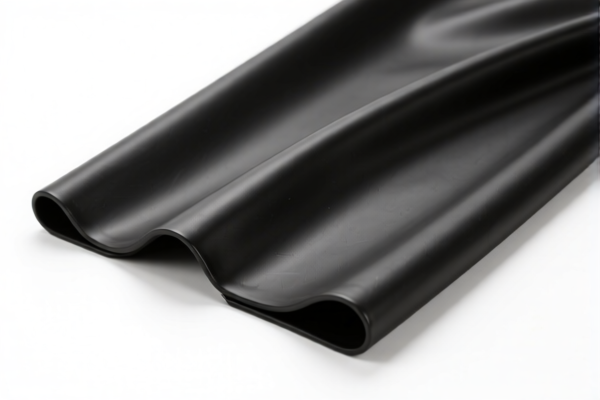
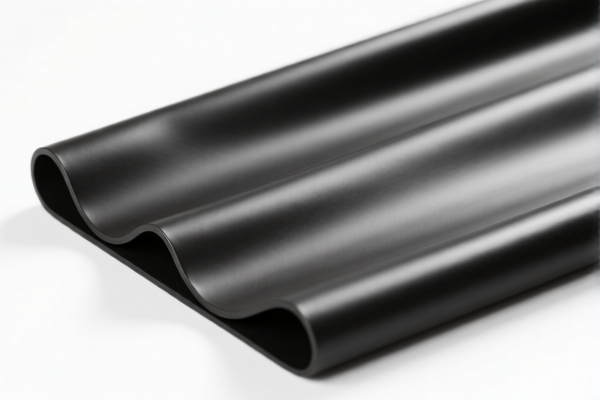
AI Analysis
🧪 Synthetic Rubber Coating (Powder Form)
🌐 HS Code Reference & Customs Clearance Guide | 2026 Latest Tariff Analysis | Professional Entry Strategy
📌 I. Product Definition & Classification: Do You Really Understand "Synthetic Rubber Powder"?
Synthetic Rubber Coating (in Powder Form) refers to chemical derivatives or particulate forms of synthetic rubber materials, primarily used as binders, fillers, or coating agents in industrial manufacturing, flooring, adhesives, and construction materials.
In international trade, the classification is critical because physical form (powder vs. solid/blocks) and chemical nature (pure rubber vs. chemically modified derivative) dictate whether it falls under Chapter 39 (Plastics/Rubber Articles) or Chapter 40 (Rubber and Rubber Articles).
⚠️ Key Distinction Points:
- If the material is pure synthetic rubber in powder form → It generally falls under HS 3901 or HS 4002 depending on specific polymer type.
- If the material is a chemically modified derivative specifically for coating applications → It may fall under HS 3907 or HS 4002 variants.
- Critical Note: "Synthetic Rubber Powder" is often misclassified. If it is a primary synthetic rubber polymer, it belongs to 3901/4002. If it is a secondary chemical product (derivative), it may belong to 3907.
📦 II. HS Code Classification Details (2026 Latest Tariff Authority Comparison)
| HS Code | Product Description | Application Scenario | Material Nature |
|---|---|---|---|
3901.90.10.00 |
Synthetic Rubber Powder | General purpose synthetic rubber powder | ✅ Pure Synthetic Rubber (Powder) |
4002.19.00.19 |
Synthetic Rubber Powder | Other synthetic rubbers (e.g., EPDM, SBR) in powder form | ✅ Pure Synthetic Rubber (Powder) |
4002.19.00.14 |
Synthetic Rubber Powder | Specific synthetic rubber types in powder form | ✅ Pure Synthetic Rubber (Powder) |
3901.90.90.00 |
Synthetic Rubber Powder (Alternative) | Other plastic materials/rubber powders not specified elsewhere | ✅ Plastic/Rubber Powder (Less Common) |
3907.99.50.50 |
Chemical Derivatives for Coating | Chemically modified synthetic derivatives used in coatings | ✅ Chemical Derivative |
🔍 Important Reminder:
- HS 3901/4002 categories are for primary synthetic rubber polymers.
- HS 3907 is for chemically modified derivatives (e.g., acetates, ethers) that may be used in coatings.
- Do not confuse "rubber powder" (physical form) with "rubber articles" (finished products).
💰 III. 2026 Latest Tariff Rate Breakdown (Including Surcharges & Policy Add-ons)
✅ Applicable Country: United States (US)
✅ Origin: China (CN)
✅ Effective Date: From November 10, 2025 (and subsequent imports)
🎯 1. 3901.90.10.00 / 4002.19.00.19 / 4002.19.00.14 —— Synthetic Rubber Powder (Pure)
| Item | Details |
|---|---|
| Base Tariff Rate | 0% (Ad Valorem) |
| USITC Additional Tariff | +25% (From USITC Footnote 9903.88.01 / Section 301) |
| IEEPA Additional Tariff | +10% (Targeting China/HK products, from Nov 10, 2025) |
| Total Tax Rate | 35.0% |
| Tax Calculation | CIF Value × 35% |
| De Minimis Eligibility | ❌ Not Eligible (deny_de_minimis) |
| Legal Basis Path | IEEPA:9903.01.25 → IEEPA:9903.01.24 → USITC:3901.90.10.00 → FOOTNOTE:9903.88.01 |
📌 Explanation:
- The 25% USITC tariff is imposed under Section 301 of the Trade Act for Chinese-made rubber/polymer products.
- The 10% IEEPA tariff is an additional national security/trade remedy levy on Chinese goods.
- Total 35% is a significant cost burden. Importers must budget accordingly.
🎯 2. 3901.90.90.00 / 3907.99.50.50 —— Alternative Classifications (Derivatives/Other Powders)
| Item | Details |
|---|---|
| Base Tariff Rate | 6.5% (Ad Valorem) |
| USITC Additional Tariff | +25% |
| IEEPA Additional Tariff | +10% |
| Total Tax Rate | 41.5% |
| Tax Calculation | CIF Value × 41.5% |
| De Minimis Eligibility | ❌ Not Eligible (deny_de_minimis) |
| Legal Basis Path | IEEPA:9901.25 → IEEPA:9903.01.24 → USITC:3901.90.90.00 → FOOTNOTE:9903.88.01 |
📌 Note:
- If classified under 3901.90.90.00 or 3907.99.50.50, the base tariff is 6.5%, but the surcharges remain the same.
- Total 41.5% is even higher than the 35% rate for pure rubber powders.
- Misclassification Risk: Classifying a derivative as "pure rubber" to get 0% base rate may trigger customs audits and penalties.
🛠️ IV. Customs Clearance Practical Advice (Real-World Pitfall Avoidance)
✅ 1. Required Documentation Checklist (All Mandatory)
| Document | Required | Notes |
|---|---|---|
| ✅ Product Specification Sheet | ✔️ | Must clearly state: "Synthetic Rubber Powder," chemical formula, particle size, and intended use (e.g., "for coating"). |
| ✅ Material Safety Data Sheet (MSDS) | ✔️ | Critical for chemical products. Confirms hazard class and composition. |
| ✅ Product Photos | ✔️ | Clear images showing powder form, packaging, and labels. |
| ✅ Commercial Invoice | ✔️ | Must explicitly state "Synthetic Rubber Powder" or "Chemical Derivative for Coating." Avoid vague terms like "Rubber Material." |
| ✅ Certificate of Origin (CO) | ✔️ | To verify Chinese origin and apply correct surcharges. |
| ✅ Packing List | ✔️ | Detail net/gross weight, package dimensions. |
| ✅ Third-Party Test Report | ✔️ | If applicable, for chemical composition verification. |
✅ 2. Declaration Strategy (Key Mnemonic)
🔥 "Form Determines Chapter, Derivative Needs Detail, Origin Triggers Surcharges!"
| Scenario | Correct Declaration | Wrong Practice |
|---|---|---|
| Pure Synthetic Rubber Powder | 3901.90.10.00 or 4002.19.00.19 |
Reporting as "Plastic Pellets" → Wrong Chapter |
| Chemically Modified Derivative | 3907.99.50.50 |
Reporting as "Natural Rubber" → Fraud Risk |
| Generic "Rubber Powder" | Must specify Synthetic + Purpose | Vague "Rubber Stuff" → Customs Delay |
| Small Sample (< $800) | Still Pay Tariff | Assuming De Minimis Exemption → False! |
📌 Critical Warning:
- De Minimis Exemption ($800) does NOT apply to goods from China under Section 301/IEEPA.
- All shipments, regardless of value, are subject to the 35%–41.5% tariff.
✅ 3. Special Circumstances Handling
| Situation | Handling Advice |
|---|---|
| OEM Coating Formula | Provide client order + technical data sheet to prove "derivative" status if claiming 3907. |
| Mixed Packaging (Powder + Liquid) | Declare separately. Powder under 3901/4002, Liquid under appropriate chemical code. |
| Non-Chinese Origin | If sourced from Vietnam/Thailand, IEEPA 10% may not apply. Verify FTAs. |
| Customs Audit | Be prepared to submit lab tests proving chemical structure to support HS code choice. |
🌍 V. Global Market Comparison (2026 Latest)
| Country/Region | Recommended HS Code | Base Tariff | Surcharges | Total Rate (China Origin) | Notes |
|---|---|---|---|---|---|
| 🇺🇸 USA | 3901.90.10.00 / 4002.19.00.19 |
0% | +25% (301) +10% (IEEPA) | 35% | High barrier; no de minimis. |
| 🇨🇳 China | 3901.90.10.00 |
Varies | None | ~1–6% | Import duties may vary by specific HS. |
| 🇪🇺 EU | 4002.19.00 |
~6.5% | None | ~6.5% | No Section 301 equivalents. |
| 🇬🇧 UK | 4002.19.00 |
~6.5% | None | ~6.5% | Post-Brexit rules apply. |
| 🇯🇵 Japan | 4002.19.00 |
~5.3% | None | ~5.3% | No additional political tariffs. |
📌 Conclusion:
- USA is the most expensive market for Chinese synthetic rubber due to layered surcharges.
- EU/UK/Japan offer significantly lower total tariffs (~6.5%), making them more competitive for Chinese exports.
📌 VI. Common Mistakes & Pitfall Guide (Lessons Learned)
❌ Mistake 1: Claiming De Minimis ($800 exemption) for small samples
👉 Consequence: Seizure, fines, and blacklisting. No de minimis for China under 301/IEEPA.
❌ Mistake 2: Declaring "Synthetic Rubber Powder" as "Plastic Resin" to avoid 301 duties
👉 Consequence: Customs classification audit → Back taxes + Penalties + Delay.
❌ Mistake 3: Ignoring the "Derivative" status for coating chemicals
👉 Consequence: If it’s a chemical derivative, HS 3907 applies (41.5% rate). Misclassifying as 3901 (35%) is still risky if evidence shows modification.
❌ Mistake 4: Using vague invoice descriptions like "Rubber Material"
👉 Consequence: Customs may classify under the highest duty rate or hold shipment for inspection.
✅ Correct Practice:
"Synthetic Rubber Powder, [Specific Type, e.g., SBR], for Industrial Coating Application, Particle Size <100µm, HS Code 3901.90.10.00, Origin: China"
🎯 VII. Conclusion: Professional Declaration, Cost Control, Efficiency!
🎯 Remember the Mnemonic:
🔹 "Powder is 35%, Derivative is 41.5%, No De Minimis, Origin is China!"
🔹 "HS Code Defines Cost, 301 & IEEPA Double Tap, Declare Clearly, Avoid Tap!"
📌 Pro Tip:
If your synthetic rubber powder is sourced from Vietnam, Malaysia, or Thailand, you may qualify for IEEPA exemption (0–10% base rate only).
Recommend pre-consulting with a customs broker or applying for a Binding Ruling to confirm HS code and duty liability before shipping.
📣 Immediate Action:
📞 Contact a licensed customs broker + Provide MSDS + Apply for HS Code Pre-Ruling
🚀 Ensure smooth customs clearance, minimize duties, and maximize profit!
✨ Professional Customs Clearance Starts with Accurate Classification!
💼 Every cent of cost deserves precise calculation!
Customer Reviews
About HS Code Classification
The Harmonized System (HS) is an internationally standardized nomenclature developed by the World Customs Organization (WCO) to classify traded products. Over 200 countries use the HS system as the basis for customs tariffs, trade statistics, and import/export regulations.
Each HS code follows a hierarchical structure:
- Chapter (2 digits) — Broad category of goods (e.g., Chapter 84: Machinery and Mechanical Appliances)
- Heading (4 digits) — More specific grouping within the chapter
- Subheading (6 digits) — Internationally standardized breakdown, used by all WCO member countries
- National subdivisions (8-10 digits) — Country-specific extensions for further classification, such as US HTSUS 10-digit codes
Correct HS code classification is essential for smooth customs clearance, accurate duty payment, and compliance with trade regulations. Misclassification can lead to customs delays, overpayment of duties, or penalties.
When importing from CN to US, the applicable tariff rates may include:
- Most-Favored-Nation (MFN) rate — The standard duty rate applied to WTO members
- General rate — Applied to countries without trade agreements
- Trade remedy duties — Additional tariffs such as Section 301 (anti-dumping), Section 232 (national security), or countervailing duties
The information provided on this page is for reference purposes only. For official classification, please consult with your local customs authority or a licensed customs broker.