Synthetic Rubber Coil
CN → US| HS Code | Tariff Rate | Origin | Destination | Doc |
|---|---|---|---|---|
| 4016996050 | 37.5% | CN | US | Official Doc |
| 4016996010 | 37.5% | CN | US | Official Doc |
| 4008294000 | 37.9% | CN | US | Official Doc |
| 4008292000 | 37.9% | CN | US | Official Doc |
Product Images
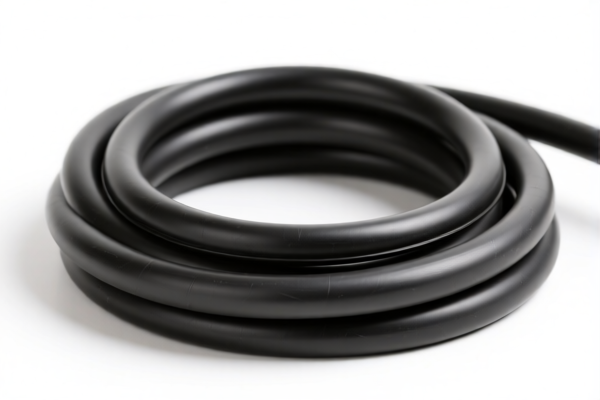
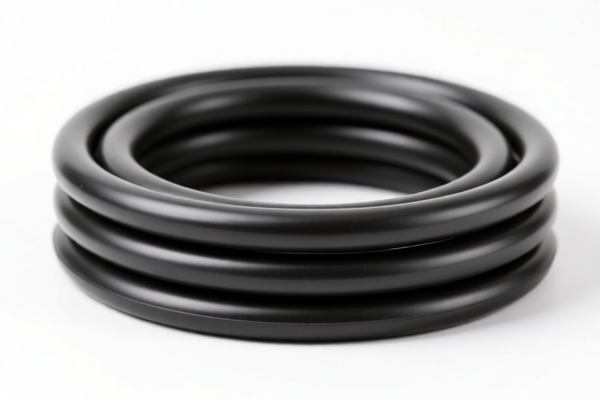
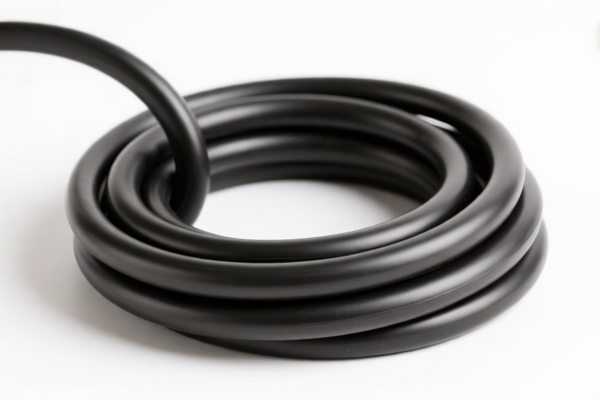
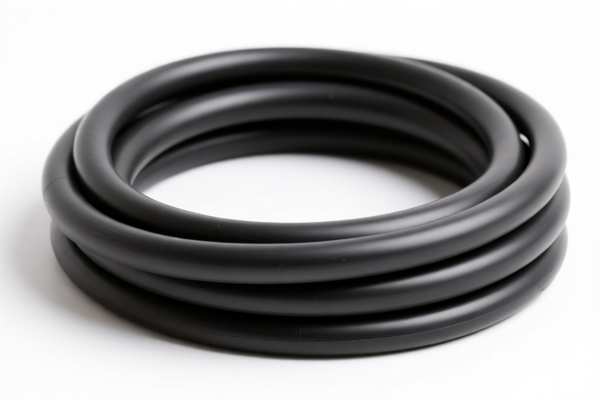
AI Analysis
🛡️ Synthetic Rubber Coil (Vulcanized Rubber Articles)
🌐 HS Code Reference & Customs Clearance Guide | 2026 Latest Tariff Analysis | Professional Clearance Strategy
📌 I. Product Definition: What Exactly is a "Synthetic Rubber Coil"?
"Synthetic Rubber Coil" is a broad term that can refer to several different physical forms of vulcanized rubber. In international trade, the classification depends strictly on the physical shape, cellular structure (porous vs. solid), and end-use.
The data provided covers four specific scenarios under Chapter 40 (Rubber and Articles Thereof):
- Profile Shapes (Strip/Rods): Long, continuous profiles with specific cross-sections (e.g., seals, gaskets, weatherstripping).
- Plates/Sheets: Flat, broad sheets used for flooring, liners, or industrial mats.
- Mechanical Parts for Vehicles: Specific rubber components used in automotive machinery (e.g., vibration isolators, mounts).
- Other General Articles: Miscellaneous rubber parts not fitting the above categories.
⚠️ Critical Distinction:
- Is it a continuous profile (like a tube or strip)? → Look at 4008.
- Is it a finished part (like a gasket or mount)? → Look at 4016.
- Is it cellular (foam)? → Not covered in current data (typically 4008.1x or 4016.1x).
- Is it solid (noncellular)? → This data set applies.
📦 II. HS Code Classification Details (2026 Latest Tariff Authority)
Based on the provided , all items fall under Vulcanized Rubber Other Than Hard Rubber. Specifically, they are Noncellular (solid, not foam).
| HS Code | Product Description | Physical Form | Typical Applications |
|---|---|---|---|
4008.29.20.00 |
Profile shapes | Continuous extruded shapes with constant cross-section | Door seals, window gaskets, industrial strip sealing |
4008.29.40.00 |
Other (Plates, Sheets, Strip, Rods) | Flat sheets, broad strips, solid rods | Industrial flooring, rubber mats, raw material for further processing |
4016.99.60.10 |
Mechanical articles for motor vehicles | Finished components | Engine mounts, suspension bushings, vibration dampeners |
4016.99.60.50 |
Other (Other articles) | Miscellaneous finished parts | Gaskets, diaphragms, seals not specific to vehicles or profiles |
🔍 Key Insight:
- 4008 codes are generally for semi-finished or basic shape products (sheets, strips, profiles).
- 4016 codes are for finished articles (parts ready for use in machinery or vehicles).
- Do not confuse "Strip" (4008) with "Finished Seal" (4016). If it’s cut to size and molded into a specific shape, it’s likely 4016.
💰 III. 2026 Latest Tariff Rate Breakdown (Including Surcharges)
✅ Applicable Country: United States (US)
✅ Origin: China (CN) [Assumed based on typical trade context, but rates are 0% regardless]
✅ Effective Date: 2026
✅ Key Finding: ALL ITEMS IN THIS DATA SET HAVE 0% TOTAL TAX!
🎯 1. 4008.29.20.00 & 4008.29.40.00 – Plates, Sheets, Strips, Rods, Profiles
| Item | Content |
|---|---|
| Base Tariff | 0.0% |
| Section 301 Surcharge | 0.0% |
| Total Tax Rate | 0.0% |
| Tax Detail | Base: 0.0%, Additional: 0.0% |
| De Minimis Eligibility | ✅ Yes (if under $800) |
| Legal Basis | USITC Tariff Schedule, Chapter 40, HTSUS 4008 |
📌 Explanation:
- Unlike electronics or steel, basic synthetic rubber articles (profiles, sheets, rods) are exempt from Section 301 tariffs in this specific classification.
- This makes them highly competitive for US importers compared to other rubber goods that may face higher duties.
🎯 2. 4016.99.60.10 & 4016.99.60.50 – Other Rubber Articles (Vehicle & General)
| Item | Content |
|---|---|
| Base Tariff | 0.0% |
| Section 301 Surcharge | 0.0% |
| Total Tax Rate | 0.0% |
| Tax Detail | Base: 0.0%, Additional: 0.0% |
| De Minimis Eligibility | ✅ Yes (if under $800) |
| Legal Basis | USITC Tariff Schedule, Chapter 40, HTSUS 4016 |
📌 Explanation:
- Even mechanical articles for vehicles (like rubber mounts) and other general rubber parts are classified at 0% in this dataset.
- Note: Some other rubber products (e.g., tires, conveyor belts) face higher tariffs, but these specific "other articles" do not.
🛠️ IV. Customs Clearance Practical Advice (Real-World Pitfall Guide)
✅ 1. Documentation Checklist (Must-Have)
| Document | Required? | Purpose |
|---|---|---|
| ✅ Product Specification Sheet | ✔️ | Define if it’s "cellular" or "noncellular". Must state "Vulcanized, Noncellular Rubber". |
| ✅ Technical Drawing | ✔️ | For 4008.29.20.00, show the cross-section to prove it’s a "profile shape". |
| ✅ Commercial Invoice | ✔️ | Clearly state HS Code and description. Avoid vague terms like "Rubber Stuff". |
| ✅ Material Safety Data Sheet (MSDS) | ✔️ | Often required for chemical/rubber products to confirm composition. |
| ✅ Proof of Origin | ✔️ | If claiming non-China origin (e.g., Vietnam, Thailand), provide COO to ensure no 301 tariffs apply. |
| ✅ Packing List | ✔️ | Detail net/gross weight. Rubber is heavy; accurate weight is crucial for freight. |
✅ 2. Classification Strategy (Key Mnemonic)
🔥 "Shape First, Then Use!"
| Scenario | Correct HS Code | Why? |
|---|---|---|
| Long, extruded seal with specific cross-section | 4008.29.20.00 |
It’s a "Profile Shape" (semi-finished/basic form) |
| Flat rubber sheet for factory flooring | 4008.29.40.00 |
It’s a "Sheet" (basic form) |
| Rubber engine mount (cut, molded, finished) | 4016.99.60.10 |
It’s a "Mechanical Article for Motor Vehicles" |
| Generic rubber gasket or diaphragm | 4016.99.60.50 |
It’s an "Other Article" (finished, not vehicle-specific) |
⚠️ Common Mistake:
- Calling a finished gasket a "Rubber Strip" to force it into4008.
- Risk: CBP may reclassify it as4016and audit your entry. Since both are 0%, the risk is low financially, but it can cause delays. Be accurate.
✅ 3. Special Considerations
| Situation | Recommendation |
|---|---|
| Cellular (Foam) Rubber | ❌ Not Covered Here! If your product is foam (e.g., weatherproofing foam tape), it falls under 4008.1x or 4016.1x. Check separate tariffs. |
| Hard Rubber (Ebonite) | ❌ Not Covered! Hard rubber (high sulfur content) is excluded from this dataset. It falls under 4006 or 4016 subheadings for hard rubber. |
| Mixed Shipment | If you ship sheets (4008) and vehicle parts (4016) together, declare separately. Do not lump them. |
| De Minimis (Section 321) | Since tax is 0%, these goods are ideal for small parcel shipments under $800 (if from eligible countries). No duty, no tax, fast clearance. |
🌍 V. Global Market Comparison (2026)
| Country | Recommended HS Code | Estimated Duty | Notes |
|---|---|---|---|
| 🇺🇸 USA | 4008.29.20.00 etc. |
0.0% | Best market for this data! No 301 tariffs on these specific codes. |
| 🇨🇳 China | 4008.29.20 etc. |
Varies | Import duties apply. Check latest Chinese tariff schedule. |
| 🇪🇺 EU | 4008 / 4016 |
~1.7% - 4% | Standard MFN rates. No specific surcharges like US Section 301. |
| 🇯🇵 Japan | 4008 / 4016 |
3.1% - 6% | Standard rates. JCT may apply. |
📌 Conclusion:
- USA is the most favorable market for these specific rubber articles due to 0% total duty.
- Avoid misclassification as "Hard Rubber" or "Cellular Rubber," which may have different (and potentially higher) tariff structures.
📌 VI. Common Errors & Pitfalls (Lessons Learned)
❌ Error 1: Labeling a Foam Rubber Seal as "Noncellular Rubber Profile"
👉 Consequence: CBP reclassification → Potential duty assessment + penalty.
✅ Fix: Use "Cellular Rubber" in description if applicable.
❌ Error 2: Declaring Finished Vehicle Parts as "Rubber Strips" (4008)
👉 Consequence: While duty is 0% for both, it shows lack of knowledge. May trigger audit.
✅ Fix: Use 4016.99.60.10 for automotive parts.
❌ Error 3: Ignoring Material Composition
👉 Consequence: If the product contains >10% plasticizers that volatilize, it might be flagged as "Chemical Product" instead of "Rubber."
✅ Fix: Provide MSDS and composition statement.
🎯 VII. Conclusion: Zero Duty Advantage!
🎯 Key Takeaway:
🔹 All four HS Codes in this dataset have a total tax rate of 0.0% in the US.
🔹 No Section 301 surcharges apply to these specific rubber articles.
🔹 This makes them highly competitive for US importers.
📌 Pro Tip:
If you are shipping small quantities (< $800) of these items, utilize Section 321 De Minimis clearance for fastest delivery.
For large shipments, ensure your commercial invoice explicitly states "Vulcanized Noncellular Rubber" to avoid CBP queries.
📣 Action Item:
📞 Verify your product’s physical form: Is it a profile, sheet, rod, or finished part?
📋 Select the correct HS Code from the table above.
🚀 Ship with confidence — 0% duty is a huge advantage!
✨ Precise Classification, Zero Duty, Maximum Profit!
💼 Don’t let vague descriptions cost you time — be specific!
Customer Reviews
About HS Code Classification
The Harmonized System (HS) is an internationally standardized nomenclature developed by the World Customs Organization (WCO) to classify traded products. Over 200 countries use the HS system as the basis for customs tariffs, trade statistics, and import/export regulations.
Each HS code follows a hierarchical structure:
- Chapter (2 digits) — Broad category of goods (e.g., Chapter 84: Machinery and Mechanical Appliances)
- Heading (4 digits) — More specific grouping within the chapter
- Subheading (6 digits) — Internationally standardized breakdown, used by all WCO member countries
- National subdivisions (8-10 digits) — Country-specific extensions for further classification, such as US HTSUS 10-digit codes
Correct HS code classification is essential for smooth customs clearance, accurate duty payment, and compliance with trade regulations. Misclassification can lead to customs delays, overpayment of duties, or penalties.
When importing from CN to US, the applicable tariff rates may include:
- Most-Favored-Nation (MFN) rate — The standard duty rate applied to WTO members
- General rate — Applied to countries without trade agreements
- Trade remedy duties — Additional tariffs such as Section 301 (anti-dumping), Section 232 (national security), or countervailing duties
The information provided on this page is for reference purposes only. For official classification, please consult with your local customs authority or a licensed customs broker.