Synthetic Rubber and Fake Rubber Mixture for Tires
CN → US| HS Code | Tariff Rate | Origin | Destination | Doc |
|---|---|---|---|---|
| 4011901050 | 35.0% | CN | US | Official Doc |
| 4002800000 | 35.0% | CN | US | Official Doc |
| 4002990000 | 35.0% | CN | US | Official Doc |
| 4005100000 | 35.0% | CN | US | Official Doc |
Product Images
AI Analysis
🛞 Synthetic Rubber and Fake Rubber Mixture for Tires
🌐 HS Code Reference & Customs Clearance Guide | 2026 Latest Tariff Analysis | Professional Clearance Strategy
📌 I. Product Definition & Classification: What is this "Mixture"?
This product is a specialized compound of Synthetic Rubber and "Fake Rubber" (often referring to recycled rubber, reclaimed rubber, or specific polymer blends in trade contexts) specifically formulated for tire manufacturing. In international trade, it is classified based on its chemical composition, state (unvulcanized), and intended use.
⚠️ Key Classification Logic:
- The product is primarily a rubber mixture not yet vulcanized (unvulcanized). - It falls under Chapter 40 (Rubber and articles thereof). - The exact HS Code depends on whether it fits the specific sub-heading for "mixed rubber" vs. "specific synthetic rubber preparations."
📦 II. HS Code Classification Details (2026 Latest Tariff Authority对照)
Based on the provided data, there are 4 potential HS Codes depending on the precise nature of the "Fake Rubber" component and the mixture's state.
| HS Code | Product Description | Applicable Scenario | Key Distinction |
|--------|--------------------------|-----------------------------|
| 4011.90.10.50 | Synthetic rubber and fake rubber mixture, consistent with rubber material and tire pneumatic tire raw material attributes. | Tire manufacturing raw materials. | Focuses on end-use (Tires). |
| 4002.80.00.00 | Synthetic rubber mixed with fake rubber, matching the description in Heading 4002 for mixtures of synthetic rubber and products of Heading 4001. | Standard mixture classification. | Focuses on Heading 4001/4002 linkage. |
| 4002.99.00.00 | Synthetic rubber and fake rubber mixture, consistent with synthetic rubber and rubber plasticizer materials. | Mixture with specific plasticizing agents. | Focuses on Material Composition (Plasticizers). |
| 4005.10.00.00 | Unvulcanized synthetic rubber and fake rubber mixture. | Mixed rubber commonly used, shape is original or in plates, sheets, or strips. | Focuses on State (Unvulcanized). |
🔍 Important Note:
- All four HS codes share the same total tariff rate of 35%. - The choice of HS Code should be based on the most accurate technical description of the product's composition and state. For example, if it is clearly a standard mixture of synthetic and natural (or 4001) rubber,4002.80.00.00might be preferred. If it is a general unvulcanized compound in sheet form,4005.10.00.00is appropriate.
💰 III. 2026 Latest Tariff Rate Breakdown (Including Surtaxes & Policy Surcharges)
✅ Applicable Country: United States (US)
✅ Country of Origin: China (CN)
✅ Effective Time: Current regulations apply
🎯 1. General Tariff Structure for All Listed HS Codes
| Item | Content |
|---|---|
| Base Tariff Rate | 0.0% (ad valorem) |
| Section 301 Surtax (Added Tariff) | +25.0% |
| Section 122 Tariff | +10.0% |
| Total Tariff Rate | 35.0% |
| Tax Calculation | CIF Value × 35% |
| De Minimis Eligibility | ❌ Not Eligible (High value goods, not suitable for de minimis) |
| Legal Basis Path | USITC:4011/4002/4005 → Section 301: Footnote 9903.88.01 → Section 122: HTSUS |
📌 Explanation:
- "Section 301 Surtax 25%": Imposed under the U.S. Trade Act of 1974, Section 301, targeting Chinese imports. - "Section 122 Tariff 10%": Imposed under the Trade Act of 1974, Section 122, providing additional protection for specific industries. - Total 35%: This is a significant cost burden. Importers must calculate this carefully in their landed cost models.
🛠️ IV. Customs Clearance Practical Advice (Combat Pitfall Guide)
✅ 1. Required Documentation Checklist (All or Nothing)
| Document | Mandatory? | Description |
|---|---|---|
| ✅ Product Specification Sheet | ✔️ | Must detail the percentage of synthetic rubber vs. "fake" rubber, additives, and vulcanization status. |
| ✅ Composition Analysis Report | ✔️ | Third-party lab report proving the exact chemical makeup (synthetic vs. reclaimed/plasticizer mix). |
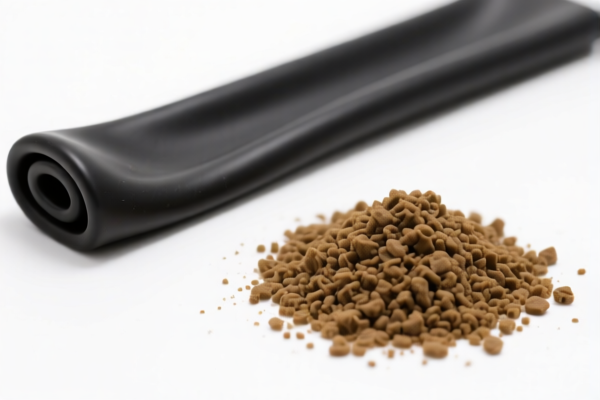
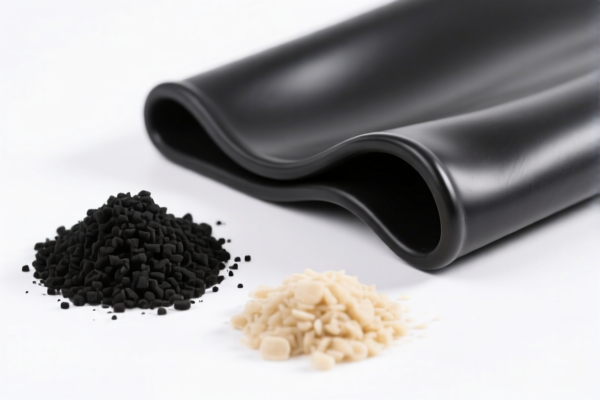
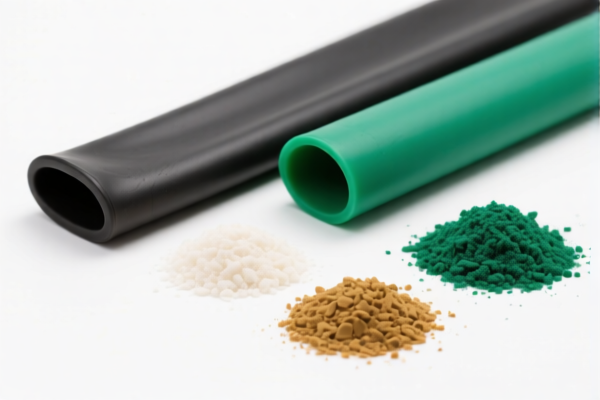
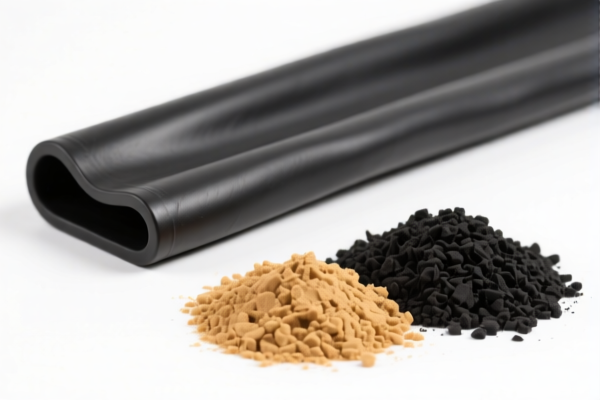
| ✅ Product Photos | ✔️ | Clear images showing the physical state (pellets, sheets, strips) and packaging. |
| ✅ Commercial Invoice | ✔️ | Clearly state "Synthetic Rubber Mixture for Tire Manufacture" to match the HS code summary. |
| ✅ Packing List | ✔️ | Weight and volume details. |
| ✅ Certificate of Origin (CO) | ✔️ | Essential for determining the 35% surtax. If originating elsewhere, lower rates may apply. |
| ✅ MSDS (Material Safety Data Sheet) | ✔️ | Required for hazardous material assessment (rubber chemicals may trigger this). |
✅ 2. Declaration Tips (Key Mantras)
🔥 "Declare State Accurately, Mix Proportions Clear, Avoid 'Tire' Only Claims!"
| Scenario | Correct Declaration | Incorrect Practice |
|---|---|---|
| Unvulcanized Sheets/Strips | 4005.10.00.00 |
Misdeclaring as "Tires" → Higher duty + penalties |
| Mixture of Synthetic + Natural | 4002.80.00.00 |
Misdeclaring as "Pure Synthetic" → Misclassification risk |
| Mixture with Plasticizers | 4002.99.00.00 |
Ignoring plasticizer content → Incomplete description |
| Raw Material for Tires | 4011.90.10.50 |
Declaring as "Finished Tires" → Wrong chapter (87.08) |
⚠️ Critical Warning:
- Do not declare this as "Finished Tires" (HS 4011.xx). This is a raw material for tires. - "Fake Rubber" is not a standard customs term. Use technical terms like "Reclaimed Rubber" or "Recycled Rubber Compounds" in official documentation to avoid ambiguity.
✅ 3. Special Case Handling
| Situation | Handling Advice |
|---|---|
| Reclaimed Rubber Content | If "Fake Rubber" refers to reclaimed rubber, ensure it is declared under the appropriate synthetic/reclaimed mixture code. Some reclaimed rubbers have different duties. |
| Plasticizer Mixtures | If the mixture contains significant plasticizers, 4002.99.00.00 may be more accurate. Provide MSDS. |
| Unvulcanized State | Must explicitly state "Unvulcanized" or "Raw Rubber" to avoid being classified as "Articles of Rubber" (which have different duties). |
| Mixed Packaging | If shipped with other rubber compounds, ensure they are separable or declared separately to avoid complex duty calculations. |
🌍 V. Global Market Clearance Comparison (2026 Latest)
| Country/Region | Recommended HS Code | Tariff Rate | Certification Requirements | Notes |
|---|---|---|---|---|
| 🇺🇸 USA | 4002.80.00.00 / 4005.10.00.00 |
35% | None (but MSDS recommended) | High surtax due to Section 301 & 122. |
| 🇨🇳 China | 4002.80.00.00 |
0% - 5% | GB Standards | Low duty if imported into China. |
| 🇪🇺 EU | 4002.80.00 |
0% - 1.7% | REACH Compliance | REACH registration required for chemicals. |
| 🇯🇵 Japan | 4002.80.00 |
5% - 6% | JIS Standards | Standard MFN rate applies. |
| 🇻🇳 Vietnam | 4002.80.00 |
0% - 4% | TCK Certificate | Potential for lower duties if origin is Vietnam. |
📌 Conclusion:
- USA is the most expensive market due to 35% total duty.
- EU and Japan offer much lower tariffs but have stricter chemical regulations (REACH, etc.).
- Consider supply chain diversification if shipping to the US to mitigate the 35% tariff burden.
📌 VI. Common Errors & Pitfalls (Blood Lessons)
❌ Error 1: Declaring "Fake Rubber" as a standard term.
👉 Consequence: Customs may reject the declaration or assign a default higher duty.
✅ Fix: Use technical terms like "Reclaimed Rubber" or "Rubber Compound."
❌ Error 2: Misdeclaring unvulcanized rubber as "Finished Rubber Articles."
👉 Consequence: Duty rate mismatch (Articles may have different rates) and potential fraud allegations.
✅ Fix: Always specify "Unvulcanized" in the description.
❌ Error 3: Ignoring Section 122 and 301 surtaxes.
👉 Consequence: Underpayment of duties, leading to fines and shipment delays.
✅ Fix: Include 35% in your cost calculation for US imports.
❌ Error 4: Failing to provide MSDS for rubber compounds.
👉 Consequence: Hazardous material hold-ups, especially if plasticizers or additives are present.
✅ Fix: Provide a comprehensive MSDS with the shipping documents.
🎯 VII. Conclusion: Professional Declaration Saves Money!
🎯 Remember the Mantra:
🔹 "Unvulcanized, Mixture, 35% Duty!"
🔹 "Fake Rubber is Reclaimed, Declare it Clearly!"
🔹 "301 + 122 = 35%, Plan Your Costs Accordingly!"
📌 Pro Tip:
If your synthetic rubber mixture is originating from countries other than China (e.g., Malaysia, Thailand, Indonesia), you may avoid the 35% surtax.
Recommendation: Apply for a Certificate of Origin and seek Advance Rulings to confirm the correct HS code and duty rate.
📣 Immediate Action:
📞 Contact a professional customs broker + Provide Product Specifications + Request HS Code Advance Ruling
🚀 Ensure your Synthetic Rubber Mixture clears customs smoothly, avoiding costly delays!
✨ Professional Clearance Starts with Accurate Classification!
💼 Every percentage point matters in your landed cost!
Customer Reviews
About HS Code Classification
The Harmonized System (HS) is an internationally standardized nomenclature developed by the World Customs Organization (WCO) to classify traded products. Over 200 countries use the HS system as the basis for customs tariffs, trade statistics, and import/export regulations.
Each HS code follows a hierarchical structure:
- Chapter (2 digits) — Broad category of goods (e.g., Chapter 84: Machinery and Mechanical Appliances)
- Heading (4 digits) — More specific grouping within the chapter
- Subheading (6 digits) — Internationally standardized breakdown, used by all WCO member countries
- National subdivisions (8-10 digits) — Country-specific extensions for further classification, such as US HTSUS 10-digit codes
Correct HS code classification is essential for smooth customs clearance, accurate duty payment, and compliance with trade regulations. Misclassification can lead to customs delays, overpayment of duties, or penalties.
When importing from CN to US, the applicable tariff rates may include:
- Most-Favored-Nation (MFN) rate — The standard duty rate applied to WTO members
- General rate — Applied to countries without trade agreements
- Trade remedy duties — Additional tariffs such as Section 301 (anti-dumping), Section 232 (national security), or countervailing duties
The information provided on this page is for reference purposes only. For official classification, please consult with your local customs authority or a licensed customs broker.