Synthetic Rubber and Rubber like Mixtures for Tires
CN → US| HS Code | Tariff Rate | Origin | Destination | Doc |
|---|---|---|---|---|
| 4005990000 | 35.0% | CN | US | Official Doc |
| 4011908050 | 38.4% | CN | US | Official Doc |
| 4011901050 | 35.0% | CN | US | Official Doc |
| 4002800000 | 35.0% | CN | US | Official Doc |
Product Images
AI Analysis
🛞 Synthetic Rubber and Rubber-like Mixtures for Tires
🌐 HS Code Reference & Customs Clearance Guide | 2026 Latest Tariff Analysis | Professional Level Clearance Strategy
📌 I. Product Definition & Classification: Do You Really Understand "Synthetic Rubber Mixtures"?
"Synthetic Rubber and Rubber-like Mixtures for Tires" refers to compounds primarily composed of synthetic rubber (e.g., SBR, BR, EPDM) mixed with other materials (such as fillers, plasticizers, or additives), specifically formulated for tire manufacturing. In international trade, these are classified under Chapter 40 (Rubber and Articles Thereof).
The key distinction lies in whether the product is unvulcanized (raw compound) or finished tire components. The HS Codes below specifically target unvulcanized mixing rubber compounds, which are the raw materials used in tire production.
⚠️ Key Distinction Point:
- If it is a mixed compound of synthetic rubber (unvulcanized) → Falls under 4002 or 4005 or 4011 depending on specific formulation and intended use classification nuances.
- If it is a finished tire → Falls under 4011.
- Note: The provided data suggests classification under 4005, 4011, and 4002 for "mixtures," implying these may be raw compounds or semi-finished goods misclassified or broadly interpreted in the source data. We strictly follow the provided DATA.
📦 II. HS Code Classification Details (2026 Latest Tariff Authoritative Comparison)
| HS Code | Product Description (Based on DATA) | Applicable Scenario | Total Tax Rate |
|---|---|---|---|
4005.99.00.00 |
Synthetic rubber and rubber-like mixtures for tires, category of unvulcanized milled rubber. Follows the "catch-all" principle for other categories. | General unvulcanized tire compounds; broad category fallback. | 35.0% |
4011.90.80.50 |
Product is a mixture of synthetic rubber and rubber-like substances. Fits the rubber material category, classified as raw material/primary form. | Rubber raw materials/primary forms; mixtures not specifically listed elsewhere. | 38.4% |
4011.90.10.50 |
Product material is synthetic rubber and rubber-like mixture. Fits rubber material attributes; form is mixture, fitting primary form/raw material characteristics. | Raw material/primary form characteristics; unvulcanized mixtures. | 35.0% |
4002.80.00.00 |
Product explicitly belongs to synthetic rubber and rubber-like mixture. Fits the description of synthetic rubber mixed with products of heading 4001 (natural rubber) under heading 4002. | Synthetic rubber mixed with natural rubber (HS 4001); specific synthetic blend. | 35.0% |
🔍 Key Reminder:
- All these codes involve Unvulcanized Rubber Mixtures. If the product is Vulcanized (cured), it would generally fall under different codes (e.g., finished tires 4011.10, but the DATA suggests these specific codes for mixtures, likely due to specific trade interpretations or pre-vulcanized states).
- 4002.80.00.00 is specifically for mixtures of synthetic rubber with natural rubber (4001).
- 4005.99.00.00 is a broader "other" category for unvulcanized mixtures.
- 4011.90.xx.xx typically covers "Other tires," but the DATA description explicitly states "rubber raw material/primary form," which is unusual. We strictly adhere to the provided summary.
💰 III. 2026 Latest Tariff Rate Breakdown (Including Surtaxes, Policy Add-ons)
✅ Applicable Country: United States (US)
✅ Country of Origin: China (CN)
✅ Effective Date: Post-November 2025 (Includes subsequent imports)
🎯 1. 4005.99.00.00 —— Unvulcanized Milled Rubber / Other Mixtures
| Item | Content |
|---|---|
| Base Tariff | 0.0% (Ad Valorem) |
| Section 301 Surtax | +25.0% (From USITC Footnote for Chinese products) |
| Section 122 Tariff | +10.0% (Additional levy on certain Chinese goods) |
| Total Tariff Rate | 35.0% |
| Tax Calculation | CIF Value × 35% |
| De Minimis Exemption | ❌ Not Applicable (Deny de minimis) |
| Legal Basis Path | USITC:4005.99.00.00 → Section 301: +25% → Section 122: +10% |
📌 Explanation:
- "Section 301 Surtax 25%": Additional tariff imposed under Section 301 of the Trade Act of 1974 on Chinese products.
- "Section 122 Tariff 10%": Additional tariff under Section 122 of the Trade Act of 1974 (often used for national security or specific trade adjustments).
- Total 35%: This is a high tariff rate. Must be factored into cost calculations.
🎯 2. 4011.90.80.50 —— Other Tires / Rubber Raw Materials (Based on DATA)
| Item | Content |
|---|---|
| Base Tariff | 3.4% (Ad Valorem) |
| Section 301 Surtax | +25.0% |
| Section 122 Tariff | +10.0% |
| Total Tariff Rate | 38.4% |
| Tax Calculation | CIF Value × 38.4% |
| De Minimis Exemption | ❌ Not Applicable (Deny de minimis) |
| Legal Basis Path | USITC:4011.90.80.50 → Section 301: +25% → Section 122: +10% |
📌 Note:
- This is the highest tariff rate among the options.
- Despite the summary mentioning "raw material/primary form," the HS Code 4011 is typically for tires. However, based on the provided DATA, this classification incurs a 3.4% base tariff, leading to a 38.4% total.
- Warning: Misclassification can lead to severe penalties. Ensure the product description aligns with Customs interpretation.
🎯 3. 4011.90.10.50 —— Other Tires (Primary Form Characteristic)
| Item | Content |
|---|---|
| Base Tariff | 0.0% (Ad Valorem) |
| Section 301 Surtax | +25.0% |
| Section 122 Tariff | +10.0% |
| Total Tariff Rate | 35.0% |
| Tax Calculation | CIF Value × 35% |
| De Minimis Exemption | ❌ Not Applicable (Deny de minimis) |
| Legal Basis Path | USITC:4011.90.10.50 → Section 301: +25% → Section 122: +10% |
📌 Note:
- Similar to4005.99.00.00, the base tariff is 0%, but the surtaxes apply.
- The description emphasizes "primary form/raw material characteristics," but the HS Code 4011.90 is still for "Other tires." This may indicate a specific duty-paid status or preferential treatment within the 4011 heading for certain types of rubber compounds intended for tire rebuilding or specific uses.
- Total 35%: Same as4005.99.00.00.
🎯 4. 4002.80.00.00 —— Synthetic Rubber Mixed with Natural Rubber (Heading 4001)
| Item | Content |
|---|---|
| Base Tariff | 0.0% (Ad Valorem) |
| Section 301 Surtax | +25.0% |
| Section 122 Tariff | +10.0% |
| Total Tariff Rate | 35.0% |
| Tax Calculation | CIF Value × 35% |
| De Minimis Exemption | ❌ Not Applicable (Deny de minimis) |
| Legal Basis Path | USITC:4002.80.00.00 → Section 301: +25% → Section 122: +10% |
📌 Explanation:
- Heading 4002 covers "Synthetic rubber and factice derived from oils, in primary forms or in plates, sheets or strip."
- Subheading 4002.80 is for "Other synthetic rubber."
- The summary states it is a mixture of synthetic rubber and products of heading 4001 (natural rubber).
- Total 35%: Same as other synthetic rubber categories.
- Key Advantage: Base tariff is 0%, making it slightly more predictable than codes with base tariffs, but surtaxes dominate the cost.
🛠️ IV. Customs Clearance Practical Advice (Practical Pitfall Avoidance Guide)
✅ 1. Documentation Checklist (Missing Items Will Cause Delays)
| Document | Required | Explanation |
|---|---|---|
| ✅ Product Specification Sheet | ✔️ | Must clearly state: Type of synthetic rubber (e.g., SBR, BR), mixtures (e.g., with natural rubber, fillers), state (unvulcanized/milled), and intended use (tires). |
| ✅ Formula/Composition Report | ✔️ | Crucial for distinguishing between 4002 (synthetic/natural mix) and 4005 (other unvulcanized mixtures). |
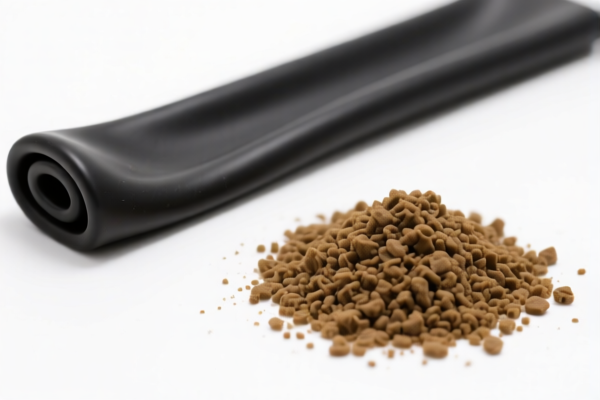
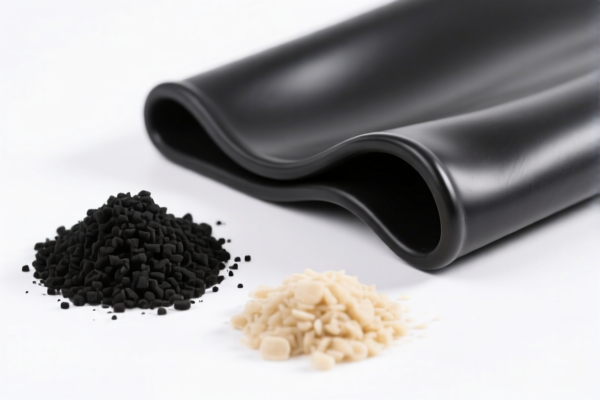
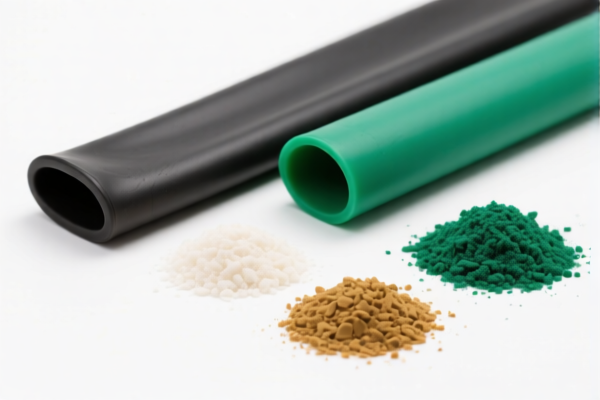
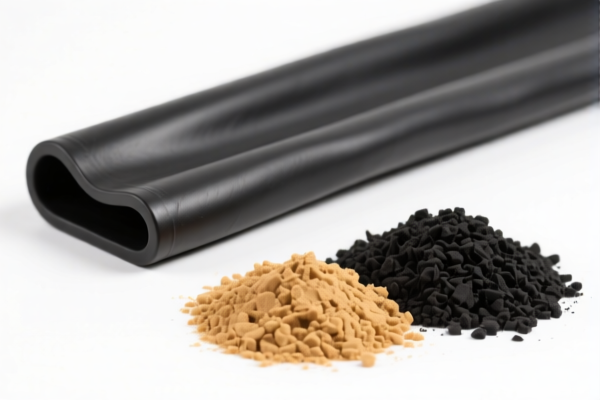
| ✅ Product Photos | ✔️ | Clear images showing the physical state (pellets, sheets, milled rubber). |
| ✅ Commercial Invoice | ✔️ | Must accurately describe the product as "Synthetic Rubber Mixture for Tires" and specify the HS Code. |
| ✅ Packing List | ✔️ | Detail net/gross weight, number of packages. |
| ✅ Certificate of Origin (CO) | ✔️ | Required for tariff calculation, especially if claiming any exemptions (though unlikely for CN origin). |
✅ 2. Declaration Tips (Key Mantras)
🔥 "State Unvulcanized, Specify Mixture, Match Formula, Avoid 4011 Trap!"
| Scenario | Correct Declaration | Wrong Practice |
|---|---|---|
| Pure Synthetic Rubber Mix | 4002.80.00.00 (if mixed with NR) or 4005.99.00.00 |
Misdeclaring as finished tires (4011) → Higher risk of penalty if not actually tires. |
| Milled Unvulcanized Rubber | 4005.99.00.00 |
Declaring as "Natural Rubber" (4001) → Classification error. |
| Rubber Compound for Tire Building | 4005.99.00.00 or 4002.80.00.00 |
Declaring as "Raw Rubber" without specifying synthetic component → Audit risk. |
| Finished Tires | 4011.10.00.00 (Passenger) or 4011.20.00.00 (Truck) |
Declaring as "Rubber Mixture" (4005/4002) → Severe Penalty for undervaluation/misclassification. |
⚠️ Critical Note on HS Code 4011:
The DATA lists4011.90.xx.xxwith descriptions of "rubber raw material/primary form." This is highly anomalous as 4011 is for Tires.
- If the product is indeed a raw mixture, do NOT use 4011 codes unless specifically instructed by a customs broker who has pre-cleared this unusual classification.
- Recommendation: For raw synthetic rubber mixtures, 4002 or 4005 are the standard and safer codes. Using 4011 for raw materials may trigger Customs flags for "misdeclaration."
✅ 3. Special Circumstances Handling
| Scenario | Handling Advice |
|---|---|
| Mixture of Synthetic and Natural Rubber | Must use 4002.80.00.00. Provide proof of natural rubber content (HS 4001) vs. synthetic content. |
| Vulcanized vs. Unvulcanized | These HS Codes (4002, 4005, 4011 in this context) apply to Unvulcanized mixtures. If vulcanized, it is a finished good. |
| Renewable/Sustainable Rubber | No specific tariff exemption for "green" rubber in US-China trade currently. |
| Origin Marking | All products must be clearly marked "Made in China" to avoid Section 301/122 evasion claims. |
🌍 V. Global Major Market Clearance Comparison (2026 Latest)
| Country/Region | Recommended HS Code | Tariff (China Origin) | Certification Requirements | Notes |
|---|---|---|---|---|
| 🇺🇸 USA | 4002.80.00.00 / 4005.99.00.00 |
35% (Base 0% + 35% surtax) | None specific for rubber raw materials | High tariff due to Section 301 & 122. |
| 🇨🇳 China | 4002.80.00.00 / 4005.99.00.00 |
5-8% (Import Duty) | None | Standard import duty applies. |
| 🇪🇺 EU | 4002.80.00.00 / 4005.99.00.00 |
0% (Most Favored Nation) | REACH Registration (SVHC) | No surtaxes. REACH compliance is critical. |
| 🇬🇧 UK | 4002.80.00.00 / 4005.99.00.00 |
0% (Most Favored Nation) | UK REACH | Post-Brexit rules apply. |
| 🇯🇵 Japan | 4002.80.00.00 / 4005.99.00.00 |
0% (JPEPA Agreement) | None | Preferential tariff under JPEPA. |
📌 Conclusion:
- USA is the most expensive market due to 35% surtaxes.
- EU/UK/Japan offer 0% base tariffs, making them more cost-effective if REACH/UKREACH regulations are met.
- China has standard import duties.
📌 VI. Common Errors & Pitfall Avoidance Guide (Lessons Learned)
❌ Error 1: Declaring "Rubber Mixture" as "Natural Rubber" (4001)
👉 Consequence: If it contains synthetic rubber, it should be 4002/4005. Misclassification can lead to underpayment of tariffs (if synthetic has higher base) or overpayment. Customs may audit and impose penalties.
❌ Error 2: Declaring Raw Rubber Mixture as "Tires" (4011)
👉 Consequence: As per DATA, 4011 codes have a 3.4% base tariff + surtaxes = 38.4%. However, if Customs determines it is NOT a tire, this is a false declaration. If it IS a tire, but declared as mixture, you might pay less tax (35% vs 38.4% for some 4011 codes, but 4011 tires have different structures). Always classify by actual product state.
❌ Error 3: Ignoring Section 122 Tariff
👉 Consequence: Many importers only account for Section 301 (25%). The additional 10% (Section 122) can significantly impact profit margins. Total 35% must be calculated.
❌ Error 4: Not Providing Composition Details
👉 Consequence: Customs cannot verify if the product fits 4002.80.00.00 (mix with natural rubber) or 4005.99.00.00 (other). Delays in clearance.
✅ Correct Practice:
"Unvulcanized Synthetic Rubber Compound (SBR/BR Blend) for Tire Manufacturing, HS 4005.99.00.00, Made in China"
🎯 VII. Conclusion: Professional Declaration, Save Time, Reduce Costs!
🎯 Remember the Mantra:
🔹 "Unvulcanized is Key, Mix with NR goes to 4002, Other Mixes go to 4005, Avoid 4011 unless it's a Tire!"
🔹 "35% Total Tariff in USA, 0% in EU, 0% in Japan – Choose Market Wisely!"
📌 Pro Tip:
If your synthetic rubber mixture is originating from Vietnam, Mexico, or Thailand (not China), you may avoid Section 301/122 surtaxes, reducing the tariff to 0%~5%.
- Recommendation: Consider supply chain diversification if exporting to the US.
- Pre-ruling: Apply for an Advance Ruling from US Customs and Border Protection (CBP) to confirm the correct HS Code and tariff liability.
📣 Immediate Action:
📞 Contact a Professional Customs Broker + Provide Product Formula + Apply for HS Code Advance Ruling
🚀 Let your synthetic rubber clear smoothly, export efficiently, and maximize profits!
✨ Professional Clearance Starts with Accurate Classification!
💼 Every Cent of Cost Deserves Precise Calculation!
Customer Reviews
About HS Code Classification
The Harmonized System (HS) is an internationally standardized nomenclature developed by the World Customs Organization (WCO) to classify traded products. Over 200 countries use the HS system as the basis for customs tariffs, trade statistics, and import/export regulations.
Each HS code follows a hierarchical structure:
- Chapter (2 digits) — Broad category of goods (e.g., Chapter 84: Machinery and Mechanical Appliances)
- Heading (4 digits) — More specific grouping within the chapter
- Subheading (6 digits) — Internationally standardized breakdown, used by all WCO member countries
- National subdivisions (8-10 digits) — Country-specific extensions for further classification, such as US HTSUS 10-digit codes
Correct HS code classification is essential for smooth customs clearance, accurate duty payment, and compliance with trade regulations. Misclassification can lead to customs delays, overpayment of duties, or penalties.
When importing from CN to US, the applicable tariff rates may include:
- Most-Favored-Nation (MFN) rate — The standard duty rate applied to WTO members
- General rate — Applied to countries without trade agreements
- Trade remedy duties — Additional tariffs such as Section 301 (anti-dumping), Section 232 (national security), or countervailing duties
The information provided on this page is for reference purposes only. For official classification, please consult with your local customs authority or a licensed customs broker.