Synthetic Rubber for Automotive Use
CN → US| HS Code | Tariff Rate | Origin | Destination | Doc |
|---|---|---|---|---|
| 4005100000 | 35.0% | CN | US | Official Doc |
| 4011901050 | 35.0% | CN | US | Official Doc |
| 4002800000 | 35.0% | CN | US | Official Doc |
| 4002990000 | 35.0% | CN | US | Official Doc |
Product Images
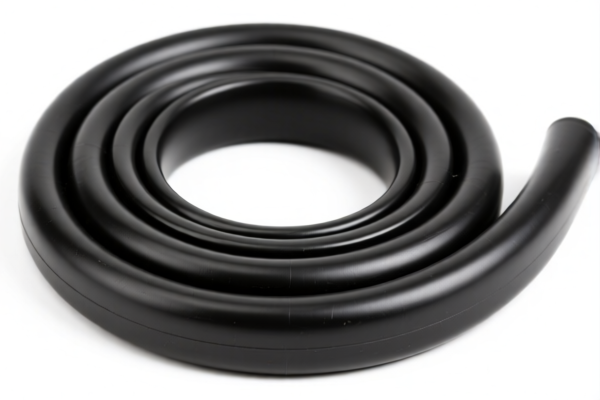
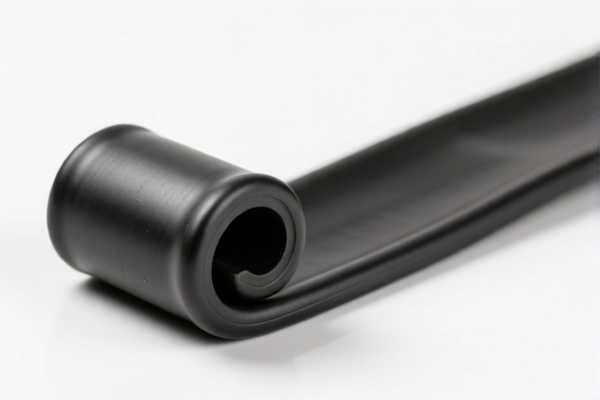
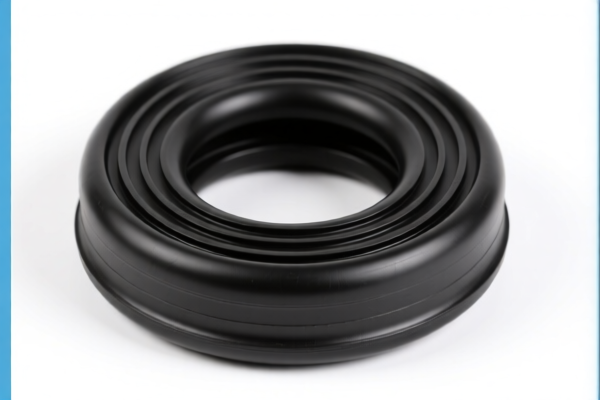
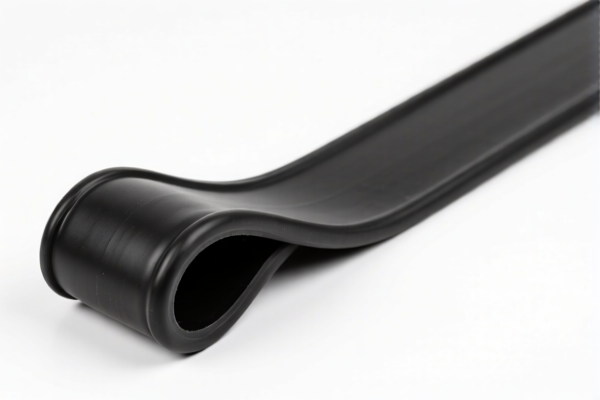
AI Analysis
🚗 Synthetic Rubber for Automotive Use
🌐 HS Code Reference & Clearance Guide | 2026 Latest Tariff Analysis | Professional Clearance Strategy
📌 I. Product Definition & Classification: What Exactly Is "Automotive Synthetic Rubber"?
In the global automotive supply chain, Synthetic Rubber is not a single product but a complex category of polymers used for tires, seals, hoses, and vibration dampeners. Under the Harmonized System (HS), classification depends strictly on the physical state (raw material vs. semi-finished good) and specific application.
For U.S. importers, the most critical distinction is whether the rubber is in its primary form (raw, unvulcanized, bulk material) or a compound/mixture intended for specific end-products like tires. Misclassification here leads to massive tariff penalties due to USITC Section 301 and IEEPA provisions.
⚠️ Key Distinction Point:
- If it is a pre-mix specifically designed for tires and remains unvulcanized → 4005.10.00.00
- If it is a raw compound or primary form mixture (general purpose) → 4011.90.10.50
- If it is a generic synthetic rubber mixture not meeting 4005/4001 definitions strictly → 4002.80.00.00
- If it is a mixture involving both 4001 (natural) and 4002 (synthetic) types → 4002.99.00.00
📦 II. HS Code Classification Details (2026 Latest Tariff Authority)
| HS Code | Product Description | Application Scenario | Tax Status |
|---|---|---|---|
4005.10.00.00 |
Mixtures of synthetic rubber and other substances (including carbon black), in primary forms or plates, sheets, or strips, suitable for tire manufacturing | Tire treads, sidewalls, unvulcanized tire components | ⚠️ High Tariff |
4011.90.10.50 |
Synthetic and "fake" rubber mixtures, featuring primary form/raw material characteristics | General industrial rubber stocks, unformed compounds | ⚠️ High Tariff |
4002.80.00.00 |
Synthetic rubber and mixtures thereof, falling within heading 4002, not elsewhere specified | Generic synthetic rubber blends, specific synthetic polymers | ⚠️ High Tariff |
4002.99.00.00 |
Synthetic rubber and mixtures thereof, including blends of heading 4001 products with heading 4002 products | Blends of Natural Rubber (4001) + Synthetic Rubber (4002) | ⚠️ High Tariff |
🔍 Important Note:
- All four codes listed above represent Chinese-origin goods subject to heavy punitive tariffs. - The term "Primary Form" is crucial. If the rubber is vulcanized (rubberized), it would fall under completely different headings (e.g., 4011 for tires, 4016 for other articles) with different tax rates. These codes apply only to unvulcanized/raw forms.
💰 III. 2026 Latest Tariff Rate Breakdown (Including Surcharges)
✅ Applicable Country: United States (US)
✅ Country of Origin: China (CN)
✅ Effective Date: November 10, 2025 (and subsequent imports)
🎯 1. 4005.10.00.00 – Tire-Grade Synthetic Rubber Mixtures
| Item | Content |
|---|---|
| Base Tariff | 0% (ad valorem) |
| USITC Additional Duty | +25% (Section 301) |
| IEEPA Additional Duty | +10% (China/HK Products, effective Nov 10, 2025) |
| Total Tax Rate | 35.0% |
| Calculation Method | CIF Value × 35% |
| De Minimis Eligibility | ❌ None (deny_de_minimis applies to Section 301 goods) |
| Legal Basis Path | USITC:4005.10.00.00 → FOOTNOTE:9903.88.01 → IEEPA:9903.01.25 |
📌 Explanation:
- The 25% is the standard Section 301 tariff on Chinese industrial goods. - The 10% is the new IEEPA surcharge targeting specific Chinese imports. - Total: 35%. This is a significant cost burden that must be factored into landed costs.
🎯 2. 4011.90.10.50 – Primary Form Synthetic Rubber Mixtures
| Item | Content |
|---|---|
| Base Tariff | 0% |
| USITC Additional Duty | +25% |
| IEEPA Additional Duty | +10% |
| Total Tax Rate | 35.0% |
| Calculation Method | CIF Value × 35% |
| De Minimis Eligibility | ❌ None |
| Legal Basis Path | USITC:4011.90.10.50 → FOOTNOTE:9903.88.01 → IEEPA:9903.01.24 |
📌 Note:
- Although the HS code looks like a "tire part" (4011), the description clarifies it is a mixture in primary form. It is treated similarly to raw material tariffs. - Even if it’s a specialty rubber blend, the 35% rate applies strictly.
🎯 3. 4002.80.00.00 – General Synthetic Rubber Mixtures
| Item | Content |
|---|---|
| Base Tariff | 0% |
| USITC Additional Duty | +25% |
| IEEPA Additional Duty | +10% |
| Total Tax Rate | 35.0% |
| Calculation Method | CIF Value × 35% |
| De Minimis Eligibility | ❌ None |
| Legal Basis Path | USITC:4002.80.00.00 → FOOTNOTE:9903.88.01 → IEEPA:9903.01.25 |
📌 Explanation:
- This code is often used when the specific subtype doesn’t fit 4005.10 (tire-specific) or 4002.19 (styrene-butadiene). - The 35% total remains constant for all Chinese-origin synthetic rubber imports in this category.
🎯 4. 4002.99.00.00 – Mixed Natural/Synthetic Rubber Blends
| Item | Content |
|---|---|
| Base Tariff | 0% |
| USITC Additional Duty | +25% |
| IEEPA Additional Duty | +10% |
| Total Tax Rate | 35.0% |
| Calculation Method | CIF Value × 35% |
| De Minimis Eligibility | ❌ None |
| Legal Basis Path | USITC:4002.99.00.00 → FOOTNOTE:9903.88.01 → IEEPA:9903.01.24 |
📌 Critical Warning:
- Many automotive rubber components use a blend of Natural Rubber (NR) and Synthetic Rubber (SR). - If the blend is not classified under 4005 (tire compound) or 4002.80, it falls here. - The 35% rate is non-negotiable for Chinese origin. Do not attempt to split NR and SR components to lower duties; they are classified as a single mixture.
🛠️ IV. Clearance Practical Advice (Battle-Tested Pitfall Avoidance)
✅ 1. Required Documentation Checklist (Non-Negotiable)
| Document | Mandatory? | Details |
|---|---|---|
| ✅ Product Specification Sheet | ✔️ | Must detail chemical composition, viscosity, and unvulcanized state. |
| ✅ Certificate of Origin (CO) | ✔️ | Explicitly state "Made in China". Critical for Section 301/IEEPA applicability. |
| ✅ Commercial Invoice | ✔️ | Must describe goods as "Synthetic Rubber Mixture, Unvulcanized". Avoid vague terms like "Car Parts". |
| ✅ Technical Data Sheet (TDS) | ✔️ | Proves the product is in "Primary Form" (raw) and not a finished good. |
| ✅ Packaging List | ✔️ | Show net/gross weight clearly. |
| ✅ US Agent Info | ✔️ | Required for Customs Broker communication. |
✅ 2. Declaration Strategy (Key Mantra)
🔥 "Raw State Proof, Origin Clear, Code Exact, Tariff Avoided!"
| Scenario | Correct Declaration | Incorrect Action | Consequence |
|---|---|---|---|
| Unvulcanized Tire Compound | 4005.10.00.00 |
Declare as "Rubber Sheets" | Misclassification penalty + 35% tariff |
| General Synthetic Blend | 4002.80.00.00 |
Declare as "Natural Rubber" | Fraud allegation + high penalties |
| Mixed NR/SR Blend | 4002.99.00.00 |
Declare only as "Synthetic" | Incomplete data + detention |
| Pre-formed Gaskets | NOT 4002/4011 | Declare as 4002.99.00.00 |
Wrong Code! Pre-formed items go to 4016/4017 with different (often lower) duties. |
📌 Crucial Tip:
- If the product is already shaped (e.g., cut gaskets, pre-molded seals), it is NO LONGER in "primary form." - It may fall under 4016.93 or 4017.00 with potentially different tariffs. - Do not declare shaped products under 4005/4002/4011 codes. This is the #1 cause of customs holds.
✅ 3. Special Cases & Mitigation
| Situation | Handling Advice |
|---|---|
| OEM Custom Compounds | Provide formulation sheets. If >50% synthetic, use 4002 series. If tire-specific, use 4005.10. |
| Transshipment from Vietnam/Malaysia | ⚠️ High Risk of scrutiny. CBP will check for minimal processing. If just repackaged, origin remains China → 35% tariff applies. |
| Small Samples (<$800) | ❌ No De Minimis Exemption. Section 301 goods (including these rubber codes) are explicitly excluded from the $800 de minimis rule. Pay the 35% even for samples. |
| Mixed Containers (Rubber + Tires) | Declare rubber separately under 4002/4005/4011 and tires under 4011. Do not bundle. |
🌍 V. Global Market Comparison (2026 Latest)
| Country/Region | Recommended HS Code | Base Tariff | Surcharges | Total Effective Rate | Notes |
|---|---|---|---|---|---|
| 🇺🇸 USA | 4005.10, 4002.80, etc. |
0% | +25% (301) +10% (IEEPA) | 35.0% | Strict enforcement. No de minimis. |
| 🇨🇳 China | 4005/4002 | 5-6% | None | ~5-6% | Export duty may apply depending on type. |
| 🇪🇺 EU | 4005/4002 | 6.5% | None | 6.5% | No Section 301/IEEPA equivalent. |
| 🇲🇽 Mexico | 4005/4002 | 0-6% | None (if USMCA) | 0-6% | Verify USMCA origin criteria. |
📌 Conclusion:
- The USA is the most expensive market for Chinese synthetic rubber due to the 35% combined tariff. - EU and Asia-Pacific markets offer significant cost advantages (6-7% total). - Consider supply chain diversification to Vietnam/Mexico only if substantial transformation occurs, not just assembly.
📌 VI. Common Errors & Pitfalls (Blood-Teaching Lessons)
❌ Error 1: Declaring finished rubber parts (e.g., car door seals) under 4002.80.00.00
👉 Consequence: Customs will reclassify to 4016.93 or 4017.00. If you already paid 35%, you might get a refund, but if they deny it, you pay fines. Always confirm physical state.
❌ Error 2: Assuming small shipments are exempt
👉 Consequence: NO DE MINIMIS. Every single kilogram of Chinese synthetic rubber incurs the 35% tax, even for free samples. Plan logistics accordingly.
❌ Error 3: Using vague descriptions like "Rubber Material"
👉 Consequence: Customs examiners will choose the highest-risk code. Be specific: "Styrene-Butadiene Rubber (SBR), Unvulcanized, Primary Form, for Tire Tread Application."
✅ Correct Practice:
"Synthetic Rubber Mixture, Styrene-Butadiene Based, Unvulcanized, in Bales, HS 4005.10.00.00, Origin: China."
🎯 VII. Conclusion: Precision Classification Saves Millions!
🎯 Remember the Mantra:
🔹 "Raw Form Only for 35%, Shaped Goods Need New Code."
🔹 "No De Minimis for Section 301 – Pay on Every Dollar."
🔹 "Origin is Key – Vietnam Re-packaging Fails."
📌 Pro Tip:
If your synthetic rubber is sourced from China, budget for the 35% total landed cost increase. If possible, source from Non-Chinese origins (e.g., South Korea, Japan, Thailand) to avoid Section 301 and IEEPA surcharges entirely. For large volumes, apply for HS Code Advance Rulings from CBP to lock in the correct classification and avoid post-entry audits.
📣 Immediate Action:
📞 Engage a licensed Customs Broker + Provide Physical Samples/Photos + Verify "Unvulcanized" Status
🚀 Optimize your landed cost, ensure compliance, and keep your automotive supply chain moving!
✨ Professional Clearance Starts with Accurate Classification!
💼 Your Bottom Line Depends on the HS Code!
Customer Reviews
About HS Code Classification
The Harmonized System (HS) is an internationally standardized nomenclature developed by the World Customs Organization (WCO) to classify traded products. Over 200 countries use the HS system as the basis for customs tariffs, trade statistics, and import/export regulations.
Each HS code follows a hierarchical structure:
- Chapter (2 digits) — Broad category of goods (e.g., Chapter 84: Machinery and Mechanical Appliances)
- Heading (4 digits) — More specific grouping within the chapter
- Subheading (6 digits) — Internationally standardized breakdown, used by all WCO member countries
- National subdivisions (8-10 digits) — Country-specific extensions for further classification, such as US HTSUS 10-digit codes
Correct HS code classification is essential for smooth customs clearance, accurate duty payment, and compliance with trade regulations. Misclassification can lead to customs delays, overpayment of duties, or penalties.
When importing from CN to US, the applicable tariff rates may include:
- Most-Favored-Nation (MFN) rate — The standard duty rate applied to WTO members
- General rate — Applied to countries without trade agreements
- Trade remedy duties — Additional tariffs such as Section 301 (anti-dumping), Section 232 (national security), or countervailing duties
The information provided on this page is for reference purposes only. For official classification, please consult with your local customs authority or a licensed customs broker.