Synthetic Rubber for Construction
CN → US| HS Code | Tariff Rate | Origin | Destination | Doc |
|---|---|---|---|---|
| 4016940000 | 39.2% | CN | US | Official Doc |
| 4002190015 | 35.0% | CN | US | Official Doc |
| 4016996050 | 37.5% | CN | US | Official Doc |
| 4002190016 | 35.0% | CN | US | Official Doc |
| 4002190019 | 35.0% | CN | US | Official Doc |
Product Images
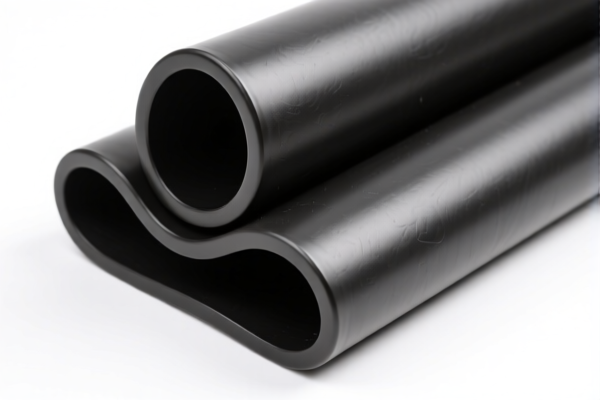
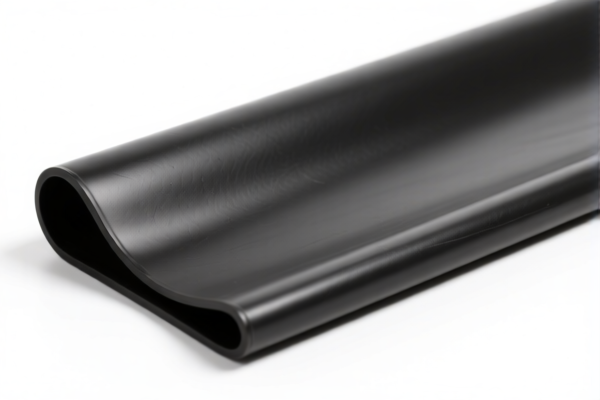
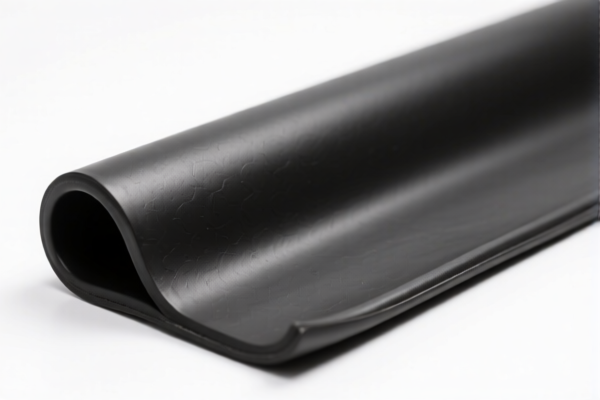
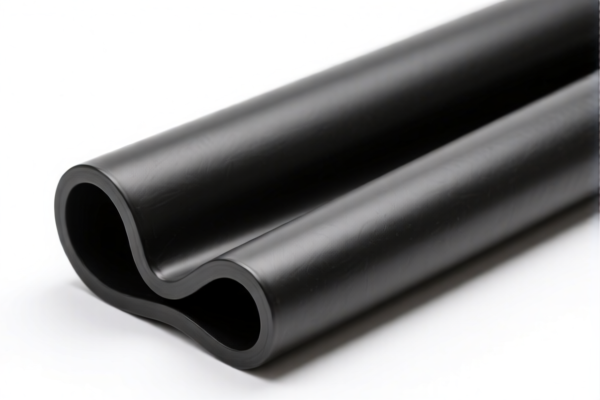
AI Analysis
🏗️ Synthetic Rubber for Construction (and Marine/Industrial Applications)
🌐 HS Code Reference & Customs Clearance Guide | 2026 Latest Tariff Analysis | Professional Clearance Strategy
📌 I. Product Definition & Classification: What Exactly is "Synthetic Rubber" in Trade?
Synthetic rubber is a man-made elastomer, chemically similar to natural rubber but produced from petroleum by-products. In the construction and marine sectors, it is primarily used for seals, gaskets, hoses, waterproofing membranes, and shock absorption.
In international trade, it is strictly divided based on state (raw vs. processed) and application:
- Raw/Intermediate Forms (Chapters 40.02):
- Unvulcanized latex, powders, granules, or specific types like SBR (Styrene-Butadiene Rubber). These are considered "raw materials" for manufacturing.
- Vulcanized/Finished Goods (Chapter 40.16):
- Rubber products that have been chemically hardened (vulcanized) for specific uses, such as marine seals, construction joints, or general-purpose gaskets.
⚠️ Key Distinction Point:
- If the product is a powder, latex, or unstitched sheet meant for further processing →归类 to 4002.xx (Raw Material).
- If the product is a finished, vulcanized item (e.g., a pre-made seal, gasket, or molded part) → 归类 to 4016.xx (Finished Rubber Article).
📦 II. HS Code Classification Details (2026 Latest Tariff Authority Reference)
| HS Code | Product Description | Application Context | State of Rubber |
|---|---|---|---|
4002.19.00.15 |
Synthetic Rubber, Styrene-Butadiene Rubber (SBR/XSBR), Other Form | Raw material for tires, adhesives, or construction coatings | ❌ Unvulcanized (Raw) |
4002.19.00.16 |
Synthetic Rubber, Petroleum-Derived SBR, Form Not Specified | General raw synthetic rubber for industrial mixing | ❌ Unvulcanized (Raw) |
4002.19.00.19 |
Synthetic Rubber Powder, Primary Form, Raw Material/Granules | Powdered rubber for concrete additives or manufacturing | ❌ Unvulcanized (Powder/Granule) |
4016.94.00.00 |
Synthetic Rubber, Vulcanized, Used for Marine Applications | Marine seals, boat fenders, underwater gaskets | ✅ Vulcanized (Finished) |
4016.99.60.50 |
Synthetic Rubber, Vulcanized, General Purpose, Non-Specific Use | Construction seals, generic gaskets, industrial mats | ✅ Vulcanized (Finished) |
🔍 Crucial Note:
- Raw materials (4002 series) and Vulcanized goods (4016 series) are in different chapters and have different tax treatments.
- Do not confuse "Rubber for Construction" (which could be raw material added to concrete) with "Construction Rubber Seals" (vulcanized finished goods). The HS code depends entirely on the physical state and intent.
💰 III. 2026 Latest Tariff Rate Breakdown (Including Surcharges & Policy Add-ons)
✅ Applicable Country: United States (US)
✅ Country of Origin: China (CN)
✅ Effective Date: From November 10, 2025 (including subsequent imports)
🎯 1. 4002.19.00.15 & 4002.19.00.16 & 4002.19.00.19 — Raw Synthetic Rubber (SBR/Powder)
| Item | Details |
|---|---|
| Base Duty Rate | 0.0% (Ad Valorem) |
| USITC Additional Duty | +25% (Section 301 Tariff) |
| IEEPA Additional Duty | +10% (Section 122 Tariff on Chinese Products) |
| Total Tax Rate | 35.0% |
| Calculation Basis | CIF Value × 35% |
| De Minimis Exemption | ❌ Denied (deny_de_minimis) |
| Legal Authority Path | IEEPA:9903.01.24 → USITC:4002.19.00.xx → FOOTNOTE:301 |
📌 Explanation:
- Although the base tariff for raw SBR is 0%, the 25% Section 301 tariff and 10% Section 122 tariff apply.
- Total 35% is a significant cost for raw material importers.
- This applies to SBR latex, granules, and powders.
🎯 2. 4016.94.00.00 — Vulcanized Rubber for Marine Use
| Item | Details |
|---|---|
| Base Duty Rate | 4.2% |
| USITC Additional Duty | +25% (Section 301 Tariff) |
| IEEPA Additional Duty | +10% (Section 122 Tariff) |
| Total Tax Rate | 39.2% |
| Calculation Basis | CIF Value × 39.2% |
| De Minimis Exemption | ❌ Denied (deny_de_minimis) |
| Legal Authority Path | IEEPA:9903.01.25 → USITC:4016.94.00.00 → FOOTNOTE:301 |
📌 Explanation:
- Marine-specific vulcanized rubber carries a higher base duty (4.2%) compared to raw materials.
- The total 39.2% rate makes marine rubber imports highly sensitive to cost fluctuations.
🎯 3. 4016.99.60.50 — General Purpose Vulcanized Rubber (e.g., Construction Seals)
| Item | Details |
|---|---|
| Base Duty Rate | 2.5% |
| USITC Additional Duty | +25% (Section 301 Tariff) |
| IEEPA Additional Duty | +10% (Section 122 Tariff) |
| Total Tax Rate | 37.5% |
| Calculation Basis | CIF Value × 37.5% |
| De Minimis Exemption | ❌ Denied (deny_de_minimis) |
| Legal Authority Path | IEEPA:9903.01.24 → USITC:4016.99.60.50 → FOOTNOTE:301 |
📌 Explanation:
- General-purpose vulcanized rubber (used in construction joints, seals) has a 2.5% base rate.
- Total 37.5% applies.
- Key Distinction: If the product is a "general" rubber part for construction (not specifically marine), it falls under4016.99.60.50, not4016.94.00.00.
🛠️ IV. Customs Clearance Practical Advice (Real-World Pitfall Guide)
✅ 1. Required Documentation Checklist (Mandatory)
| Document | Required? | Description |
|---|---|---|
| ✅ Product Specification Sheet | ✔️ | Must state: Type (SBR, NBR, EPDM), State (Raw/Vulcanized), Composition. |
| ✅ Commercial Invoice | ✔️ | Clearly describe goods: "Vulcanized Synthetic Rubber Seal" or "SBR Rubber Powder". Avoid vague terms like "Rubber Part". |
| ✅ Certificate of Origin (CO) | ✔️ | Critical for verifying Chinese origin to apply correct surcharges. |
| ✅ Packing List | ✔️ | Detail gross/net weight. |
| ✅ Technical Data Sheet (TDS) | ✔️ | For vulcanized goods, provide photos showing the finished shape to prove it’s not raw material. |
| ✅ Third-Party Lab Report | Optional but Recommended | To prove chemical composition (e.g., % SBR content) if disputed. |
✅ 2. Declaration Tips (Critical Keywords)
🔥 “State Matters: Raw is 35%, Finished is 37.5%~39.2%!”
| Scenario | Correct Declaration | Incorrect Practice | Risk |
|---|---|---|---|
| SBR Powder/Granules | 4002.19.00.19 - Synthetic Rubber Powder, Primary Form |
Declaring as "Rubber Pellets for Manufacturing" (Vague) | Misclassification → Penalty |
| SBR Latex/Sheets | 4002.19.00.15/16 - Synthetic Rubber, SBR, Other Form |
Declaring as "Vulcanized Rubber" | Under-declaration of Tax → High Risk |
| Marine Seals/Gaskets | 4016.94.00.00 - Vulcanized Rubber for Marine Use |
Declaring as "General Rubber Parts" (4016.99) |
Overpayment (39.2% vs 37.5%) or Under-declaration |
| Construction Joints/Seals | 4016.99.60.50 - Vulcanized Rubber, General Purpose |
Declaring as "Raw Rubber" (4002) |
Severe Penalty (Raw is 0% base, Finished is 2.5-4.2%) |
✅ 3. Special Cases & Handling
| Scenario | Handling Advice |
|---|---|
| Mixed Shipments | If a container contains both raw SBR and vulcanized seals, must split declaration. Do not mix HS codes in one line item. |
| OEM Custom Seals | Provide customer design drawings. If the design is for marine use, declare as 4016.94.00.00. If for general construction, use 4016.99.60.50. |
| "Rubber for Construction" | Clarify: Is it latex added to concrete (Raw 4002) or waterproof membrane/seal (Finished 4016)? This is the #1 cause of customs delays. |
| Section 122 (IEEPA) Impact | Remember the +10% IEEPA tariff is specific to Chinese origin. If rubber is sourced from Malaysia or Vietnam, this 10% may be avoidable (subject to current trade rules). |
🌍 V. Global Market Comparison (2026 Latest)
| Country/Region | Recommended HS Code | Duty Rate (CN Origin) | Certification Required | Notes |
|---|---|---|---|---|
| 🇺🇸 USA | 4002.19.00.19 / 4016.99.60.50 |
35.0% ~ 39.2% | No special certs, but strict origin verification | High tariffs due to Section 301 & 122 |
| 🇨🇳 China | 4002 / 4016 |
5% ~ 10% | CCC (if specific types) | No additional surcharges |
| 🇪🇺 EU | 4002 / 4016 |
0% ~ 4.2% | REACH Compliance | No Section 301 equivalent |
| 🇦🇺 Australia | 4002 / 4016 |
5% ~ 10% | RCM (if electrical components) | Moderate duty |
| 🇯🇵 Japan | 4002 / 4016 |
0% ~ 3.5% | JIS Standards | Low duty for most rubber |
📌 Conclusion:
- USA is the most expensive market for Chinese synthetic rubber due to cumulative surcharges (25% + 10%).
- Raw materials (4002) have a lower base rate (0%) but still end up at 35% total.
- Vulcanized goods (4016) have higher base rates, leading to 37.5% - 39.2% total.
📌 VI. Common Errors & Pitfalls (Lessons Learned)
❌ Error 1: Declaring "Vulcanized Rubber Seals" as "Synthetic Rubber" (Raw Material)
👉 Consequence: Customs may reclassify, leading to underpayment of base duty (0% vs 2.5-4.2%) + penalties.
❌ Error 2: Not specifying "Marine Use" for marine seals
👉 Consequence: Declared as 4016.99.60.50 (37.5%) instead of 4016.94.00.00 (39.2%)? Actually, marine is often more specialized. Check if marine-specific classification saves cost. In this data, Marine is 39.2%, General is 37.5%. So, misclassifying general as marine leads to overpayment.
❌ Error 3: Ignoring Section 122 (IEEPA) 10% Surcharges
👉 Consequence: Budgeting only for 25% tariff → Unexpected 35-39% total cost → Profit margin erosion.
❌ Error 4: Vague Description: "Rubber Parts"
👉 Consequence: CBP (Customs Border Protection) will request additional info, causing 3-5 days delay.
✅ Correct Practice:
"Vulcanized Synthetic Rubber Seal, EPDM, for Marine Hull, Model XYZ, Made in China"
OR
"Styrene-Butadiene Rubber (SBR) Latex, Unvulcanized, for Construction Adhesives, Made in China"
🎯 VII. Conclusion: Precise Classification, Cost Control, Smooth Clearance!
🎯 Remember the Mantra:
🔹 "Raw vs. Finished: State Defines the Code."
🔹 "US Tariffs: 0% Base + 25% Section 301 + 10% IEEPA = 35-39% Total."
🔹 "Be Specific: 'Marine' vs 'General' Changes Your Rate by 1.7%!"
📌 Pro Tip:
If you are importing raw SBR powder or latex, ensure your supplier provides a Material Safety Data Sheet (MSDS) and Certificate of Analysis to prove it is unvulcanized. If importing vulcanized seals, provide product images showing the final shape.
📣 Action Step:
📞 Contact your customs broker with product specs + intended use (Marine vs. General Construction).
🚀 Apply for Advance Ruling if your product is new to the US market to lock in the HS Code and tariff rate.
✨ Professional Clearance Starts with Accurate Classification!
💼 Every Percent of Duty Saved is Pure Profit!
Customer Reviews
About HS Code Classification
The Harmonized System (HS) is an internationally standardized nomenclature developed by the World Customs Organization (WCO) to classify traded products. Over 200 countries use the HS system as the basis for customs tariffs, trade statistics, and import/export regulations.
Each HS code follows a hierarchical structure:
- Chapter (2 digits) — Broad category of goods (e.g., Chapter 84: Machinery and Mechanical Appliances)
- Heading (4 digits) — More specific grouping within the chapter
- Subheading (6 digits) — Internationally standardized breakdown, used by all WCO member countries
- National subdivisions (8-10 digits) — Country-specific extensions for further classification, such as US HTSUS 10-digit codes
Correct HS code classification is essential for smooth customs clearance, accurate duty payment, and compliance with trade regulations. Misclassification can lead to customs delays, overpayment of duties, or penalties.
When importing from CN to US, the applicable tariff rates may include:
- Most-Favored-Nation (MFN) rate — The standard duty rate applied to WTO members
- General rate — Applied to countries without trade agreements
- Trade remedy duties — Additional tariffs such as Section 301 (anti-dumping), Section 232 (national security), or countervailing duties
The information provided on this page is for reference purposes only. For official classification, please consult with your local customs authority or a licensed customs broker.