Synthetic Short Fiber Blended Fabric
CN → US| HS Code | Tariff Rate | Origin | Destination | Doc |
|---|---|---|---|---|
| 5512190005 | 48.6% | CN | US | Official Doc |
| 5509210000 | 44.7% | CN | US | Official Doc |
| 5509110000 | 44.4% | CN | US | Official Doc |
| 5511100060 | 42.5% | CN | US | Official Doc |
| 5508200000 | 46.0% | CN | US | Official Doc |
Product Images
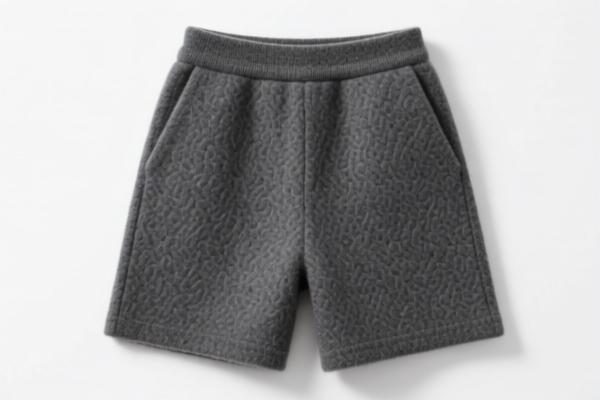
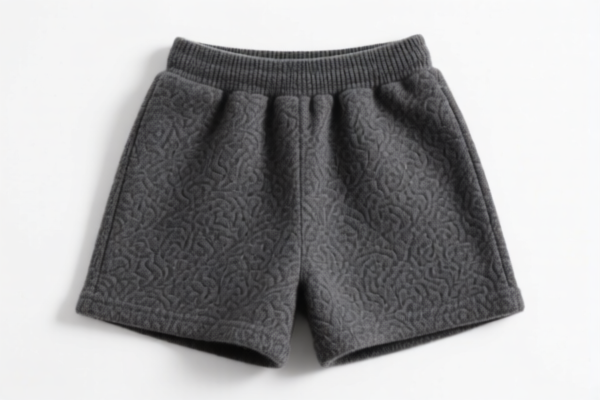
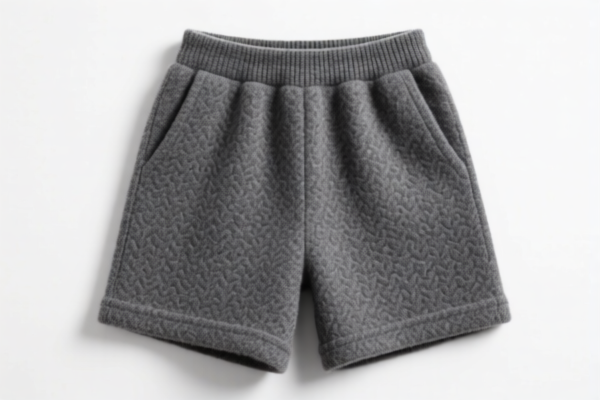
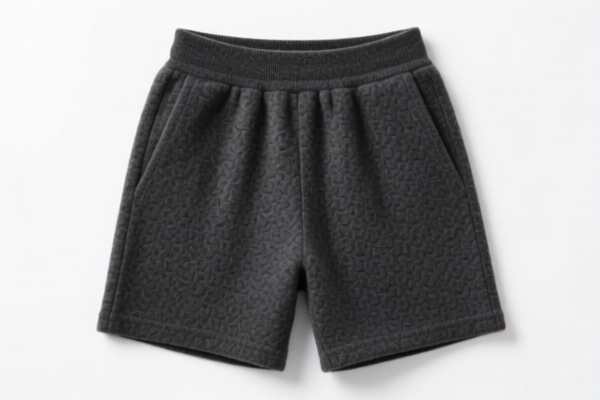
AI Analysis
🧵 Synthetic Short Fiber Blended Fabric (混色短纤织物)
🌐 HS Code Reference & Customs Clearance Guide | 2026 Latest Tariff Analysis | Professional Clearance Strategy
📌 Part 1: Product Definition & Classification: What is "Synthetic Short Fiber Blended Fabric"?
Synthetic short fiber blended fabrics are textiles manufactured from synthetic staple fibers (such as polyester, nylon, acrylic, etc.) rather than continuous filaments. These fibers are spun into yarns and then woven or knitted into fabric.
In international trade, the classification depends heavily on the specific fiber composition and the form of the product (yarn vs. fabric).
⚠️ Key Distinction Points:
- Yarn Stage: If the product is spun yarn (not yet woven/knitted), it falls under Chapter 55 heading 5508-5511.
- Fabric Stage: If the product is woven/knitted fabric, it falls under Chapter 55 heading 5512-5516.
- Coloration: "Mixed Color" (混色) often refers to fabrics made from yarns of different colors or blended fibers of different colors, which can affect specific sub-heading classifications.
📦 Part 2: HS Code Classification Details (2026 Latest Tariff Authority Cross-Reference)
Based on the provided data, here are the relevant HS Codes for synthetic short fiber products. Note that while the input is "Fabric," some entries in the data refer to "Yarn." This is common because yarn is the primary input, and misclassification often occurs between yarn and fabric stages.
| HS Code | Product Description | Application Scenario | Fiber/Form Type |
|---|---|---|---|
5512.19.00.05 |
Mixed-color synthetic short fiber fabric | Woven/knitted fabric made from different colored synthetic staple fibers | ✅ Fabric (Synthetic Staple) |
5509.21.00.00 |
Synthetic short fiber yarn, complying with material/form requirements | Spun yarn from synthetic staples (general) | ✅ Yarn (Synthetic Staple) |
5509.11.00.00 |
Synthetic short fiber yarn, consistent with nylon/polyamide staples | Spun yarn specifically from Nylon or Polyamide | ✅ Yarn (Nylon/Polyamide Staple) |
5508.20.00.00 |
Synthetic short fiber yarn, corresponding to artificial short fiber material & sewing thread form | Sewing thread made from synthetic short fibers | ✅ Yarn (Sewing Thread) |
5511.10.00.60 |
Synthetic short fiber yarn, matching long filament material requirements, non-sewing thread | Yarn for weaving/knitting, not sewing thread | ✅ Yarn (Weaving/Knitting Yarn) |
🔍 Key Reminder:
- If the product is fabric (woven/knitted sheet),5512.19.00.05is the most direct match for "blended/mixed-color" synthetic short fiber fabric.
- If the product is yarn, you must identify the specific fiber type (e.g., Nylon vs. Polyester) and end-use (Sewing thread vs. Weaving yarn) to choose between5509.21.00.00,5509.11.00.00,5508.20.00.00, or5511.10.00.60.
💰 Part 3: 2026 Latest Tariff Rate Details (Including Additional Taxes, Policy Add-ons)
✅ Applicable Country: United States (US)
✅ Country of Origin: China (CN)
✅ Effective Time: 2025 November 10 onwards (for subsequent imports)
🎯 1. 5512.19.00.05 —— Synthetic Short Fiber Fabric (Mixed Color)
| Item | Details |
|---|---|
| Base Tariff | 13.6% (ad valorem) |
| Additional Tariff (Section 301) | +25.0% |
| 122 Clause Tariff | +10.0% |
| Total Tax Rate | 48.6% |
| Tax Calculation | CIF Value × 48.6% |
| De Minimis Eligibility | ❌ Not Eligible (denied de minimis) |
| Legal Basis Path | Base Rate → Section 301 Footnote → 122 Clause Provision |
📌 Explanation:
- The Base Rate (13.6%) is the standard Most Favored Nation (MFN) rate for synthetic short fiber fabrics.
- The 25% Section 301 Tariff is a standard additional tariff on many Chinese textiles.
- The 10% 122 Clause Tariff is an additional specific tariff affecting certain Chinese imports.
- Total 48.6% is a very high duty burden. Proper classification is critical to ensure you are not paying this rate on a product that might qualify for a lower rate (if applicable, though limited for China-origin textiles).
🎯 2. 5509.21.00.00 —— Synthetic Short Fiber Yarn (General)
| Item | Details |
|---|---|
| Base Tariff | 9.7% |
| Additional Tariff (Section 301) | +25.0% |
| 122 Clause Tariff | +10.0% |
| Total Tax Rate | 44.7% |
| Tax Calculation | CIF Value × 44.7% |
| De Minimis Eligibility | ❌ Not Eligible |
| Legal Basis Path | Base Rate → Section 301 Footnote → 122 Clause Provision |
📌 Note:
- This applies to general synthetic short fiber yarns (e.g., polyester staple fiber yarn).
- Even though it's yarn, the additional tariffs make the total cost high.
🎯 3. 5509.11.00.00 —— Synthetic Short Fiber Yarn (Nylon/Polyamide)
| Item | Details |
|---|---|
| Base Tariff | 9.4% |
| Additional Tariff (Section 301) | +25.0% |
| 122 Clause Tariff | +10.0% |
| Total Tax Rate | 44.4% |
| Tax Calculation | CIF Value × 44.4% |
| De Minimis Eligibility | ❌ Not Eligible |
| Legal Basis Path | Base Rate → Section 301 Footnote → 122 Clause Provision |
📌 Note:
- Specific to Nylon or Polyamide staple fiber yarns.
- Slightly lower base rate (9.4% vs 9.7%) results in a slightly lower total rate (44.4% vs 44.7%).
🎯 4. 5508.20.00.00 —— Synthetic Short Fiber Sewing Thread
| Item | Details |
|---|---|
| Base Tariff | 11.0% |
| Additional Tariff (Section 301) | +25.0% |
| 122 Clause Tariff | +10.0% |
| Total Tax Rate | 46.0% |
| Tax Calculation | CIF Value × 46.0% |
| De Minimis Eligibility | ❌ Not Eligible |
| Legal Basis Path | Base Rate → Section 301 Footnote → 122 Clause Provision |
📌 Note:
- Specifically for sewing thread made from synthetic short fibers.
- Base rate is higher (11.0%) than general yarn, leading to a higher total rate (46.0%).
🎯 5. 5511.10.00.60 —— Synthetic Short Fiber Yarn (Non-Sewing, for Weaving/Knitting)
| Item | Details |
|---|---|
| Base Tariff | 7.5% |
| Additional Tariff (Section 301) | +25.0% |
| 122 Clause Tariff | +10.0% |
| Total Tax Rate | 42.5% |
| Tax Calculation | CIF Value × 42.5% |
| De Minimis Eligibility | ❌ Not Eligible |
| Legal Basis Path | Base Rate → Section 301 Footnote → 122 Clause Provision |
📌 Note:
- This is the lowest total tax rate (42.5%) among the yarn categories provided.
- It applies to synthetic short fiber yarns used for weaving/knitting, not for sewing.
- If your "blended fabric" is actually exported as yarn first, this classification offers the most cost-effective route.
🛠️ Part 4: Customs Clearance Practical Advice (Real-World Pitfall Guide)
✅ 1. Required Documentation Checklist
| Document | Mandatory? | Description |
|---|---|---|
| ✅ Product Specification Sheet | ✔️ | Must detail fiber content (e.g., 100% Polyester), fiber length (staple vs. filament), and fabric construction (weave/knit). |
| ✅ Commercial Invoice | ✔️ | Must clearly state "Synthetic Short Fiber Blended Fabric" or specific yarn type. Avoid vague terms like "Textile Material." |
| ✅ Packing List | ✔️ | Detail net/gross weight and quantity. |
| ✅ Certificate of Origin (CO) | ✔️ | Essential for proving China origin, which triggers the additional tariffs. |
| ✅ Bill of Lading/Air Waybill | ✔️ | Standard shipping document. |
| ✅ Test Report (Optional but Recommended) | ✔️ | Fiber composition analysis report to prove "short fiber" vs. "filament." |
✅ 2. Classification Tips (Key Mantras)
🔥 "Fiber Type Defines Code, Form Determines Heading!"
| Scenario | Correct HS Code | Common Mistake |
|---|---|---|
| Woven/Knitted Fabric (Mixed Color) | 5512.19.00.05 |
Misclassifying as Yarn (5509 series) → Risk of penalty |
| Yarn for Sewing | 5508.20.00.00 |
Misclassifying as Weaving Yarn → Wrong tax rate |
| Nylon Staple Yarn | 5509.11.00.00 |
Misclassifying as General Polyester Yarn → Slightly wrong rate |
| General Staple Yarn | 5509.21.00.00 |
Misclassifying as Filament Yarn → Major error |
| Weaving/Knitting Yarn (Non-Sewing) | 5511.10.00.60 |
Misclassifying as Sewing Thread → Higher tax |
✅ 3. Special Case Handling
| Situation | Handling Advice |
|---|---|
| Mixed Fiber Content | If the fabric contains both synthetic and natural fibers (e.g., Polyester/Cotton blend), it may fall under a different HS Code not listed in the provided data (e.g., Chapter 52 or 54). Verify fiber composition first! |
| "Blended" vs. "Mixed Color" | "Blended" usually means mixed fibers (e.g., Poly/Cotton). "Mixed Color" usually means yarns of different colors woven together. Ensure your description matches the HS Code definition. |
| De Minimis Exemption | ❌ Not Eligible. All these items have total tax rates >48%, so they cannot enter the US via de minimis (Section 321) for shipments under $800. Must use formal entry. |
| Origin Marking | Ensure products are marked "Made in China" to comply with US Customs rules, as this triggers the additional tariffs. |
🌍 Part 5: Global Market Comparison (2026 Latest)
| Country/Region | Recommended HS Code | Tariff Rate | Certification | Notes |
|---|---|---|---|---|
| 🇺🇸 USA | 5512.19.00.05 (Fabric) |
48.6% | None specific | High due to Section 301 + 122 Clause |
| 🇨🇳 China | 5512.19.00.05 |
~5-8% | CCC (if applicable) | No additional tariffs |
| 🇪🇺 EU | 5512.19.00 |
6-12% | CE (if textile products) | No Section 301 equivalent |
| 🇬🇧 UK | 5512.19.00 |
6-12% | UKCA | Post-Brexit tariffs apply |
| 🇦🇺 Australia | 5512.19.00 |
5% | RCM | Free Trade Agreement benefits may apply |
📌 Conclusion:
- The US market is significantly more expensive due to the combination of Base Tariff + 25% Section 301 + 10% 122 Clause.
- Total rates range from 42.5% to 48.6%.
- For other markets, the burden is much lower, making the US the most challenging destination for Chinese synthetic short fiber products.
📌 Part 6: Common Errors & Pitfall Guide (Blood Lessons)
❌ Error 1: Misclassifying Fabric as Yarn
👉 Consequence: If you are exporting fabric but declare it as yarn (5509 or 5511), you may face misdeclaration penalties and potential fraud charges, even if the tax rate is slightly lower. Customs will inspect the physical goods.
❌ Error 2: Assuming "Blended" means "Mixed Color"
👉 Consequence: "Blended" often implies mixed fiber types (e.g., Poly/Cotton), which have different HS Codes than 100% synthetic. Using 5512.19.00.05 for a Poly/Cotton blend will lead to rejection and back taxes.
❌ Error 3: Ignoring the 122 Clause
👉 Consequence: Many importers forget the 10% 122 Clause Tariff, leading to underpayment and subsequent audits/penalties.
❌ Error 4: Using "Textile" as a Generic Description
👉 Consequence: Vague descriptions like "Textile Material" will cause customs delays and requests for additional information, slowing down clearance.
✅ Correct Practice:
"100% Polyester Synthetic Short Fiber Woven Fabric, Mixed Color, Width 150cm, Weight 200gsm, HS Code 5512.19.00.05"
🎯 Part 7: Conclusion: Professional Declaration, Save Time, Reduce Costs!
🎯 Remember the Mantra:
🔹 "Form First, Fiber Second: Fabric is 5512, Yarn is 5508-5511."
🔹 "US Tariffs are High: 25% + 10% on top of Base. Don't get caught out!"
🔹 "Blended ≠ Mixed Color: Check Fiber Composition!"
📌 Pro Tip:
- If your product is yarn, consider if it qualifies for 5511.10.00.60 (42.5%) instead of 5509.21.00.00 (44.7%) if it's not sewing thread.
- Always provide detailed product specifications to avoid misclassification.
- Consider Advance Rulings from US Customs (CBP) if you have a large volume of shipments to ensure classification certainty.
📣 Immediate Action:
📞 Contact a professional customs broker + Provide Product Photos + Confirm Fiber Composition
🚀 Ensure your synthetic short fiber products clear customs smoothly, avoid penalties, and maximize profit!
✨ Professional Customs Clearance Starts with Accurate Classification!
💼 Every percentage point of tax matters!
Customer Reviews
About HS Code Classification
The Harmonized System (HS) is an internationally standardized nomenclature developed by the World Customs Organization (WCO) to classify traded products. Over 200 countries use the HS system as the basis for customs tariffs, trade statistics, and import/export regulations.
Each HS code follows a hierarchical structure:
- Chapter (2 digits) — Broad category of goods (e.g., Chapter 84: Machinery and Mechanical Appliances)
- Heading (4 digits) — More specific grouping within the chapter
- Subheading (6 digits) — Internationally standardized breakdown, used by all WCO member countries
- National subdivisions (8-10 digits) — Country-specific extensions for further classification, such as US HTSUS 10-digit codes
Correct HS code classification is essential for smooth customs clearance, accurate duty payment, and compliance with trade regulations. Misclassification can lead to customs delays, overpayment of duties, or penalties.
When importing from CN to US, the applicable tariff rates may include:
- Most-Favored-Nation (MFN) rate — The standard duty rate applied to WTO members
- General rate — Applied to countries without trade agreements
- Trade remedy duties — Additional tariffs such as Section 301 (anti-dumping), Section 232 (national security), or countervailing duties
The information provided on this page is for reference purposes only. For official classification, please consult with your local customs authority or a licensed customs broker.