Synthetic Staple Fiber Fabric
CN → US| HS Code | Tariff Rate | Origin | Destination | Doc |
|---|---|---|---|---|
| 5516910090 | 47.0% | CN | US | Official Doc |
| 5509110000 | 44.4% | CN | US | Official Doc |
| 5509210000 | 44.7% | CN | US | Official Doc |
| 5508200000 | 46.0% | CN | US | Official Doc |
| 5511100060 | 42.5% | CN | US | Official Doc |
Product Images

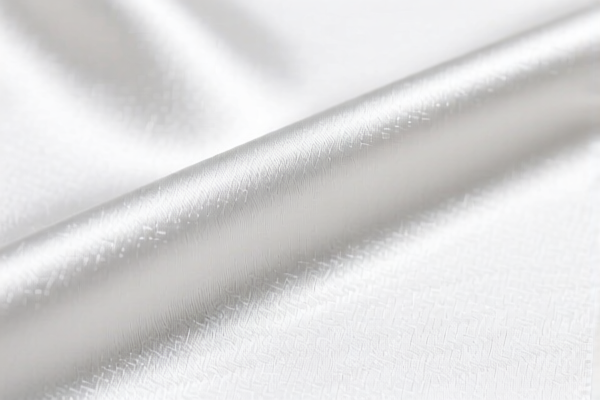
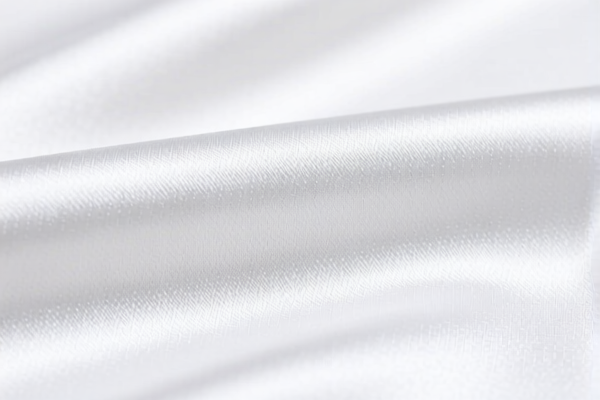
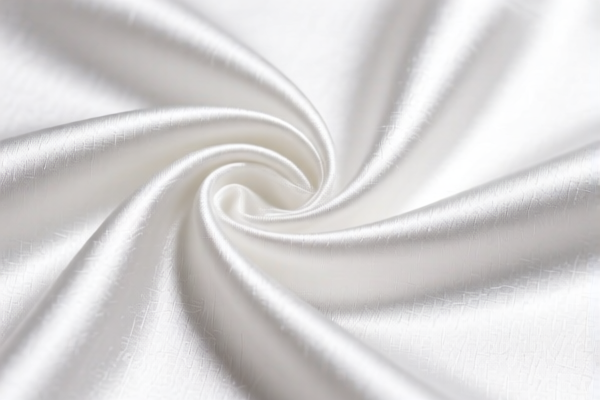
AI Analysis
🧵 Synthetic Staple Fiber Fabric (人造短纤产业用面料)
🌐 HS Code Reference & Customs Clearance Guide | 2026 Latest Tariff Analysis | Professional Clearance Strategy
📌 1. Product Definition & Classification: Do You Really Understand "Synthetic Staple Fiber Fabric"?
Synthetic staple fiber fabrics belong to the category of woven fabrics made from man-made staple fibers. In international trade, if the specific type of fabric (e.g., canvas, twill, satin) is not explicitly mentioned, it is generally classified under the "Other" category.
⚠️ Key Distinction:
- Staple Fibers vs. Filaments: Staple fibers are short fibers (like cotton or wool) that are spun into yarn, whereas filaments are continuous long fibers. Fabrics made from spun staple fibers fall under Chapter 55 (Textile Articles).
- Woven vs. Non-woven: This guide focuses on woven fabrics. Non-woven fabrics have different HS codes.
📦 2. HS Code Classification Details (2026 Latest Tariff Authority Comparison)
| HS Code | Product Description | Applicable Scenario | Total Tax Rate |
|---|---|---|---|
| 5516.91.00.90 | Fabric of synthetic staple fibers, other than those of heading 55.13, 55.14, or 55.15 | General synthetic staple fiber woven fabric (not specified as canvas/twill/satin) | 47.0% |
| 5509.11.00.00 | Yarn of synthetic staple fibers, containing ≥ 85% nylon or other polyamides by weight, single, untwisted or with a twist ≤ 50 turns/m | Synthetic staple fiber yarn (Polyamide/Nylon) | 44.4% |
| 5509.21.00.00 | Yarn of synthetic staple fibers, containing ≥ 85% polyester by weight, single, untwisted or with a twist ≤ 50 turns/m | Pure polyester staple fiber yarn | 44.7% |
| 5508.20.00.00 | Threads for sewing of synthetic textile materials, single, not put up for retail sale | Synthetic staple fiber sewing thread | 46.0% |
| 5511.10.00.60 | Yarn (other than sewing thread) and yarn for knitted/piercing, containing ≥ 85% synthetic staple fibers | Synthetic staple fiber yarn for knitting/weaving | 42.5% |
🔍 Important Reminder:
- If the product is a finished fabric (woven from spun yarn), use 5516.91.00.90.
- If the product is yarn (raw material), the HS code depends on the fiber content (Polyester vs. Polyamide/Nylon) and twist level (see codes 5509.11, 5509.21, 5511.10).
- If the product is sewing thread, use 5508.20.00.00.
💰 3. 2026 Latest Tariff Rate Details (Including Surcharge Tariffs, Policy Add-ons)
✅ Applicable Country: United States (US)
✅ Country of Origin: China (CN)
✅ Effective Date: From November 10, 2025 (including subsequent imports)
🎯 1. 5516.91.00.90 —— Synthetic Staple Fiber Fabric (General Category)
| Item | Content |
|---|---|
| Base Tariff Rate | 12.0% (ad valorem) |
| Section 301 Surcharge | +25.0% |
| Section 122 Tariff | +10.0% |
| Total Tax Rate | 47.0% |
| Tax Calculation | CIF Value × 47.0% |
| De Minimis Eligibility | ❌ Not Eligible (deny_de_minimis) |
| Legal Basis Path | Base Tariff:12% → Sec301:25% → Sec122:10% → Total:47% |
📌 Explanation:
- The 25% Section 301 tariff is imposed under U.S. Trade Act Section 301 against Chinese imports.
- The 10% Section 122 tariff is an additional surcharge for national security reasons under U.S. Trade Act Section 232.
- Combined Total: 47%. This is a very high tariff rate, must be anticipated in advance!
🎯 2. 5509.11.00.00 —— Polyamide/Nylon Staple Fiber Yarn (≥85%)
| Item | Content |
|---|---|
| Base Tariff Rate | 9.4% (ad valorem) |
| Section 301 Surcharge | +25.0% |
| Section 122 Tariff | +10.0% |
| Total Tax Rate | 44.4% |
| Tax Calculation | CIF Value × 44.4% |
| De Minimis Eligibility | ❌ Not Eligible (deny_de_minimis) |
| Legal Basis Path | Base Tariff:9.4% → Sec301:25% → Sec122:10% → Total:44.4% |
📌 Note:
- This applies specifically to Nylon/Polyamide staple fiber yarns with high content.
- Even if it's for industrial use, the tariff structure remains the same.
🎯 3. 5509.21.00.00 —— Polyester Staple Fiber Yarn (≥85%)
| Item | Content |
|---|---|
| Base Tariff Rate | 9.7% (ad valorem) |
| Section 301 Surcharge | +25.0% |
| Section 122 Tariff | +10.0% |
| Total Tax Rate | 44.7% |
| Tax Calculation | CIF Value × 44.7% |
| De Minimis Eligibility | ❌ Not Eligible (deny_de_minimis) |
| Legal Basis Path | Base Tariff:9.7% → Sec301:25% → Sec122:10% → Total:44.7% |
📌 Note:
- This applies to Polyester staple fiber yarns.
- Polyester is the most common synthetic fiber; ensure the content is ≥85% for this specific subheading.
🎯 4. 5508.20.00.00 —— Synthetic Staple Fiber Sewing Thread
| Item | Content |
|---|---|
| Base Tariff Rate | 11.0% (ad valorem) |
| Section 301 Surcharge | +25.0% |
| Section 122 Tariff | +10.0% |
| Total Tax Rate | 46.0% |
| Tax Calculation | CIF Value × 46.0% |
| De Minimis Eligibility | ❌ Not Eligible (deny_de_minimis) |
| Legal Basis Path | Base Tariff:11% → Sec301:25% → Sec122:10% → Total:46% |
📌 Note:
- Sewing threads are considered specialized products, hence a slightly higher base rate (11%) compared to general yarns (9.4%-9.7%).
🎯 5. 5511.10.00.60 —— Other Synthetic Staple Fiber Yarn (Knitting/Weaving)
| Item | Content |
|---|---|
| Base Tariff Rate | 7.5% (ad valorem) |
| Section 301 Surcharge | +25.0% |
| > Section 122 Tariff | +10.0% |
| Total Tax Rate | 42.5% |
| Tax Calculation | CIF Value × 42.5% |
| De Minimis Eligibility | ❌ Not Eligible (deny_de_minimis) |
| Legal Basis Path | Base Tariff:7.5% → Sec301:25% → Sec122:10% → Total:42.5% |
📌 Note:
- This code covers synthetic staple fiber yarns used for knitting or piercing, not specifically nylon or polyester dominant in the previous codes, or general categories. It has the lowest base rate (7.5%) among the options, but still results in a high total tariff.
🛠️ 4. Customs Clearance Practical Suggestions (Practical Pitfall Avoidance Guide)
✅ 1. Prepare Material List (All Required)
| Material | Must Provide | Description |
|---|---|---|
| ✅ Product Specification Sheet | ✔️ | Include fiber content (%), yarn count, fabric weight, weave structure |
| ✅ Product Photos (with Labels) | ✔️ | Clearly show model number, brand, input/output parameters |
| ✅ Commercial Invoice | ✔️ | Explicitly state "Synthetic Staple Fiber Fabric" or "Yarn" |
| ✅ Packing List | ✔️ | Explain the relationship between raw materials and finished goods |
| ✅ Certificate of Origin (CO) | ✔️ | If not from China, apply for preferential tariff |
| ✅ Third-party Test Report | ✔️ | Fiber composition analysis report is crucial for correct classification |
✅ 2. Declaration Skills (Key Mnemonic)
🔥 "Fiber Content Determines Code, Base Rate Varies, Surcharge Fixed!"
| Situation | Correct Declaration Method | Wrong Practice |
|---|---|---|
| Finished Fabric (Woven) | 5516.91.00.90 |
Declare as Yarn → 42-47% vs 47% (Similar, but legal risk) |
| Nylon Yarn (≥85%) | 5509.11.00.00 |
Declare as Polyester Yarn → 44.4% vs 44.7% (Small diff, but compliance issue) |
| Polyester Yarn (≥85%) | 5509.21.00.00 |
Declare as Nylon Yarn → 44.7% vs 44.4% |
| Sewing Thread | 5508.20.00.00 |
Declare as General Yarn → 46.0% vs 42.5-44.7% |
| Knitting/Weaving Yarn (Other) | 5511.10.00.60 |
Declare as Sewing Thread → 42.5% vs 46.0% (Savings possible if accurate) |
✅ 3. Special Case Handling
| Situation | Handling Advice |
|---|---|
| OEM Custom Fabric | Provide customer order + design drawings to avoid being classified as "non-standard" |
| Mixed Fiber Fabric | If mixed, determine the dominant fiber (>50%) to select the correct subheading |
| Sample Shipment | Even for samples, declare accurately; de minimis does not apply |
| Return Goods | Provide proof of previous export to apply for duty drawback if applicable |
🌍 5. Global Main Market Clearance Comparison (2026 Latest)
| Country/Region | Recommended HS Code | Tariff | Certification Requirements | Notes |
|---|---|---|---|---|
| 🇺🇸 United States | 5516.91.00.90 (Fabric) |
47.0% | N/A | High tariff due to Sec301 + Sec122 |
| 🇨🇳 China | 5516.91.00.90 |
~5-6% | CCC (if applicable) | No additional surcharges |
| 🇪🇺 European Union | 5516.91.00.90 |
~10-12% | CE (if regulated goods) | No US-style surcharges |
| 🇦🇺 Australia | 5516.91.00.90 |
~5% | N/A | No additional surcharges |
| 🇯🇵 Japan | 5516.91.00.90 |
~10% | PSE (if applicable) | No additional surcharges |
📌 Conclusion:
- The United States is the only market imposing extremely high additional tariffs on synthetic textile products from China.
- Chinese-made synthetic fabrics face very high clearance costs in the US, suggesting early evaluation of supply chain adjustments or alternative sourcing.
📌 6. Common Errors & Pitfall Avoidance Guide (Lessons Learned)
❌ Error 1: Declaring "Sewing Thread" as "General Yarn"
👉 Consequence: Rate drops from 46.0% to 42.5%? No, wait, declaring as general yarn might be lower (42.5%), but if it's actually sewing thread, it's a misdeclaration → Penalty + Back Tax!
❌ Error 2: Declaring "Polyester Yarn" as "Nylon Yarn"
👉 Consequence: Rate difference is small (44.7% vs 44.4%), but it's a compliance violation → Inspection Delay + Penalty!
❌ Error 3: Not providing a fiber composition report
👉 Consequence: Customs cannot determine the exact subheading → Delay in Release or Return!
❌ Error 4: Using "Textile Material" as a generic description
👉 Consequence: Customs may classify it under the highest possible rate or demand further documentation → Delay!
✅ Correct Practice:
"Synthetic Staple Fiber Woven Fabric, 100% Polyester, Plain Weave, 200GSM, Model XYZ, For Industrial Use"
🎯 7. Conclusion: Professional Declaration, Save Time and Money!
🎯 Remember the Mnemonic:
🔹 "Fiber Content Rules, Base Rate Varies, Surcharge Fixed at 35%!"
🔹 "HS Code Determines Life or Death, 35% Surcharge is High, One Mistake Costs Thousands!"
📌 Tips:
If your product is originally from Vietnam, Mexico, Thailand, Malaysia, you may apply for IEEPA Exemption, and the tariff rate is only 0%~5%.
It is recommended to apply for an Advance Ruling in advance to avoid clearance risks.
📣 Take Immediate Action:
📞 Contact a Professional Customs Broker + Provide Product Photos + Apply for HS Code Advance Ruling
🚀 Let your synthetic fabrics, smoothly clear customs, efficiently go global, double profits!
✨ Professional Clearance, Starting with Accurate Classification!
💼 Every penny of your cost deserves to be calculated precisely!
Customer Reviews
About HS Code Classification
The Harmonized System (HS) is an internationally standardized nomenclature developed by the World Customs Organization (WCO) to classify traded products. Over 200 countries use the HS system as the basis for customs tariffs, trade statistics, and import/export regulations.
Each HS code follows a hierarchical structure:
- Chapter (2 digits) — Broad category of goods (e.g., Chapter 84: Machinery and Mechanical Appliances)
- Heading (4 digits) — More specific grouping within the chapter
- Subheading (6 digits) — Internationally standardized breakdown, used by all WCO member countries
- National subdivisions (8-10 digits) — Country-specific extensions for further classification, such as US HTSUS 10-digit codes
Correct HS code classification is essential for smooth customs clearance, accurate duty payment, and compliance with trade regulations. Misclassification can lead to customs delays, overpayment of duties, or penalties.
When importing from CN to US, the applicable tariff rates may include:
- Most-Favored-Nation (MFN) rate — The standard duty rate applied to WTO members
- General rate — Applied to countries without trade agreements
- Trade remedy duties — Additional tariffs such as Section 301 (anti-dumping), Section 232 (national security), or countervailing duties
The information provided on this page is for reference purposes only. For official classification, please consult with your local customs authority or a licensed customs broker.