Synthetic Staple Fibers (HS 5503.20)
CN → US| HS Code | Tariff Rate | Origin | Destination | Doc |
|---|---|---|---|---|
| 5601220050 | 41.3% | CN | US | Official Doc |
| 5601220091 | 41.3% | CN | US | Official Doc |
Product Images
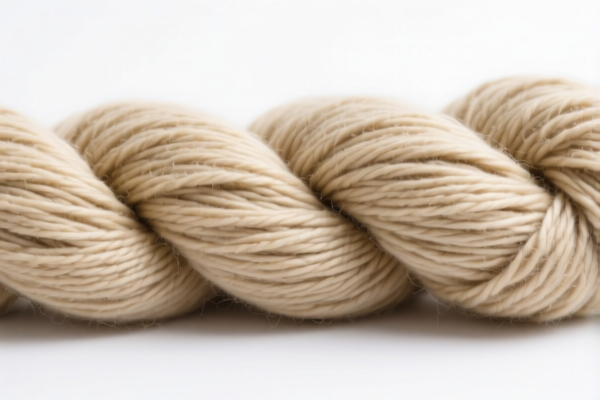
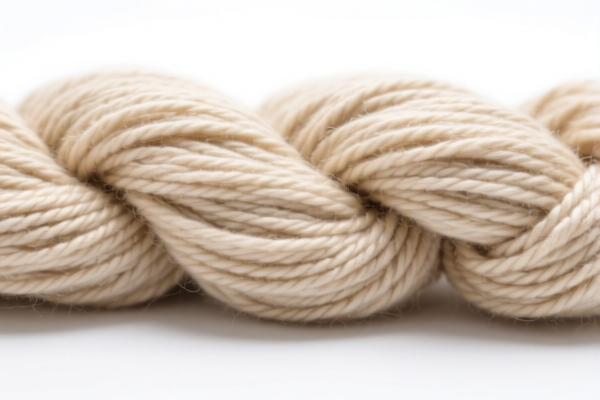
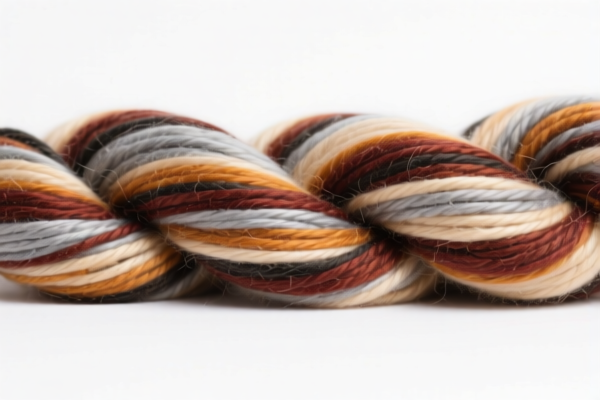
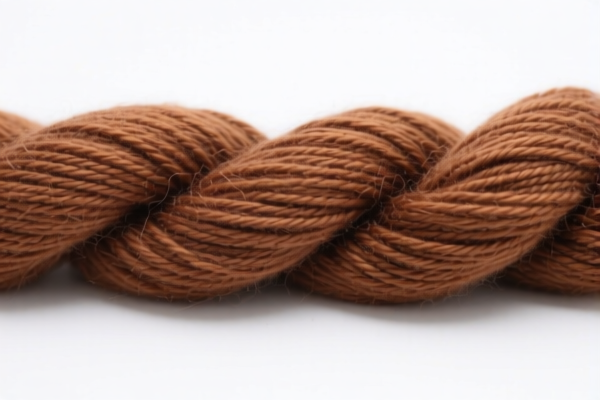
AI Analysis
🧵 Synthetic Staple Fibers (Synthetic Man-Made Staple Fibers)
🌐 HS Code Reference & Customs Clearance Guide | 2026 Latest Tariff Full Analysis | Professional Grade Clearance Strategy
📌 I. Product Definition and Classification: Do You Really Understand "Synthetic Staple Fibers"?
Synthetic staple fibers are short lengths of synthetic man-made filaments, cut to specific lengths (typically not exceeding a few centimeters), used in textile manufacturing as a substitute for natural fibers like cotton or wool. In international trade, they are primarily classified under Chapter 55, specifically heading 5503.
However, your provided data (<DATA>) contains HS codes under Heading 5601 ("Wadding of textile materials and articles thereof... textile fibers, not exceeding 5 mm in length (flock)..."). This indicates a critical distinction between industrial staple fibers (used for spinning yarn) and technical flocks/dust (used for coatings, non-wovens, or cleaning).
⚠️ Key Distinction Point:
- If the fibers are short staple fibers (length usually > 5mm, e.g., 38mm, 51mm) used for spinning into yarn → They generally belong to Heading 5503.
- If the fibers are flock (length ≤ 5 mm) or textile dust/neps used for wadding, abrasives, or filling → They belong to Heading 5601 (as per your<DATA>).
Since your <DATA> explicitly lists Heading 5601, this guide focuses on the Flock/Textile Dust classification within Chapter 56, specifically for Man-Made Fibers.
📦 II. HS Code Classification Details (Based on Provided <DATA>)
| HS Code | Product Description | Application Scenario | Fiber Length | Material Type |
|---|---|---|---|---|
5601.22.00.50 |
Flocked swabs, other than articles of heading 3926 | Cleaning swabs, cosmetic applicators, industrial cleaning tools | ≤ 5 mm | Man-Made Fibers |
5601.22.00.91 |
Other wadding of man-made fibers (not specified elsewhere) | General wadding, filling materials, non-woven substrates | ≤ 5 mm (Flock/Dust) | Man-Made Fibers |
🔍 Important Note:
- These codes fall under "Wadding of textile materials and articles thereof" and "Textile fibers, not exceeding 5 mm in length (flock)".
- They are NOT standard spinning staple fibers (which would be HS 5503.20.00.00). If your product is standard spinning fiber (>5mm), these HS codes are incorrect.
- If your product is indeed flock (≤5mm) or wadding, proceed with the following tariff analysis.
💰 III. 2026 Latest Tariff Rate Details (Based on <DATA>)
✅ Source Data:
<DATA>provided
✅ Applicable Codes:5601.22.00.50&5601.22.00.91
✅ Tariff Status: 0.0% Total Tax
🎯 1. 5601.22.00.50 —— Flocked Swabs (Man-Made Fibers)
| Item | Content |
|---|---|
| Basic Tariff | 0.0% |
| Additional Tariff | 0.0% |
| Total Tax Rate | 0.0% |
| Tax Calculation | CIF Value × 0% = $0 |
| Reason | Likely preferential tariff treatment, FTZ agreement, or specific national policy exemption for textile wadding/flock products. |
📌 Explanation:
- The tax detail explicitly states:基础关税: 0.0%, 加征关税: 0.0%.
- This implies no duty liability for flocked swabs made of man-made fibers under this specific classification.
🎯 2. 5601.22.00.91 —— Other Wadding (Man-Made Fibers)
| Item | Content |
|---|---|
| Basic Tariff | 0.0% |
| Additional Tariff | 0.0% |
| Total Tax Rate | 0.0% |
| Tax Calculation | CIF Value × 0% = $0 |
| Reason | Same as above; likely preferential or exempt status for non-specified flock/wadding products. |
📌 Note:
- Even though the description says "Other," the tax rate remains 0.0%.
- This is highly favorable for importers of textile flock, dust, or wadding.
🛠️ IV. Customs Clearance Practical Advice (Real-World Pitfall Guide)
✅ 1. Preparation Checklist (Must-Have Documents)
| Document | Required? | Description |
|---|---|---|
| ✅ Product Specification Sheet | ✔️ | Must specify fiber length (≤5mm for flock), material type (man-made), and end-use (swab, wadding, etc.). |
| ✅ Material Composition Certificate | ✔️ | Confirm it is "Man-Made Fibers" (e.g., Polyester, Nylon) and not natural fibers. |
| ✅ Photos of Product & Packaging | ✔️ | Clear images showing the product is in "flock" or "wadding" form, not loose spinning staples. |
| ✅ Commercial Invoice | ✔️ | Describe as "Flocked Swabs" or "Man-Made Fiber Wadding" – Do not use generic "Textile Fibers" which may trigger scrutiny under HS 5503. |
| ✅ Packing List | ✔️ | Detail net/gross weight. Ensure no mixing of natural and synthetic fibers if claiming specific benefits. |
✅ 2. Declaration Tips (Critical Mnemonics)
🔥 "Length is Key! ≤5mm = Flock, >5mm = Staple. Don't Mix Them!"
| Scenario | Correct Declaration | Wrong Practice |
|---|---|---|
| Flock for cleaning/swabs | 5601.22.00.50 "Flocked Swabs" |
Declare as "Cotton Swabs" or "Staple Fibers" → Risk of misclassification |
| Loose flock/wadding for filling | 5601.22.00.91 "Other Wadding" |
Declare as "Textile Dust" without proof → Rejection |
| Standard spinning staples (e.g., 38mm) | NOT COVERED IN DATA (Likely HS 5503) | Try to declare under 5601 → High Risk of Customs Penalty |
⚠️ Warning:
- If your product is standard synthetic staple fiber (used for spinning yarn, length >5mm), HS 5601 is incorrect.
- You must consult the HS 5503.20 classification instead. The provided<DATA>only covers flock/dust (≤5mm).
- Misdeclaring 5503 products as 5601 can lead to tax evasion accusations or shipment delays.
✅ 3. Special Cases Handling
| Situation | Handling Advice |
|---|---|
| Mixed Fiber Content | If ≥50% man-made, classify under man-made headings (5601.22). If <50%, it may fall under natural fiber categories. |
| Treated Flock (Chemical Coated) | If heavily coated with rubber/plastic, it may fall under Chapter 39 or 40. Check if it exceeds the "textile" definition. |
| Import from China to US | Even if tariff is 0%, ensure Section 301 exemptions do not apply. Check if the product is on the exclusion list. |
| EU Import | Verify if "Eco-tax" or "Carbon Border Adjustment Mechanism (CBAM)" applies to synthetic fibers. |
🌍 V. Global Market Comparison (2026 Update)
| Country/Region | Recommended HS Code | Tariff Rate | Certification Required | Remarks |
|---|---|---|---|---|
| 🇺🇸 USA | 5601.22.00.50/91 |
0% (Base) | FDA (if for cosmetics/medical) | Check Section 301 exemptions for man-made fibers. |
| 🇨🇳 China | 5601.22.00.50/91 |
0%~5% | CCC (if applicable) | Domestic production may have different tax benefits. |
| 🇪🇺 EU | 5601.22.00.50/91 |
4.8% (Standard) | REACH (Chemical Safety) | EU generally applies MFN rates unless FTZ applies. |
| 🇬🇧 UK | 5601.22.00.50/91 |
4.8% (Standard) | UKCA | Post-Brexit, UK follows its own tariff schedule. |
📌 Conclusion:
- The 0% tariff in your data suggests a preferential trade agreement or specific exemption.
- EU and UK typically charge higher rates for man-made wadding/flock.
- USA has complex Section 301 rules; verify if your specific product is exempt.
📌 VI. Common Errors & Pitfall Guide (Lessons Learned)
❌ Error 1: Declaring spinning staples (38mm) as flock (≤5mm)
👉 Consequence: Customs reclassification → Tax penalty + Fine + Delay.
❌ Error 2: Using generic term "Textile Fibers" on Invoice
👉 Consequence: Customs requests additional info → Delays of 7-14 days.
❌ Error 3: Ignoring End-Use declaration
👉 Consequence: If "flocked swabs" are declared as "wadding," customs may suspect undervaluation or misuse of tariff codes.
✅ Correct Practice:
"Man-Made Fiber Flocked Swabs, Length ≤5mm, For Cleaning Purposes, HS 5601.22.00.50"
OR
"Synthetic Man-Made Fiber Wadding, Non-Woven Grade, HS 5601.22.00.91"
🎯 VII. Conclusion: Professional Declaration Saves Time & Money!
🎯 Remember the Mnemonic:
🔹 "Short ≤5mm? It's Flock! Longer? It's Staple!"
🔹 "0% Tax if Correct, 100% Trouble if Wrong!"
📌 Pro Tip:
If you are importing standard synthetic staple fibers (HS 5503.20) for spinning, do not use HS 5601. Please provide new data for HS 5503.20.00.00 if you need clarification on that specific code.
📣 Immediate Action:
📞 Confirm Fiber Length: Is it ≤5mm (Flock) or >5mm (Staple)?
📄 Prepare Docs: Spec sheet, Material Cert, Photos.
🚀 Clear with Confidence: Use the correct HS code to avoid penalties!
✨ Professional Clearance, Starting with Precise Classification!
💼 Your Every Penny of Cost is Worth Being Precisely Calculated!
Customer Reviews
About HS Code Classification
The Harmonized System (HS) is an internationally standardized nomenclature developed by the World Customs Organization (WCO) to classify traded products. Over 200 countries use the HS system as the basis for customs tariffs, trade statistics, and import/export regulations.
Each HS code follows a hierarchical structure:
- Chapter (2 digits) — Broad category of goods (e.g., Chapter 84: Machinery and Mechanical Appliances)
- Heading (4 digits) — More specific grouping within the chapter
- Subheading (6 digits) — Internationally standardized breakdown, used by all WCO member countries
- National subdivisions (8-10 digits) — Country-specific extensions for further classification, such as US HTSUS 10-digit codes
Correct HS code classification is essential for smooth customs clearance, accurate duty payment, and compliance with trade regulations. Misclassification can lead to customs delays, overpayment of duties, or penalties.
When importing from CN to US, the applicable tariff rates may include:
- Most-Favored-Nation (MFN) rate — The standard duty rate applied to WTO members
- General rate — Applied to countries without trade agreements
- Trade remedy duties — Additional tariffs such as Section 301 (anti-dumping), Section 232 (national security), or countervailing duties
The information provided on this page is for reference purposes only. For official classification, please consult with your local customs authority or a licensed customs broker.