Synthetic Staple Yarn (Mainly or Solely Blended with Synthetic Staple, Worsted)
CN → US| HS Code | Tariff Rate | Origin | Destination | Doc |
|---|---|---|---|---|
| 5510904000 | 45.6% | CN | US | Official Doc |
| 5508100000 | 46.4% | CN | US | Official Doc |
| 5508200000 | 46.0% | CN | US | Official Doc |
| 5509513000 | 44.7% | CN | US | Official Doc |
| 5509513000 | 44.7% | CN | US | Official Doc |
Product Images
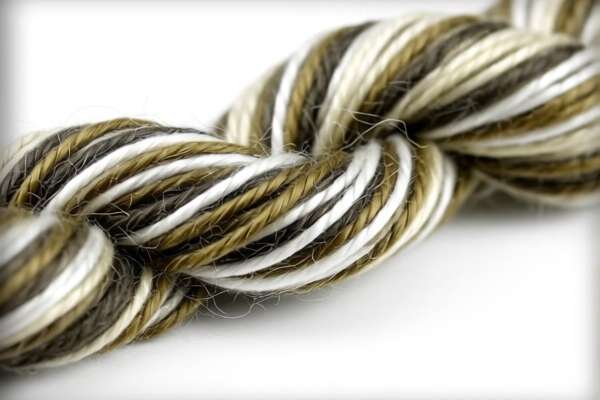
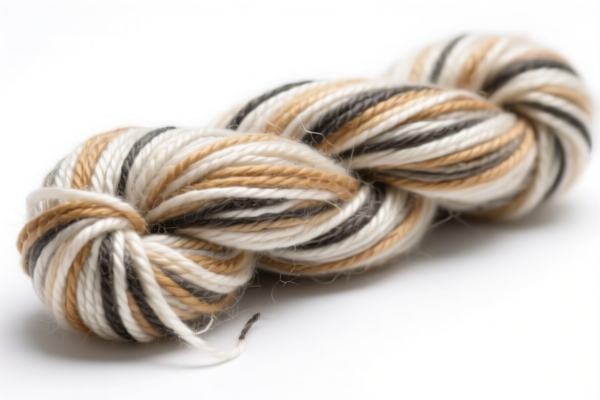
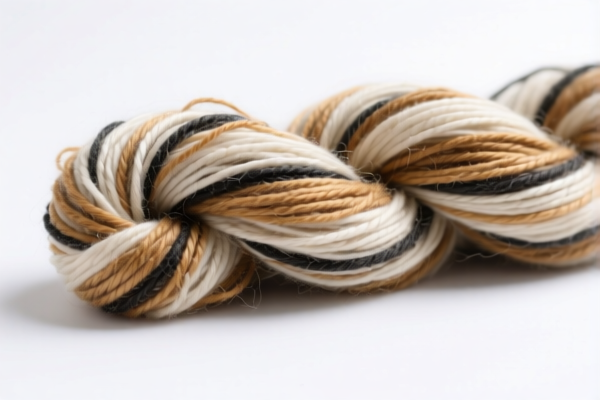
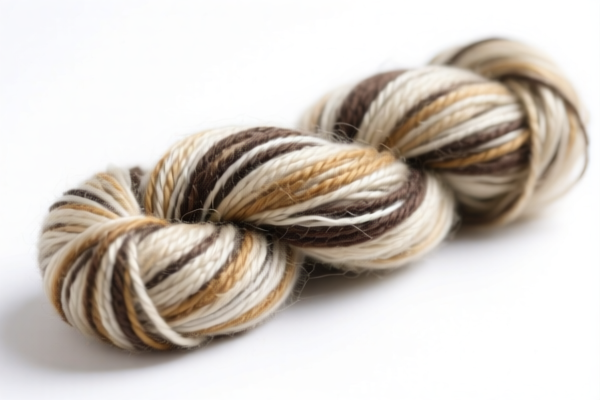
AI Analysis
🧵 Synthetic Staple Yarn (Worsted Blended) – The 44%-46% Tariff Trap
🌐 HS Code Reference & Customs Clearance Guide | 2026 Latest Harmonized System Analysis | Professional Entry Strategy
📌 I. Product Definition & Classification: What Exactly is "Synthetic Staple Yarn"?
Synthetic Staple Yarn, particularly when described as "Worsted" or "Mainly or Solely Blended with Synthetic Staple," refers to yarns manufactured from short synthetic fibers (cut to a specific length) that have been spun together. The term "Worsted" implies a specific spinning process that results in a smoother, stronger, and more uniform yarn, often used in high-quality suits, dress shirts, and fine knitwear.
In international trade, these yarns fall under Chapter 55 (Man-made Staple Fibres) of the Harmonized System. The critical distinction lies in the material composition (Polyester vs. Other Synthetics like Acrylic/Modacrylic) and the blending nature.
⚠️ Key Distinction Point:
- If the yarn is made from Polyester (PET) staple fibers → It typically falls under 5509.51.
- If the yarn is made from Other Synthetic staple fibers (e.g., Acrylic, Modacrylic, Nylon) → It typically falls under 5508 or 5510.
- The description "Mainly or Solely Blended" indicates the yarn structure and affects the specific subheading.
📦 II. HS Code Classification Details (2026 Latest Tariff Schedule)
Based on the provided data, the specific HS Codes and their corresponding tariff details are as follows:
| HS Code | Product Summary | Applicable Scenario | Total Tax Rate |
|---|---|---|---|
5510.90.40.00 |
Synthetic staple yarn, mainly or solely blended with synthetic staple fibers | General Synthetic Staple Yarn (Non-Polyester or Unspecified Synthetic Mix) | 45.6% |
5508.10.00.00 |
Yarn of synthetic staple fibres | Other Synthetic Staple Yarn (e.g., Acrylic/Modacrylic blends) | 46.4% |
5508.20.00.00 |
Yarn of artificial staple fibres | Artificial (Rayon/Viscose) Staple Yarn | 46.0% |
5509.51.30.00 |
Yarn of polyester staple fibres, mainly or solely blended with synthetic staple fibres | Polyester Staple Yarn (The most common synthetic textile input) | 44.7% |
5509.51.30.00 |
Yarn of synthetic staple fibres, mainly or solely blended with synthetic staple fibres | Polyester Blend Specific (Note: Data lists this twice for similar descriptions) | 44.7% |
🔍 Critical Observation:
- Polyester Yarn (5509.51.30.00) enjoys the lowest total tax rate (44.7%) among the listed codes.
- Other Synthetic Yarns (5510and5508) carry higher rates (45.6% - 46.4%).
- Artificial Yarns (5508.20) are also taxed at 46.0%.
- All listed items are subject to significant additional tariffs.
💰 III. 2026 Latest Tariff Rate Breakdown (Including Surtaxes & Policy Add-ons)
✅ Applicable Country: United States (US)
✅ Country of Origin: China (CN)
✅ Effective Date: November 10, 2025 (and subsequent imports)
The total tax rate is a composite of three distinct components: Base Duty, Section 301 Tariff, and Section 122 Tariff.
🎯 1. 5509.51.30.00 —— Polyester Staple Yarn (Lowest Rate: 44.7%)
| Item | Content |
|---|---|
| Base Duty Rate | 9.7% |
| Section 301 Surtax | +25.0% |
| Section 122 Tariff | +10.0% |
| Total Tax Rate | 44.7% |
| Tax Calculation | CIF Value × 44.7% |
| De Minimis Exemption | ❌ NOT Eligible (High value threshold, de minimis does not apply to Section 301/122 goods) |
| Legal Basis Path | USITC:5509.51.30.00 → Section 301: 25% → Section 122: 10% |
📌 Explanation:
- Base Duty (9.7%): The standard Most Favored Nation (MFN) rate for polyester yarns.
- Section 301 (25%): Imposed by the U.S. Trade Representative under the "301 Investigation" to address unfair trade practices.
- Section 122 (10%): A historical trade remedy provision (Section 2122 of the Trade Act of 1974, often re-implemented or referenced in specific contexts like the provided data) adding an extra 10% duty.
- Total: 9.7% + 25.0% + 10.0% = 44.7%. This is a very high effective duty rate.
🎯 2. 5510.90.40.00 —— General Synthetic Staple Yarn (Rate: 45.6%)
| Item | Content |
|---|---|
| Base Duty Rate | 10.6% |
| Section 301 Surtax | +25.0% |
| Section 122 Tariff | +10.0% |
| Total Tax Rate | 45.6% |
| Tax Calculation | CIF Value × 45.6% |
| De Minimis Exemption | ❌ NOT Eligible |
| Legal Basis Path | USITC:5510.90.40.00 → Section 301: 25% → Section 122: 10% |
📌 Note:
- The base duty is slightly higher (10.6%) than polyester yarn.
- The surtaxes remain constant.
- Result: 10.6% + 25.0% + 10.0% = 45.6%.
🎯 3. 5508.10.00.00 & 5508.20.00.00 —— Other Synthetic/Artificial Yarns (Rates: 46.4% / 46.0%)
| HS Code | Base Duty | Section 301 | Section 122 | Total Rate |
|---|---|---|---|---|
5508.10.00.00 (Synthetic) |
11.4% | 25.0% | 10.0% | 46.4% |
5508.20.00.00 (Artificial) |
11.0% | 25.0% | 10.0% | 46.0% |
📌 Explanation:
- These yarns have the highest base duties (11.0% - 11.4%).
- The surtaxes are identical.
- Result: These are the most expensive to import under the current regime.
🛠️ IV. Customs Clearance Practical Advice (Real-World Pitfall Guide)
✅ 1. Documentation Checklist (Non-Negotiable)
| Document | Required | Notes |
|---|---|---|
| ✅ Commercial Invoice | ✔️ | Must clearly state: "Synthetic Staple Yarn," material composition (e.g., 100% Polyester, 50% Acrylic/50% Polyester), and HS Code. |
| ✅ Packing List | ✔️ | Detail gross/net weight, number of bobbins/spools, and packaging type. |
| ✅ Certificate of Origin (CO) | ✔️ | Essential for verifying "Made in China" origin. |
| ✅ Product Specification Sheet | ✔️ | Include fiber content, count (Ne/N), twist direction, and intended use (e.g., weaving, knitting). |
| ✅ Test Report | ✔️ | Fiber analysis report from a recognized lab (e.g., SGS, Bureau Veritas) to confirm material composition. |
✅ 2. Classification Strategy (Key Tips)
🔥 "Be Precise About Material! Polyester vs. Acrylic Changes the Tax!"
| Scenario | Correct HS Code | Tax Rate | Risk if Misclassified |
|---|---|---|---|
| Polyester Yarn (Mainly blended) | 5509.51.30.00 |
44.7% | Misclassifying as 5510 → Pay 45.6% (Loss of $0.9/kg) |
| Acrylic/Modacrylic Yarn | 5508.10.00.00 |
46.4% | Misclassifying as Polyester → Penalties for false declaration |
| Artificial (Rayon) Yarn | 5508.20.00.00 |
46.0% | Misclassifying as Synthetic → Potential audit |
| Mixed Blends (e.g., Wool/Poly) | Not in Data | Check Ch. 51 | If classified as pure synthetic staple, high tax applies |
📌 Key Tip:
- Ensure your supplier provides a fiber content report. Customs may require this to distinguish between5509(Polyester) and5508/5510(Other Synthetics).
- The term "Worsted" is a spinning process, not a material. It does not change the HS Code based on material alone. You must identify the fiber type first.
✅ 3. Special Situations & Handling
| Situation | Handling Advice |
|---|---|
| OEM Yarn | Provide the buyer’s order with material specs. Ensure the invoice matches the material composition exactly. |
| Partial Blends | If the yarn is blended with non-synthetic fibers (e.g., Cotton, Wool), it may fall under Chapter 52 or 51, potentially changing the tariff. Check the exact blend ratio. |
| Small Shipments | De Minimis (Section 321) does NOT apply to goods subject to Section 301 and Section 122 tariffs. Do not attempt to use UPS/FedEx de minimis clearance for large volumes. |
| Re-imports | If re-exporting, maintain strict chain-of-custody documents to avoid double taxation. |
🌍 V. Global Market Comparison (2026 Latest)
| Country/Region | Recommended HS Code | Base Tariff | Additional Surtaxes | Total Effective Rate | Notes |
|---|---|---|---|---|---|
| 🇺🇸 USA | 5509.51.30.00 |
9.7% | +35% (301 + 122) | 44.7% | High barrier. |
| 🇨🇳 China | 5509.51.30.00 |
8.0% - 10%* | None | ~9% | Lower duty. |
| 🇪🇺 EU | 5509.51.30.00 |
7.5% | None | 7.5% | No Section 301/122. |
| 🇬🇧 UK | 5509.51.30.00 |
8.0% | None | 8.0% | Post-Brexit independent tariff. |
| 🇯🇵 Japan | 5509.51.30.00 |
9.5% | None | 9.5% | CPTPP benefits may apply. |
📌 Conclusion:
- The US market is uniquely punitive due to the combination of Base Duty + Section 301 + Section 122.
- China, EU, UK, and Japan have significantly lower total duties (no political surtaxes).
- Strategy: If exporting to the US, consider supply chain diversification (e.g., Vietnam, India, Bangladesh) to avoid the 35%+ surtaxes, provided the origin rules are met.
📌 VI. Common Mistakes & Pitfall Guide (Lessons Learned)
❌ Mistake 1: Classifying "Synthetic Yarn" as "Wool Yarn" (5106) to avoid high tariffs
👉 Consequence: Customs inspection reveals polyester content → Penalty + Back Duties + Possible Fraud Charges.
❌ Mistake 2: Ignoring the "Section 122" 10% tariff
👉 Consequence: Budgeting only for Base + Section 301 (35%) → Unexpected cost increase of 10%.
❌ Mistake 3: Using "Yarn" as a generic description on the Invoice
👉 Consequence: Customs delays for clarification. Must specify "Polyester Staple Yarn" or "Acrylic Staple Yarn".
❌ Mistake 4: Assuming De Minimis applies to small batches
👉 Consequence: Packages held at customs, duties assessed, and shipment delayed. Section 301 goods are excluded from $800 de minimis.
✅ Correct Practice:
"Polyester Staple Yarn, 100% Polyester, 40/2 Ne, Spun for Knitting, Made in China, HS 5509.51.30.00"
🎯 VII. Conclusion: Precision is Profit in Textile Trade
🎯 Remember the Mantra:
🔹 "Polyester is Cheaper (44.7%) than Other Synthetics (46.4%)."
🔹 "Section 301 + 122 = 35% Surtax on Top of Base Duty."
🔹 "No De Minimis for Textiles! Declare Accurately!"
📌 Strategic Advice:
- If you are importing into the US, calculate the Total Landed Cost including 44.7%-46.4% taxes.
- Consider Pre-Ruling with US Customs and Border Protection (CBP) to confirm the correct HS Code if your blend is complex.
- Explore FTAs (Free Trade Agreements) with non-China origins to mitigate these high duties.
📣 Immediate Action:
📞 Contact your freight forwarder to verify the latest Section 122 enforcement status.
📄 Request a fiber analysis report from your supplier before shipment.
🚀 Optimize your classification to ensure you pay the lowest possible legal duty (44.7% for Polyester).
✨ Expert Customs, From Accurate Classification Onward!
💼 Your Profit Margin Depends on Your HS Code!
Customer Reviews
About HS Code Classification
The Harmonized System (HS) is an internationally standardized nomenclature developed by the World Customs Organization (WCO) to classify traded products. Over 200 countries use the HS system as the basis for customs tariffs, trade statistics, and import/export regulations.
Each HS code follows a hierarchical structure:
- Chapter (2 digits) — Broad category of goods (e.g., Chapter 84: Machinery and Mechanical Appliances)
- Heading (4 digits) — More specific grouping within the chapter
- Subheading (6 digits) — Internationally standardized breakdown, used by all WCO member countries
- National subdivisions (8-10 digits) — Country-specific extensions for further classification, such as US HTSUS 10-digit codes
Correct HS code classification is essential for smooth customs clearance, accurate duty payment, and compliance with trade regulations. Misclassification can lead to customs delays, overpayment of duties, or penalties.
When importing from CN to US, the applicable tariff rates may include:
- Most-Favored-Nation (MFN) rate — The standard duty rate applied to WTO members
- General rate — Applied to countries without trade agreements
- Trade remedy duties — Additional tariffs such as Section 301 (anti-dumping), Section 232 (national security), or countervailing duties
The information provided on this page is for reference purposes only. For official classification, please consult with your local customs authority or a licensed customs broker.